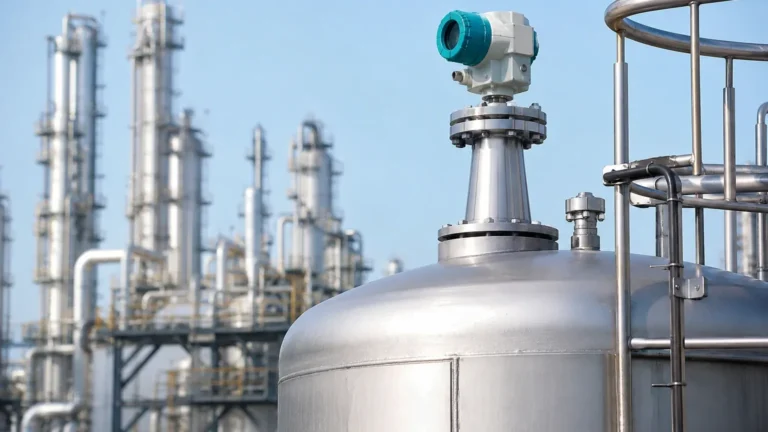
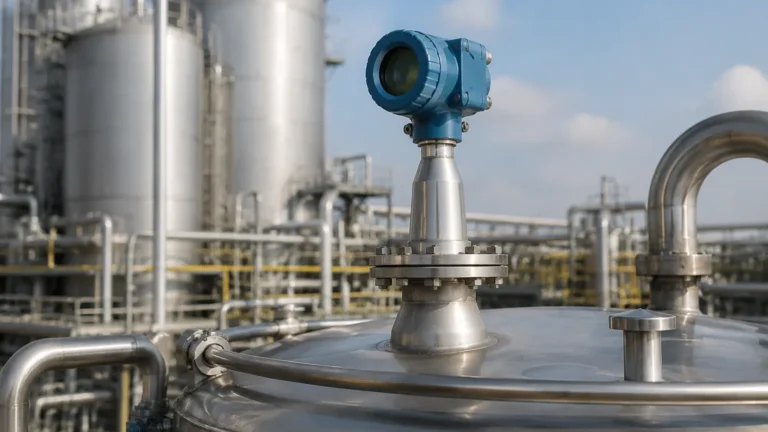
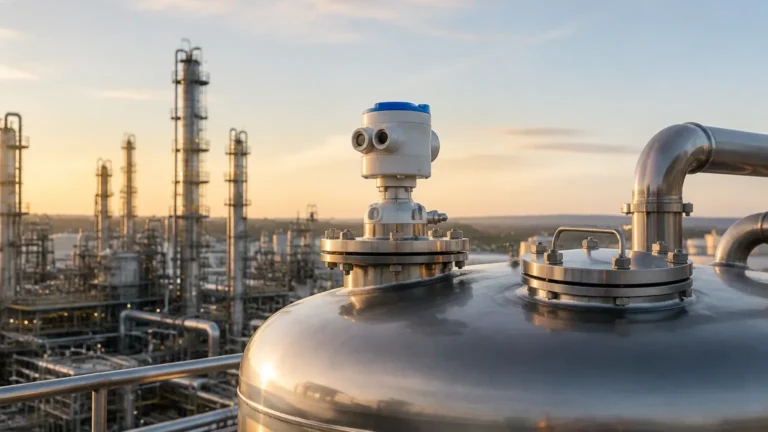
Radar Type Level Transmitter Emerson
Radar Type Level Transmitter Emerson: An Engineering Guide to Selection and Application
In the landscape of industrial process automation, precise level measurement is fundamental to operational safety, inventory management, and process efficiency. Among the various technologies available, radar-based systems have emerged as the preferred choice for challenging environments. When engineers discuss a radar type level transmitter Emerson, they are typically referring to the Rosemount series, which has set industry benchmarks for reliability in oil and gas, chemical processing, and water treatment.
This guide examines the underlying physics of radar level measurement, compares different architectural approaches, and provides technical insights into selecting and installing Radar Level Meters for industrial applications.
1. Understanding the Operating Principles of Radar Level Measurement
Radar level transmitters operate by emitting electromagnetic waves (microwaves) toward the surface of a medium and measuring the reflected signal. Because microwaves travel at the speed of light, the time-of-flight (ToF) from emission to reception is used to calculate the distance.
There are two primary methods used in modern instrumentation:
Pulse Radar
Pulse radar transmitters emit a series of short-duration microwave pulses. The instrument measures the time interval between the transmitted pulse and the received echo. While energy-efficient, pulse radar can sometimes struggle with signal-to-noise ratios in environments with heavy surface turbulence or low-dielectric products.
Frequency Modulated Continuous Wave (FMCW)
FMCW technology, utilized in high-end models like the Rosemount 5408, involves transmitting a continuous signal with a constantly changing frequency. The distance is calculated by measuring the frequency difference between the transmitted and reflected signals at any given moment. FMCW provides significantly higher accuracy and better signal processing capabilities, making it ideal for detecting weak echoes in complex tank geometries.
The Role of the Dielectric Constant ($ε_r$)
The dielectric constant of the process medium is the most critical factor in radar measurement. It determines how much of the microwave energy is reflected back to the sensor.
- High $ε_r$ (>10): Media like water or aqueous solutions provide strong reflections.
- Low $ε_r$ (1.4 to 4): Media like hydrocarbons, oils, and solids reflect less energy, requiring more sensitive electronics or guided wave technology.
2. Comparing Non-Contacting and Guided Wave Radar (GWR)
When selecting a radar type level transmitter Emerson or a similar industrial grade instrument, engineers must choose between non-contacting and guided wave configurations.
| Feature | Non-Contacting Radar | Guided Wave Radar (GWR) |
| :— | :— | :— |
| Measurement Path | Through air/vapor space | Along a physical probe/cable |
| Surface Conditions | Sensitive to heavy foam/turbulence | Less affected by foam/turbulence |
| Maintenance | Low (no contact with media) | Moderate (probe cleaning may be needed) |
| Dielectric Limit | Generally requires $ε_r$ > 1.4 | Can measure $ε_r$ as low as 1.2 |
| Internal Obstructions | Must avoid beam interference | Only requires clearance around the probe |
| Application | Corrosive liquids, large silos | Small tanks, interface measurement |
Non-contacting radar is preferred for corrosive or viscous liquids where probe fouling is a concern. Guided Wave Radar is the superior choice for liquid-liquid interface measurement (e.g., oil over water) because the microwave signal can partially pass through the upper layer to detect the lower layer.
3. Critical Engineering Features of the Radar Type Level Transmitter Emerson Series
Emerson’s Rosemount brand has pioneered several features that have become standard requirements for high-stakes industrial projects. Understanding these features helps in evaluating equivalent Radar Level Meters for specific site needs.
Dual-Port Technology
Some GWR models use dual-port technology to increase the signal-to-noise ratio. This allows for reliable measurement even when the probe is coated with viscous product or when the vapor space is saturated with steam.
Signal Quality Metrics
Advanced transmitters provide "Signal Quality Metrics," which alert operators if the echo strength is degrading. This is often caused by build-up on the antenna or changes in the process fluid's dielectric properties, allowing for predictive maintenance before a measurement failure occurs.
High-Frequency Performance (80 GHz)
While older radar systems operated at 6 GHz or 26 GHz, modern non-contacting units often utilize 80 GHz technology. The higher frequency allows for a much narrower beam angle, which is essential for avoiding internal tank obstructions like agitators, heating coils, or baffles.
4. Selection Criteria for Industrial Radar Level Meters
To ensure the longevity and accuracy of a level measurement system, the following parameters must be defined during the FEED (Front-End Engineering Design) phase:
1. Process Temperature and Pressure: Standard sensors may handle up to 150°C, but specialized ceramic seals are required for high-temperature reactors reaching 400°C or cryogenic applications.
2. Vessel Height: Non-contacting radar can measure distances up to 40 meters (131 ft) or more, whereas GWR is limited by the mechanical weight and tension of the cable probe.
3. Chemical Compatibility: Wetted parts must be compatible with the process. Common materials include 316L Stainless Steel, Hastelloy, and PTFE (Teflon) coatings for aggressive acids.
4. Process Connection: Options range from 1.5-inch NPT threads for small vessels to large 10-inch flanges for storage tanks.
5. Output Protocol: Most industrial sites require 4-20 mA with HART, though Foundation Fieldbus, Profibus, or WirelessHART are common in modern digital plants.
5. Installation Best Practices and Vessel Geometry
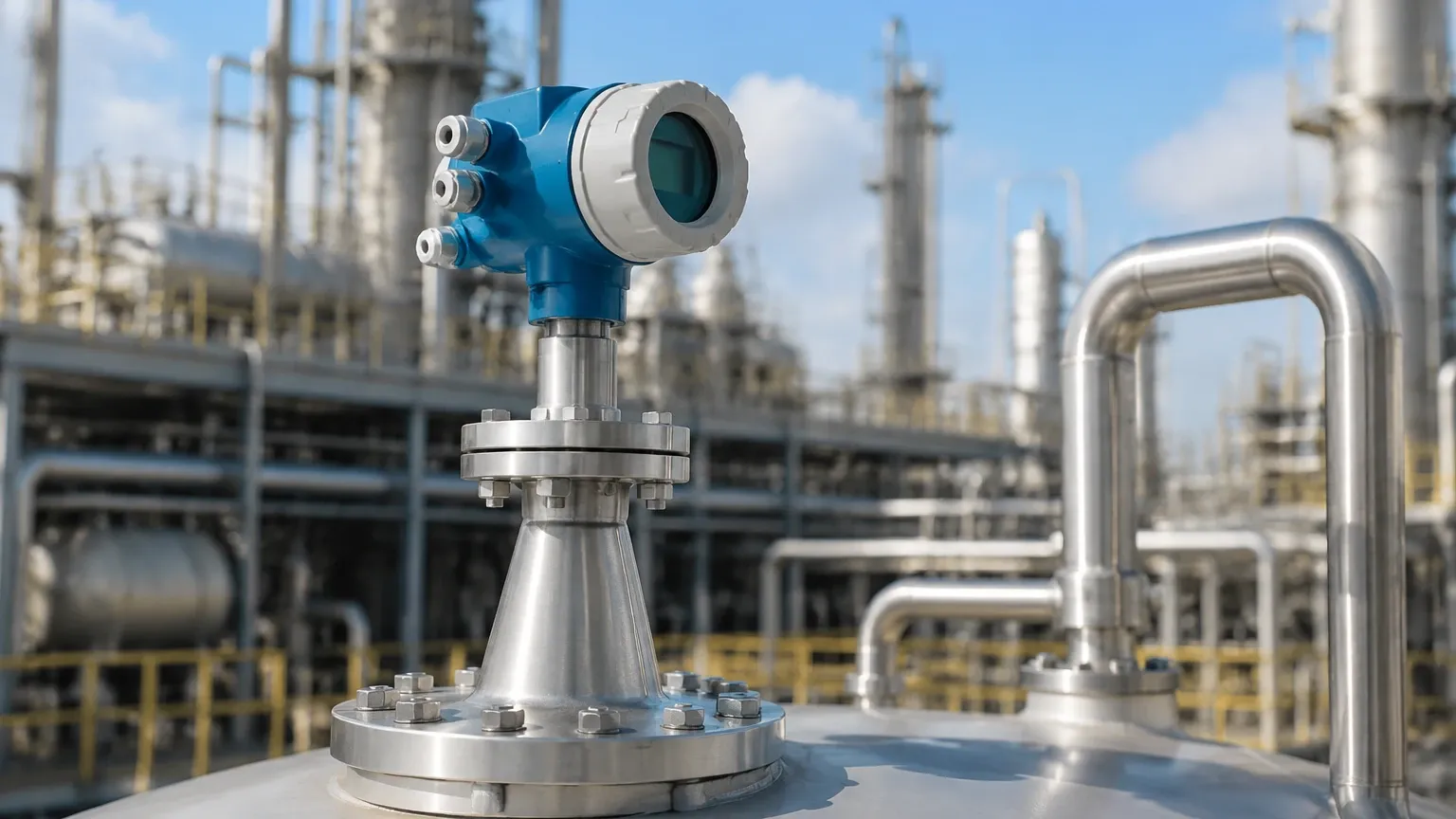
Even the most advanced radar type level transmitter Emerson will fail if installed incorrectly. Engineers must adhere to strict placement guidelines to ensure a clear line of sight to the product surface.
Nozzle Design
The nozzle height should be kept as short as possible. If the nozzle is too long or narrow, the radar signal may reflect off the nozzle's internal edges, creating a "ringing" effect that masks the actual level signal. For non-contacting radar, the antenna should ideally extend slightly below the nozzle bottom.
Beam Angle and Obstructions
The radar beam spreads as it travels. The "dead zone" or "blocking distance" near the top of the sensor must be accounted for. Furthermore, the beam must not hit the tank wall or internal structures.
- Calculation Tip: For a 26 GHz radar with a 3-inch (76 mm) horn antenna, the beam angle is approximately 10 degrees. At a distance of 10 meters, the beam diameter will be roughly 1.75 meters.
Agitators and Turbulence
If an agitator is present, the transmitter should be programmed with a "False Echo Suppression" or "Static Mapping" routine. This allows the software to recognize the agitator as a fixed obstruction and ignore its reflection.
6. Limitations and Common Application Challenges
While radar is highly versatile, it is not a universal solution. Engineers should be aware of the following limitations:
* Heavy Foam: Extremely dense, thick foam can absorb the microwave signal entirely, leading to a "Loss of Echo" (LoE) error. In these cases, GWR or ultrasonic sensors may be more appropriate depending on the foam density.
* Vacuum Conditions: While radar works in a vacuum (unlike ultrasonic sensors which require a medium for sound travel), the mechanical seals of the transmitter must be rated for vacuum service to prevent air ingress or sensor damage.
* Dust and Solids: In powder or grain silos, dust clouds can attenuate the signal. High-power FMCW radar with a purging connection (to keep the lens clean) is typically required for these applications.
* Condensation: Heavy condensation on the antenna can refract the signal. Using a PTFE drip shield or a parabolic antenna can help mitigate this risk.
7. Frequently Asked Questions (FAQ)
Q: Can a radar level transmitter measure the interface between two liquids?
A: Yes, specifically Guided Wave Radar (GWR). The signal reflects off the upper liquid (low dielectric) and continues through to reflect off the lower liquid (high dielectric), provided the upper layer is non-conductive.
Q: What is the difference between 26 GHz and 80 GHz radar?
A: 80 GHz radar has a much narrower beam and a smaller antenna size. It is better for small vessels or tanks with many internal obstructions. 26 GHz is often more robust for applications with heavy condensation or steam.
Q: Does the vapor space pressure affect radar accuracy?
A: Unlike hydrostatic level transmitters, radar accuracy is largely independent of pressure. However, extremely high-pressure gases (like high-pressure CO2 or steam) can slightly change the propagation speed of microwaves, requiring a compensation factor.
Q: How often does a radar level transmitter need calibration?
A: Radar transmitters are solid-state devices with no moving parts. Once commissioned and mapped to the tank geometry, they typically do not require periodic re-calibration, though annual verification is recommended for safety-critical loops (SIL).
Conclusion
Selecting a radar type level transmitter Emerson or an equivalent high-performance Radar Level Meter requires a deep understanding of the process environment and the physics of electromagnetics. By prioritizing the dielectric properties of the media, managing vessel geometry constraints, and choosing the appropriate frequency, engineers can implement a measurement solution that provides years of maintenance-free service. Whether the application involves simple water storage or complex chemical reactors, radar remains the most capable technology for modern industrial level automation.