Rosemount 5600 Radar Level Transmitter
Rosemount 5600 Radar Level Transmitter: Engineering Guide for High-Performance Level Measurement
In the landscape of industrial automation, accurate level measurement is critical for inventory management, process safety, and operational efficiency. Among the various technologies available, non-contacting radar has emerged as a gold standard for challenging environments. The rosemount 5600 radar level transmitter represents a high-performance solution within the broader category of Radar Level Meters, designed specifically for complex applications where standard loop-powered devices may reach their technical limits.
This guide explores the engineering principles, selection criteria, and installation requirements for the Rosemount 5600, providing a factual reference for process engineers and international procurement specialists.
—
1. Measurement Principles: FMCW Technology
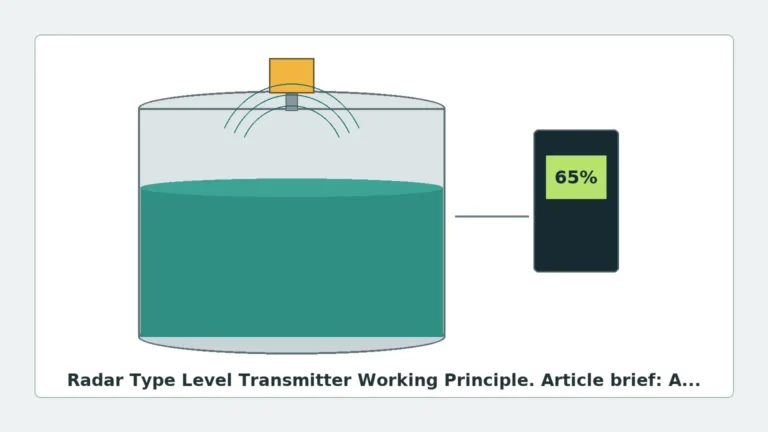
To understand the capabilities of the rosemount 5600 radar level transmitter, one must first understand its underlying technology: Frequency Modulated Continuous Wave (FMCW). Unlike traditional pulse radar, which measures the time of flight of a single microwave pulse, FMCW radar transmits a continuous signal with a constantly changing frequency.
How FMCW Works
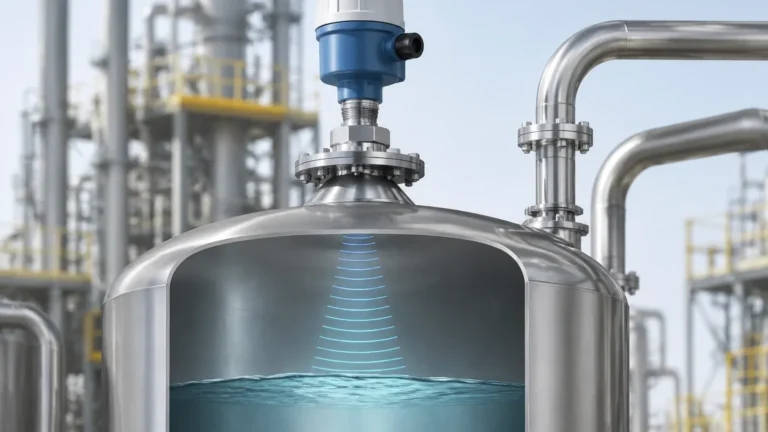
1. Signal Transmission: The transmitter emits a microwave signal that sweeps across a specific frequency bandwidth (typically around 10 GHz).
2. Reflection: The signal hits the product surface and reflects back to the antenna.
3. Frequency Shift: Because the transmitter is constantly changing its frequency, by the time the reflection returns, the transmitted frequency has moved to a new value.
4. Distance Calculation: The difference between the transmitted frequency and the received frequency (the "beat frequency") is directly proportional to the distance to the product surface.
This method provides a significantly higher signal-to-noise ratio compared to pulse radar. It allows the Rosemount 5600 to distinguish the true level from background noise, internal tank obstructions, and turbulent surfaces, making it highly effective for materials with low dielectric constants ($ε_r$).
—
2. Key Features of the Rosemount 5600
The Rosemount 5600 is a 4-wire radar transmitter. This distinction is vital for engineering selection. While 2-wire (loop-powered) transmitters are common for standard applications, the 4-wire architecture of the 5600 provides dedicated power to the electronics, enabling advanced signal processing and higher sensitivity.
Technical Highlights
* High Sensitivity: The 4-wire power supply allows the device to detect weak echoes from materials that reflect poorly, such as plastic pellets, wood chips, or liquefied gases.
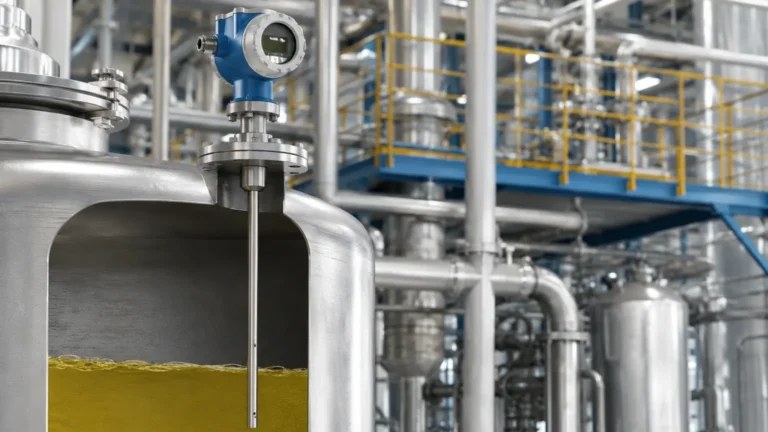
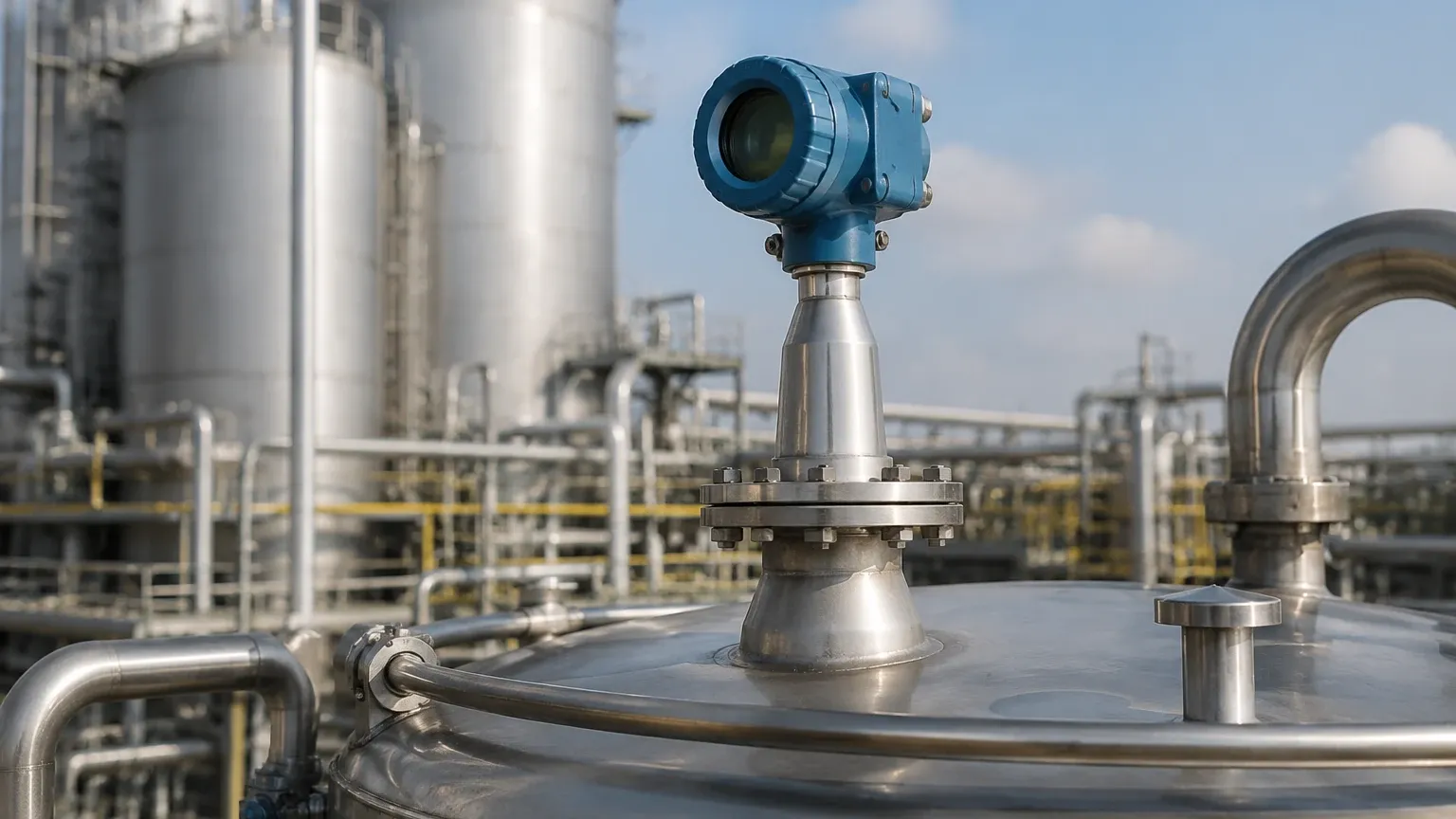
* Wide Range of Antennas: It supports horn, parabolic, and rod antennas to suit different vessel geometries and process conditions.
* Process Temperature and Pressure: Designed to operate in extreme conditions, with models capable of handling temperatures from -196°C to +400°C (-320°F to +752°F) and pressures up to 345 bar (5000 psi).
* Dual-Port Electronics: Allows for separate wiring of power and signal, reducing interference and simplifying troubleshooting.
—
3. Engineering Selection and Application Suitability
Choosing the right instrument among various Radar Level Meters requires a thorough analysis of the process media and vessel characteristics. The Rosemount 5600 is typically reserved for "problematic" applications.
Selection Matrix
| Process Condition | Suitability of Rosemount 5600 | Engineering Note |
| :— | :— | :— |
| Low Dielectric Liquids (ε_r < 1.4) | Excellent | FMCW provides the sensitivity needed for weak reflections. |
| Solid Powders/Granules | High | The high signal strength helps penetrate dust and handle uneven surfaces. |
| Extreme Turbulence | High | Advanced software filtering compensates for rapid surface changes. |
| Heavy Vapor/Boiling | Moderate to High | Requires careful antenna selection (e.g., Parabolic) to maximize signal return. |
| Standard Water Storage | Over-specified | A 2-wire pulse radar is generally more cost-effective for simple liquids. |
When to Specify the 5600
Engineers should specify the rosemount 5600 radar level transmitter when the application involves long measuring ranges (up to 50 meters or 164 feet), low-reflectivity media, or vessels with significant internal structures like agitators and heating coils that create parasitic reflections.
—
4. Installation Considerations and Constraints
Proper installation is the most critical factor in the performance of any radar level meter. Even the most advanced FMCW transmitter will fail if it is poorly positioned.
Nozzle Requirements
* Nozzle Diameter: The nozzle must be large enough to accommodate the chosen antenna. For horn antennas, the horn should ideally extend slightly beyond the nozzle bottom to prevent "ringing" or internal reflections within the nozzle.
* Nozzle Height: Keep nozzles as short as possible. If a long nozzle is unavoidable, the Rosemount 5600 may require a stilling well or a specific antenna extension.
Positioning and Obstructions
1. Avoid the Center: Never install a radar transmitter in the exact center of a circular tank. This can cause multiple reflections from the tank walls to converge at the center, creating a false high-level signal.
2. The "Keep-Out" Zone: Maintain a clear path for the radar beam. The beam spreads as it travels (typically at a 10° to 20° angle depending on the antenna). Any internal pipes, ladders, or agitators within this cone will create interference.
3. Inlet Streams: Ensure the radar beam does not intersect with the product inflow, as the falling stream will be detected as the level.
Metric Installation Clearances
* Minimum Distance from Wall: Typically 10% of the tank height, or a minimum of 300 mm (12 inches).
* Upper Dead Zone: The 5600 has a minimum measuring distance (often 0.5 m or 1.6 ft from the reference point). Level measurements within this zone are not reliable.
—
5. Limitations and Application Risks
While the rosemount 5600 radar level transmitter is a robust instrument, it is not a universal solution for every process. Engineers must be aware of the following limitations:
* Foam Interference: While FMCW is better at penetrating foam than pulse radar, extremely thick, dense, or "dry" foam (like shaving cream) can absorb the microwave signal entirely, leading to a loss of echo.
* Vacuum Conditions: Radar signals travel at the speed of light and are generally unaffected by vacuum. However, the physical seals and flanges must be rated for vacuum service to prevent mechanical failure.
* Conductive Dust: In solids applications, if conductive dust builds up on the antenna lens, it can attenuate the signal. Air purging systems are often required in these scenarios.
* Dielectric Constant Changes: If the media's dielectric constant drops significantly (e.g., due to temperature changes in certain hydrocarbons), the signal may become too weak to track reliably.
—
6. Maintenance and Diagnostic Capabilities
The Rosemount 5600 utilizes advanced diagnostic software, often integrated with HART or Foundation Fieldbus protocols. This allows for "Echo Curve" analysis.
Echo Curve Analysis
By viewing the echo curve, a technician can see the signal strength of the actual product level versus the noise generated by tank internals. The 5600 allows for "false echo suppression," where the transmitter is taught to ignore static reflections from a known obstruction like a support beam.
Routine Maintenance
* Visual Inspection: Check for corrosion on the housing and antenna.
* Condensation/Buildup: In high-humidity applications, check the antenna for moisture or product buildup. While many antennas are designed to shed droplets, heavy coating will eventually degrade performance.
—
7. Frequently Asked Questions (FAQ)
Q: Can the Rosemount 5600 be used for custody transfer?
A: While the 5600 is highly accurate, custody transfer applications usually require specific certifications (like OIML) and may involve specialized high-precision models like the Rosemount 5900 series. The 5600 is primarily a process level transmitter.
Q: What is the advantage of 4-wire over 2-wire for this specific model?
A: The 4-wire design provides more power to the microprocessor. This enables faster update rates and more complex algorithms to filter out noise, which is essential in tanks with heavy agitation or low-dielectric solids.
Q: Does the transmitter require recalibration if the fluid density changes?
A: No. Unlike hydrostatic level transmitters, radar measurement is based on the speed of light and the reflection of waves. It is independent of fluid density, pressure, and viscosity.
Q: How does the 5600 handle internal agitators?
A: It uses a combination of FMCW signal processing and software-based false echo registration. The transmitter can be programmed to "mask" the reflection of the agitator blade as it passes through the beam.
—
Conclusion
The rosemount 5600 radar level transmitter remains a cornerstone for engineers facing the most difficult level measurement challenges. By leveraging FMCW technology and a powerful 4-wire architecture, it provides reliability where other sensors fail. However, success depends on meticulous attention to antenna selection and installation geometry. For those evaluating broader options in Radar Level Meters, the 5600 represents the high-end capability necessary for process-critical applications in the chemical, oil and gas, and power industries.