Prosonic Flow 93t
Prosonic Flow 93t
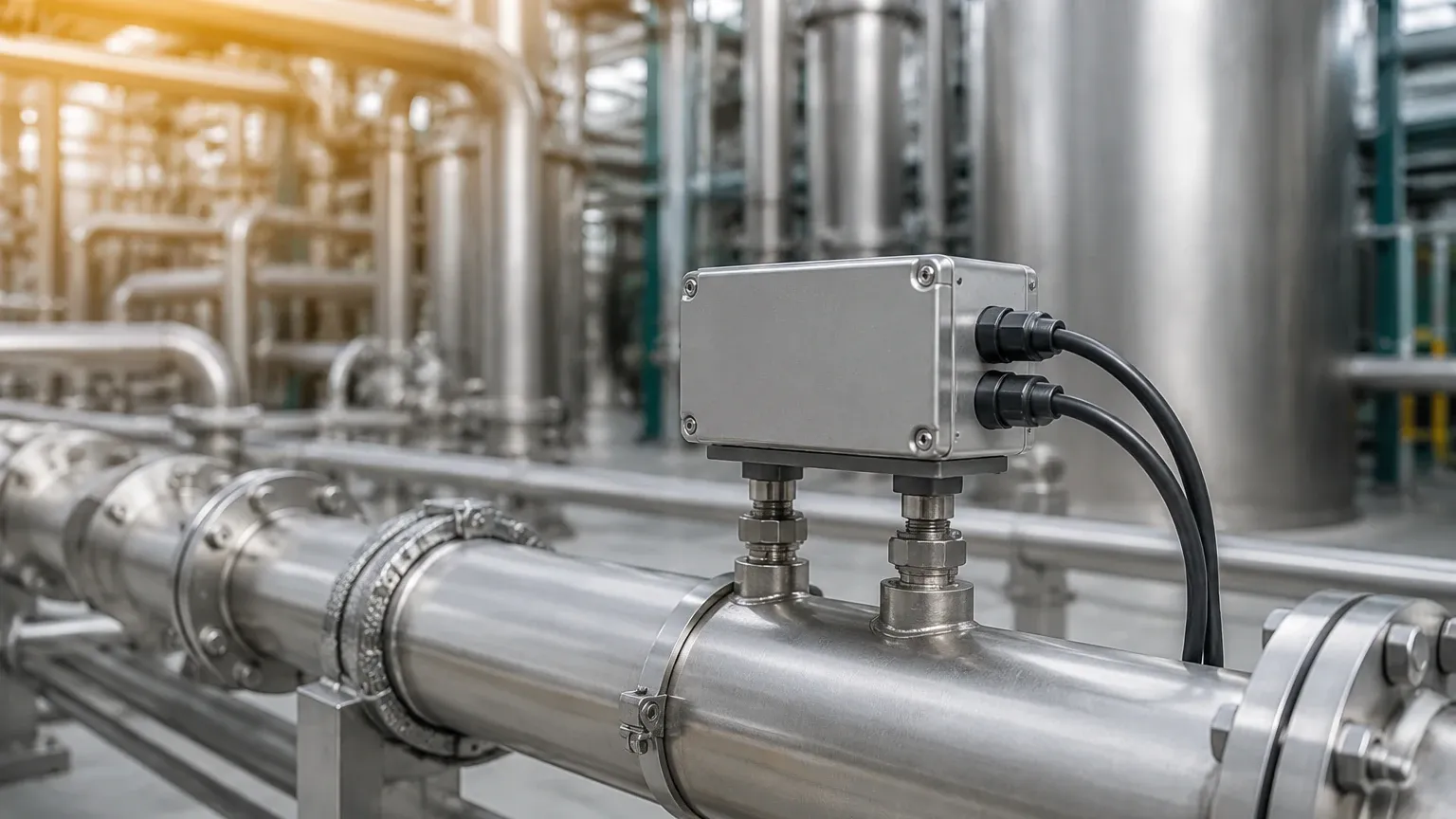
In the landscape of industrial process control, the ability to measure fluid movement without interrupting operations is a critical advantage. The Prosonic Flow 93t represents a specialized class of portable ultrasonic flowmeters designed for non-invasive measurement. As a transit-time ultrasonic device, it allows engineers and technicians to obtain accurate flow data from the outside of a pipe, eliminating the need for pipe cutting or process downtime. This capability is particularly valuable in sectors such as water treatment, chemical processing, and oil and gas, where system integrity must be maintained during diagnostic or verification procedures.
While Welk specializes in fixed industrial level measurement instruments—including radar level meters and ultrasonic level sensors—understanding the complementary nature of flow measurement is essential for comprehensive process automation. This guide provides a detailed technical overview of the Prosonic Flow 93t, its underlying principles, and its practical application in industrial environments.
Understanding the Ultrasonic Transit-Time Principle
Before selecting or deploying a portable flowmeter like the Prosonic Flow 93t, it is vital to understand the physics of its operation. The device utilizes the transit-time ultrasonic principle, which relies on the difference in the travel time of ultrasonic signals.
The Physics of Transit-Time
In a transit-time system, two transducers are mounted on the exterior of the pipe. These transducers act as both emitters and receivers of ultrasonic pulses. The measurement is based on a simple acoustic phenomenon: an ultrasonic signal traveling in the direction of the fluid flow (downstream) moves faster than a signal traveling against the flow (upstream).
1. Signal Propagation: The transmitter sends a pulse from Transducer A to Transducer B.
2. Time Measurement: The device records the time taken ($t_{up}$ and $t_{down}$).
3. Velocity Calculation: The difference in transit time ($Δt$) is directly proportional to the flow velocity of the liquid.
4. Volume Integration: By combining the measured velocity with the known internal cross-sectional area of the pipe, the device calculates the volumetric flow rate.
This principle requires the fluid to be relatively clean and free of significant concentrations of air bubbles or suspended solids, as these can scatter the ultrasonic signal and lead to measurement errors. For fluids with high solid content, Doppler-effect meters are typically preferred, though the Prosonic Flow 93t is optimized for high-precision measurement in clean to slightly dirty liquids.
Key Technical Specifications of the Prosonic Flow 93t
The Prosonic Flow 93t is engineered for portability and field use. Its design focuses on ease of deployment and data integrity. Below are the primary technical characteristics that define its performance:
| Feature | Specification Details |
| :— | :— |
| Measurement Principle | Ultrasonic Transit-Time (Time-of-Flight) |
| Pipe Diameter Range | DN 15 to DN 4000 (1/2" to 160") |
| Accuracy | ±0.5% to ±2% of reading (depending on application) |
| Fluid Temperature | -40°C to +170°C (-40°F to +338°F) |
| Power Supply | Internal battery or AC power adapter |
| Data Logging | Integrated memory for up to 40,000 measured values |
| Outputs | 0/4-20 mA, pulse/frequency, status output |
| Enclosure Rating | IP67 (Transmitter), IP68 (Sensors) |
These specifications ensure that the device can handle a wide variety of pipe materials, including carbon steel, stainless steel, ductile iron, and various plastics. The versatility in pipe diameter makes it a universal tool for plant-wide audits.
Installation Guidelines for Portable Clamp-on Sensors
The accuracy of a non-invasive flowmeter is heavily dependent on the quality of the installation. Unlike level sensors that may be mounted at the top of a tank, clamp-on flow sensors require specific pipe geometry to ensure a stable acoustic path.
1. Site Selection
To minimize turbulence, the sensors should be installed on a straight run of pipe. The general rule of thumb is to have at least 10 pipe diameters (10D) of straight pipe upstream and 5 pipe diameters (5D) downstream from the measurement point. If the pipe is vertical, the flow should be in the upward direction to ensure the pipe remains completely full.
2. Pipe Preparation
The exterior surface of the pipe must be clean. Rust, scale, or thick paint should be removed using a wire brush or sandpaper. A smooth surface ensures optimal contact between the transducer and the pipe wall.
3. Coupling Agent Application
Ultrasonic waves do not travel well through air. A coupling agent (typically a silicone-based grease or a high-temperature gel) must be applied to the face of the transducers. This eliminates the air gap between the sensor and the pipe, allowing the acoustic signal to pass through the pipe wall and into the fluid.
4. Mounting Configurations
Depending on the pipe size and fluid properties, the Prosonic Flow 93t sensors are typically mounted in one of two configurations:
* V-Mount: The signal reflects off the opposite pipe wall once. This is common for standard pipe sizes (DN 50 to DN 400).
* W-Mount: The signal reflects three times. This is used for very small pipes to increase the transit-time path length and improve resolution.
* Z-Mount: The sensors are placed on opposite sides of the pipe. This is used for very large pipes or highly attenuating fluids where signal strength is a concern.
Application Suitability and Selection Criteria
Choosing the right tool for flow measurement involves evaluating the specific process conditions. The Prosonic Flow 93t is best suited for the following scenarios:
* Verification of Fixed Meters: It is often used to check the calibration and performance of existing electromagnetic or vortex flowmeters without removing them from the line.
* Temporary Flow Monitoring: In systems where permanent flow measurement is not economically justified, the 93t provides periodic data for energy audits or water balance studies.
* Leak Detection: By measuring flow at different points in a distribution network, engineers can pinpoint areas of fluid loss.
* Non-Conductive Fluids: Unlike electromagnetic flowmeters, ultrasonic meters do not require the fluid to be conductive, making them ideal for demineralized water, hydrocarbons, and distilled chemicals.
When evaluating this technology, engineers should confirm the pipe material and lining. If a pipe has a loose liner (such as a plastic sleeve not fully bonded to the metal pipe), the ultrasonic signal may be trapped in the air gap, rendering the measurement impossible.
Limitations and Operational Risks
While the Prosonic Flow 93t is a robust instrument, certain factors can compromise its accuracy or functionality:
1. Entrained Air and Solids: If the fluid contains more than 1% to 2% by volume of air bubbles or suspended solids, the ultrasonic signal will scatter. This results in a "Signal Loss" error.
2. Partially Filled Pipes: The transit-time principle assumes the pipe is 100% full. If the pipe is partially empty, the calculated cross-sectional area will be incorrect, leading to significant overestimation of flow.
3. Extreme Scaling: Heavy internal scaling or tuberculation in older pipes can absorb the ultrasonic energy. In such cases, the signal-to-noise ratio may drop below the threshold required for measurement.
4. Temperature Fluctuations: Rapid changes in fluid temperature can affect the speed of sound in the liquid. The Prosonic Flow 93t includes temperature compensation features, but extreme transients can still cause temporary fluctuations in readings.
Integrating Flow and Level Measurement in Industrial Processes
In many industrial applications, flow measurement and level measurement are two sides of the same coin. For instance, in a large chemical storage tank, a Welk radar level meter provides precise inventory data, while a Prosonic Flow 93t can be used to verify the discharge rates of the pumps.
Combining these data points allows for advanced process diagnostics:
* Mass Balance: Comparing the change in tank level (volume) over time against the integrated flow rate from the 93t helps identify discrepancies in the system.
* Pump Performance Testing: By measuring the flow rate at various pump speeds and comparing it to the drawdown rate in a tank, maintenance teams can identify wear in pump impellers.
* Automation Calibration: Fixed ultrasonic level sensors used in open channel flow (like flumes or weirs) can be cross-verified using portable transit-time meters in the pressurized sections of the same system.
For engineers looking to optimize their entire measurement chain, reviewing the variety of available technologies is essential. For more details on industrial instrumentation, you can visit the Main Page.
Frequently Asked Questions (FAQ)
Q: Can the Prosonic Flow 93t measure gas flow?
No, the 93t is designed specifically for liquid applications. Gas flow measurement requires different ultrasonic frequencies and higher-powered transducers due to the low density of gases.
Q: How long does the battery last during field use?
Under typical operating conditions, the internal battery provides approximately 8 hours of continuous measurement. For longer studies, the device should be connected to an external power source.
Q: Does the pipe material affect the accuracy?
Yes. The transmitter must be programmed with the correct pipe material, outer diameter, and wall thickness. This allows the device to calculate the refraction angles of the ultrasonic beam as it passes through the pipe wall.
Q: Is it possible to measure flow in lined pipes?
Yes, provided the liner is well-bonded to the pipe wall (e.g., cement-lined ductile iron or epoxy-lined steel). If there is an air gap between the liner and the pipe, the signal will be blocked.
Conclusion
The Prosonic Flow 93t is an indispensable tool for modern industrial maintenance and process optimization. Its non-invasive nature, combined with the precision of transit-time technology, provides a flexible solution for flow verification and temporary monitoring. By adhering to strict installation guidelines and understanding the limitations of ultrasonic propagation, users can ensure high-quality data that supports efficient plant operations. Whether used alongside Welk's level measurement solutions or as a standalone diagnostic tool, the 93t remains a benchmark for portable flow instrumentation. For comprehensive information on integrated industrial measurement solutions, visit the Main Page.