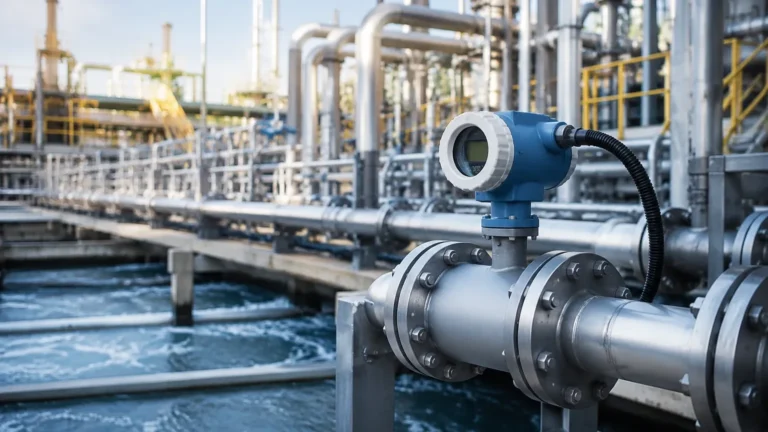
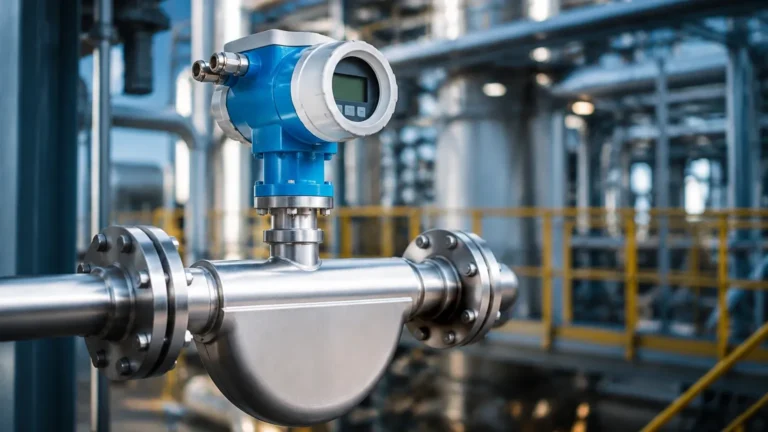
Promag 300 Flow Meter
Promag 300 Flow Meter
In the landscape of industrial process automation, the accurate measurement of liquid flow is as critical as monitoring storage volumes. The promag 300 flow meter represents a sophisticated evolution in electromagnetic flow measurement, designed to provide high-accuracy data in a compact, digitally integrated package. As a cornerstone of modern instrumentation, this device is widely utilized across the chemical, water/wastewater, and food and beverage industries to ensure process efficiency and regulatory compliance.
While level measurement instruments—such as those found on our Main Page—provide essential data on inventory and vessel status, flow meters like the Promag 300 offer the dynamic data necessary for real-time mass balance and throughput control. Understanding the technical nuances of this instrument is essential for engineers tasked with designing robust process loops.
Understanding Electromagnetic Flow Measurement Principles
The promag 300 flow meter operates on the principle of Faraday’s Law of Induction. This physical law states that a voltage is induced when a conductive medium flows through a magnetic field. In the context of a flow meter, the process liquid serves as the conductor.
The sensor contains two electromagnetic coils that generate a constant magnetic field across the cross-section of the measuring pipe. Two electrodes, located on the pipe wall, pick up the induced voltage as the liquid moves through the field. The relationship is defined by the formula:
Ue = B · L · v
Where:
* Ue is the induced voltage.
* B is the magnetic induction (field strength).
* L is the distance between the electrodes (pipe diameter).
* v is the flow velocity.
Because the magnetic field (B) and the distance (L) are constant, the induced voltage is directly proportional to the flow velocity (v). The transmitter then converts this voltage into a standardized signal, such as 4-20 mA, or a digital protocol. Crucially, this measurement is independent of fluid properties such as pressure, temperature, density, and viscosity, provided the medium meets a minimum electrical conductivity threshold (typically ≥ 5 μS/cm).
Key Features of the Promag 300 Transmitter
The "300" designation refers specifically to the transmitter—the "brain" of the flow meter. It is designed for compact installation where the transmitter is mounted directly onto the sensor. This configuration is ideal for space-constrained environments and simplifies wiring.
Digital Integration and Industry 4.0
The Promag 300 is built for the modern digital plant. It supports a wide array of communication protocols, including HART, Profibus PA/DP, Foundation Fieldbus, Modbus RS485, EtherNet/IP, and PROFINET. This allows for seamless integration into higher-level PLC or SCADA systems, enabling remote configuration and advanced data analytics.
Heartbeat Technology
One of the most significant advancements in this series is Heartbeat Technology. This suite of functions provides continuous self-diagnostics, verification, and monitoring. It allows operators to verify the device’s health without interrupting the process, generating a formal report that complies with quality standards like ISO 9001. This reduces the need for manual wet calibrations and extends maintenance intervals.
Web Server Access
The transmitter includes an integrated web server. By connecting a standard laptop via a service interface or WLAN, technicians can access all device parameters, diagnostics, and documentation without the need for specialized software or proprietary handheld terminals.
Sensor Variants and Application Suitability
The promag 300 flow meter transmitter can be paired with various sensors (the physical pipe section) to suit different industrial environments. Selecting the correct sensor is vital for longevity and accuracy.
| Sensor Type | Primary Application | Key Characteristics |
| :— | :— | :— |
| Promag W | Water and Wastewater | Available in large diameters; features a "0 x DN" full-bore option for installation without straight pipe runs. |
| Promag P | Chemical and Process | Designed for high temperatures and corrosive media; utilizes PFA or PTFE liners. |
| Promag H | Food and Life Sciences | Hygienic design with stainless steel housing; suitable for CIP/SIP cleaning processes. |
| Promag L | Water/Wastewater (Weight-optimized) | Features lap joint flanges for flexible installation; ideal for applications where weight is a concern. |
Technical Selection Criteria and Material Compatibility
When specifying a promag 300 flow meter, engineers must evaluate several technical factors to ensure the instrument survives the process conditions. The choice of liner and electrode material is the most critical decision.
Liner Materials
The liner protects the measuring pipe from the process medium and provides electrical insulation.
* PFA (Perfluoroalkoxy): Offers excellent chemical resistance and high-temperature stability (up to +150 °C). It is the standard for aggressive chemicals and hygienic applications.
* PTFE (Polytetrafluoroethylene): Similar chemical resistance to PFA but generally limited to lower pressure/temperature cycles. It is widely used in the chemical industry.
* Polyurethane: Highly abrasion-resistant. It is the preferred choice for water and wastewater applications where the liquid may contain suspended solids or grit.
* Hard Rubber: A cost-effective solution for process water and saline solutions, typically rated up to +80 °C.
Electrode Selection
Electrodes must be compatible with the fluid to prevent corrosion or scaling. Standard materials include Stainless Steel (1.4435/316L), Alloy C22, Tantalum, and Platinum. For liquids that tend to form coatings (such as wastewater or slurry), "bullet-head" or exchangeable electrodes may be required to maintain signal integrity.

Installation Considerations for Optimal Performance
While electromagnetic flow meters are relatively forgiving, following strict installation guidelines is necessary to achieve the specified accuracy (typically ±0.5% of reading, or ±0.2% with calibration).
Straight Pipe Requirements
To ensure a stable flow profile, standard installations require a straight pipe run of at least 5 x DN (nominal diameter) upstream of the meter and 2 x DN downstream. If these distances cannot be met, the Promag W "0 x DN" version should be considered, which utilizes a refined sensor design to compensate for turbulence.
Pipe Orientation and Filling
The measuring tube must always be completely full of liquid. For this reason, vertical installation with an upward flow direction is preferred. If horizontal installation is necessary, the meter should be placed at a low point in the piping system rather than at a high point where air pockets can accumulate. Air bubbles passing through the magnetic field will cause measurement errors and signal instability.
Grounding and Potential Equalization
Because the induced voltage is often in the millivolt range, proper grounding is essential to prevent electrical noise from interfering with the signal. The process liquid, the sensor, and the transmitter must be at the same electrical potential. This is typically achieved using grounding rings or grounding electrodes, especially in plastic or lined piping systems.
Integrating Flow and Level Measurement in Process Control
In many industrial applications, flow and level measurement are complementary. For example, in a chemical dosing tank, a hydrostatic or radar level transmitter (as detailed on our Main Page) monitors the total volume available, while a promag 300 flow meter precisely controls the rate at which the chemical is injected into the process.
Integrating these two data points allows for:
1. Leak Detection: Comparing the change in tank level over time against the integrated flow rate from the meter.
2. Pump Protection: Using flow data to prevent dry-running of pumps when level sensors indicate low tank volumes.
3. Inventory Management: Reconciling incoming bulk deliveries (measured by flow) with stored inventory (measured by level).
By leveraging both technologies, plant operators can create a "closed-loop" system that maximizes safety and minimizes material waste.
Limitations and Common Operational Risks
Despite its versatility, the promag 300 flow meter is not a universal solution. Engineers must be aware of its inherent limitations:
* Conductivity Requirements: It cannot measure non-conductive fluids such as hydrocarbons (oil, diesel, gasoline), demineralized water (below 5 μS/cm), or gases.
* Vacuum Sensitivity: Certain liners, particularly PTFE, can collapse or peel away from the pipe wall under vacuum conditions. PFA liners with stainless steel mesh reinforcement are required for vacuum applications.
* Magnetic Interference: High-power cables or large motors located in close proximity to the sensor can distort the magnetic field, leading to measurement drift.
* Solids Content: While magmeters can handle slurries, high concentrations of abrasive solids will eventually wear down the liner and electrodes, requiring periodic inspection.
Frequently Asked Questions (FAQ)
Q: Can the Promag 300 be used for custody transfer?
A: Yes, specific versions of the Promag series are available with OIML R49 or MI-001 certifications, making them suitable for legal metrology and billing in water applications.
Q: How often does the Promag 300 need to be calibrated?
A: This depends on the industry and internal quality standards. However, with Heartbeat Technology, the device can perform self-verification that may allow for the extension of physical calibration cycles from 1 year to 3 or even 5 years in stable processes.
Q: What is the difference between the Promag 300 and the Promag 500?
A: The Promag 300 is a compact version where the transmitter is attached to the sensor. The Promag 500 is a remote version, where the transmitter can be mounted up to 200 meters away from the sensor, which is useful in high-vibration areas or locations with limited physical access.
Q: Does the meter require a specific flow direction?
A: The Promag 300 is bi-directional. It can measure flow in both directions, though the "positive" flow direction is usually marked with an arrow on the sensor body for configuration purposes.
Q: What happens if the pipe is only partially full?
A: An electromagnetic flow meter will provide inaccurate, usually fluctuating, readings if the pipe is not full. Some Promag sensors include an "Empty Pipe Detection" (EPD) electrode that triggers an alarm if the liquid level falls below the electrodes.
By carefully considering the liner materials, installation environment, and digital integration needs, the promag 300 flow meter serves as a reliable and high-performance component in any modern industrial fluid handling system. For comprehensive process control, pairing these flow solutions with accurate level measurement technology ensures a complete overview of plant operations.