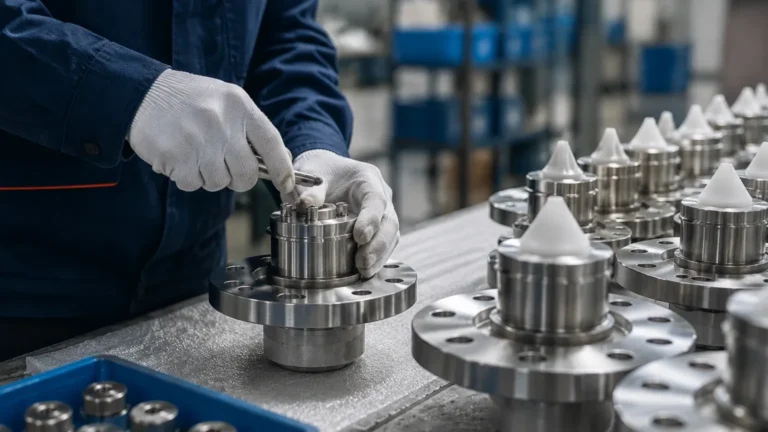
Cpa842
Cpa842
In the landscape of industrial process automation, the ability to maintain, calibrate, and replace sensors without halting production is a critical factor for operational efficiency. The Cpa842 refers to a specialized class of retractable assemblies designed for the seamless integration of sensors into tanks, pipes, and vessels. While often associated with analytical probes, these assemblies play a pivotal role in the broader ecosystem of level measurement and process control. For engineers managing complex liquid environments, understanding the mechanics and application of the Cpa842 is essential for ensuring long-term instrument reliability and safety.
Industrial environments—ranging from wastewater treatment plants to high-pressure chemical reactors—require robust mounting solutions. The Cpa842 assembly provides a mechanical interface that allows a sensor to be inserted into or retracted from a process medium while the process remains under pressure. This guide explores the technical foundations, selection criteria, and practical implementation of these assemblies within modern industrial frameworks.
Understanding the Measurement Principle and Integration of Cpa842
The primary function of a Cpa842 assembly is to act as a gatekeeper between the process medium and the sensitive measurement instrumentation. The "retractable" principle relies on a telescopic or sliding mechanism that moves the sensor through a ball valve or a specialized sealing chamber.
The Retraction Mechanism
When the sensor is in the "measure" position, it is fully extended into the pipe or tank. In the "service" position, the sensor is pulled back into a cleaning chamber. This chamber is isolated from the main process by a series of high-performance seals. Once isolated, the sensor can be cleaned, calibrated, or replaced without any leakage of the process fluid. This is particularly vital in applications involving hazardous chemicals or high-temperature liquids where a system shutdown would be prohibitively expensive.
Synergy with Level Measurement
While level measurement instruments like radar or ultrasonic sensors often utilize top-down mounting, many advanced process setups require side-mounted analytical sensors to work in tandem with level data. For instance, in a chemical storage tank monitored by a Welk radar level meter, a Cpa842 assembly might hold a pH or conductivity probe at a specific elevation. The data from the level meter ensures that the analytical probe is only retracted or cleaned when the liquid level is at a safe height, preventing dry-running or mechanical stress on the assembly.
Key Technical Specifications and Evaluation Criteria
Selecting the correct configuration for a Cpa842 assembly requires a deep dive into the physical and chemical demands of the application. Failure to match the assembly material to the process medium can lead to catastrophic seal failure or corrosion.
Material Composition
Standard assemblies are typically constructed from 316L stainless steel (1.4404), which offers excellent resistance to corrosion in water and mild chemical applications. However, for more aggressive environments, such as those found in petrochemical processing, materials like Hastelloy C22 or specialized plastics (PVDF or PEEK) may be required.
Pressure and Temperature Ratings
The Cpa842 is designed to withstand significant process pressures. Most industrial variants are rated for pressures up to 16 bar (approximately 232 psi) and temperatures ranging from -10°C to 140°C. It is crucial to verify that the assembly's pressure-temperature curve aligns with the maximum surge conditions of the vessel.
Immersion Depth and Stroke Length
The stroke length determines how far the sensor extends into the medium. Common lengths include 36 mm, 78 mm, or even longer custom extensions for double-walled tanks. Engineers must calculate the required immersion depth to ensure the sensor tip is positioned in a representative flow area, away from boundary layers or stagnant zones near the vessel wall.
Application Scenarios in Level Measurement Systems
The integration of Cpa842 assemblies is most prevalent in industries where process continuity is non-negotiable.
1. Water and Wastewater Treatment: In large-scale aeration tanks, sensors are prone to biofouling. Using a Cpa842 allows for automated cleaning cycles. When paired with hydrostatic level transmitters, the system can automatically manage the immersion depth based on the current tank volume.
2. Chemical Processing: In reactors where the medium is highly corrosive or toxic, the manual removal of a sensor is a safety risk. The Cpa842 provides a secure, sealed environment for sensor maintenance, often integrated with pneumatic actuators for remote operation.
3. Food and Beverage: Hygienic versions of these assemblies feature electro-polished surfaces and USP Class VI compliant seals. They allow for CIP (Cleaning-in-Place) procedures without removing the instrumentation, ensuring that the level and quality monitoring remains sterile.
To explore the full range of instrumentation that complements these assemblies, including advanced radar and ultrasonic solutions, you can Review product options and application support on the Welk official site.
Practical Selection Table for Cpa842 Configurations
When specifying an assembly, use the following table as a baseline for comparing common configurations:
| Feature | Standard Industrial | Heavy-Duty Chemical | Hygienic/Food Grade |
| :— | :— | :— | :— |
| Housing Material | Stainless Steel 316L | Hastelloy C22 | Polished 316L (Ra < 0.76 µm) |
| Seal Material | EPDM / FKM | Kalrez (FFKM) | Silicone / EPDM (FDA) |
| Max Pressure | 10 bar | 16 bar | 6 bar |
| Max Temperature | 100°C | 140°C | 135°C (Sterilization) |
| Operation | Manual Hand-wheel | Pneumatic Actuator | Pneumatic / Manual |
| Process Connection | Flange (DN50/ANSI 2") | Threaded (G 1¼") | Tri-Clamp / Varivent |

Installation Considerations and Maintenance Best Practices
Proper installation is the difference between a reliable measurement system and a constant maintenance headache. The Cpa842 must be installed with precision to ensure the seals function correctly over thousands of cycles.
Mounting Orientation
While these assemblies can technically be mounted in any orientation, a horizontal or slightly inclined position (approx. 15 degrees) is often preferred. This allows for better drainage of the cleaning chamber and prevents the accumulation of air bubbles or sediment around the sensor head. If mounting vertically on top of a tank, ensure there is sufficient overhead clearance for the full stroke length during retraction.
Safety Interlocks
In pressurized systems, it is vital to use assemblies equipped with safety locks. A mechanical pin or pneumatic interlock prevents the assembly from being opened or the sensor from being removed while the chamber is still under process pressure.
Maintenance of Seals
The seals (O-rings) are the primary wear components. In a Cpa842, there are typically internal seals that isolate the process and external seals that prevent leakage to the environment. A scheduled maintenance program should include:
* Lubrication: Using process-compatible grease on the sliding shafts.
* Visual Inspection: Checking for "weep" holes that indicate an internal seal failure.
* Replacement Cycles: Replacing seals every 6 to 12 months, depending on the aggressiveness of the medium and the frequency of retraction cycles.
Limitations and Common Risks
Despite its versatility, the Cpa842 is not a universal solution for every process challenge. Engineers should be aware of the following limitations:
* Solid Content: In slurries or liquids with high solid concentrations (e.g., mining tailings), particles can become trapped in the sealing mechanism. This can score the shaft or prevent the ball valve from closing fully. In such cases, a flush-mounted level sensor or a non-contact radar might be a better primary measurement choice.
* Chemical Compatibility: Even "resistant" plastics like PVDF can swell when exposed to certain solvents. Always cross-reference the seal and housing materials with a chemical resistance chart.
* Mechanical Stress: If installed in a high-velocity pipe, the extended sensor and assembly shaft are subject to vortex shedding and vibration. This can lead to fatigue failure. Support brackets or shorter immersion depths are necessary in high-flow applications.
Frequently Asked Questions (FAQs)
Q: Can a Cpa842 be used with non-contact radar level meters?
A: No. The Cpa842 is designed for contact-based sensors (probes). However, it is frequently used in the same tank as a non-contact radar to provide auxiliary analytical data (like pH or dissolved oxygen) that the radar cannot measure.
Q: What is the difference between manual and pneumatic versions?
A: Manual versions require an operator to physically turn a hand-wheel to retract the sensor. Pneumatic versions use compressed air and can be integrated into a PLC (Programmable Logic Controller) for automated cleaning and calibration cycles.
Q: How do I know when the seals need replacing?
A: Most professional assemblies feature a leakage port. If fluid begins to drip from this port, it indicates that the primary process seal has been compromised and maintenance is required immediately.
Q: Is the Cpa842 compatible with all sensor brands?
A: Most Cpa842 assemblies use a standard Pg 13.5 thread or a 120mm sensor length standard, making them compatible with a wide range of industrial probes. However, always verify the sensor diameter and thread pitch before purchase.
Conclusion
The Cpa842 retractable assembly is an indispensable tool for modern process engineering, bridging the gap between sensitive instrumentation and harsh industrial environments. By allowing for sensor maintenance without process interruption, it significantly reduces downtime and enhances the accuracy of the data used for level and quality control.
When designing a comprehensive level measurement system, it is important to look at the complete installation environment. Whether you are deploying hydrostatic transmitters for tank gauging or radar systems for bulk solids, the integration of robust mounting hardware like the Cpa842 ensures that your facility operates at peak efficiency. For more information on selecting the right level measurement technology for your specific industry, visit the Main Page to explore Welk’s full catalog of industrial solutions.