Vega AI
Vega AI
In the landscape of industrial automation, the integration of artificial intelligence (AI) into field instrumentation represents a significant leap forward in process reliability and data accuracy. Vega AI, a term often associated with the digital transformation of level and pressure measurement, refers to the advanced signal processing and machine learning capabilities embedded within modern sensor ecosystems. For process engineers and plant managers, understanding how these intelligent algorithms interact with physical measurement principles is essential for optimizing complex industrial workflows.
Industrial level measurement has moved beyond simple distance detection. Today, sensors must distinguish between the actual material surface and a multitude of environmental interferences. This guide explores the technical foundations of intelligent level measurement, the role of AI in signal interpretation, and practical considerations for implementing these technologies in demanding B2B environments.
Principles of Radar Level Measurement and Signal Processing
To appreciate the impact of Vega AI and similar intelligent systems, one must first understand the underlying physics of radar level measurement. Most high-end sensors, such as those found on the Main Page of leading manufacturers, utilize Frequency Modulated Continuous Wave (FMCW) or pulse radar technology.
The Time-of-Flight Principle
A radar sensor emits high-frequency electromagnetic waves (typically in the 6 GHz, 26 GHz, or 80 GHz bands) toward the medium. These waves reflect off the surface and return to the sensor. The distance is calculated based on the time it takes for the signal to travel to the surface and back (Time-of-Flight).
The Challenge of False Echoes
In a perfect vacuum or a clean, empty tank, signal processing is straightforward. However, real-world industrial vessels contain agitators, heating coils, ladders, and varying degrees of foam or buildup on the sensor face. Each of these physical obstructions creates a "false echo." Traditionally, engineers had to manually perform "false signal suppression" by recording the echoes of an empty tank and telling the sensor to ignore them.
How AI Enhances Signal Analysis
Vega AI and modern intelligent algorithms automate this process. Instead of relying on a static map of the tank, AI-driven sensors use dynamic signal analysis. They can distinguish between the moving blades of an agitator and the rising level of a liquid by analyzing the signal's characteristics, such as amplitude, phase shift, and frequency patterns over time. This allows the sensor to "learn" the environment and adapt to changes, such as the gradual buildup of material on the vessel walls, without requiring manual recalibration.
Key Features of Intelligent Level Measurement Systems
The implementation of Vega AI within a sensor network provides several distinct advantages over conventional instrumentation. These features focus on reducing downtime and increasing the precision of the data fed into the PLC or SCADA system.
1. Advanced Noise Filtering
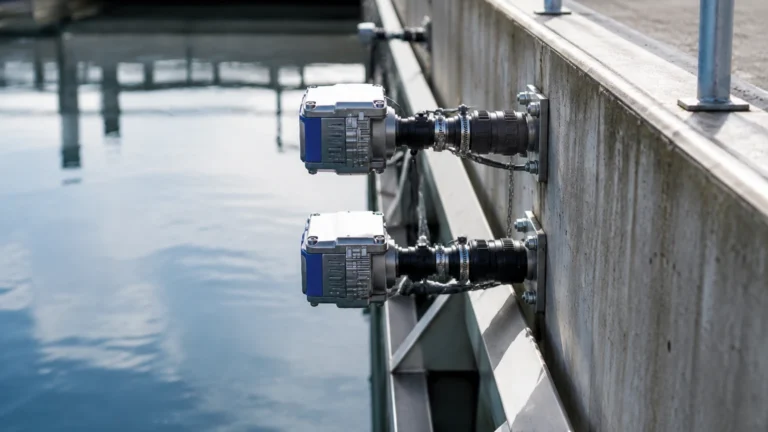
In applications involving turbulent surfaces—such as chemical mixing tanks or water treatment aeration basins—the radar return signal can be extremely noisy. Intelligent algorithms apply sophisticated filters that can track the true median level while ignoring the instantaneous peaks and troughs caused by waves or splashing.
2. Predictive Maintenance and Diagnostics
One of the primary benefits of an AI-integrated system is the ability to monitor its own health. By analyzing the signal strength (the "signal-to-noise ratio"), the sensor can predict when maintenance is required. For instance, if the signal strength slowly degrades over several weeks, the AI identifies this as a likely buildup of condensation or product on the sensor lens and triggers a maintenance alert before the measurement fails entirely.
3. Simplified Commissioning
Modern sensors equipped with intelligent software can be configured via mobile apps or cloud-based platforms. Vega AI often facilitates a guided setup where the user provides basic vessel dimensions, and the AI suggests the optimal parameters for the specific medium being measured, whether it is a low-dielectric hydrocarbon or a highly reflective aqueous solution.
Technology Selection and Comparison
Choosing the right level measurement technology requires a balance between cost, accuracy, and the physical properties of the media. While AI-enhanced radar is highly versatile, other technologies remain relevant depending on the application.
| Technology | Best For | Advantages | Limitations |
| :— | :— | :— | :— |
| 80 GHz Radar | Liquids and Solids in complex vessels | High focus, penetrates steam/dust, AI-ready | Higher initial cost |
| Ultrasonic | Water treatment, open channels | Cost-effective, non-contact | Affected by air temp, wind, and foam |
| Guided Wave Radar | Low dielectric liquids, interface measurement | Immune to turbulence and foam | Contact-based, prone to probe damage |
| Hydrostatic | Deep wells, vented tanks | Simple installation, very reliable | Density dependent, contact-based |
When evaluating systems that utilize Vega AI, engineers should compare the sensor's beam angle and dynamic range. A narrower beam angle (common in 80 GHz units) reduces the number of false echoes the AI has to process, leading to a more stable measurement in narrow silos or tanks with internal obstructions.
Installation Considerations for Intelligent Sensors
Even the most advanced AI cannot overcome poor physical installation. To ensure Vega AI functions at its peak performance, several engineering guidelines must be followed:
1. Nozzle Geometry: The sensor should be mounted such that the radar beam has a clear path to the product surface. Avoid mounting sensors too close to the tank wall, as the beam spread may interact with the wall and create unnecessary interference.
2. Obstruction Mapping: While AI can filter out agitators, it is best practice to mount the sensor in a position where it is not directly above an inflow stream or a stationary internal structure.
3. Environmental Protection: In outdoor applications, sunshades should be used to prevent extreme temperature fluctuations from affecting the electronics, even though most intelligent sensors include internal temperature compensation.
4. Alignment: For bulk solids, the sensor should be mounted with an aiming flange to ensure the beam is perpendicular to the angle of repose of the material, maximizing the return signal strength.

Limitations and Practical Boundaries
Despite the power of Vega AI, there are physical and operational boundaries that engineers must acknowledge:
* Dielectric Constants: Radar relies on the reflection of waves. Materials with very low dielectric constants ($ε_r < 1.5$), such as certain liquefied gases, reflect very little energy. While AI can amplify weak signals, there is a physical limit to what can be detected without a stilling well or guided wave probe.
* Extreme Foam: While intelligent algorithms are better at seeing through foam than ultrasonic sensors, extremely dense, thick foam (like shaving cream) can absorb radar signals entirely, leading to a "loss of echo" error.
* Connectivity Requirements: To fully utilize AI-driven diagnostics and cloud-based monitoring, the facility must have the necessary digital infrastructure (HART, Profibus, or Industrial Ethernet) to transmit more than just a simple 4-20mA analog signal.
Frequently Asked Questions (FAQ)
Q: Does Vega AI require an active internet connection to work?
A: No. The core signal processing and AI algorithms reside on the sensor's internal microprocessor. An internet connection is only required for cloud-based data logging, remote diagnostics, or firmware updates.
Q: Can I retrofit an old tank with an AI-enabled sensor?
A: Yes. Most intelligent sensors are designed to fit standard process connections (threaded or flanged). The AI will automatically begin learning the tank's internal echo profile once powered on during the commissioning phase.
Q: How does AI improve safety in chemical applications?
A: By providing more reliable measurements in turbulent or foaming conditions, AI reduces the risk of overfills or dry-running pumps. Furthermore, predictive diagnostics allow for maintenance during planned shutdowns rather than reacting to emergency failures in hazardous zones.
Q: Is 80 GHz radar always better than 26 GHz for AI applications?
A: Not necessarily. While 80 GHz offers a narrower beam and better resolution, 26 GHz may be more effective in applications with extremely heavy dust or steam, as the longer wavelength can sometimes penetrate these atmospheres more effectively.
Conclusion
The integration of Vega AI into level measurement instrumentation represents a shift from reactive to proactive process management. By leveraging machine learning to interpret complex signal environments, these sensors provide a level of reliability that was previously unattainable in difficult industrial applications. Whether managing water treatment facilities or complex chemical reactors, the transition to intelligent sensing is a foundational step in the journey toward Industry 4.0.
For those seeking to implement these advanced solutions, it is recommended to consult with a professional manufacturer to ensure the hardware specifications align with the chemical and physical demands of the process. You can explore a wide range of compatible instrumentation and technical specifications on the Main Page of our product catalog, where we provide detailed engineering support for global industrial automation needs.