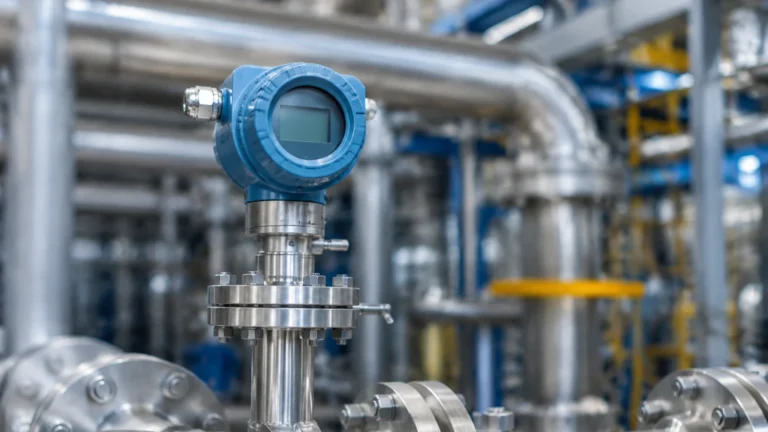
Promag Endress
Promag Endress
Electromagnetic flow measurement has become the gold standard for conductive liquids across a vast array of industrial sectors, from municipal water treatment to aggressive chemical processing. Within this field, the promag endress series represents a significant portion of the global installed base. Known for their reliability and lack of moving parts, these instruments utilize electromagnetic induction to provide accurate volumetric flow rates.
For engineers and plant operators, understanding the technical nuances of the promag endress line is essential for optimizing process efficiency and ensuring long-term instrument stability. This guide provides a comprehensive technical overview of electromagnetic flowmeter principles, selection criteria, and installation requirements, serving as a practical reference for industrial automation professionals.
The Measurement Principle: Faraday’s Law of Induction
Before selecting a specific promag endress model, it is critical to understand the underlying physics. Electromagnetic flowmeters (often called magmeters) operate based on Faraday’s Law of Induction. This principle states that a voltage is induced when a conductive medium moves through a magnetic field.
In a promag endress sensor, two field coils are located inside the flow tube. These coils generate a constant magnetic field across the entire cross-section of the pipe. According to Faraday’s Law, as a conductive liquid flows through this magnetic field, a voltage ($U$) is induced. This voltage is directly proportional to the flow velocity ($v$), the magnetic field strength ($B$), and the distance between the electrodes ($d$), which corresponds to the pipe diameter. The formula is expressed as:
$$U = B \cdot v \cdot d$$
The induced voltage is picked up by two electrodes located on opposite sides of the flow tube and is then transmitted to the electronics (the transmitter). Because the magnetic field strength and the pipe diameter are constant, the voltage is purely a function of the fluid velocity. The transmitter then converts this voltage into a standardized signal, such as 4-20 mA, pulse, or a digital protocol like Modbus or EtherNet/IP.
Requirements for Conductivity
A fundamental limitation of the electromagnetic principle is that the fluid must be electrically conductive. For most promag endress devices, a minimum conductivity of 5 μS/cm is required (though some specialized versions for demineralized water can operate at lower thresholds). This makes magmeters unsuitable for hydrocarbons like oil or gas, but ideal for water, acids, alkalis, and slurries.
The Promag Endress Product Family: A Comparative Overview
The promag endress portfolio is categorized by sensor types and transmitter capabilities. Selecting the right combination depends on the specific demands of the application, such as hygiene requirements, chemical aggressiveness, or environmental conditions.
Sensor Types
1. Promag W: Designed primarily for the water and wastewater industry. It features a wide range of nominal diameters (DN 25 to DN 2400) and is often available with specialized coatings for buried or underwater installation.
2. Promag P: Targeted at the chemical and process industries. It is built to withstand high temperatures (up to +180 °C) and corrosive media, utilizing liners like PFA or PTFE.
3. Promag H: The hygienic sensor for the food, beverage, and pharmaceutical industries. It features a stainless steel housing and specialized liners that meet FDA and 3-A requirements.
4. Promag D: A wafer-style (flangeless) sensor designed for space-restricted installations, commonly used in water utility applications.
Transmitter Series
The transmitter is the "brain" of the flowmeter. The promag endress line offers several tiers:
* Proline 10: Basic functionality for straightforward applications where cost-effectiveness is a priority.
* Proline 300/500: High-end transmitters with advanced diagnostics (Heartbeat Technology), multiple I/Os, and comprehensive digital communication options.
* Proline 400: Specifically optimized for the water industry, featuring built-in web servers for remote access.
Technical Selection Criteria for Industrial Applications
Choosing the correct promag endress configuration requires a detailed analysis of the process fluid and the mechanical environment. The following table outlines the primary considerations for liner and electrode materials.
Selection Table: Liner and Electrode Materials
| Material Category | Material Type | Common Applications | Temperature Range |
| :— | :— | :— | :— |
| Liner | PFA | Aggressive chemicals, high-temp food | -20 to +180 °C |
| Liner | PTFE | Standard chemical applications | -40 to +130 °C |
| Liner | Hard Rubber | Process water, wastewater | 0 to +80 °C |
| Liner | Polyurethane | Abrasive slurries, sand/water mixes | -20 to +50 °C |
| Electrode | 1.4435 (316L) | Standard water and mild chemicals | N/A |
| Electrode | Alloy C22 | Corrosive media, acids | N/A |
| Electrode | Tantalum | High-concentration acids | N/A |
| Electrode | Platinum | Highly oxidizing or toxic fluids | N/A |
Accuracy and Rangeability
Most promag endress devices offer a standard measurement error of ±0.5% of the reading. High-accuracy versions can achieve ±0.2%. One of the major advantages of this technology is the high turndown ratio (often 1000:1), allowing for precise measurement at both very low and very high flow velocities (typically 0.5 m/s to 10 m/s).
Installation Best Practices and Hydraulic Requirements
To ensure the accuracy of a promag endress flowmeter, the hydraulic conditions within the pipe must be stable. The flow profile should be fully developed and free of turbulence or swirl.
Straight Pipe Runs
Standard installation guidelines recommend a minimum straight pipe run before and after the sensor to dampen turbulence caused by valves, pumps, or bends:
* Inlet (Upstream): 5 x DN (Nominal Diameter)
* Outlet (Downstream): 2 x DN
If the application involves severe disturbances (e.g., a double bend in different planes), longer inlet runs may be necessary. Some modern promag endress models feature "0 x DN" full-bore sensors that utilize multiple measuring electrodes to compensate for distorted flow profiles, though standard sensors still benefit from straight runs.
Orientation and Filling
The sensor must always be completely full of liquid. If air bubbles are present or if the pipe is only partially full, the measurement will be inaccurate.
* Vertical Installation: The preferred orientation is a vertical pipe with the flow moving upwards. This ensures the pipe remains full and prevents the accumulation of solids.
* Horizontal Installation: If horizontal installation is necessary, the electrode axis must be horizontal. This prevents air bubbles at the top of the pipe or sediment at the bottom from interfering with the electrode signal.
Grounding
Since the induced voltage is very small (in the millivolt range), proper grounding is essential to prevent electrical noise from interfering with the signal. The fluid, the sensor, and the transmitter must be at the same electrical potential. This is typically achieved using grounding rings or grounding electrodes, especially when the flowmeter is installed in plastic or lined pipes.

Maintenance, Calibration, and Troubleshooting
One of the primary benefits of the promag endress series is the lack of moving parts, which significantly reduces mechanical wear. However, maintenance is still required to ensure long-term performance.
Diagnostic Features
Many modern promag units include "Heartbeat Technology," which allows for continuous internal self-monitoring. This system can detect electrode coating, changes in magnetic field strength, and electronic component drift without interrupting the process. This enables "predictive maintenance," where the device is only serviced when the diagnostics indicate a potential issue.
Common Troubleshooting Steps
* Signal Instability: Often caused by air bubbles (entrained air) or insufficient fluid conductivity. Check for leaks on the suction side of pumps.
* Zero-Point Drift: Can occur if the electrodes become coated with grease or scale. Periodic cleaning or the use of "bullet-head" electrodes can mitigate this.
* Empty Pipe Alarm: If the device triggers an empty pipe alarm while the pipe is full, it may indicate a failure of the empty pipe detection (EPD) electrode or a loss of conductivity.
Integrating Flow and Level Measurement Systems
In complex industrial automation, flow measurement rarely exists in isolation. It is frequently paired with level measurement to provide a complete picture of mass balance and tank inventory. For instance, in a chemical dosing application, a promag endress flowmeter controls the rate of addition, while a radar or ultrasonic level sensor monitors the supply tank to prevent dry-running of pumps.
When designing these systems, engineers often look for integrated solutions that offer consistent communication protocols and diagnostic interfaces. For those exploring a wider range of industrial instrumentation, including radar and ultrasonic level sensors that complement electromagnetic flowmeters, it is useful to consult a comprehensive Main Page for technical specifications and product comparisons across different measurement technologies.
Integrating these data points into a centralized PLC (Programmable Logic Controller) or SCADA system allows for advanced process control, such as leak detection (comparing inflow vs. outflow) and automated inventory replenishment.
Frequently Asked Questions (FAQs)
Q: Can a promag endress flowmeter measure steam or gas?
A: No. Electromagnetic flowmeters require a conductive liquid medium. For steam or gas measurement, vortex, ultrasonic (gas version), or thermal mass flowmeters are appropriate alternatives.
Q: What happens if the fluid conductivity drops below the threshold?
A: If the conductivity is too low, the induced voltage will be too weak for the transmitter to distinguish from background noise. The reading will become unstable or drop to zero.
Q: How often should a promag endress be calibrated?
A: Calibration frequency depends on the industry and internal quality standards. In regulated industries like pharmaceuticals, annual calibration is common. In general water applications, the device may go several years without requiring recalibration, especially if using diagnostic tools like Heartbeat Technology.
Q: Are promag endress sensors sensitive to vibration?
A: While they are more robust than mechanical meters, extreme vibration can affect the electronics or the integrity of the electrode connections. It is always best to support the piping near the flowmeter to minimize mechanical stress.
Q: Can I use a magmeter for food products with particulates?
A: Yes, the promag endress H is specifically designed for this. Since the sensor has a smooth, unobstructed bore, it handles fluids with fruit pieces, seeds, or fibers without risk of clogging or damage to the meter.
By adhering to these engineering principles and selection guidelines, facilities can leverage the full potential of electromagnetic flow measurement, ensuring high process availability and accurate data for years to come.