Mass 500
Mass 500
In the landscape of industrial process automation, the transition from simple volumetric measurement to precise mass-based monitoring represents a significant leap in operational efficiency. The term "Mass 500" frequently refers to high-performance mass measurement systems designed for complex industrial environments where accuracy, reliability, and digital integration are paramount. Whether applied to flow or static storage, understanding the engineering principles behind mass measurement is essential for selecting the right instrumentation for chemical, oil and gas, or water treatment applications.
For engineers and project managers, mass measurement provides a more stable data point than volume because mass remains constant regardless of changes in temperature or pressure. This article explores the technical foundations of mass measurement, the specific capabilities of 500-series instrumentation platforms, and how these systems integrate with broader level measurement strategies.
Understanding Mass Measurement in Industrial Processes
Mass is a fundamental property of matter. In industrial fluid dynamics, measuring mass directly is often preferred over measuring volume. Volumetric flow and level are susceptible to errors caused by thermal expansion, gas entrainment, and pressure fluctuations. For instance, a cubic meter of fuel at 10°C contains more energy-producing mass than a cubic meter of the same fuel at 40°C.
Systems categorized under the mass 500 designation typically involve advanced Coriolis technology or integrated mass-provisions within digital transmitter platforms. These systems are designed to provide not only the primary mass value but also density, temperature, and viscosity data in real-time. This multi-variable approach allows for comprehensive process control from a single installation point.
In storage tank applications, mass is often derived through hydrostatic principles or by integrating flow-based mass data. When precision is the priority, the industry looks toward high-tier transmitters that offer remote electronics and advanced diagnostics, often denoted by the "500" series nomenclature in major instrumentation catalogs. These devices separate the sensor from the transmitter, allowing for easier access in hazardous or hard-to-reach locations.
Measurement Principles: Coriolis vs. Hydrostatic Methods
To effectively implement a mass 500 solution, one must understand the two primary methods used to determine mass in industrial fluids: the Coriolis effect for moving fluids and the hydrostatic method for static liquids.
The Coriolis Principle
Coriolis mass measurement is widely considered the gold standard for accuracy. The principle relies on the fact that a moving fluid within a vibrating tube will exert a force on the tube walls. This force causes a phase shift in the vibration, which is directly proportional to the mass flow rate.
1. Vibration: The meter’s internal tubes are vibrated at their natural frequency by an electromagnetic drive coil.
2. Phase Shift: As fluid flows through the tubes, the Coriolis force causes the tubes to twist.
3. Detection: Sensors at the inlet and outlet measure the time difference (phase shift) between the vibrations. This delta is converted into a mass flow value.
The Hydrostatic Principle (Mass-Based Level)
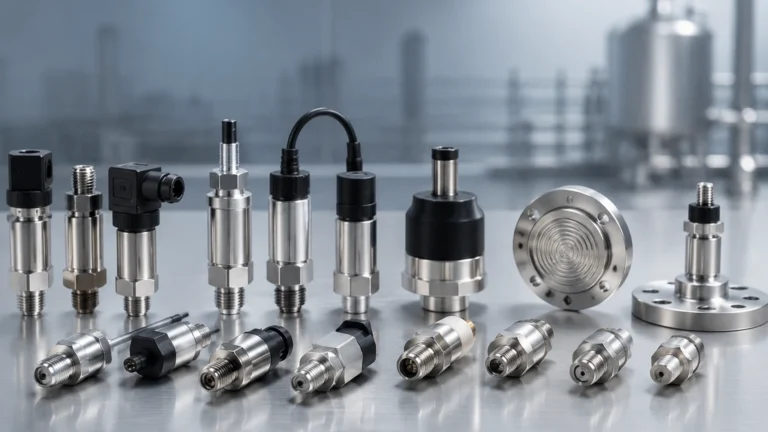
In many B2B applications involving large storage tanks, mass is calculated using hydrostatic pressure transmitters. This is a core focus for manufacturers like Welk, who provide high-precision pressure and level sensors. The formula is straightforward:
Mass = (Pressure × Area) / Gravity
By measuring the pressure at the bottom of a vessel with a known cross-sectional area, the system can determine the total mass of the liquid regardless of density changes. This method is highly effective for inventory management where the fluid's density may vary due to temperature stratification.
Key Features of High-Performance Mass 500 Systems
When evaluating a mass 500 platform, several technical features distinguish these high-end systems from standard industrial meters. These features are designed to meet the demands of Industry 4.0 and complex process architectures.
Remote Electronics and Accessibility
A defining characteristic of "500-class" transmitters is the separation of the sensor and the transmitter. In a remote configuration, the transmitter can be located up to 300 meters (approx. 984 feet) away from the sensor. This is critical for:
* Safety: Keeping electronics out of high-vibration or high-temperature zones.
* Maintenance: Placing the user interface at eye level or in a control room for easier configuration.
* Connectivity: Allowing for easier wiring to central PLC/DCS systems.
Advanced Digital Integration
Modern mass 500 systems are rarely standalone devices. They are designed to communicate via high-speed digital protocols. Common interfaces include:
* EtherNet/IP: For seamless integration into Rockwell Automation environments.
* PROFINET: For high-speed data exchange in Siemens-dominated architectures.
* Modbus RS485: For legacy system compatibility and long-distance serial communication.
* HART: For superimposed digital signals on standard 4-20mA loops.
Heartbeat Technology and Diagnostics
Process reliability is maintained through continuous self-diagnostics. These systems can detect tube coating, corrosion, and even the presence of entrained gas (bubbles) in the liquid. By providing a "health score" for the instrument, maintenance teams can move from reactive to predictive maintenance strategies.
Selection Criteria for Mass Measurement Instrumentation
Choosing between a flow-based mass 500 system and a level-based mass calculation depends on the specific requirements of the application. The following table provides a comparison for engineering reference.
| Feature | Coriolis Mass Flow (500 Series) | Hydrostatic Mass (Level) |
| :— | :— | :— |
| Primary Use | Continuous process flow / Custody transfer | Tank inventory / Static storage |
| Accuracy | High (0.05% to 0.1% of rate) | Moderate (0.1% to 0.5% of span) |
| Installation Cost | High (Requires pipe modification) | Low to Moderate (Standard tank ports) |
| Maintenance | Low (No moving parts) | Moderate (Requires periodic cleaning) |
| Fluid Types | Liquids, Gases, Slurries | Liquids only |
| Data Provided | Mass, Density, Temp, Viscosity | Pressure, Level, Calculated Mass |
For comprehensive system design, engineers often visit the Main Page of specialized manufacturers to compare how these technologies complement each other in a full-scale plant automation project.

Installation and Engineering Considerations
Successful deployment of a mass 500 system requires strict adherence to mechanical and electrical engineering standards. Failure to account for environmental factors can lead to measurement drift or premature sensor failure.
Mechanical Mounting
For Coriolis-based mass 500 sensors, vibration is the primary enemy. The sensor must be mounted on a rigid support structure to ensure that external mechanical noise does not interfere with the internal tube vibrations. In piping systems, it is recommended to use flexible connectors if the surrounding pipework is subject to significant thermal expansion or vibration.
For hydrostatic mass systems, the location of the pressure sensor is critical. It should be placed at the lowest possible point of the tank but away from areas of high turbulence, such as near an agitator or an inlet pipe. This ensures a stable pressure reading that accurately reflects the liquid column height.
Calibration and Zeroing
All mass 500 instruments must be zeroed under process conditions. For flow meters, this means the tubes must be full of liquid but with zero flow. For hydrostatic sensors, zeroing involves calibrating the sensor to the atmospheric pressure or the empty tank state. In high-precision applications, a multi-point calibration is recommended to account for non-linearities in tank geometry.
Wiring and Signal Integrity
Because 500-series transmitters often use remote electronics, the cable between the sensor and the transmitter must be shielded and properly grounded. Using proprietary cables provided by the manufacturer is essential to maintain signal integrity over long distances. In hazardous areas, intrinsic safety (IS) barriers must be used to prevent electrical sparks.
Limitations and Operational Challenges
While mass 500 systems are highly advanced, they are not universal solutions. Engineers must be aware of the following limitations:
1. Entrained Gas: Coriolis meters struggle when large amounts of gas are present in a liquid stream. While advanced software can compensate for some aeration, excessive "slug flow" can cause the meter to stall.
2. Initial Capital Expenditure: The cost of a mass 500 Coriolis system is significantly higher than a standard volumetric flow meter or a simple ultrasonic level sensor. The ROI must be justified by the need for extreme precision or multi-variable data.
3. Pressure Drop: Coriolis sensors involve narrow internal tubes, which can cause a pressure drop in the system. This must be accounted for during pump sizing and hydraulic calculations.
4. Material Compatibility: The wetted parts (often Stainless Steel 316L, Hastelloy, or Tantalum) must be compatible with the process fluid. Corrosive chemicals in the water treatment or chemical industries require careful material selection to prevent sensor breach.
Frequently Asked Questions (FAQ)
Q: What is the difference between a 100-series and a 500-series transmitter?
A: Typically, a 100-series transmitter is a compact, integrated unit where the electronics are mounted directly on the sensor. A 500-series transmitter is a remote-mounted unit with enhanced processing power, more I/O options, and a more robust user interface designed for complex system integration.
Q: Can mass 500 systems be used for custody transfer?
A: Yes, many Coriolis-based mass 500 systems carry OIML or NTEP certifications, making them suitable for legal-for-trade applications where high-accuracy mass measurement is required for financial transactions.
Q: How does temperature affect mass 500 readings?
A: Mass measurement is inherently independent of temperature. However, the physical properties of the sensor (like tube stiffness) change with temperature. High-end mass 500 systems include internal temperature sensors to automatically compensate for these physical changes, ensuring the mass output remains accurate across a wide thermal range.
Q: Is it possible to measure the mass of solids using these systems?
A: Coriolis mass 500 systems are designed for fluids (liquids and gases). For solids, mass measurement usually requires load cells (weighing) or specialized bulk flow meters. However, slurries (solids suspended in liquid) can be measured effectively by Coriolis meters if the solid concentration is relatively stable.
Q: How often should a mass 500 system be recalibrated?
A: This depends on the industry regulations and the criticality of the process. In many chemical applications, an annual verification using internal diagnostic tools (like Heartbeat Technology) is sufficient, with full wet calibration performed every 3 to 5 years.
For technical assistance in selecting between mass flow and level-based mass measurement solutions, engineers are encouraged to review the product options and application support available on the Main Page of Welk's industrial catalog. Proper instrument selection ensures long-term reliability and the highest possible accuracy for your process control requirements.