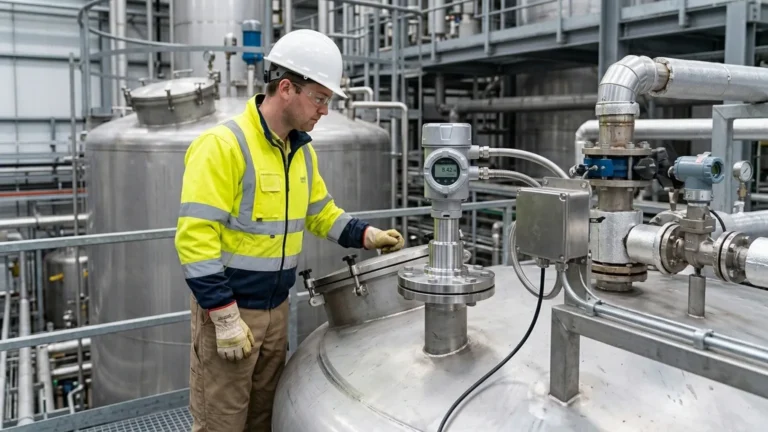
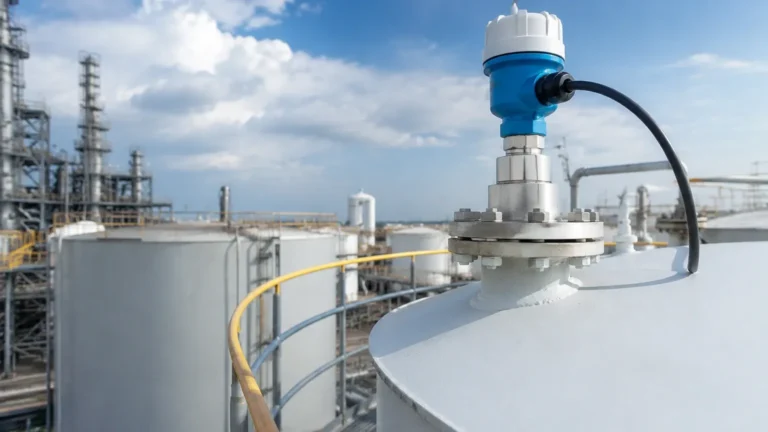
Radar Level Transmitter Honeywell
Radar Level Transmitter Honeywell: Engineering Guide for Industrial Level Measurement
In modern industrial process control, accurate level measurement is fundamental to operational safety, inventory management, and process efficiency. Among the various technologies available, radar-based systems have emerged as the gold standard for challenging environments. When engineers evaluate high-performance instrumentation, the radar level transmitter honeywell—specifically the SmartLine series—often serves as a benchmark for reliability and integration within distributed control systems (DCS).
This guide explores the engineering principles behind radar level measurement, compares different technological approaches, and provides practical selection and installation criteria for professionals integrating Radar Level Meters into their industrial workflows.
1. Understanding Radar Measurement Principles
Before selecting a specific model, such as a radar level transmitter honeywell RM70 or RM80, it is essential to understand how radar waves interact with process media. Industrial radar transmitters generally operate using one of two primary methods: Pulse Time-of-Flight (ToF) or Frequency Modulated Continuous Wave (FMCW).
Pulse Time-of-Flight (ToF)
In pulse radar systems, the device emits short microwave pulses toward the product surface. These pulses are reflected back to the sensor. The transmitter measures the time elapsed between emission and reception. Since the speed of light is constant, the distance is calculated as:
Distance = (Speed of Light × Time of Flight) / 2
Pulse radar is often preferred for its lower power consumption and suitability for simple liquid level applications where extreme precision is not the primary driver.
Frequency Modulated Continuous Wave (FMCW)
FMCW radar, utilized in high-end units like the Honeywell SmartLine RM80, emits a continuous signal with a constantly changing frequency. The frequency difference between the emitted signal and the reflected signal is proportional to the distance. FMCW offers significant advantages in signal-to-noise ratio, making it the preferred choice for measuring solids, turbulent liquids, or media with low dielectric constants.
Frequency Bands
* 6 GHz (C-Band): Best for applications with heavy steam, foam, or agitation, as the longer wavelength can penetrate surface disturbances.
* 26 GHz (K-Band): The industrial standard for most liquid applications, offering a balance between beam focus and signal strength.
* 80 GHz (W-Band): Provides a very narrow beam angle, ideal for tall, narrow tanks or vessels with internal obstructions.
2. Technology Comparison: Non-Contact vs. Guided Wave Radar
When specifying a radar level transmitter honeywell, engineers must choose between non-contact (free-space) radar and Guided Wave Radar (GWR).
| Feature | Non-Contact Radar (e.g., RM80) | Guided Wave Radar (GWR) (e.g., RM70) |
| :— | :— | :— |
| Measurement Principle | Electromagnetic waves travel through air. | Waves travel along a physical probe/cable. |
| Media Contact | Non-contact (ideal for corrosive/hygienic). | Contacting (probe is immersed in media). |
| Dielectric Constant (εr) | Requires εr > 1.4 typically. | Can measure εr as low as 1.1. |
| Obstructions | Sensitive to internal tank structures. | Immune to tank geometry and obstructions. |
| Foam/Turbulence | Can be affected by heavy surface foam. | Highly resistant to foam and turbulence. |
| Maintenance | Extremely low (no moving parts/contact). | Low, but requires probe cleaning in scaling media. |
3. The Role of Honeywell in Industrial Radar
Honeywell’s entry into the radar market, particularly through the SmartLine RM series, focused on integration and modularity. A radar level transmitter honeywell is often chosen for its ability to communicate seamlessly via HART, DE, or Foundation Fieldbus protocols. These transmitters feature advanced diagnostics and high-pressure/high-temperature capabilities, often rated up to 400°C and 400 bar.
For many international buyers, Welk provides comparable industrial Radar Level Meters designed for heavy-duty applications in water treatment, chemical processing, and oil and gas. These solutions prioritize cost-effectiveness without compromising the accuracy (typically ±2mm to ±5mm) required for industrial automation.
4. Selection Criteria for Radar Transmitters
Selecting the right instrument requires a detailed analysis of the process conditions. Use the following checklist to define your requirements:
Dielectric Constant (εr)
The dielectric constant of the medium determines how much energy is reflected. Hydrocarbons (oil, diesel) have low εr (approx. 1.9 to 2.1), while water has a high εr (approx. 80). If the εr is below 1.5, a Guided Wave Radar or a high-frequency FMCW non-contact radar is usually necessary.
Tank Geometry and Internals
Internal structures like agitators, heating coils, and ladders can create "false echoes." Non-contact radars with narrow beam angles (80 GHz) or Guided Wave Radars are better suited for cluttered tanks. If using a radar level transmitter honeywell, the software often includes "False Echo Suppression" to digitally mask these reflections.
Process Atmosphere
* Vapor and Steam: High-pressure steam can slow down radar waves, causing a measurement error. C-band radar or GWR with vapor compensation is recommended.
* Dust: In solids measurement (e.g., cement or grain), dust can attenuate the signal. High-power FMCW radar is required here.
5. Installation Guidelines and Constraints
Proper installation is the most critical factor in ensuring the long-term accuracy of a radar level transmitter honeywell or any industrial level sensor. Failure to follow geometric constraints often leads to signal loss or erratic readings.
Positioning and Nozzles
1. Avoid the Center: Never install a non-contact radar in the exact center of a domed tank. This can cause multiple reflections to converge, drowning out the actual level signal.
2. Wall Distance: Maintain a minimum distance from the tank wall, typically 1/6th of the tank diameter, to prevent signal interference from the wall.
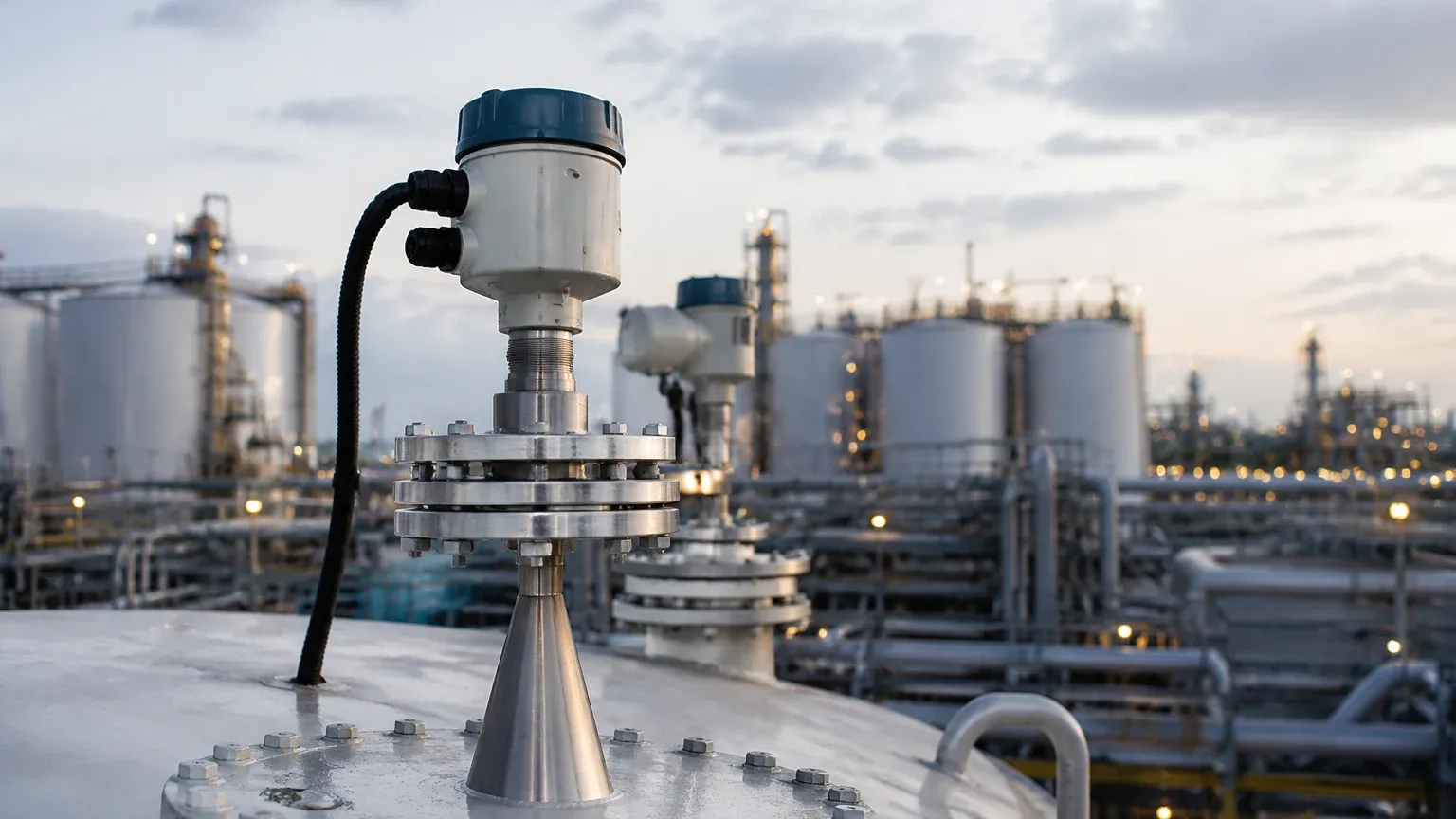
3. Nozzle Height: The antenna should ideally extend slightly below the mounting nozzle. If the nozzle is too long or narrow, it can create internal reflections. For high nozzles, an antenna extension or a horn antenna is required.
Dead Zones (Blocking Distance)
Every radar transmitter has a "dead zone" or "upper blocking distance" near the antenna (typically 0.1m to 0.5m). Level measurement is not possible within this range. Ensure the maximum fill level of the tank does not enter this zone.
Orientation
For solids, the radar should be mounted with an aiming flange to point the beam at the "angle of repose" of the material. For liquids, the transmitter must be mounted perfectly vertical (perpendicular to the liquid surface).
6. Practical Selection Table for Industrial Applications
| Application | Recommended Radar Type | Key Consideration |
| :— | :— | :— |
| Corrosive Acid Tank | Non-contact (PTFE Sealed) | Ensure no metal parts contact the vapor. |
| High-Pressure Boiler | Guided Wave Radar (GWR) | Requires steam compensation/coaxial probe. |
| Grain Silo | 80 GHz Non-contact FMCW | High power to penetrate dust; narrow beam. |
| Oil/Water Interface | Guided Wave Radar | GWR can detect both the top level and the interface. |
| Small Buffer Tank | 80 GHz Non-contact | Small dead zone and narrow beam for tight spaces. |
7. Limitations and Risks
While highly versatile, radar technology is not a universal solution. Engineers should be aware of the following limitations:
* Heavy Foam: Extremely dense, thick foam (like shaving cream) can absorb the radar signal entirely. In such cases, a magnetic level gauge or a displacement transmitter may be more reliable.
* Vacuum Conditions: While radar works in a vacuum, the mechanical seals of the transmitter must be rated for vacuum service to prevent air ingress or sensor damage.
* Conductive Dust: If conductive dust builds up on the antenna of a non-contact radar, it can short out the signal. Air purging systems are often necessary for these environments.
8. Frequently Asked Questions (FAQ)
Q: Can a radar level transmitter honeywell measure the level of solids?
A: Yes, models like the RM80 are designed for both liquids and solids. However, for solids, the frequency and antenna type must be selected based on the particle size and dust levels.
Q: What is the difference between 4-wire and 2-wire radar transmitters?
A: 2-wire transmitters are loop-powered (4-20mA), which simplifies wiring but provides less power for signal processing. 4-wire transmitters have a separate power supply, allowing for higher signal strength and more features, which is often necessary for long-range solids measurement.
Q: How does the dielectric constant affect the accuracy?
A: The dielectric constant doesn't necessarily affect the *accuracy* of the distance measurement, but it affects the *strength* of the reflection. If the reflection is too weak, the transmitter may lose the signal entirely.
Q: Is it necessary to calibrate a radar transmitter?
A: Radar transmitters are typically factory-calibrated. On-site "calibration" usually involves configuring the zero and span points (empty and full distances) to match the specific tank dimensions.
Conclusion
Whether deploying a radar level transmitter honeywell for a complex refinery application or utilizing Welk Radar Level Meters for standard industrial automation, the success of the installation depends on matching the technology to the process physics. By understanding the dielectric properties of the media, the geometry of the vessel, and the specific strengths of FMCW vs. Pulse technology, engineers can ensure highly accurate and maintenance-free level measurement for years to come.
For international procurement, always confirm the process temperature, pressure, and chemical compatibility with the manufacturer to ensure the selected model meets the specific safety and performance standards of your region.