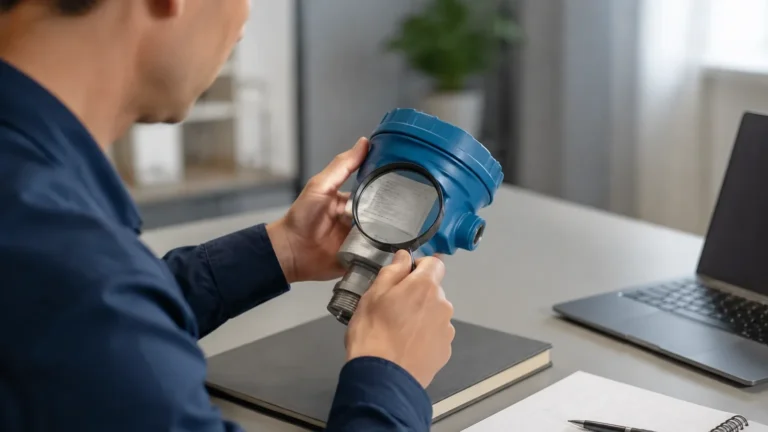
28pi
28pi
In the landscape of industrial automation, precision and reliability in level measurement are paramount. The 28pi series represents a significant advancement in high-frequency radar level measurement technology, specifically designed to address the complexities of modern process industries. As plants move toward higher efficiency and tighter safety margins, understanding the nuances of 28pi-based instrumentation becomes essential for process engineers and procurement specialists alike.
This guide provides a technical deep dive into the 28pi technology, exploring its measurement principles, application suitability, and the practical considerations required for successful integration into industrial workflows. Whether managing volatile chemicals, abrasive solids, or wastewater treatment processes, the 28pi framework offers a robust solution for accurate inventory and process control.
Understanding 28pi in Industrial Level Measurement
The 28pi designation typically refers to a specialized category of high-frequency (often 80GHz) radar level transmitters that utilize Frequency Modulated Continuous Wave (FMCW) technology. Unlike traditional pulse radar, which measures the time of flight of a single microwave pulse, 28pi systems emit a continuous signal with a varying frequency.
In industrial environments, the "28" often denotes the specific signal processing architecture or model lineage within a manufacturer's portfolio, while "pi" can relate to the phase-processing algorithms used to interpret the return signal. Together, they represent a hardware-software synergy that allows for millimeter-level accuracy even in challenging conditions such as heavy dust, steam, or narrow tank geometries.
For engineers looking to upgrade from legacy ultrasonic or low-frequency radar systems, the 28pi series provides a narrower beam angle and a higher signal-to-noise ratio. This makes it particularly effective for installations where internal obstructions—such as agitators, heating coils, or ladders—previously caused signal interference.
The Core Measurement Principles of High-Frequency Radar
To appreciate the value of 28pi, one must understand the underlying physics of FMCW radar. The transmitter emits a high-frequency microwave signal whose frequency increases linearly over time (a frequency sweep or "chirp"). The signal travels to the surface of the medium, reflects, and returns to the sensor.
Frequency Difference and Distance
Because the transmitter is constantly changing its output frequency, there is a measurable difference between the frequency being emitted at any given moment and the frequency of the reflected signal that has just returned. This frequency difference ($Δf$) is directly proportional to the time of flight, and therefore the distance to the product surface.
Signal Processing and Phase Analysis
The 28pi system utilizes advanced Fast Fourier Transform (FFT) algorithms to convert these frequency shifts into a clear distance profile. The "pi" aspect of the technology often refers to the precision in phase-shift analysis, allowing the sensor to distinguish between the actual liquid level and parasitic reflections from the tank walls or internal structures. This high-resolution processing ensures that even materials with a low dielectric constant (low Er) can be detected reliably.
Key Performance Advantages of 28pi Technology
Adopting 28pi technology offers several distinct advantages over traditional measurement methods:
1. Narrow Beam Angle: High-frequency radar (80GHz) allows for much smaller antenna sizes while maintaining a very narrow beam (often as low as 3 degrees). This prevents the signal from hitting the sides of the vessel, which is a common issue in tall, narrow silos.
2. High Precision: The wide bandwidth associated with 28pi systems allows for an accuracy of ±1mm. This is critical for high-value custody transfer and precise inventory management.
3. Immunity to Environmental Factors: Unlike ultrasonic sensors, radar signals are not affected by air temperature, pressure, or vacuum. The 28pi series is specifically engineered to penetrate heavy steam and dust, which often attenuate or scatter lower-frequency signals.
4. Non-Contact Measurement: By eliminating contact with the medium, the 28pi sensor reduces maintenance requirements and prevents cross-contamination, making it ideal for the food, beverage, and pharmaceutical industries.
Selection Criteria and Comparison Table
When selecting a level measurement solution, it is vital to compare 28pi technology against other common instruments. The following table highlights the performance metrics across different technologies.
| Feature | 28pi (80GHz Radar) | 26GHz Radar | Ultrasonic Sensor | Hydrostatic Pressure |
| :— | :— | :— | :— | :— |
| Accuracy | ±1 mm | ±3-5 mm | ±0.25% of range | ±0.1% to 0.5% |
| Beam Angle | 3° – 6° | 10° – 20° | 10° – 15° | N/A (Contact) |
| Max Range | Up to 120m | Up to 30m | Up to 15m | Varies by head |
| Dust/Steam Resistance | Excellent | Good | Poor | N/A |
| Internal Obstruction Handling | Superior | Moderate | Poor | Excellent |
| Cost | Premium | Mid-range | Economical | Mid-range |
For a detailed look at specific model variations and to find the right fit for your facility's infrastructure, you can review product options and application support on our Main Page.
Installation Best Practices for 28pi Sensors
While 28pi technology is highly robust, proper installation is critical to achieving the rated accuracy and longevity of the instrument. Engineers should adhere to the following guidelines:
Nozzle Positioning and Height
The sensor should be mounted away from the tank wall to avoid interference, typically at a distance of at least 200mm from the vessel side. If the tank has a domed top, the sensor should not be mounted in the dead center, as this can create multiple-path reflections that confuse the signal processor. Additionally, the nozzle height should be kept as short as possible to ensure the antenna extends into the vessel or sits flush with the interior ceiling.
Avoiding Obstructions
Even with a narrow 3-degree beam, it is essential to map the interior of the tank. Ensure the signal path is clear of filling streams, agitator blades, and limit switches. The 28pi software usually includes a "false echo suppression" feature, which allows the user to teach the sensor to ignore static internal structures, but a clear path is always preferable.
Orientation and Leveling
The sensor must be installed perpendicular to the product surface. For liquid applications, this means ensuring the flange or thread is perfectly horizontal. For solids or powders that form a repose angle, an adjustable flange (aiming flange) may be required to orient the 28pi sensor toward the material's slope for maximum signal return.

Limitations and Environmental Considerations
No technology is universal, and 28pi radar has specific limitations that must be considered during the engineering phase:
* Dielectric Constant (Er): Radar relies on the reflection of electromagnetic waves. Materials with extremely low dielectric constants (e.g., certain liquefied gases or ultra-pure oils) may reflect very little energy. In these cases, a guided wave radar or a 28pi unit with a high-sensitivity antenna may be required.
* Heavy Foam: While 28pi can penetrate some foam, extremely dense or thick foam (like shaving cream consistency) can absorb the radar signal entirely. If heavy foaming is a constant process condition, secondary verification or specialized foam-penetrating frequencies may be necessary.
* Extreme Temperatures: While the sensor electronics are generally rated for standard industrial ranges, the antenna assembly must be matched to the process temperature. High-temperature spacers or cooling fins are necessary for applications exceeding 200°C.
Maintenance and Troubleshooting
One of the primary benefits of the 28pi series is its low maintenance requirement. However, periodic checks ensure the system remains within calibration:
1. Lens Cleaning: In applications with heavy buildup or condensation, the antenna lens should be inspected. Many 28pi units feature a PTFE or ceramic cover that resists sticking, but a manual wipe-down or the use of an integrated air purge system can prevent signal attenuation.
2. Signal Strength Monitoring: Modern 28pi transmitters provide diagnostic data, including the signal-to-noise ratio (SNR). A declining SNR over time often indicates antenna fouling or a change in the material's dielectric properties.
3. Firmware Updates: Ensure the signal processing algorithms are up to date. Manufacturers often release updates that improve the 28pi's ability to filter out new types of process noise.
Frequently Asked Questions (FAQs)
Q: Can 28pi radar be used in vacuum tanks?
A: Yes. Unlike ultrasonic sensors that require a medium (air) to transmit sound, radar waves travel through a vacuum without any loss of signal strength. This makes 28pi ideal for vacuum distillation columns.
Q: How does 28pi handle turbulence in liquid surfaces?
A: The high-speed sampling rate of the 28pi series allows it to average out surface ripples and turbulence. Advanced software filters can be adjusted to provide a steady level reading even in agitated tanks.
Q: Is 28pi suitable for explosive atmospheres?
A: Most 28pi instruments are available with global explosion-proof certifications (such as ATEX, IECEx, or CSA). Always verify that the specific model's rating matches the zone classification of your installation site.
Q: What is the minimum measuring distance?
A: High-frequency radar typically has a very small "blind zone" (often less than 50mm from the antenna tip). This allows for measurement nearly to the very top of the tank, maximizing storage capacity.
Conclusion
The 28pi technology represents the current pinnacle of non-contact level measurement. By leveraging the precision of 80GHz FMCW radar and sophisticated phase-processing algorithms, it provides industrial operators with the data accuracy needed for modern automated systems. When correctly selected and installed, 28pi sensors reduce downtime, improve safety, and offer a significant return on investment through reduced maintenance and optimized inventory control.
For engineers seeking to implement these solutions, it is recommended to consult with technical experts to verify the compatibility of the sensor with specific chemical compositions and vessel geometries. Comprehensive support and technical documentation are available via the Main Page to assist in the transition to high-frequency radar measurement.