Monitoring Instruments for Tailings Dams
Monitoring Instruments for Tailings Dams
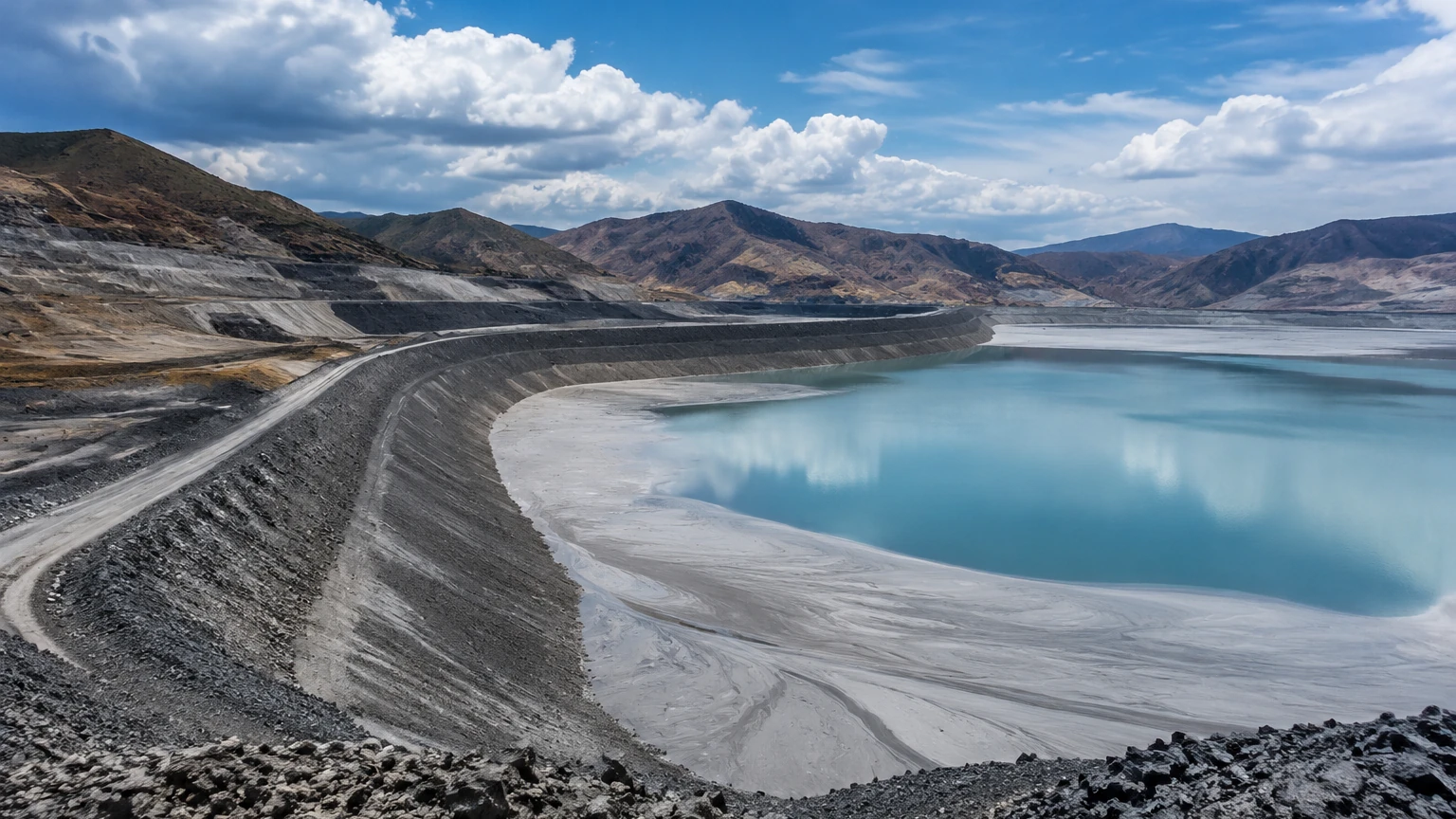
Tailings storage facilities (TSFs), or tailings dams, represent some of the most critical infrastructure in the mining and industrial sectors. Unlike conventional water dams, tailings dams are often constructed incrementally over decades using the waste byproduct of mining operations. Because these structures contain a mixture of water, chemicals, and finely ground rock, their stability is paramount to preventing environmental disasters and ensuring the safety of downstream communities.
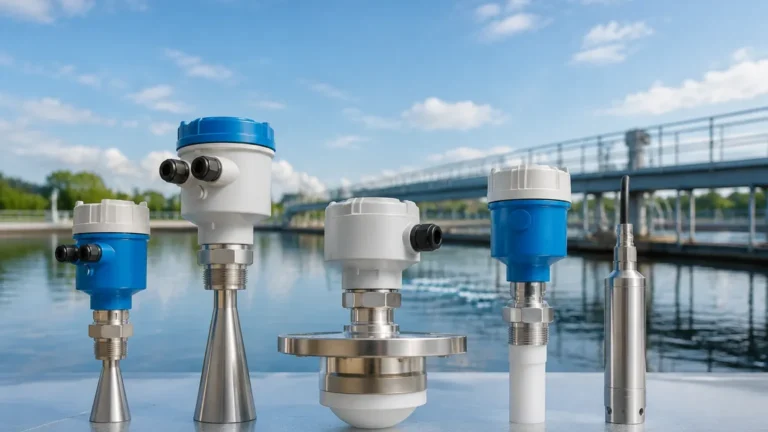
Effective management of these facilities relies heavily on the deployment of robust monitoring instruments for tailings dams. These instruments provide the real-time data necessary to track phreatic lines, pond levels, and structural integrity. This guide explores the technical principles, selection criteria, and installation best practices for level and pressure measurement technologies used in tailings management.
Measurement Principles for Tailings Monitoring
Before selecting specific monitoring instruments for tailings dams, it is essential to understand the physical principles governing how these sensors detect changes in level and pressure. In the context of a tailings facility, we generally measure two distinct types of levels: the surface level of the decant pond and the pore water pressure (or phreatic surface) within the dam embankment.
Non-Contact Radar Level Measurement
Radar level meters operate on the Time-of-Flight (ToF) principle. The instrument emits high-frequency microwave pulses (typically in the 26 GHz or 80 GHz range) toward the surface of the tailings or water. These pulses reflect off the material surface and return to the sensor. The distance is calculated using the formula:
$$D = \frac{c \times t}{2}$$
Where $D$ is the distance, $c$ is the speed of light, and $t$ is the measured travel time. Because radar pulses do not require a physical medium for propagation, they are unaffected by air temperature fluctuations, heavy dust, or steam, making them ideal for the harsh outdoor environments of mine sites.
Ultrasonic Level Measurement
Similar to radar, ultrasonic sensors use the ToF principle but utilize sound waves instead of electromagnetic pulses. The sensor emits an ultrasonic pulse that reflects off the surface. However, the speed of sound is significantly influenced by air temperature and density. While modern ultrasonic sensors include temperature compensation, they are generally more susceptible to interference from wind, heavy rain, and surface foam compared to radar systems.
Hydrostatic Pressure Measurement
Hydrostatic transmitters measure the pressure exerted by a liquid column at a specific depth. The principle is based on the relationship between pressure ($P$), liquid density ($\rho$), and the height of the liquid ($h$):
$$P = \rho \cdot g \cdot h$$
In tailings dams, hydrostatic sensors (often configured as vibrating wire piezometers or submersible transmitters) are placed within boreholes or embedded in the dam structure to monitor the phreatic line. This data is critical for slope stability analysis.
Magnetic Level Gauges
For localized tanks or chemical processing units associated with tailings treatment, magnetic level gauges provide a visual and electronic indication of levels. A float containing a permanent magnet moves with the liquid level inside a bypass chamber, flipping magnetic flaps on an external scale. This provides a fail-safe mechanical readout that does not require power to function visually.
Selection Criteria for Tailings Dam Instrumentation
Choosing the correct monitoring instruments for tailings dams requires a detailed analysis of the site-specific conditions. Engineers must balance accuracy requirements with the ruggedness needed for long-term field deployment.
Material Characteristics
Tailings are rarely pure water. They can range from thin slurries to thick, paste-like consistencies.
* High Solids Content: Non-contact methods like radar are preferred to avoid sensor fouling.
* Chemical Corrosivity: If the tailings contain acidic or alkaline process water, sensors must be constructed from resistant materials like PVDF, PTFE, or high-grade stainless steel.
Environmental Factors
Tailings dams are exposed to the elements. Instruments must have high Ingress Protection (IP) ratings, typically IP67 or IP68. In regions with extreme temperature swings, radar is superior to ultrasonic due to its inherent immunity to air density changes.
Range and Accuracy
Decant ponds can be several hundred meters wide, but the critical measurement is often the "freeboard"—the distance between the water level and the top of the dam crest. Instruments must have a measurement range that covers the full depth of the pond while maintaining an accuracy of $\pm$2mm to $\pm$5mm to detect subtle trends.
Comparison of Monitoring Technologies
| Technology | Measurement Type | Recommended Application | Key Limitation |
| :— | :— | :— | :— |
| 80 GHz Radar | Non-contact Level | Decant pond freeboard, slurry tanks | Higher initial capital cost |
| Ultrasonic | Non-contact Level | Small secondary ponds, water channels | Sensitive to wind and foam |
| Hydrostatic | Contact Pressure | Phreatic line monitoring, boreholes | Risk of sensor clogging in thick sludge |
| Magnetic Gauge | Visual/Contact | Chemical additive tanks, process vessels | Requires physical mounting on a vessel |
Practical Installation Considerations
The reliability of monitoring instruments for tailings dams is often determined by the quality of the installation. Even the most advanced radar meter will provide poor data if incorrectly positioned.
1. Stilling Wells: When measuring pond levels, surface turbulence caused by wind or inflow can lead to "noisy" data. Installing the sensor inside a stilling well (a vertical pipe with small intake holes) dampens wave action and provides a stable surface for measurement.
2. Mounting Stability: For radar and ultrasonic sensors, the mounting bracket must be rigid. Any vibration or movement of the mounting arm will be interpreted by the sensor as a change in level. In tailings dams, where ground movement is possible, brackets should be checked periodically for levelness.
3. Beam Clearance: Radar and ultrasonic signals propagate in a cone shape. It is vital to ensure that the "beam path" is free of obstructions such as dam walls, pipes, or ladders. For an 80 GHz radar, the beam angle is narrow (typically $3^{\circ}$ to $8^{\circ}$), which allows for easier installation in tight spaces compared to lower frequency models.
4. Lightning Protection: Given their height and exposed locations, tailings dam instruments are frequent targets for lightning. Surge protection devices (SPDs) and proper grounding are non-negotiable for long-term survival.
Limitations and Risk Management
While automated monitoring instruments for tailings dams significantly improve safety, they are not without limitations.
* Signal Attenuation: In extremely dusty environments (common during dry seasons at mine sites), ultrasonic signals can be absorbed by airborne particles. Radar is less affected but can still experience signal loss if heavy crusting occurs on the sensor face.
* Power Supply: Many tailings dams are located in remote areas without grid power. Systems must rely on solar panels and batteries. During extended periods of cloud cover, low voltage can lead to intermittent data or sensor failure.
* Data Latency: In a critical dam breach scenario, data transmitted every hour may be too slow. Real-time telemetry (LoRaWAN, Satellite, or 4G/5G) is necessary to provide the early warning required for emergency response.
For engineers looking to integrate these technologies into a comprehensive safety program, visiting the Main Page of a specialized manufacturer like Welk can provide detailed technical specifications and customized OEM/ODM options for specific site requirements.
Frequently Asked Questions (FAQ)
Q: Can radar level meters measure the thickness of the sediment layer at the bottom of a tailings pond?
A: Standard radar level meters are designed to reflect off the first significant change in dielectric constant, which is the air-liquid interface. To measure the interface between water and settled solids (sediment), specialized sonar or submerged hydrostatic sensors are typically required.
Q: How does foam on the surface of the tailings affect measurement?
A: Foam can absorb ultrasonic waves, leading to a loss of signal. Radar is more resilient, but very thick, dry foam may still cause signal attenuation. In these cases, selecting a high-frequency (80 GHz) radar with advanced signal processing is the best approach.
Q: What maintenance is required for monitoring instruments for tailings dams?
A: Maintenance should include a monthly visual inspection for physical damage, cleaning the sensor face of any buildup (especially for contact sensors), and an annual calibration check against a manual tape measurement to ensure the instrument has not drifted.
Q: Is it possible to use these instruments in hazardous (Ex) zones?
A: Yes. Many tailings facilities involve chemical processing that may require explosion-proof or intrinsically safe instrumentation. Always verify that the sensor has the appropriate ATEX, IECEx, or local certification for the specific zone.
Conclusion
The implementation of precise monitoring instruments for tailings dams is a fundamental requirement for modern mining operations. By understanding the principles of radar, ultrasonic, and hydrostatic measurement, and by accounting for the unique environmental challenges of a tailings facility, operators can ensure they receive the accurate data needed to maintain structural integrity. For further technical support and a wide range of industrial level measurement solutions, engineers are encouraged to Review product options and application support to find the most cost-effective and reliable instrumentation for their specific application.