3000 Degree Thermometer
3000 Degree Thermometer
In the realm of extreme industrial processing, measuring temperatures that reach or exceed 3000°C (5432°F) presents a unique set of engineering challenges. At these thermal levels, most conventional materials—including the protective sheathing used for standard sensors—will melt, vaporize, or undergo rapid chemical degradation. A 3000 degree thermometer is not a single device but a category of specialized instrumentation designed to withstand or bypass the destructive nature of ultra-high-heat environments.
Whether used in aerospace testing, plasma research, or the production of advanced refractory materials, selecting the correct measurement technology is critical for process control and safety. This guide explores the principles, selection criteria, and practical application of high-temperature measurement systems.
Measurement Principles for Ultra-High Temperatures
Before selecting a 3000 degree thermometer, it is essential to understand the physics of heat detection at the extreme end of the Kelvin scale. There are two primary methods: non-contact (radiation-based) and contact (thermocouple-based).
Non-Contact Pyrometry (Infrared)
Non-contact measurement is the most common approach for temperatures reaching 3000°C. These instruments, known as infrared pyrometers or radiation thermometers, operate on the principle of Planck’s Law. Every object with a temperature above absolute zero emits electromagnetic radiation. As an object gets hotter, the intensity of this radiation increases, and the peak wavelength shifts toward the visible spectrum.
For a 3000 degree thermometer, the device captures this infrared energy and converts it into an electrical signal. Because the sensor does not touch the target, it is not subject to the melting point of the material being measured. However, the accuracy depends heavily on "emissivity"—the efficiency with which a surface emits thermal energy compared to a perfect blackbody.
Contact Measurement (Tungsten-Rhenium Thermocouples)
Contact measurement at 3000°C is significantly more difficult. Standard Type K or Type S thermocouples fail long before reaching this point. Specialized "Refractory Metal" thermocouples, typically utilizing Tungsten and Rhenium (such as Type C, D, or G), are required. These sensors operate on the Seebeck Effect, where a temperature gradient across two dissimilar metals generates a voltage.
While some Tungsten-Rhenium alloys have melting points near 3400°C, their functional limit in industrial settings is often lower due to embrittlement and the need for high-purity inert atmospheres (like Argon or Helium) or high-vacuum environments to prevent oxidation.
Types of 3000 Degree Thermometers
When evaluating a 3000 degree thermometer, engineers typically choose between three main categories of instruments based on the specific application requirements.
1. Single-Wavelength Infrared Pyrometers
These are the most basic infrared sensors. They measure radiation at a specific, narrow band of wavelengths. They are highly effective when the emissivity of the target material is known and constant. However, if there is smoke, steam, or dust between the sensor and the target, the reading will be lower than the actual temperature.
2. Two-Color (Ratio) Pyrometers
Ratio pyrometers are often the preferred choice for 3000°C applications. Instead of measuring a single wavelength, they measure the ratio of energy at two different wavelengths. The advantage of this method is that the measurement is independent of emissivity (provided the change is equal at both wavelengths) and is unaffected by partially obscured sight paths. If a viewing window becomes slightly dirty or if there is dust in the air, the ratio remains the same, providing a much more reliable reading in harsh industrial furnaces.
3. Fiber Optic High-Temperature Sensors
In environments with intense electromagnetic interference (EMI) or where the target is not in a direct line of sight, fiber optic pyrometers are used. A flexible fiber optic cable carries the optical signal from the high-heat zone to a remote electronic box. This allows the sensitive electronics to be mounted in a cooler, shielded location while the small optical head handles the 3000°C radiation.
Technical Selection Table
The following table provides a comparison of the primary technologies used for ultra-high temperature measurement.
| Feature | Single-Wavelength Pyrometer | Two-Color (Ratio) Pyrometer | Tungsten-Rhenium Thermocouple |
| :— | :— | :— | :— |
| Max Range | Up to 3500°C | Up to 4000°C | Approx. 2320°C to 2760°C |
| Contact Type | Non-contact | Non-contact | Contact (Invasive) |
| Accuracy | High (if emissivity is known) | Excellent (emissivity independent) | High (initial calibration) |
| Response Time | Fast (ms) | Fast (ms) | Slow (seconds) |
| Environment | Clean sight path required | Tolerates dust/smoke/steam | Vacuum or Inert Gas only |
| Common Use | General high-heat processes | Molten metal, Carbon research | Vacuum furnaces, Nuclear |
Key Evaluation Criteria for Industrial Use
When sourcing a 3000 degree thermometer for a B2B application, procurement and engineering teams should confirm the following technical specifications:
1. Optical Resolution (Distance-to-Spot Ratio): This defines how large the measurement spot is at a given distance. At 3000°C, you may need to measure a small target inside a furnace from several meters away. A high D:S ratio (e.g., 100:1 or 300:1) is essential for precision.
2. Spectral Response: Different materials require different wavelengths for accurate measurement. For example, measuring through glass requires a specific wavelength that the glass is transparent to, while metallic surfaces require shorter wavelengths to minimize emissivity errors.
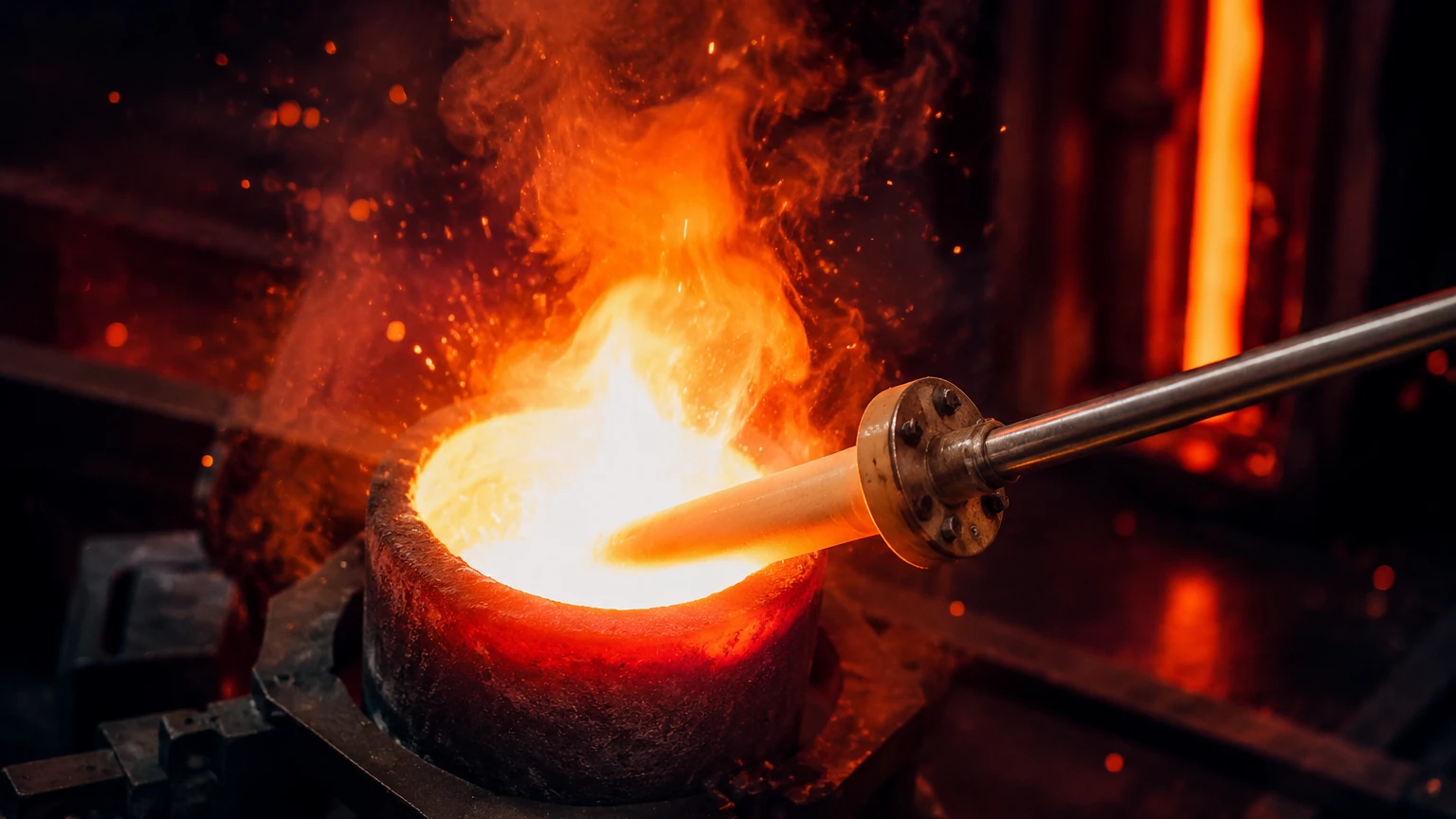
3. Environmental Protection: Because the sensor will likely be near a high-heat source, it must be equipped with water-cooling jackets and air-purge collars. Air purging prevents dust and fumes from settling on the lens, which would otherwise skew the 3000 degree thermometer's data.
4. Signal Output: Integration into modern PLC or SCADA systems requires standard outputs such as 4-20mA, Modbus RTU, or Profibus. For more information on integrating these sensors into broader industrial systems, you can visit our Main Page for technical support and product options.
Installation Considerations and Limitations
Installing a 3000 degree thermometer involves more than just mounting a bracket. Because the energy levels are so high, even small errors in installation can lead to significant safety risks or equipment failure.
* Sight Path Clarity: For infrared sensors, the "view" of the target must be unobstructed. If the process generates heavy fumes, an air-purge system is mandatory to keep the optical path clear.
* Ambient Temperature Limits: While the sensor measures 3000°C, the sensor body itself usually cannot withstand more than 60°C to 85°C. Cooling accessories are not optional in these applications; they are fundamental components of the installation.
* Reflections: At ultra-high temperatures, the sensor might pick up reflected radiation from furnace walls rather than the target itself. Proper shielding and angling are required to ensure the 3000 degree thermometer is reading the intended surface.
* Thermocouple Degradation: If using Tungsten-Rhenium probes, be aware of "thermal shunting." At temperatures near 3000°C, the ceramic insulators used to separate the wires can become conductive, leading to false low readings.
Frequently Asked Questions (FAQ)
Q: Can a standard infrared thermometer used for HVAC work at 3000°C?
A: No. Standard handheld IR thermometers usually max out between 500°C and 1000°C. Their sensors would saturate, and their lenses are not designed for the short-wavelength radiation emitted at 3000°C.
Q: Why is emissivity so important at these temperatures?
A: Emissivity is a measure of how much energy a surface radiates. If you set your 3000 degree thermometer to an emissivity of 1.0 (blackbody) but the material is actually 0.5, the temperature reading could be off by hundreds of degrees.
Q: How often does a 3000 degree thermometer need calibration?
A: In critical applications like aerospace or semiconductor manufacturing, annual calibration is standard. However, if the environment is particularly dirty or the sensor is subjected to thermal shock, semi-annual checks are recommended.
Q: Are there any contact sensors that can reach 3000°C in air?
A: No. At 3000°C, all known metal thermocouples will oxidize and destroy themselves almost instantly if oxygen is present. For measurements in air at these levels, non-contact pyrometry is the only viable solution.
Conclusion
Selecting a 3000 degree thermometer requires a deep understanding of the process environment and the physical properties of the target material. While non-contact infrared pyrometers—specifically two-color models—are the industry standard for these extremes, the success of the measurement depends on proper cooling, sight-path maintenance, and emissivity compensation.
For engineers and project managers looking to implement high-precision measurement solutions, Welk provides a range of industrial instruments designed for the most demanding environments. By following rigorous selection protocols and considering the limitations of high-heat physics, facilities can ensure accurate data and long-term instrument reliability. For further assistance with industrial measurement technology and to explore our full range of sensors, please refer to our Main Page.