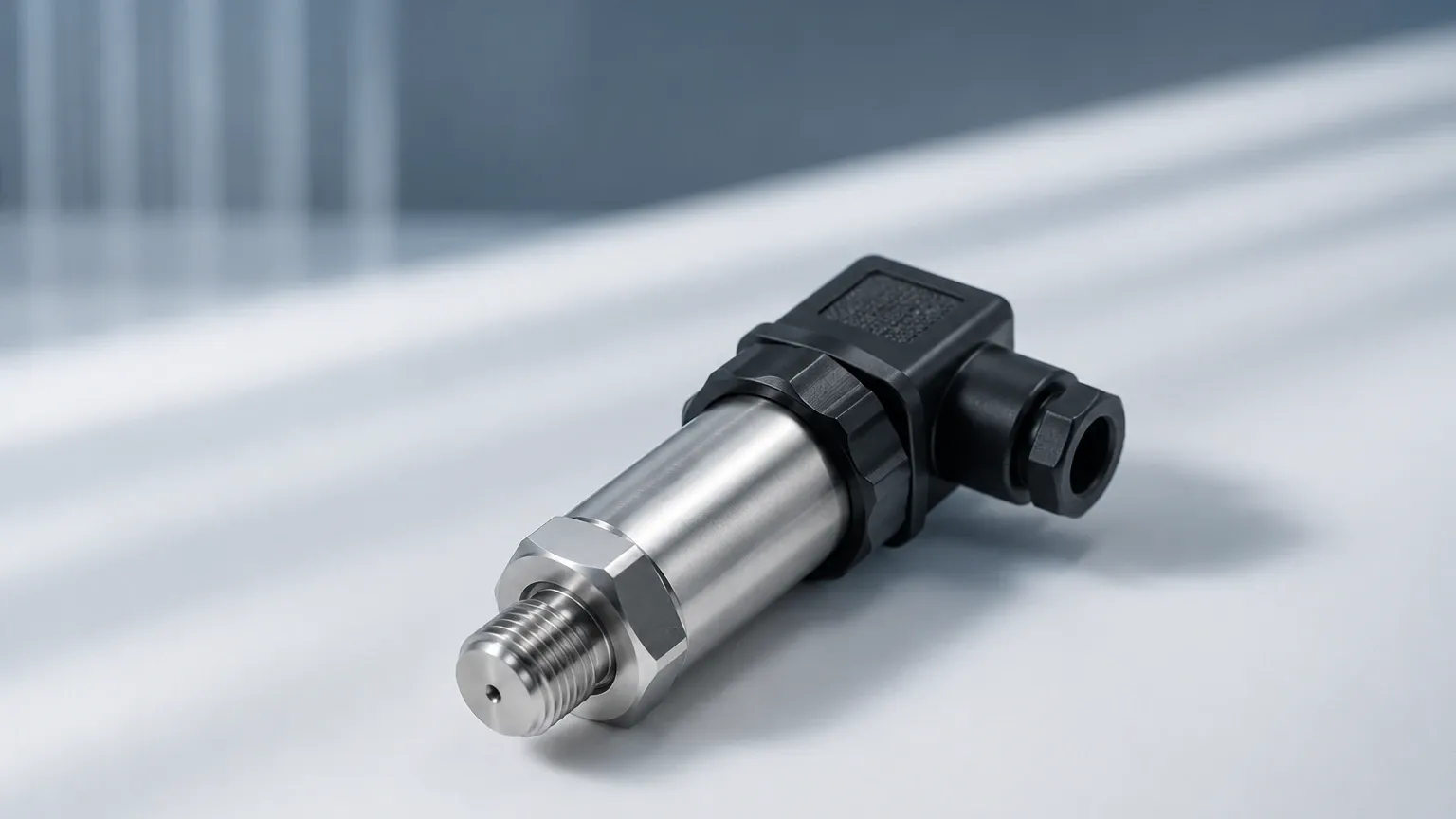
Air Pressure Transducer
Air Pressure Transducer
In the landscape of industrial automation and process control, the air pressure transducer serves as a fundamental component for monitoring, regulating, and safety management. These devices are engineered to convert the physical force of air or gas pressure into a standardized electrical signal, such as 4-20 mA or 0-10 V. For engineers and facility managers, understanding the nuances of transducer technology is essential for ensuring system reliability, especially in applications involving pneumatic controls, HVAC systems, and indirect liquid level measurement.
Understanding the Measurement Principles
An air pressure transducer operates by detecting the mechanical deformation of a sensing element when exposed to pressurized air. The method by which this mechanical movement is converted into an electrical signal defines the transducer's performance characteristics. The most common principles include:
1. Piezoresistive Sensing
This is the most widely utilized technology in industrial air pressure transducers. It employs a silicon or ceramic diaphragm with integrated strain gauges. When air pressure is applied, the diaphragm flexes, changing the electrical resistance of the gauges. This change is proportional to the pressure and is processed by internal electronics to provide a linear output. Piezoresistive sensors are favored for their high sensitivity and robust performance in standard industrial environments.
2. Capacitive Sensing
Capacitive transducers measure the change in electrical capacitance between a flexible diaphragm and a fixed metal plate. As air pressure moves the diaphragm, the distance between the plates changes, altering the capacitance. These sensors are known for their extreme sensitivity to low-pressure ranges and their ability to withstand significant overpressure without permanent damage.
3. Potentiometric and Inductive Sensing
While less common in high-precision modern applications, these rely on mechanical linkages. Potentiometric sensors move a wiper across a resistive element, while inductive (LVDT) sensors move a core within a coil. These are generally reserved for heavy-duty applications where high-level output signals are required without extensive amplification.
Key Types of Air Pressure Transducers
Selecting the correct air pressure transducer requires a clear understanding of the reference pressure against which the measurement is made. There are three primary configurations:
* Gauge Pressure Transducers: These measure pressure relative to the local atmospheric pressure. They are vented to the atmosphere and are the most common type used in pneumatic lines and tank level applications where the tank is open to the air.
* Absolute Pressure Transducers: These measure pressure relative to a perfect vacuum sealed within the device. They are essential for applications affected by changes in barometric pressure or in vacuum-sealed processes.
* Differential Pressure Transducers: These feature two ports and measure the difference in pressure between them. In air systems, they are frequently used to monitor filter clogs (measuring pressure drop) or to calculate flow rates across an orifice plate.
Application in Liquid Level Measurement
While primarily designed for gases, the air pressure transducer is a critical component in indirect liquid level measurement systems, specifically the "bubbler" or pneumatic level method. This technique is particularly useful for measuring corrosive, high-temperature, or slurry-filled liquids where direct contact with a sensor might lead to failure.
In a bubbler system, a tube is submerged into the liquid. A small, constant flow of air is pushed through the tube. The air pressure required to displace the liquid and allow bubbles to escape from the bottom of the tube is exactly equal to the hydrostatic pressure of the liquid column above the tube's opening. By connecting an air pressure transducer to this pneumatic line, the system can determine the liquid level with high accuracy. For a broader look at various measurement technologies, including radar and ultrasonic options, you can consult the Main Page for a comprehensive overview of industrial solutions.
Selection Criteria and Technical Specifications
When specifying an air pressure transducer for a B2B industrial application, engineers must evaluate several technical parameters to ensure long-term stability and accuracy. The following table provides a comparison of common selection factors:
| Specification | Industrial Standard Range | Considerations |
| :— | :— | :— |
| Pressure Range | 0–100 mbar to 0–600 bar | Must exceed maximum expected system pressure by 20%. |
| Accuracy (FS) | 0.1% to 1.0% | Includes linearity, hysteresis, and repeatability. |
| Output Signal | 4-20 mA, 0-5 V, RS485 | 4-20 mA is preferred for long-distance transmission. |
| Operating Temp | -20°C to +85°C | Thermal compensation is required for accuracy. |
| Housing Material | 304/316 Stainless Steel | Essential for corrosive or outdoor environments. |
| IP Rating | IP65 to IP68 | Determines resistance to dust and water ingress. |
Installation and Maintenance Best Practices
Proper installation is as critical as the device selection itself. An incorrectly mounted air pressure transducer can suffer from signal drift, mechanical fatigue, or premature failure.
Orientation and Mounting
Whenever possible, transducers should be mounted vertically with the pressure port facing downwards. This prevents moisture or condensate from pooling on the diaphragm, which can cause measurement errors or corrosion. If horizontal mounting is necessary, the device should be calibrated in that specific orientation to account for any gravitational effects on the sensing element.
Pneumatic Connections
Use high-quality fittings and ensure that the tubing material is compatible with the air quality (e.g., oil-free or dry air). In systems where rapid pressure spikes (water hammer in liquid-adjacent air lines) are possible, a snubber or capillary tube should be installed to dampen the shock before it reaches the transducer diaphragm.
Electrical Wiring
For industrial environments with high electromagnetic interference (EMI), shielded twisted-pair cabling is mandatory. The shield should be grounded at the controller end only to avoid ground loops. Ensure that the power supply is regulated, as fluctuations in voltage can translate into noise in the output signal.
Limitations and Operational Risks
Despite their versatility, air pressure transducers have specific limitations that must be addressed during the design phase:
1. Moisture and Contamination: Standard transducers are designed for clean, dry air. If the air contains moisture, it can freeze in cold environments or cause corrosion. Particulates can clog small pressure ports or damage sensitive diaphragms. Filters and dryers are recommended upstream of the sensor.
2. Temperature Sensitivity: All transducers exhibit some degree of thermal drift. While high-end models include internal temperature compensation, extreme fluctuations can still impact the zero-point stability. In high-heat applications, impulse lines (cooling legs) should be used to isolate the sensor from the heat source.
3. Overpressure Events: Exceeding the proof pressure (the maximum pressure a device can withstand without changing performance) or the burst pressure (the pressure that causes physical failure) is a common cause of damage. Always select a transducer with a safety margin appropriate for the system's relief valve settings.
Frequently Asked Questions
Q: What is the difference between a pressure transmitter and a pressure transducer?
A: In many industrial contexts, the terms are used interchangeably. However, technically, a transducer converts pressure into a voltage signal (like 0-5V), while a transmitter converts it into a current signal (like 4-20mA), which is more robust for long-distance transmission in industrial plants.
Q: How often should an air pressure transducer be calibrated?
A: Most manufacturers recommend an annual calibration. However, in critical safety applications or environments with high vibration and temperature swings, semi-annual or quarterly checks may be necessary to ensure the device remains within its specified accuracy class.
Q: Can an air pressure transducer be used for oxygen service?
A: Only if specifically cleaned and certified for oxygen service. Standard transducers often contain traces of oil or hydrocarbons from the manufacturing process, which can lead to spontaneous combustion when exposed to high-pressure oxygen.
Conclusion
The air pressure transducer is a versatile tool that extends far beyond simple pneumatic monitoring. By understanding the underlying physics of piezoresistive and capacitive sensing, and by correctly identifying the needs for gauge, absolute, or differential measurement, process engineers can implement highly reliable control loops. Whether used for monitoring HVAC duct pressure or as the heart of a bubbler-style level measurement system, the selection of high-quality hardware and adherence to strict installation protocols are the keys to operational success in any B2B industrial environment.