Air Pressure Transducers
Air Pressure Transducers
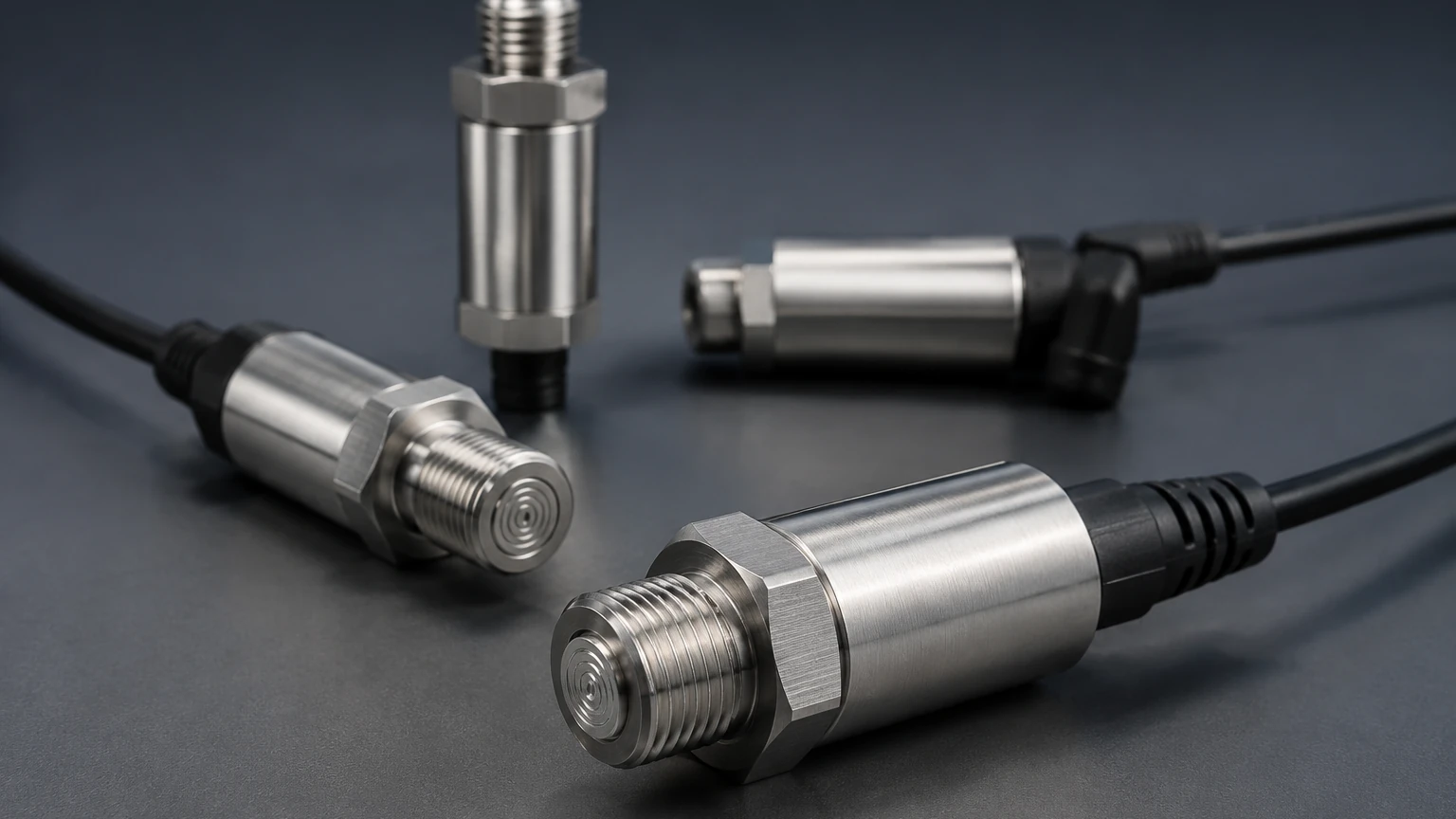
In the landscape of industrial automation and process control, air pressure transducers serve as the primary interface between physical pneumatic states and electronic control systems. These instruments are designed to convert the mechanical force of compressed air or atmospheric gases into a measurable electrical signal. For engineers and system integrators, selecting the correct air pressure transducers is critical for ensuring the safety, efficiency, and accuracy of systems ranging from HVAC and cleanrooms to complex pneumatic level measurement setups.
Understanding the technical nuances of these devices—from their internal sensing mechanisms to their integration into wider industrial networks—is essential for optimizing process performance. This guide provides a detailed technical overview of air pressure transducers, their operating principles, and their application in modern industrial environments.
Measurement Principles of Air Pressure Transducers
Before selecting a transducer, it is vital to understand the physics of how pressure is converted into electricity. Most modern air pressure transducers utilize one of three primary sensing technologies: piezoresistive, capacitive, or strain gauge.
Piezoresistive Sensing
Piezoresistive transducers are among the most common in industrial air applications. They utilize a micromachined silicon diaphragm with integrated resistors. When air pressure deforms the diaphragm, the physical stress causes a change in the electrical resistance of the material (the piezoresistive effect). These resistors are typically arranged in a Wheatstone bridge circuit, which converts the resistance change into a voltage output proportional to the applied pressure. This technology is favored for its high sensitivity and stability in low-to-medium pressure ranges.
Capacitive Sensing
Capacitive air pressure transducers measure the change in electrical capacitance between a flexible diaphragm and a fixed metal plate. As air pressure moves the diaphragm, the distance between the electrodes changes, thereby altering the capacitance. This method is exceptionally sensitive and is often used in ultra-low pressure applications, such as monitoring cleanroom pressures or duct static pressure, where minute changes must be detected with high precision.
Strain Gauge Technology
In higher-pressure air systems, metal foil or thin-film strain gauges are often bonded to a stainless steel diaphragm. As the diaphragm flexes under pressure, the strain gauge stretches or compresses, changing its resistance. While generally less sensitive than piezoresistive sensors for very low pressures, strain gauge transducers offer excellent durability and resistance to pressure spikes or mechanical shock.
Types of Pressure Reference
Air pressure transducers are categorized based on the reference point against which they measure pressure. Choosing the wrong reference can lead to significant measurement errors, especially in fluctuating weather conditions or sealed systems.
1. Gauge Pressure (G): Measured relative to the local atmospheric pressure. These transducers feature a vent (often through the cable or a small hole in the housing) to equalize the internal reference with the ambient air. They are standard for most pneumatic and tank level applications.
2. Absolute Pressure (A): Measured relative to a perfect vacuum sealed within the device. These are used when atmospheric pressure fluctuations would interfere with the process, such as in barometric measurement or vacuum packaging.
3. Differential Pressure (D): Measures the difference between two distinct pressure ports. In air systems, these are used to monitor filter clogs (measuring pressure drop across the filter) or to calculate flow rates in venturi meters.
Technical Selection Criteria
When evaluating air pressure transducers for a specific project, several technical parameters must be confirmed to ensure long-term reliability.
Pressure Range and Overpressure
The operating range should be selected so that the typical process pressure sits at approximately 50% to 75% of the transducer’s full scale. This provides a buffer for unexpected surges. Engineers must also verify the "Overpressure Rating"—the maximum pressure the sensor can withstand without permanent calibration shift—and the "Burst Pressure," which is the point of mechanical failure.
Output Signals
Industrial transducers typically provide one of the following signals:
* 4-20 mA: The industry standard for long-distance transmission, as it is highly resistant to electromagnetic interference (EMI).
* 0-10 V / 1-5 V: Common in HVAC and localized PLC cabinets where wiring distances are short.
* Digital (RS485/Modbus): Increasingly popular for "Smart Factory" applications, allowing for the transmission of diagnostic data and multiple variables over a single pair of wires.
Accuracy and Total Error Band (TEB)
Accuracy is often stated as a percentage of Full Scale (e.g., ±0.5% FS). However, a more comprehensive metric is the Total Error Band, which includes the effects of linearity, hysteresis, repeatability, and temperature thermal shifts. For precise air control, a low TEB across the intended operating temperature range is essential.
Selection Table: Comparing Air Pressure Transducer Technologies
| Feature | Piezoresistive | Capacitive | Strain Gauge |
| :— | :— | :— | :— |
| Best For | General Industrial Air | Ultra-low pressure/Cleanrooms | High-pressure/Heavy Duty |
| Sensitivity | High | Very High | Moderate |
| Durability | Moderate | Moderate | High |
| Typical Accuracy | 0.25% to 0.5% FS | 0.1% to 0.25% FS | 0.5% to 1.0% FS |
| Cost | Economical | Premium | Moderate |
Air Pressure Transducers in Level Measurement
While often associated with pneumatic lines, air pressure transducers play a vital role in liquid level measurement, particularly in "Bubbler" or pneumatic level systems. This is a specialized application where Welk’s expertise in level instrumentation becomes highly relevant.
In a bubbler system, a constant flow of air is pushed through a tube submerged in a liquid. An air pressure transducer measures the pressure required to push the air bubbles out of the bottom of the tube. According to hydrostatic principles, this air pressure is exactly equal to the liquid head pressure above the tube outlet. This method is ideal for measuring levels in harsh environments, such as sewage, slurry, or corrosive chemicals, because the transducer itself never touches the liquid; it only senses the air pressure.
For a comprehensive look at how these technologies integrate into broader industrial sensing solutions, visit the Main Page.
Installation and Maintenance Considerations
Proper installation is as important as the sensor specifications themselves. Failure to follow engineering best practices can lead to premature sensor failure or erratic readings.
* Orientation: Some low-pressure transducers are sensitive to orientation due to the weight of the internal diaphragm. Always calibrate the unit in the position it will be installed.
* Moisture and Condensation: In compressed air systems, moisture can condense in the pressure lines. Transducers should be mounted above the pressure tap, or a water trap/siphon should be used to prevent liquid from reaching the sensor element.
* Pressure Snubbers: If the air system is subject to rapid pulsations (e.g., near a reciprocating compressor), a pressure snubber should be installed to dampen the spikes and protect the diaphragm.
* Wiring: Use shielded twisted-pair cabling for analog signals to prevent noise from motors or variable frequency drives (VFDs) from corrupting the data.
Limitations and Risk Mitigation
Despite their versatility, air pressure transducers have limitations that must be addressed during the design phase:
1. Temperature Drift: All sensors are affected by temperature. Ensure the transducer has internal temperature compensation. If the air temperature exceeds 80°C (176°F), use a cooling element or a longer impulse line to dissipate heat before it reaches the sensor.
2. Media Compatibility: While designed for "air," some industrial air contains oil mists or corrosive gases. Ensure the wetted materials (usually 316L stainless steel or ceramic) are compatible with any contaminants in the air stream.
3. Clogging: In bubbler level systems, the tube outlet can become clogged with solids. Regular "purge" cycles, where a high-pressure burst of air clears the line, are necessary to maintain accuracy.
Frequently Asked Questions (FAQ)
Q: How often should an air pressure transducer be calibrated?
A: For most industrial applications, annual calibration is recommended. However, in critical safety systems or high-precision environments, semi-annual checks may be required. If the sensor experiences a significant overpressure event, it should be recalibrated immediately.
Q: Can I use an air pressure transducer for liquids?
A: Only if the wetted materials are compatible and the sensor is designed for hydrostatic pressure. However, it is generally better to use a dedicated liquid pressure transmitter to avoid issues with seal compatibility and internal volume.
Q: What is the difference between a pressure sensor and a pressure transducer?
A: In technical terms, a "sensor" is the basic element that detects pressure, while a "transducer" includes the signal conditioning electronics that output a usable voltage or current. In common industry parlance, the terms are often used interchangeably.
Q: How do I handle long cable runs for 4-20mA signals?
A: The 4-20mA loop is ideal for long runs (up to several hundred meters). Ensure the power supply voltage is high enough to overcome the total loop resistance, which includes the wire resistance and the input impedance of the receiver (PLC/Controller).
By carefully considering the measurement principles, environmental factors, and specific application requirements, engineers can select air pressure transducers that provide reliable data for years of service. Whether used for monitoring factory air lines or as part of a sophisticated bubbler level system, these instruments remain a cornerstone of modern industrial process control.