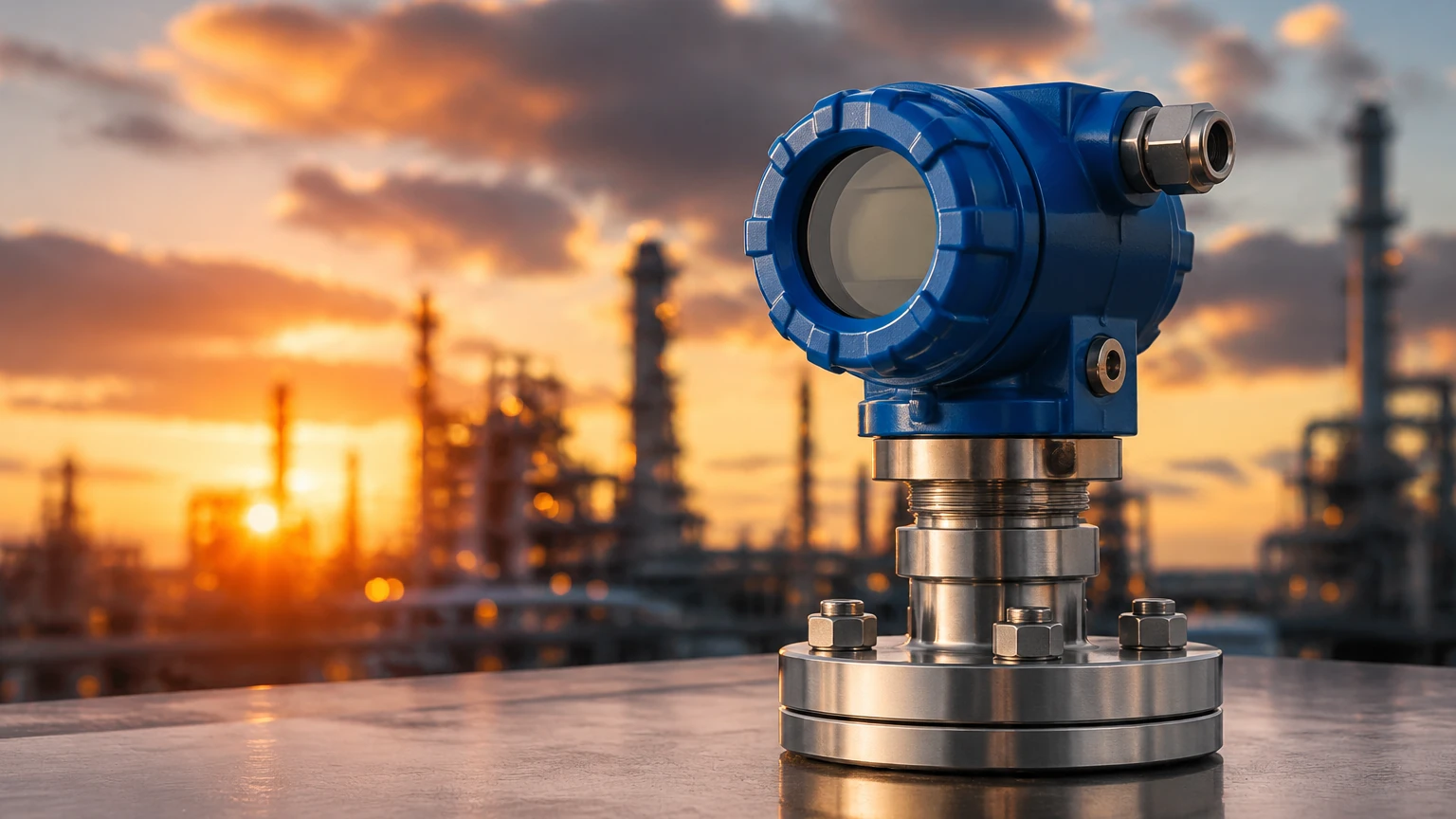
Atex Pressure Transmitter
Atex Pressure Transmitter
In industrial environments where flammable gases, vapors, or combustible dusts are present, the selection of instrumentation is governed by strict safety standards. An ATEX pressure transmitter is a specialized device designed to measure the pressure of liquids or gases while preventing the ignition of the surrounding explosive atmosphere. The term "ATEX" refers to the European Union directives (2014/34/EU) that regulate equipment intended for use in potentially explosive atmospheres. For process engineers and procurement specialists, understanding the technical nuances of these devices is essential for ensuring both operational accuracy and site safety.
Understanding the Principles of Pressure Measurement
Before selecting an ATEX-certified instrument, it is fundamental to understand how a pressure transmitter converts physical force into a standardized electrical signal. Most modern industrial transmitters utilize one of three primary sensing technologies, each with specific advantages for hazardous area applications.
Piezoresistive Sensors
Piezoresistive sensors are among the most common in industrial pressure measurement. They consist of a silicon-based diaphragm with integrated resistors. When pressure is applied, the diaphragm deforms, changing the electrical resistance of the resistors (the piezoresistive effect). This change is processed by internal electronics into a 4-20mA or digital signal. In ATEX applications, these sensors are often isolated from the process media by a stainless steel or Hastelloy diaphragm and a fill fluid (such as silicone oil) to ensure no electrical components come into direct contact with potentially corrosive or flammable substances.
Ceramic Capacitive Sensors
Ceramic sensors utilize two ceramic plates—one fixed and one flexible—acting as a capacitor. As pressure moves the flexible plate, the capacitance changes. These sensors are known for their high chemical resistance and ability to handle vacuum conditions without the need for internal fill fluids. This "dry" measurement principle is particularly valued in the chemical and pharmaceutical industries where fluid leakage must be avoided at all costs.
Strain Gauge Sensors
Strain gauge technology involves bonding a metal foil or thin-film circuit to a measuring diaphragm. As the diaphragm flexes, the strain gauge stretches, altering its resistance. While often less sensitive than piezoresistive sensors, strain gauges are exceptionally rugged and suitable for very high-pressure applications, often exceeding 1,000 bar (100 MPa).
ATEX Certification and Hazardous Area Classifications
An ATEX pressure transmitter is not a single type of device but rather a category of instruments designed to meet specific protection levels. The certification defines where the device can be safely installed based on the likelihood and duration of an explosive atmosphere.
Zone Classifications
* Zone 0 / Zone 20: Areas where an explosive atmosphere is present continuously or for long periods. Transmitters in these zones must meet the highest safety standards, typically requiring "Intrinsic Safety" (Ex ia).
* Zone 1 / Zone 21: Areas where an explosive atmosphere is likely to occur in normal operation. These often utilize "Flameproof" (Ex d) or "Increased Safety" (Ex e) enclosures.
* Zone 2 / Zone 22: Areas where an explosive atmosphere is unlikely to occur, and if it does, it will persist for a short period only. Requirements here are less stringent but still necessitate certified equipment.
Protection Methods
The two most common protection methods for an ATEX pressure transmitter are:
1. Intrinsic Safety (Ex i): This method limits the electrical and thermal energy within the circuit to levels below what is required to ignite the specific explosive atmosphere. It requires the use of an associated apparatus, such as a Zener barrier or galvanic isolator, located in a safe area.
2. Flameproof/Explosion-Proof (Ex d): This method involves housing the electronics in an enclosure strong enough to contain an internal explosion and prevent the escape of flames or hot gases to the surrounding environment.
Key Evaluation Criteria for ATEX Pressure Transmitters
When evaluating a transmitter for a specific project, engineers must look beyond the ATEX mark and consider the technical specifications that impact long-term reliability.
Media Compatibility
The wetted parts of the transmitter—the diaphragm and process connection—must be compatible with the process fluid. While 316L stainless steel is the industry standard, highly corrosive environments (such as those involving chlorides or strong acids) may require exotic materials like Hastelloy C-276, Tantalum, or Monel. For food and beverage or pharmaceutical applications, hygienic connections and FDA-approved fill fluids are mandatory.
Pressure Range and Overpressure Limits
It is critical to select a transmitter with a calibrated range that matches the process requirements. However, one must also consider the "Overpressure Limit." This is the maximum pressure the device can withstand without damage or permanent shift in calibration. In systems where water hammer or pressure surges are common, selecting a device with a high overpressure rating (e.g., 4x the nominal range) is a necessary precaution.
Accuracy and Long-term Stability
Accuracy is typically expressed as a percentage of the calibrated span (e.g., ±0.1% FS). For critical control loops, long-term stability—the ability of the device to maintain its calibration over time (e.g., <0.1% per year)—is often more important than initial accuracy, as it reduces the frequency of maintenance and re-calibration.
Installation Guidelines for Explosion-Proof Systems
Correct installation is as vital as the certification of the device itself. Failure to follow ATEX-compliant installation practices can void the safety rating of the entire loop.
1. Cable Glands and Sealing: For flameproof (Ex d) transmitters, only ATEX-certified cable glands must be used. These glands must match the cable type (armored or non-armored) and ensure a gas-tight seal. In many jurisdictions, a conduit seal (pouring seal) is required within 450 mm (18 inches) of the transmitter.
2. Grounding and Bonding: Proper earthing is essential to prevent the buildup of static electricity, which could act as an ignition source. The transmitter housing should be bonded to the plant's equipotential bonding system.
3. Intrinsic Safety Parameters: When using Ex i transmitters, the entity parameters ($U_i, I_i, P_i, C_i, L_i$) of the transmitter must be matched with the output parameters ($U_o, I_o, P_o, C_o, L_o$) of the safety barrier. The total capacitance and inductance of the connecting cable must also be accounted for.
4. Environmental Protection: While ATEX focuses on explosion protection, the device must also withstand the environment. Ensure the Ingress Protection (IP) rating is sufficient (e.g., IP67 or IP68) for outdoor or wash-down areas.
Limitations and Common Operational Risks
Despite their robust design, ATEX pressure transmitters have limitations that must be managed to ensure process safety and instrument longevity.
* Temperature Extremes: ATEX certifications are tied to specific temperature classes (T1 through T6). If the process temperature exceeds the transmitter's rating, the device may become an ignition source or fail prematurely. Cooling elements or capillary tubes with remote seals are often used to isolate the electronics from high-temperature media.
* Diaphragm Fatigue: In applications with high-frequency pressure pulsations, the sensing diaphragm can suffer from mechanical fatigue. Pulsation dampeners or snubbers should be installed to protect the sensor.
* Hydrogen Permeation: In high-pressure hydrogen applications, hydrogen atoms can diffuse through standard stainless steel diaphragms, leading to signal drift and sensor failure. Gold-plated diaphragms are the standard solution for this specific risk.
* Calibration Drift: Exposure to extreme overpressure or high temperatures can cause the zero point of the transmitter to shift. Regular verification against a reference standard is required in regulated industries.
Selection Table for Industrial Applications
The following table provides a general comparison of common configurations for ATEX pressure transmitters in various industrial contexts.
| Application | Recommended Sensor Type | Protection Method | Typical Material |
| :— | :— | :— | :— |
| Oil & Gas Pipelines | Piezoresistive / Thin Film | Ex d (Flameproof) | 316L / Duplex Steel |
| Chemical Storage Tanks | Ceramic Capacitive | Ex i (Intrinsically Safe) | Hastelloy / PTFE Coated |
| Wastewater Treatment | Hydrostatic (Submersible) | Ex i (Intrinsically Safe) | 316L / PUR Cable |
| Hydrogen Refueling | Metal Foil Strain Gauge | Ex d / Ex i | Gold-plated 316L |
| Pharmaceutical Mixing | Ceramic (Dry) | Ex i (Intrinsically Safe) | 316L (Hygienic) |
Frequently Asked Questions (FAQ)
Q: Can I use a standard industrial pressure transmitter in a hazardous area if it is inside an explosion-proof box?
A: Generally, no. The entire assembly, including the sensor and its interface, must be certified. A standard transmitter may not have the thermal or electrical limitations required, and the penetration through the box would require specialized, certified seals that are often more expensive than buying a pre-certified ATEX pressure transmitter.
Q: What is the difference between ATEX and IECEx?
A: ATEX is a mandatory legal requirement for equipment used in the European Union. IECEx is an international certification scheme. While they share many technical standards (such as the IEC 60079 series), ATEX includes specific legal requirements for the manufacturer. Many modern transmitters carry both certifications to allow for global deployment.
Q: How often should an ATEX pressure transmitter be calibrated?
A: The frequency depends on the criticality of the process and the stability of the instrument. In the oil and gas industry, an annual calibration check is standard. However, for safety-instrumented systems (SIS), the interval is determined by the required Probability of Failure on Demand (PFD) as part of the SIL (Safety Integrity Level) calculation.
Q: Can I repair an ATEX-certified transmitter myself?
A: Repairing ATEX equipment is strictly regulated. Opening a flameproof enclosure or replacing components in an intrinsically safe circuit can void the certification. Repairs should only be performed by the manufacturer or a certified repair facility that can issue a new declaration of conformity.
Conclusion
Selecting the right ATEX pressure transmitter requires a balance between safety compliance, chemical compatibility, and mechanical performance. By understanding the underlying measurement principles and the specific requirements of hazardous area classifications, engineers can ensure long-term reliability in the most demanding environments. For a comprehensive overview of available measurement technologies and detailed technical specifications, engineers can visit the Main Page to review product options and application support. Proper selection, combined with rigorous installation and maintenance practices, forms the foundation of safe and efficient industrial process control.