Automatic Water Sampling
Automatic Water Sampling
Automatic water sampling is a critical process in industrial wastewater management, environmental monitoring, and process control. By automating the collection of water samples, facilities ensure that data regarding water quality, chemical composition, and pollutant levels are representative and compliant with regulatory standards. This article serves as a practical engineering reference for understanding the principles, selection, and integration of automatic water sampling systems within industrial environments.
Understanding the Principles of Automatic Water Sampling
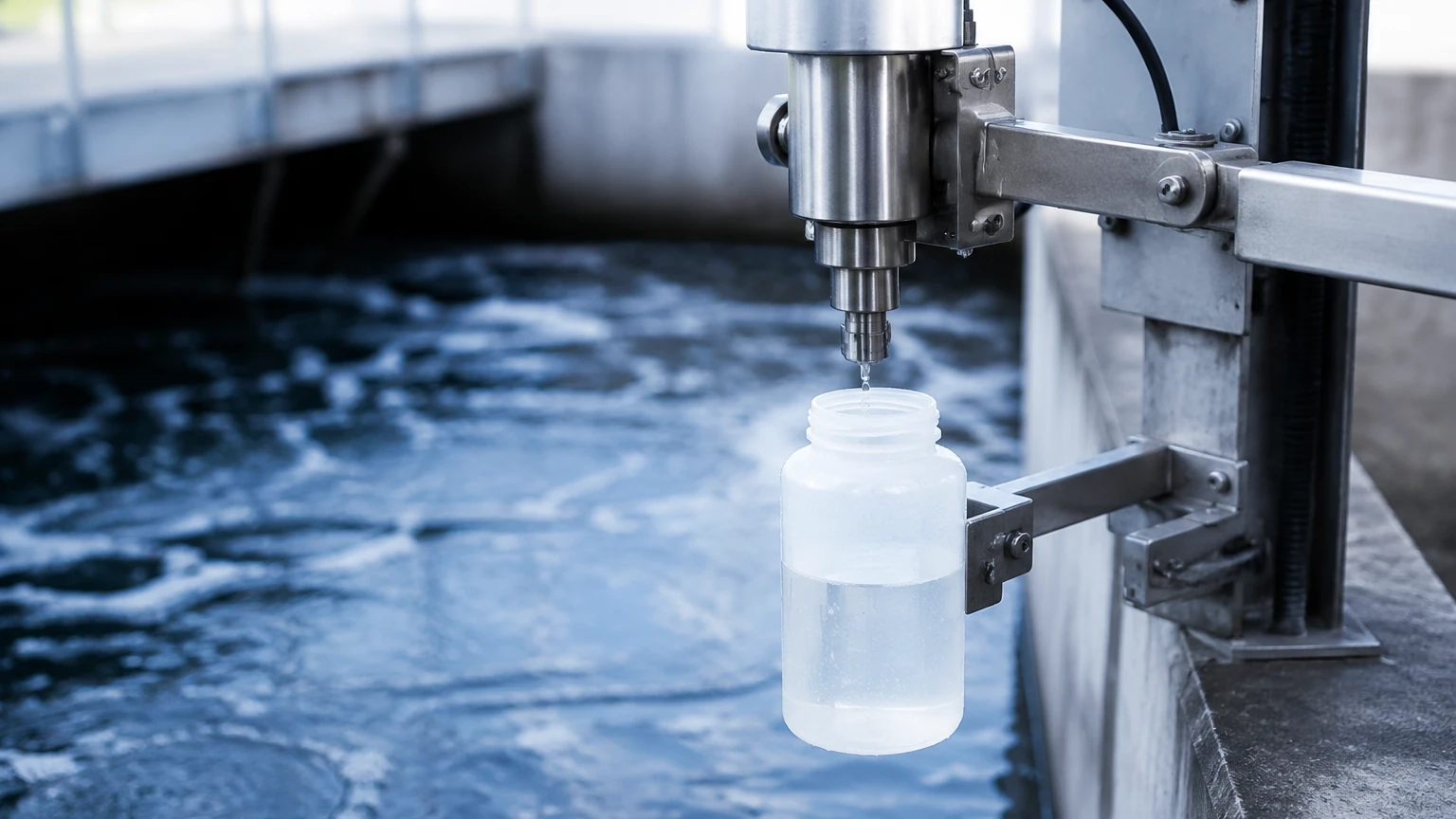
Automatic water sampling systems are designed to collect discrete or composite samples from a liquid source over a specific period or in response to specific triggers. The primary goal is to eliminate human error and provide a consistent sampling methodology that reflects the true state of the water body or process stream.
Collection Methods
There are three primary physical principles used to move the liquid from the source to the sample container:
1. Peristaltic Pump Systems: This is the most common method. A rotating roller compresses a flexible tube, creating a vacuum that draws the liquid up. This method is valued for its ability to keep the sample isolated from the pump's mechanical parts, preventing cross-contamination.
2. Vacuum-Pressure Systems: These systems use a vacuum pump to draw the liquid into a calibrated metering chamber. Once the chamber is full, the vacuum is released, and the sample is pressurized into the collection bottle. This method often achieves higher intake velocities, which is beneficial for keeping suspended solids in the sample.
3. Positive Displacement (Piston) Systems: Used primarily in high-pressure lines or for very specific volumes, a piston draws a precise amount of liquid into a chamber and then ejects it into the sample container.
Sampling Modes
To ensure the data is statistically significant, automatic water sampling units operate in several modes:
* Time-Proportional Sampling: Samples are taken at fixed time intervals (e.g., every 60 minutes). This is suitable for stable flow rates.
* Flow-Proportional Sampling: The sampler receives a signal from a flow meter (often derived from a level meter) and takes a sample after a specific volume of water has passed (e.g., every 1,000 liters). This is the standard for variable flow environments like municipal wastewater or storm runoff.
* Event-Triggered Sampling: Sampling begins only when a specific condition is met, such as a pH spike, a temperature change, or a specific liquid level reached in a tank.
Integration with Level and Flow Measurement Systems
Effective automatic water sampling is rarely a standalone process. In most industrial applications, the sampler relies on accurate level and flow data to determine when and how much to sample. This is where high-precision instrumentation, such as those found on the Main Page, becomes indispensable.
The Role of Level Meters in Sampling
In open channel applications, such as flumes or weirs, the flow rate is calculated based on the liquid level. Ultrasonic level sensors or radar level meters are positioned above the channel to measure the head height. This level data is converted into a flow rate via a pre-programmed formula (e.g., Manning’s equation). The flow signal (typically a 4-20mA or pulse output) is then sent to the automatic water sampler to trigger flow-proportional sampling.
* Ultrasonic Sensors: Ideal for standard water applications where the sensor does not come into contact with the media. They are cost-effective and reliable for most open-channel flow monitoring.
* Radar Level Meters: Preferred in environments with heavy steam, foam, or temperature fluctuations that might interfere with ultrasonic waves. Radar provides a non-contact, highly accurate level reading that ensures the sampling trigger is precise.
* Hydrostatic Transmitters: In deep tanks or reservoirs where surface turbulence is high, hydrostatic pressure sensors at the bottom of the tank provide a stable level reading to manage batch sampling processes.
Selection Criteria for Industrial Samplers
Choosing the right equipment for automatic water sampling requires an evaluation of the site conditions and the chemical nature of the water being sampled.
Portable vs. Stationary Samplers
* Portable Samplers: These are battery-operated and designed for short-term studies or remote locations. They are typically lightweight and can be deployed in manholes or at various points along a river. Robustness and battery life are the primary considerations here.
* Stationary Samplers: These are permanent installations, often housed in weather-proof, temperature-controlled cabinets. They are used for long-term regulatory compliance at industrial discharge points.
Refrigeration and Preservation
Many water quality parameters, such as BOD (Biochemical Oxygen Demand) or certain volatile organic compounds, require the sample to be maintained at a specific temperature (usually 4°C) to prevent biological degradation or chemical changes. Stationary samplers often include integrated refrigeration units, while portable units may use ice compartments.
Material Compatibility
The wetted parts of the sampler, including the intake strainer, tubing, and sample bottles, must be compatible with the liquid. For general wastewater, PVC or silicone tubing is standard. For sampling trace metals or organic pollutants, PTFE (Teflon) tubing and glass bottles may be required to prevent leaching or adsorption.
Practical Selection Table
| Feature | Peristaltic Sampler | Vacuum Sampler | Stationary Refrigerated |
| :— | :— | :— | :— |
| Max Suction Lift | 8.0 meters | 9.0 meters | 8.5 meters |
| Sample Velocity | 0.6 – 0.9 m/s | 1.0 – 1.5 m/s | 0.6 – 1.2 m/s |
| Power Source | 12V DC / 230V AC | 230V AC | 230V AC |
| Best Use Case | General wastewater | High suspended solids | Regulatory compliance |
| Maintenance | High (tube wear) | Medium (valves) | Low (compressor care) |
| Accuracy | ±5% | ±2% | ±3% |
Practical Installation and Setup Guidelines
Proper installation is as important as the equipment itself. If the intake is positioned incorrectly, the automatic water sampling process will yield skewed data.
1. Intake Placement: The intake strainer should be placed in a representative part of the flow—typically at 60% of the depth in a channel. It should be positioned upstream of any obstructions to avoid turbulence.
2. Suction Line Slope: The tubing should have a continuous downward slope from the sampler to the source. This ensures that the line drains completely between samples, preventing cross-contamination and freezing in cold climates.
3. Suction Head Considerations: While many samplers claim a 9-meter lift, efficiency drops significantly after 6 meters. For deep manholes, consider a system with a higher-capacity pump or a pressurized delivery system.
4. Signal Integration: Ensure the 4-20mA or pulse output from your level meter is correctly calibrated with the sampler's input. For example, if the level meter detects a flow of 100 m³/h, the sampler should be programmed to take a 100ml aliquot every 10 m³ to create a representative composite sample.
5. Power Supply: For stationary units, ensure a stable 230V supply with surge protection. For portable units, calculate the battery draw based on the sampling frequency and the power consumption of the internal cooling system.
Operational Limitations and Common Challenges
While automatic water sampling is highly efficient, it is not without limitations. Engineers must be aware of the following challenges:
* Solids Settling: If the intake velocity is too low (less than 0.6 m/s), heavier solids may settle in the suction line, leading to an unrepresentative sample of the total suspended solids (TSS).
* Line Clogging: In environments with high grease or large debris (e.g., food processing or raw sewage), intake strainers can clog. Regular cleaning or the use of "self-cleaning" back-flush cycles is necessary.
* Cross-Contamination: Even with a purge cycle, minute traces of the previous sample can remain. In high-purity applications, the suction line should be replaced frequently.
* Ambient Temperature: In extreme heat, non-refrigerated portable samplers may fail to keep samples within the required temperature range, potentially voiding the analysis results for regulatory reporting.
Frequently Asked Questions
Q: How often should the pump tubing be replaced in a peristaltic sampler?
A: For a sampler in daily use, tubing should be inspected weekly and typically replaced every 500 to 1,000 samples, or every 3 months, whichever comes first. Worn tubing loses its elasticity, leading to inaccurate sample volumes.
Q: Can automatic samplers be used for hazardous (Ex) zones?
A: Yes, but you must specify an ATEX or IECEx certified sampler. These units are designed with explosion-proof housings and intrinsically safe electronics to prevent ignition in volatile environments like oil refineries.
Q: What is the difference between a discrete and a composite sample?
A: A discrete sample is a single sample collected in an individual bottle at a specific time. A composite sample is a mixture of multiple aliquots collected over time into a single large container, providing an average representation of the water quality over the sampling period.
Q: Why is my sample volume inconsistent?
A: This is usually caused by air leaks in the suction line, a worn pump tube, or varying suction lift heights. Ensure all connections are airtight and that the sampler is calibrated at the specific lift height of the installation.
Conclusion
Automatic water sampling is an essential tool for modern industrial water management. By combining robust sampling hardware with precise level and flow measurement instrumentation, facilities can achieve a high degree of accuracy in their environmental reporting and process optimization. When selecting a system, always consider the physical constraints of the site, the chemical properties of the media, and the integration requirements with existing level sensors. For professional guidance on the level measurement technologies that drive these sampling systems, you can review product options and application support on the Main Page.