Bin Level Monitoring System
Bin Level Monitoring System
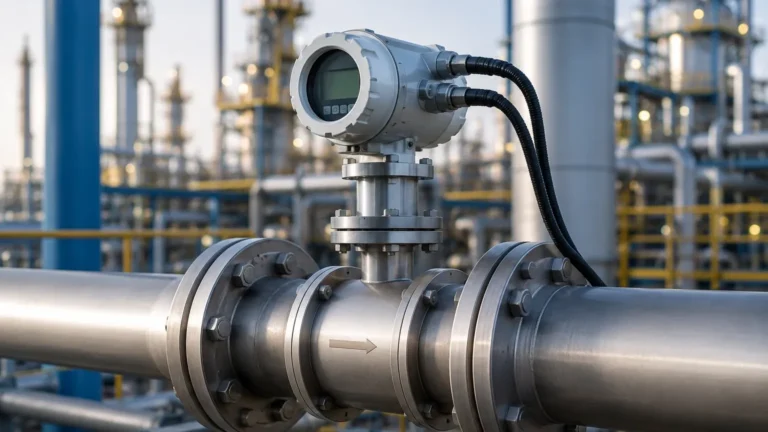
In modern industrial operations, the ability to accurately track inventory and monitor process materials within storage vessels is fundamental to efficiency and safety. A bin level monitoring system provides real-time data on the volume or height of materials—ranging from fine powders and granular solids to viscous liquids—stored in silos, bins, and tanks. Implementing a robust monitoring strategy prevents costly overfills, eliminates the risks associated with manual climbing for inspections, and ensures that production lines never face unexpected downtime due to material shortages.
For engineers and facility managers, selecting the right technology requires a deep understanding of measurement principles, material characteristics, and the physical constraints of the storage environment. This guide examines the core technologies used in bin level monitoring and provides a framework for selecting and installing the appropriate instrumentation.
Measurement Principles in Bin Level Monitoring
Bin level monitoring systems generally fall into two categories: point level detection and continuous level measurement. Point level sensors indicate whether a material has reached a specific height (high or low alerts), while continuous sensors provide a constant stream of data regarding the exact level throughout the entire height of the bin.
Radar Level Measurement (FMCW and Pulse)
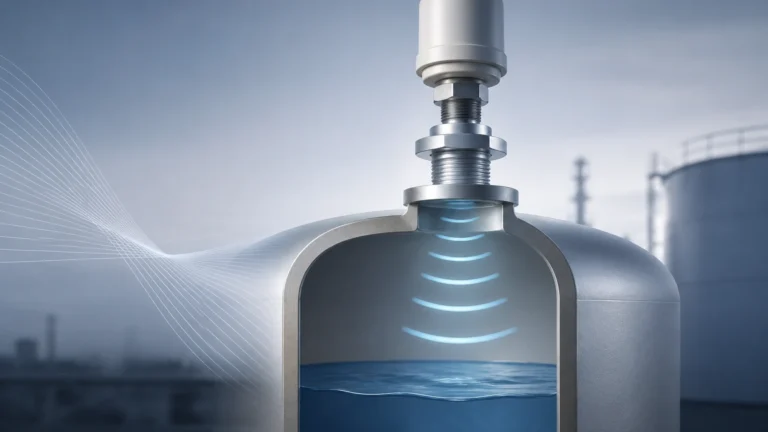
Radar technology is widely considered the gold standard for high-accuracy bin level monitoring, particularly in challenging environments. It operates by emitting electromagnetic waves toward the material surface and measuring the time it takes for the signal to reflect back to the sensor.
* Non-contact Radar: These sensors are ideal for corrosive or abrasive materials because they do not touch the medium. High-frequency radar (such as 80GHz) offers a narrow beam angle, which is critical in narrow bins or those with internal obstructions like ladders or agitators.
* Guided Wave Radar (GWR): This technology uses a cable or rod probe to guide the microwave signal directly to the material. It is highly effective for materials with low dielectric constants or in applications where heavy dust or foam might interfere with a non-contact signal.
Ultrasonic Level Measurement
Ultrasonic sensors function by emitting high-frequency sound pulses. The time-of-flight between the emission and the reception of the echo determines the distance to the material surface. While cost-effective and reliable for many liquid applications, ultrasonic sensors face limitations in bins containing heavy dust or varying temperatures, as sound waves are affected by the density of the air through which they travel.
Capacitance and Admittance
These sensors measure the change in electrical capacitance between the sensor probe and the bin wall. As the material level rises, the dielectric constant in the space changes, altering the capacitance. This principle is often used for point level detection in solids and can be calibrated to ignore material build-up on the probe.
Electromechanical (Plumb Bob)
Though older, the "plumb bob" or weight-and-cable system remains a common choice for very tall grain silos. A weighted sensor is lowered into the bin at set intervals; when it touches the material surface, the cable tension changes, and the distance is recorded. While mechanical, it is unaffected by dust or dielectric properties.
Key Components of a Bin Level Monitoring System
A complete system is more than just a sensor. To provide actionable data, several components must work in unison:
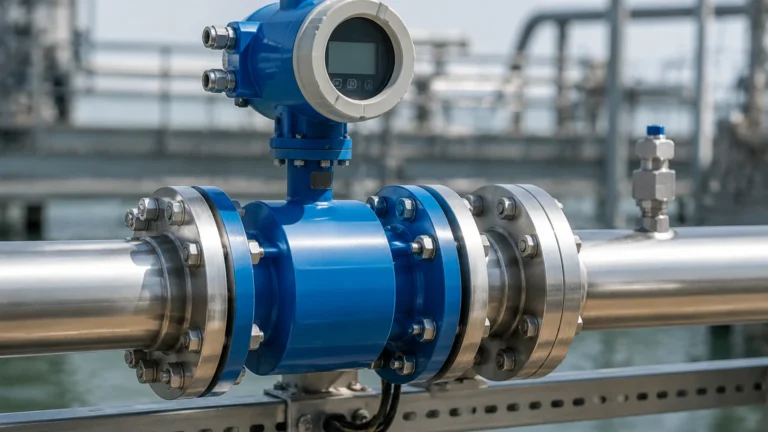
1. The Sensor/Transmitter: The primary device installed at the top of the bin that performs the physical measurement.
2. Signal Converter: Translates the raw physical data into a standardized industrial signal, such as 4-20mA, Modbus RTU, or HART.
3. Local Display/Controller: Allows operators on the plant floor to see levels without accessing a central computer.
4. Integration Interface: Connects the bin data to a PLC (Programmable Logic Controller) or SCADA system for plant-wide monitoring and automated ordering.
For those evaluating specific hardware options for these components, you can Review product options and application support to see how different transmitters integrate into a unified system.
Selection Criteria for Industrial Bins
Choosing the wrong sensor for a bin level monitoring system leads to signal loss, false alarms, and maintenance headaches. Consider the following factors before procurement:
Material Characteristics
* Dielectric Constant (εr): Radar signals reflect better off materials with higher dielectric constants. For very dry powders (low εr), guided wave radar or high-sensitivity non-contact radar is required.
* Bulk Density and Particle Size: In solids monitoring, the angle of repose (the slope of the material pile) can deflect sensor signals. Sensors with wider beams may receive multiple echoes, leading to inaccuracies.
* Abrasiveness and Corrosiveness: If the material is chemically aggressive, non-contact sensors or probes made of specialized alloys (like Hastelloy) or plastics (like PTFE) are mandatory.
Environmental Conditions
* Dust and Vapor: Heavy dust during pneumatic filling can attenuate ultrasonic and some laser signals. Radar is generally immune to dust.
* Pressure and Temperature: Ensure the sensor’s process connection and electronics are rated for the bin's internal environment, especially in chemical processing or pressurized silos.
Practical Selection Table
| Technology | Best For | Advantages | Limitations |
| :— | :— | :— | :— |
| 80GHz Radar | Fine powders, narrow silos, liquids | Narrow beam, high precision, ignores dust | Higher initial cost |
| Ultrasonic | Water-based liquids, short ranges | Low cost, easy installation | Affected by dust, wind, and temp |
| Guided Wave Radar | Low dielectric solids, foaming liquids | High reliability, works in narrow spaces | Contact-based; probe can be damaged |
| Rotary Paddle | Point level (High/Low) in solids | Simple, robust, very low cost | Mechanical wear; point detection only |
| Hydrostatic | Liquids in vented tanks | Simple principle, easy to maintain | Not for solids; density dependent |

Installation Considerations and Best Practices
Proper installation is as critical as the technology choice itself. Even the most advanced radar sensor will fail if it is positioned incorrectly.
Avoiding Obstructions
Sensors should be mounted away from the filling stream. If material falls directly onto the sensor or through its signal path, the system will report a false "full" reading. Additionally, sensors must be placed at a distance from the bin walls to avoid "ringing" or false reflections from welds and ladders.
Beam Angle and Positioning
For solids, the sensor is typically positioned at 1/6th to 1/3rd of the diameter from the wall to get a representative average of the material's cone. In bins with conical bottoms, the sensor should be centered if the goal is to monitor the bin until it is completely empty.
Dead Zones (Blocking Distance)
Every continuous level sensor has a "dead zone" directly beneath the transducer where it cannot measure. Ensure the sensor is mounted high enough (perhaps using a nozzle or standpipe) so that the maximum fill level does not enter this zone.
Common Risks and Mitigation
* Signal Loss due to Build-up: In sticky applications, material can accumulate on the sensor face. Using sensors with a "self-cleaning" flush-mounted antenna or choosing a vibrating level switch with build-up compensation can mitigate this.
* Inaccurate Volume Calculations: Most sensors measure distance, not volume. To get an accurate volume reading, the controller must be programmed with the specific geometry of the bin (e.g., strapped table or dimensions of the conical bottom).
* Pneumatic Interference: During pneumatic conveying, the high air pressure and movement of particles can create significant noise. Radar sensors with advanced signal processing (Echo Discovery) are designed to filter out this noise.
Frequently Asked Questions (FAQ)
Q: Can one bin level monitoring system handle both liquids and solids?
A: While some technologies like radar are versatile enough for both, the configuration and mounting usually differ. Solids require considerations for the angle of repose and dust, while liquids require considerations for foam and surface turbulence.
Q: How often do these systems need calibration?
A: Modern digital sensors (like those found on the Main Page of industrial suppliers) are often factory-calibrated. However, a yearly verification against a manual measurement is recommended to account for any physical shifts in the bin structure or changes in material density.
Q: What is the difference between 26GHz and 80GHz radar for bins?
A: The primary difference is the beam angle. A 26GHz radar might have a beam angle of 10-15 degrees, while an 80GHz radar can have a beam as narrow as 3 degrees. The narrower beam of the 80GHz model makes it much easier to install in bins with internal structures without receiving false echoes.
Q: Is wireless monitoring feasible for remote bins?
A: Yes. Many modern systems utilize WirelessHART or LoRaWAN to transmit data from the top of a silo to a central gateway, significantly reducing the cost of running cables across a large facility.
Summary of Implementation Steps
Before finalizing a project for a bin level monitoring system, the engineering team should confirm the following:
1. Confirm Material Properties: Identify the dielectric constant and moisture content of the material.
2. Map the Bin Interior: Document all internal obstructions and the exact location of the fill and discharge points.
3. Define Output Requirements: Determine if the system needs to trigger local alarms, provide data to a PLC, or upload to a cloud-based inventory management platform.
4. Evaluate Maintenance Access: Ensure that the chosen mounting location is accessible for occasional cleaning or inspection without requiring specialized scaffolding.
By following these technical guidelines and selecting a system tailored to the specific physical properties of the stored material, industrial facilities can achieve high-precision inventory control and enhanced operational safety.