Calibrated Flow Meter
Calibrated Flow Meter
In industrial process control, the accuracy of fluid measurement is not merely a preference but a fundamental requirement for operational safety, fiscal accountability, and product quality. A calibrated flow meter is an instrument that has undergone a rigorous verification process against a known reference standard to ensure its readings fall within a specified uncertainty range. For engineers and plant managers, understanding the mechanics of calibration and the principles behind flow measurement is essential for maintaining system integrity.
Whether managing water treatment facilities, chemical processing plants, or oil and gas refineries, the reliance on precise data remains constant. This guide explores the technical foundations of flow measurement, the necessity of periodic calibration, and the practical considerations for selecting and maintaining these critical instruments.
Measurement Principles and Technologies
Before selecting a calibrated flow meter, it is necessary to understand the physics governing fluid movement. Flow meters are generally categorized by the physical principle they employ to determine the volume or mass of a fluid passing through a conduit.
Electromagnetic Flow Meters
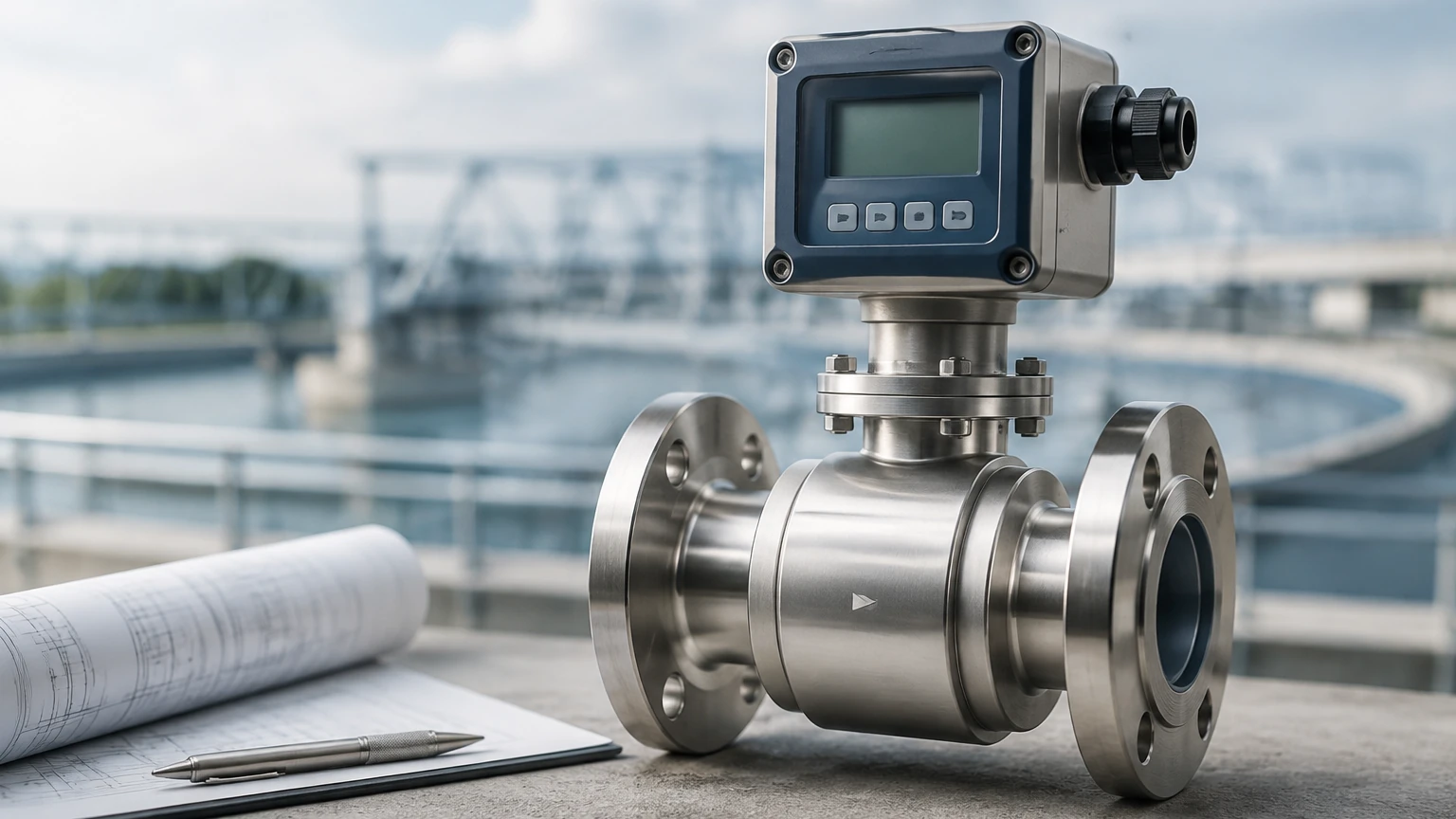
Based on Faraday’s Law of Electromagnetic Induction, these meters are used for conductive liquids. As a conductive fluid flows through a magnetic field generated by the meter, it induces a voltage proportional to its velocity. Because there are no moving parts, these meters offer high reliability and minimal pressure drop. Calibration for electromagnetic meters focuses on the "K-factor," which relates the induced voltage to the actual volumetric flow rate.
Ultrasonic Flow Meters
Ultrasonic technology utilizes sound waves to measure velocity. There are two primary types:
1. Transit-time: These meters send pulses back and forth across the flow stream. The pulse traveling with the flow moves faster than the pulse traveling against it. The time difference is directly proportional to the fluid velocity.
2. Doppler: These rely on sound waves reflecting off particles or bubbles in the fluid. The frequency shift (Doppler effect) determines the speed.
Calibration in ultrasonic systems often involves adjusting for the pipe wall thickness and the specific acoustic properties of the fluid.
Differential Pressure (DP) and Hydrostatic Methods
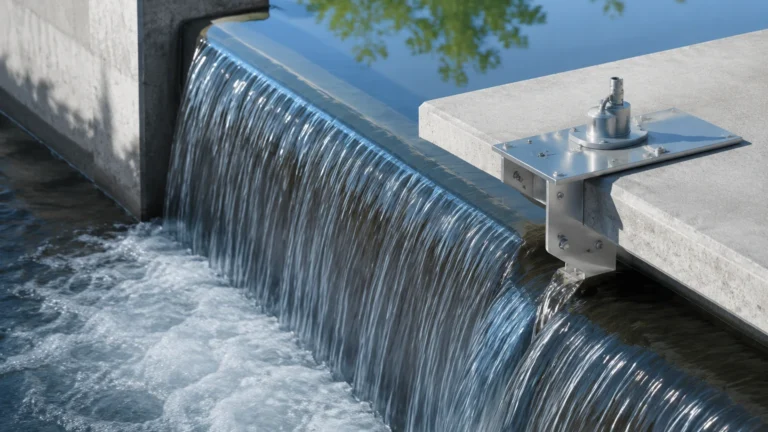
Differential pressure meters, such as orifice plates or Venturi tubes, create a constriction in the flow path. According to Bernoulli’s equation, the pressure drop across this constriction is proportional to the square of the flow rate. In many industrial setups, hydrostatic level transmitters are also used in conjunction with primary elements to calculate flow in open channels or tanks by measuring the head pressure of the liquid. For more information on the instruments used in these configurations, you can visit the Main Page of our technical resource center.
The Importance of Flow Meter Calibration
Calibration is the process of comparing the output of a flow meter to a reference standard of higher accuracy. This process establishes the relationship between the indicated value and the true value, often expressed as a percentage of rate or a percentage of full scale.
Accuracy and Repeatability
Accuracy refers to how close the meter’s reading is to the actual flow, while repeatability refers to the meter's ability to provide the same reading under identical conditions. A calibrated flow meter ensures that both metrics are within the manufacturer’s specifications. Over time, factors such as mechanical wear, sensor fouling, or electronic drift can degrade performance, making recalibration necessary.
Regulatory and Fiscal Compliance
In industries involving custody transfer (where ownership of a fluid changes hands), even a 0.5% error can result in significant financial discrepancies. Furthermore, environmental regulations often mandate the use of calibrated instruments to monitor discharge in water treatment or emissions in chemical processing.
Selection Criteria for Calibrated Flow Meters
Choosing the correct meter requires an analysis of the fluid properties, the installation environment, and the required precision. The following table provides a comparison of common industrial flow technologies.
| Technology | Typical Accuracy | Fluid Requirements | Primary Advantage |
| :— | :— | :— | :— |
| Electromagnetic | ±0.2% to ±0.5% | Conductive liquids only | No moving parts; low maintenance |
| Ultrasonic | ±0.5% to ±2.0% | Clean or dirty liquids (type dependent) | Non-intrusive; no pressure drop |
| Differential Pressure | ±0.5% to ±3.0% | Liquids, gases, and steam | Well-understood; industry standard |
| Vortex | ±0.5% to ±1.0% | Low viscosity fluids | High temperature/pressure capability |
| Coriolis (Mass) | ±0.1% to ±0.2% | Most liquids and gases | Direct mass flow measurement |
Calibration Methods and Traceability
To ensure a flow meter is truly "calibrated," the process must be traceable to national or international standards, such as NIST (National Institute of Standards and Technology) or ISO/IEC 17025. There are three common methods used in calibration laboratories:
1. Gravimetric Calibration: This is considered the most accurate method. A known volume of fluid is passed through the meter and collected in a vessel on a high-precision scale. The weight of the fluid, combined with its density and temperature, provides an absolute mass and volume reference.
2. Master Meter Calibration: The unit under test (UUT) is placed in series with a "master meter" that has a much higher accuracy rating and a current calibration certificate. The readings are compared across various flow points.
3. Volumetric Transfer: A calibrated tank (prover) with a known volume is used to measure the amount of fluid passing through the meter over a specific duration.
Installation Considerations for Maintaining Accuracy
Even a perfectly calibrated flow meter will provide inaccurate data if installed incorrectly. The following engineering considerations are vital:
* Straight Pipe Runs: Most meters require a specific length of straight pipe upstream (U) and downstream (D) to eliminate turbulence and swirl. A common requirement is 10D upstream and 5D downstream, though this varies by technology.
* Fluid Profile: Ensure the pipe is always full. In horizontal installations, meters should be placed at a low point to prevent air pockets, which can cause significant measurement errors in ultrasonic and electromagnetic systems.
* Orientation: Some meters, like those relying on gravity or specific flow profiles, must be mounted vertically with flow moving upward to ensure the sensor is completely wetted.
* Grounding: For electromagnetic flow meters, proper electrical grounding is critical to eliminate stray currents that can interfere with the low-voltage signals generated by the sensor.
Limitations and Common Risks
While a calibrated flow meter is a robust tool, it is not immune to environmental and process-related challenges.
* Drift: Electronic components and sensors can drift over time due to temperature fluctuations or aging. Regular verification schedules are necessary to catch drift before it impacts the process.
* Fouling and Scaling: In chemical or wastewater applications, the buildup of material on the inner walls of the meter or on the electrodes can change the effective diameter of the pipe or insulate the sensors, leading to under-reporting or over-reporting of flow.
* Cavitation: If the pressure in the line drops below the vapor pressure of the liquid, bubbles will form. These bubbles interfere with the signal of ultrasonic meters and can physically damage the internal components of turbine or DP meters.
* Viscosity Changes: Many calibration curves are fluid-specific. If a meter calibrated for water is used for a high-viscosity oil without correction, the resulting data will be invalid.
Frequently Asked Questions (FAQ)
How often should a flow meter be calibrated?
Frequency depends on the industry, the criticality of the measurement, and the stability of the fluid. Most industrial standards recommend an annual calibration, though high-accuracy custody transfer meters may require semi-annual checks.
Can I calibrate a flow meter on-site?
Yes, "in-situ" calibration or verification is possible using portable master meters or by comparing the flow meter's output to the change in level in a tank of known dimensions. However, for certified traceability, laboratory calibration is usually preferred.
What is the difference between calibration and validation?
Calibration is the act of adjusting or documenting the accuracy of the meter against a standard. Validation (or verification) is a functional check to ensure the meter is operating within its expected parameters without necessarily performing a full multi-point adjustment.
Does pipe material affect ultrasonic flow meter calibration?
Absolutely. Ultrasonic waves travel at different speeds through steel, PVC, and ductile iron. The meter must be programmed with the correct pipe material, wall thickness, and liner type to maintain its calibrated accuracy.
Conclusion
Implementing a calibrated flow meter is a critical step in achieving process optimization and regulatory compliance. By understanding the underlying measurement principles—whether electromagnetic, ultrasonic, or pressure-based—and adhering to strict installation and maintenance protocols, industrial operators can ensure long-term data reliability. For those seeking to integrate these instruments into broader automation systems, reviewing the technical specifications and support options on the Main Page can provide the necessary foundation for a successful deployment. Regular calibration remains the only definitive way to bridge the gap between theoretical performance and real-world accuracy.