Cannabis Alcohol Extraction Machine
Cannabis Alcohol Extraction Machine
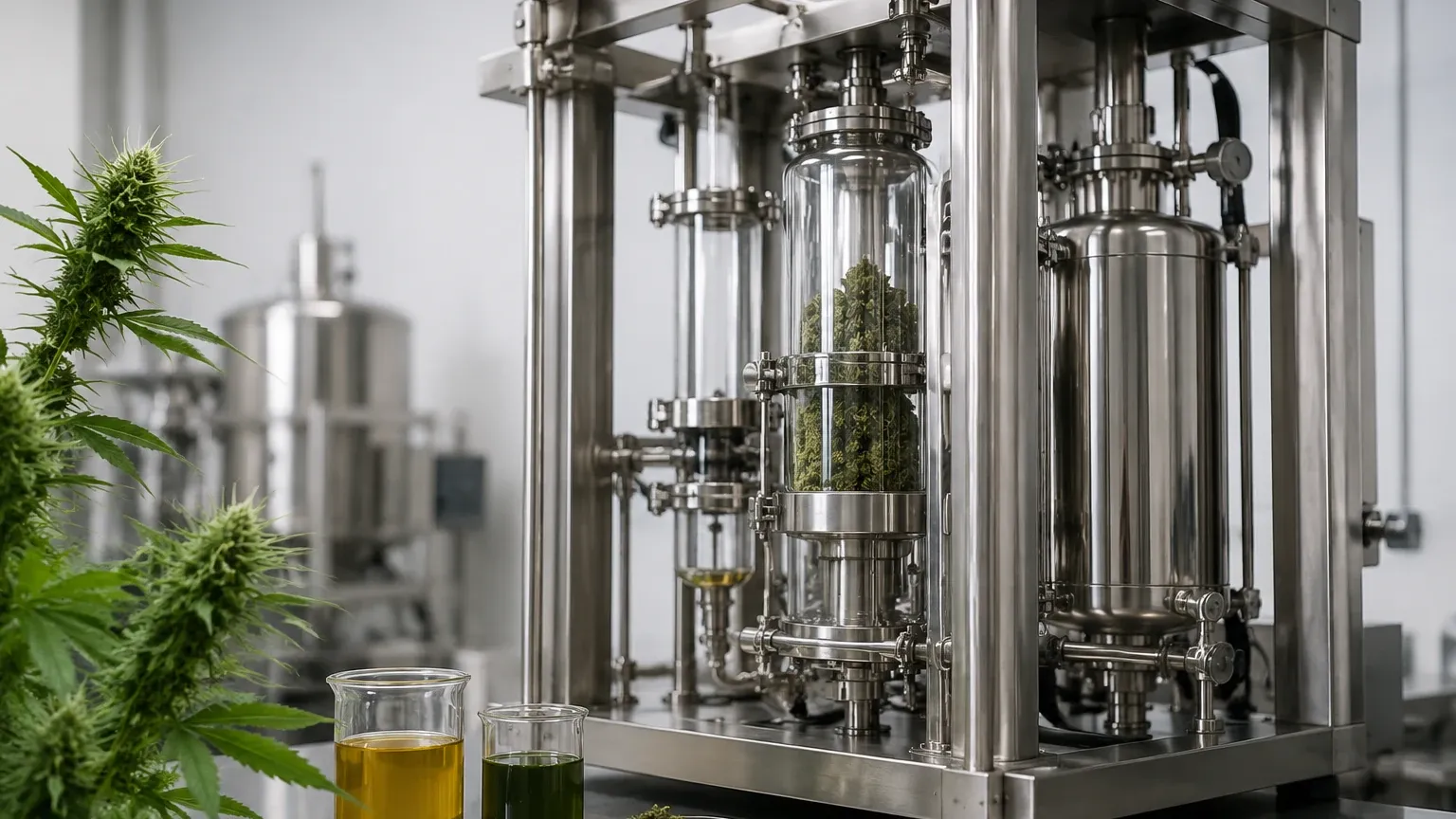
In the rapidly evolving botanical processing industry, the cannabis alcohol extraction machine has become a cornerstone for high-throughput production of oils, distillates, and isolates. These systems utilize solvents—most commonly food-grade ethanol—to strip cannabinoids and terpenes from biomass. For process engineers and facility managers, the efficiency of these machines depends not only on the extraction chemistry but also on the precision of the instrumentation governing the flow and storage of volatile solvents.
Reliable level measurement is critical for safety, inventory management, and automation within an extraction facility. Whether managing a cryogenic ethanol tank at -40°C or a solvent recovery evaporator, selecting the correct sensor technology ensures operational continuity and compliance with stringent safety standards.
Understanding Level Measurement in Extraction Systems
Level measurement within a cannabis alcohol extraction machine serves several functions. It prevents tank overfills, which could lead to hazardous solvent spills, and protects pumps from running dry. Furthermore, accurate level data is essential for calculating extraction ratios and monitoring the efficiency of solvent recovery stages.
Because ethanol is a flammable liquid, all instrumentation must meet specific hazardous area classifications, such as Class I, Division 1 (C1D1) or Division 2 (C1D2). Additionally, since the end products are intended for human consumption, sensors must often feature sanitary connections, such as Tri-clamp fittings, and be constructed from 316L stainless steel or other food-grade materials.
Key Measurement Principles for Solvent-Based Extraction
Before selecting a device for a cannabis alcohol extraction machine, it is vital to understand the physics behind the most common measurement technologies. Each principle offers distinct advantages depending on the physical state of the solvent and the vessel's geometry.
Radar Level Measurement (FMCW)
Frequency Modulated Continuous Wave (FMCW) radar is the gold standard for solvent measurement. The sensor emits a continuous signal with a varying frequency. The signal reflects off the liquid surface and returns to the antenna. The difference in frequency between the emitted and received signal is proportional to the distance.
* Advantage: Non-contact measurement unaffected by vapor, pressure, or temperature. High-frequency (80GHz) radar can penetrate heavy vapors often found in alcohol storage.
* Limitation: Solvents like ethanol have a low dielectric constant (εr ≈ 24), which provides a weaker reflection than water, though modern 80GHz sensors handle this easily.
Hydrostatic Pressure Measurement
This principle relies on the relationship between the height of a liquid column and the pressure it exerts at the base of the vessel ($P = \rho \cdot g \cdot h$). A pressure transmitter installed at the bottom of the tank measures the head pressure.
* Advantage: Cost-effective and simple to install. Ideal for large outdoor bulk ethanol storage tanks.
* Limitation: Requires constant density. If the temperature of the ethanol changes significantly (e.g., during winterization), the density shifts, leading to measurement errors unless compensated.
Ultrasonic Level Measurement
Ultrasonic sensors emit sound pulses that bounce off the liquid surface. The time-of-flight is measured to determine the level.
* Advantage: Low cost and no moving parts.
* Limitation: Sound waves are highly sensitive to the density of the air/gas space. In a cannabis alcohol extraction machine, the high concentration of ethanol vapors can change the speed of sound, leading to significant inaccuracies. Therefore, ultrasonic is generally reserved for water-based cleaning stages rather than solvent tanks.
Magnetic Level Gauges
These utilize a float containing a magnet that moves with the liquid level inside a bypass chamber. An external indicator or transmitter tracks the float's position.
* Advantage: Provides a highly visible local display without requiring power. It is inherently safe for hazardous zones.
* Limitation: Requires a side-mounted bypass chamber, which increases the system's footprint and potential leak points.
Selection Guide for Cannabis Alcohol Extraction Instrumentation
Choosing the right sensor depends on where it is located within the extraction workflow. The following table provides a practical reference for common applications within a cannabis alcohol extraction machine environment.
| Application Stage | Typical Vessel | Recommended Technology | Key Consideration |
| :— | :— | :— | :— |
| Bulk Solvent Storage | Large Vertical Tanks | Radar (80GHz) or Hydrostatic | C1D1 rating is mandatory; radar is preferred for accuracy. |
| Cryogenic Extraction | Jacketed Chillers | Radar or Magnetic Gauge | Must withstand temperatures down to -80°C. |
| Solvent Recovery | Falling Film Evaporator | Guided Wave Radar | High turbulence and vacuum conditions require stable signals. |
| Crude Oil Collection | Small Buffer Tanks | Hydrostatic or Radar | High viscosity of crude oil can coat sensors; non-contact is best. |
| Wastewater/CIP | Cleaning Tanks | Ultrasonic | Cost-effective for non-volatile liquids. |
For comprehensive technical specifications and to Review product options and application support, engineers should consult the Welk Main Page for detailed sensor data sheets.
Installation and Engineering Considerations
When integrating level sensors into a cannabis alcohol extraction machine, several mechanical and environmental factors must be addressed to ensure long-term reliability.
1. Sanitary Connections: Most extraction systems require ISO 2852 or DIN 32676 Tri-clamp connections. These allow for easy removal for cleaning and ensure there are no dead spaces where bacteria or old oil can accumulate.
2. Vapor Space Management: Ethanol is highly volatile. In closed-loop systems, the vapor space may be pressurized with nitrogen or held under a vacuum. Radar sensors are generally immune to these changes, but hydrostatic sensors must be "balanced" using a differential pressure setup if the tank is pressurized.
3. Material Compatibility: While 316L stainless steel is the industry standard, seals and O-rings must be compatible with ethanol and botanical oils. PTFE (Teflon) or FFKM (Kalrez) are often required to prevent swelling or degradation.
4. Nozzle Geometry: For radar installations, the mounting nozzle should be as short as possible to prevent signal interference. If the tank has internal agitators or heating coils, the sensor must be positioned to avoid these obstructions.
Managing Process Challenges: Foam, Agitation, and Temperature
The extraction process is rarely static. Several dynamic factors can interfere with accurate level readings in a cannabis alcohol extraction machine.
Foam Suppression
During the boiling phase of solvent recovery, ethanol can foam significantly. Ultrasonic sensors will often fail in these conditions as the foam absorbs the sound pulse. High-frequency radar can typically see through light foam to the liquid surface, but in cases of extremely thick foam, a guided wave radar (GWR) or a magnetic level gauge may be necessary to ensure a stable reading.
Agitation and Turbulence
Many extraction vessels use agitators to ensure the solvent thoroughly saturates the biomass. This creates a turbulent surface. To mitigate this, level transmitters often employ "software damping," which averages the readings over several seconds to provide a steady output. Alternatively, a stilling well (a pipe inside the tank) can be used to create a calm surface for the sensor to measure.
Temperature Extremes
Cryogenic ethanol extraction involves temperatures as low as -80°C. At these extremes, standard electronics will fail. It is essential to use sensors with "remote electronics" or extended neck housings that keep the sensitive circuit boards away from the extreme cold of the process flange.
Limitations of Common Technologies
While modern instrumentation is highly advanced, every technology has its boundaries:
* Radar: Can be affected by very low dielectric constants (below 1.4), though ethanol (24) is well within the measurable range.
* Hydrostatic: Is entirely dependent on density. If a machine switches from 200-proof ethanol to a 70/30 ethanol-water mix without recalibrating the sensor, the level reading will be incorrect.
* Ultrasonic: Should never be used in a vacuum or in high-pressure solvent environments, as the vacuum prevents the transmission of sound waves.
Frequently Asked Questions (FAQ)
Q: Why is 80GHz radar preferred over 26GHz for extraction machines?
A: 80GHz radar has a much narrower beam angle (typically 3° to 6°). This allows the sensor to be installed in small tanks with internal obstructions like agitators or cooling coils without receiving false echoes. It also provides better resolution for small volume changes.
Q: Do I need a C1D1 rating for all sensors on the machine?
A: Generally, yes. Because a cannabis alcohol extraction machine processes large volumes of flammable solvent, the immediate area is classified as a hazardous zone. Even if the tank is closed, the risk of vapor release during maintenance or a leak requires explosion-proof or intrinsically safe instrumentation.
Q: How do I measure the level of thick cannabis crude oil?
A: Crude oil is highly viscous and sticky. Non-contact radar is the best choice here because it does not touch the medium. Any contact-based sensor, like a float or a pressure diaphragm, will eventually become coated and require frequent cleaning to remain accurate.
Q: Can I use a single sensor for both temperature and level?
A: While some hydrostatic transmitters include a temperature element, they are usually separate. For high-precision extraction, it is recommended to use dedicated RTDs (Resistance Temperature Detectors) for temperature and a dedicated radar or hydrostatic sensor for level to ensure the highest accuracy for both parameters.
By carefully matching the measurement principle to the specific requirements of the cannabis alcohol extraction machine, operators can maximize safety and optimize their production yields. For further technical guidance on selecting industrial level measurement instruments, visit the Welk Main Page to explore our full range of solutions.