Premium Quality Resolver Systems for Oil and Gas Equipment
Premium Quality Resolver Systems for Oil and Gas Equipment
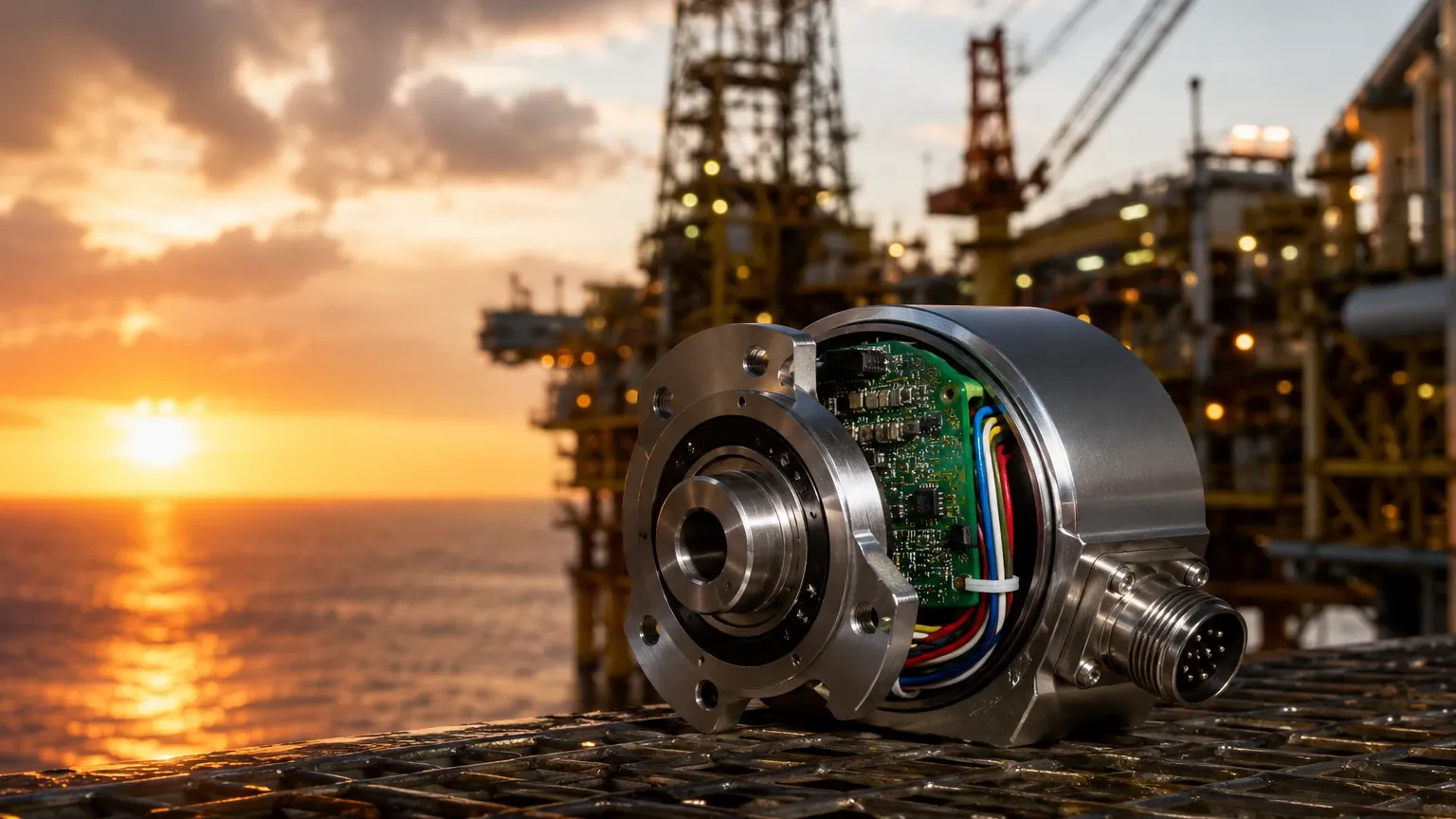
In the demanding environment of the oil and gas industry, precision and reliability are not merely performance metrics but essential safety requirements. The integration of premium quality resolver systems for oil and gas equipment ensures that automated processes—ranging from drilling rig positioning to tank farm inventory management—operate with sub-millimeter accuracy. These systems, which resolve physical parameters such as distance, angle, or pressure into actionable digital data, form the backbone of modern industrial automation.
For engineers and procurement specialists, selecting the right instrumentation requires a deep understanding of measurement principles and the specific challenges posed by volatile hydrocarbons, extreme pressures, and corrosive atmospheres. This guide explores the technical foundations of high-resolution level measurement and position feedback systems, providing a framework for selecting and installing equipment that meets the rigorous standards of the energy sector.
Core Measurement Principles for Level Resolution
To achieve the status of premium quality resolver systems for oil and gas equipment, a device must utilize advanced physics to interpret the state of a medium. In level measurement, three primary technologies dominate the field: radar, ultrasonic, and hydrostatic sensing.
Radar Level Measurement (FMCW and Pulse)
Radar technology is often considered the gold standard for high-precision resolution. It operates by emitting electromagnetic waves toward the surface of a liquid or solid.
* FMCW (Frequency Modulated Continuous Wave): These systems emit a continuous signal with a constantly changing frequency. The difference between the emitted frequency and the reflected frequency is directly proportional to the distance. This allows for extremely high resolution, often within ±1 mm.
* Pulse Radar: This method measures the "time of flight" of a microwave pulse. While slightly less precise than FMCW in some short-range applications, it is highly energy-efficient and suitable for long-range storage tanks.
Ultrasonic Sensing
Ultrasonic sensors resolve distance by emitting high-frequency sound waves (typically above 20 kHz). The sensor measures the time it takes for the sound pulse to hit the surface and return. Because sound speed is affected by air temperature, premium systems include integrated temperature compensation to maintain accuracy. These are ideal for non-contact measurement in atmospheric tanks where the chemical composition of the vapor space is stable.
Hydrostatic Pressure
Hydrostatic transmitters resolve level by measuring the pressure exerted by a liquid column. Based on the principle that pressure is equal to the height of the liquid multiplied by its density and gravity ($P = \rho gh$), these sensors are highly effective for vented tanks or deep wells. In oil and gas, these often utilize flush diaphragms to prevent clogging from heavy crude or paraffin.
For a comprehensive overview of industrial-grade measurement hardware, engineers can consult the Main Page of the Welk product catalog.
Key Evaluation Criteria for Premium Quality Resolver Systems
When evaluating premium quality resolver systems for oil and gas equipment, technical specifications must be balanced against environmental survivability. The following criteria are non-negotiable for offshore and refinery applications:
1. Hazardous Area Certifications
Equipment must be rated for explosive atmospheres. Look for ATEX (Europe), IECEx (International), or UL/CSA (North America) certifications. Common protection methods include "Ex d" (explosion-proof) enclosures and "Ex i" (intrinsically safe) circuits, which limit the energy available for ignition.
2. Material Compatibility and Corrosion Resistance
Oil and gas fluids often contain hydrogen sulfide ($H_2S$), which causes stress cracking in standard steels. Premium systems utilize 316L stainless steel, Hastelloy C-276, or PTFE (Teflon) coatings for wetted parts. For offshore environments, the external housing must also resist salt spray corrosion, often requiring marine-grade aluminum or stainless steel enclosures.
3. Signal Processing and Digital Integration
Modern resolver systems do more than just measure; they filter noise. In a tank with an agitator, a standard sensor might provide erratic readings. A premium system uses "False Echo Suppression" software to identify and ignore reflections from internal tank structures like heating coils or baffles. Output protocols such as HART, Modbus RS485, and Foundation Fieldbus are essential for integrating the sensor into a Distributed Control System (DCS).
Application-Specific Selection Guide
Choosing the correct technology depends heavily on the physical properties of the media and the vessel geometry. The following table provides a general baseline for selection.
| Application | Recommended Technology | Resolution/Accuracy | Key Advantage |
| :— | :— | :— | :— |
| Crude Oil Storage | FMCW Radar (80 GHz) | ±1 mm | Penetrates heavy vapors and foam |
| Produced Water Treatment | Ultrasonic | ±2 mm to 5 mm | Cost-effective, non-contact |
| High-Pressure Separators | Guided Wave Radar | ±2 mm | Unaffected by high pressure/density changes |
| Deep Well Monitoring | Hydrostatic (Submersible) | 0.1% to 0.25% FS | Robust in narrow, deep boreholes |
| Chemical Injection Skids | Magnetic Level Gauge | Visual + Switch | Fail-safe mechanical redundancy |
Installation and Engineering Considerations
Even the most advanced premium quality resolver systems for oil and gas equipment will fail if improperly installed. Engineering teams must adhere to strict installation protocols to ensure data integrity.
Beam Angle and Obstructions
For non-contact sensors (Radar and Ultrasonic), the "beam angle" determines the footprint of the signal. If the sensor is mounted too close to the tank wall, the signal may reflect off the wall rather than the liquid surface. As a rule of thumb, sensors should be mounted at least 200 mm to 500 mm away from the vessel wall, depending on the total height.
Stilling Wells and Bypass Chambers
In tanks with heavy turbulence, foam, or internal obstructions, a stilling well (a vertical pipe) can be used to provide a clean surface for the sensor to measure. This is particularly common in the oil industry for high-accuracy custody transfer measurements.
Pressure and Temperature Limits
Standard sensors may operate up to 80°C and 1.6 MPa (16 bar). However, oil and gas processes often exceed these limits. Premium high-temperature versions can handle up to 450°C using cooling fins or specialized ceramic seals, while high-pressure variants can withstand up to 40 MPa (400 bar).
Operational Limitations and Mitigation
No single measurement technology is universal. Understanding limitations is critical for system reliability:
* Dielectric Constant (εr): Radar relies on the reflectivity of the liquid. Hydrocarbons have low dielectric constants (εr 1.9 to 2.5), meaning they reflect less energy than water (εr 80). Premium radar systems compensate for this with high-sensitivity receivers and larger antenna diameters.
* Vacuum Conditions: Ultrasonic sensors cannot function in a vacuum because sound requires a medium (air/gas) to travel. In vacuum distillation columns, radar or hydrostatic sensors must be used.
* Heavy Foam: Thick foam can absorb ultrasonic and radar signals. In these cases, Guided Wave Radar (GWR), which uses a physical probe to guide the signal, is the preferred solution as it cuts through the foam to find the liquid interface.
Frequently Asked Questions (FAQ)
Q: How often should resolver systems in oil and gas be calibrated?
A: For custody transfer (where money changes hands based on volume), calibration is typically required annually. For process control, a biennial check is usually sufficient, provided the system has self-diagnostic capabilities.
Q: Can these systems measure the interface between oil and water?
A: Yes. Guided Wave Radar is specifically designed for interface measurement. It can detect the top of the oil layer and the point where the oil meets the water by analyzing the different signal reflections caused by the change in dielectric constant.
Q: What is the benefit of 80 GHz Radar over 26 GHz?
A: Higher frequency (80 GHz) allows for a narrower beam angle and a smaller antenna. This makes it easier to install on narrow nozzles and provides better resolution in complex vessels with many internal obstructions.
Q: Are wireless resolver systems reliable for offshore use?
A: WirelessHART and ISA100.11a protocols have proven highly reliable. They reduce cabling costs significantly, though they require a robust mesh network and regular battery maintenance schedules.
Conclusion
Investing in premium quality resolver systems for oil and gas equipment is a strategic decision that impacts the safety, efficiency, and profitability of industrial operations. By selecting instruments based on sound physical principles—such as those offered by Welk—and adhering to rigorous installation standards, operators can ensure their facilities remain compliant and productive in the face of the world's most challenging process conditions. For detailed product specifications and application support, visiting the Main Page provides access to the latest innovations in level measurement technology.
Download Premium Quality Resolver Systems for Oil and Gas Equipment as a PDF