Cannabis Machinery
Cannabis Machinery
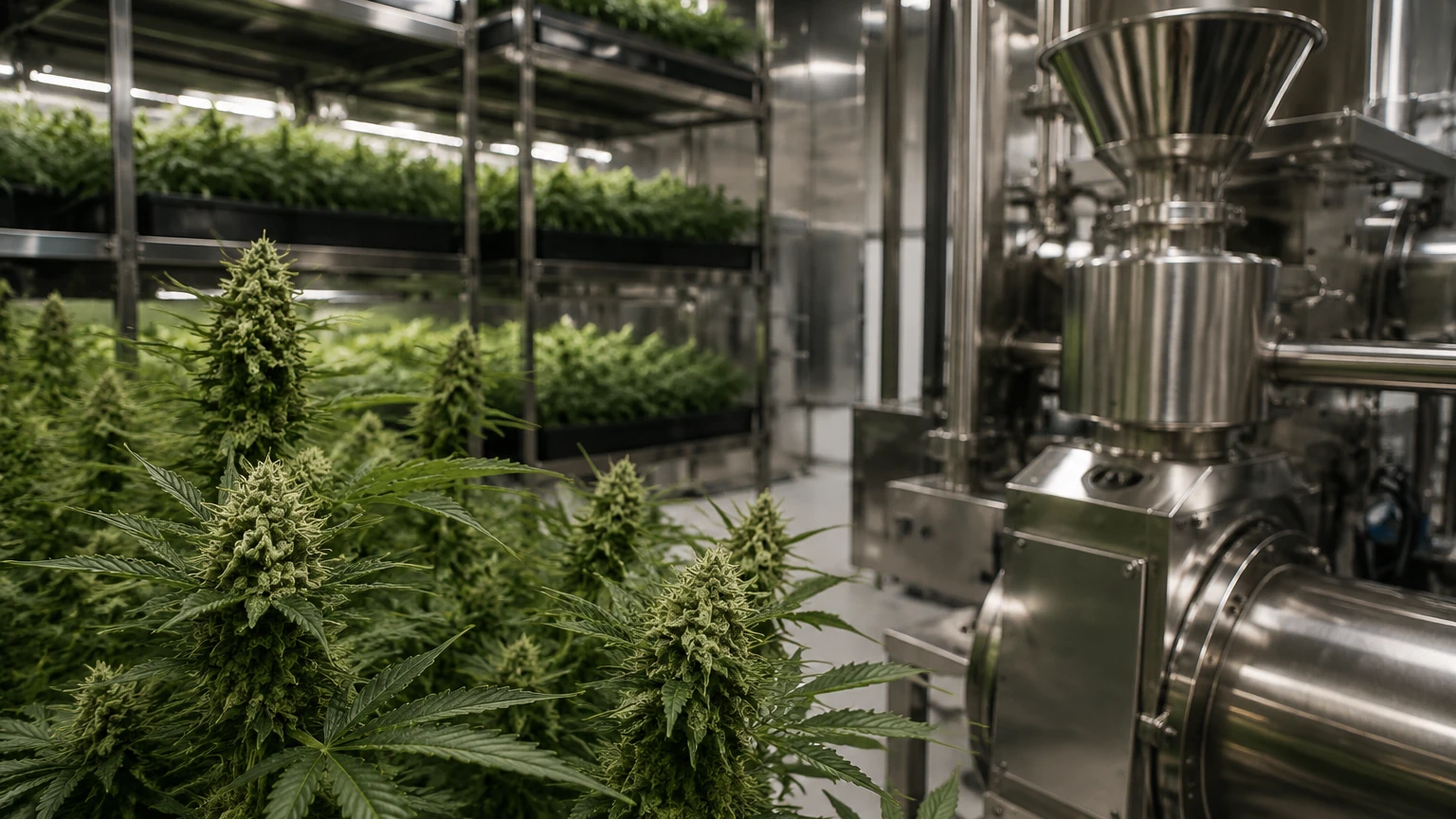
In the rapidly evolving landscape of industrial cannabis processing, the term "cannabis machinery" encompasses a wide array of specialized equipment designed for extraction, distillation, and bulk storage. As these operations scale from artisanal labs to industrial-grade facilities, the requirement for precision, safety, and automation becomes paramount. Central to the efficient operation of this machinery is the integration of advanced level measurement instruments.
Reliable level sensing ensures that solvents are managed safely, extraction yields are maximized, and inventory is tracked with high accuracy. This guide explores the technical principles of level measurement within the context of cannabis processing machinery, providing engineering insights into technology selection and installation.
The Role of Level Measurement in Cannabis Processing
Cannabis machinery for extraction and refinement typically handles a variety of liquids, including solvents (ethanol, butane, CO2), crude oils, and waste products. Monitoring the levels of these substances is critical for several reasons:
1. Process Automation: Continuous level monitoring allows for automated filling and emptying of vessels, reducing manual labor and human error.
2. Safety and Compliance: Many solvents used in cannabis extraction are flammable or pressurized. Preventing overfills reduces the risk of hazardous leaks and explosions.
3. Resource Management: High-value extracts require precise inventory tracking to ensure batch consistency and financial accountability.
4. Equipment Protection: Preventing pumps from running dry or vessels from over-pressurizing extends the lifespan of the underlying cannabis machinery.
Core Measurement Principles
Before selecting a sensor for cannabis machinery, it is essential to understand the physical principles governing different measurement technologies. Each method has distinct advantages depending on the medium's properties and the vessel's environment.
Radar Level Measurement (Non-Contact)
Radar level meters operate by emitting high-frequency microwave pulses (typically in the GHz range). These pulses travel to the surface of the liquid, reflect back, and are captured by the sensor's antenna. The device calculates the distance based on the time-of-flight (ToF) of the signal.
* Advantages: Radar is unaffected by vacuum, high pressure, or temperature fluctuations. It is highly accurate and does not come into contact with the medium, making it ideal for high-purity cannabis extracts.
* Application: Used in solvent recovery tanks and decarboxylation vessels.
Ultrasonic Level Measurement
Ultrasonic sensors emit sound waves that reflect off the liquid surface. Like radar, they use the time-of-flight principle to determine the distance.
* Advantages: Cost-effective and easy to install for non-hazardous, atmospheric applications.
* Limitations: Sound waves are sensitive to air temperature, heavy vapors, and foam, which are common in certain cannabis extraction stages. They are generally restricted to shorter ranges (up to 15m or 20m) and non-pressurized tanks.
Hydrostatic Level Measurement
This principle relies on the relationship between the height of a liquid column and the pressure it exerts at the base of the tank. A pressure transmitter at the bottom of the vessel measures this "head pressure."
* Calculation: $P = \rho \cdot g \cdot h$ (where $P$ is pressure, $\rho$ is density, $g$ is gravity, and $h$ is height).
* Application: Excellent for large atmospheric storage tanks of ethanol or water-based cleaning solutions.
Magnetic Level Gauges
Magnetic level gauges utilize a float containing a permanent magnet that moves with the liquid level inside a bypass chamber. This magnet flips external flags or interacts with a reed-chain transmitter to provide a visual and electronic reading.
* Advantages: Provides a clear visual indication without requiring power, which is useful for manual safety checks in hazardous areas.
Selecting Level Sensors for Specific Cannabis Machinery
The choice of instrumentation depends heavily on the specific stage of the production cycle. For a comprehensive look at available sensor technologies, engineers can visit the Main Page of specialized instrument manufacturers to compare technical specifications.
1. Solvent Extraction Systems
In systems using hydrocarbons (butane/propane) or ethanol, the machinery must be explosion-proof. Level sensors used here must carry ATEX or IECEx certifications. Radar level meters are preferred because they can penetrate the heavy vapors often present in the headspace of extraction tanks without losing signal integrity.
2. CO2 Extraction Units
Supercritical CO2 extraction involves extremely high pressures (often exceeding 70 bar). In these environments, hydrostatic sensors or high-pressure radar units are required. The sensors must be constructed from 316L stainless steel or higher-grade alloys to withstand the corrosive potential of carbonic acid and the mechanical stress of high pressure.
3. Distillation and Refinement
Short-path or wiped-film distillation machinery operates under high vacuum. Non-contact radar is the gold standard here, as it is not influenced by vacuum conditions and can provide millimeter-level accuracy for the collection of high-purity distillates.
Technical Selection Matrix
The following table provides a general guideline for selecting level measurement technology based on common cannabis machinery requirements:
| Technology | Typical Accuracy | Pressure Range | Temp. Range | Best For |
| :— | :— | :— | :— | :— |
| Non-contact Radar | ±2 mm | Vacuum to 40 bar+ | -40°C to 250°C | Solvents, Oils, Vacuum Distillation |
| Ultrasonic | ±0.25% of range | Atmospheric | -40°C to 70°C | Water tanks, Waste management |
| Hydrostatic | ±0.1% to 0.5% | Atmospheric | -10°C to 80°C | Bulk Ethanol Storage |
| Magnetic Gauge | ±5 mm | Up to 100 bar | -40°C to 400°C | Visual monitoring of hazardous solvents |
| Level Switch | N/A (Point level) | Up to 64 bar | -50°C to 150°C | High/Low alarm, Pump protection |
Installation and Engineering Considerations
Proper installation is as critical as technology selection. Poorly mounted sensors can lead to false readings or premature failure.
1. Dead Zones (Blocking Distance): Every sensor has a minimum distance it cannot measure (the "dead zone"). For ultrasonic and radar sensors, this is usually between 100 mm and 500 mm from the sensor face. The sensor must be mounted high enough to ensure the maximum liquid level does not enter this zone.
2. Nozzle Interference: When mounting on a tank nozzle, the diameter and height of the nozzle must not obstruct the signal beam. For radar, a narrower beam angle (e.g., 3° to 8°) is preferable for tall, narrow nozzles.
3. Internal Obstructions: Cannabis machinery often contains agitators, heating coils, or baffles. Sensors must be positioned so the signal path is clear of these obstructions to avoid "false echoes."
4. Sanitary Requirements: For equipment producing consumables, sensors must feature tri-clamp fittings and polished surfaces (Ra < 0.8 μm) to prevent bacterial growth and facilitate Clean-in-Place (CIP) processes.
Limitations and Challenges
While modern level meters are highly advanced, certain conditions in cannabis processing can pose challenges:
* Foaming: Heavy foam, common in some extraction and filtration processes, can absorb ultrasonic and radar signals. In such cases, guided wave radar (GWR) or hydrostatic sensors may be more reliable.
* Dielectric Constant: Radar signals reflect better off liquids with higher dielectric constants. Some oils have low dielectric constants, requiring high-sensitivity radar units or guided wave technology to ensure a stable signal.
* Vapor Clouds: Rapid evaporation of solvents can create dense vapor clouds. While radar is generally resistant to this, ultrasonic sensors will likely fail as the speed of sound changes in different gas densities.
Frequently Asked Questions
Q: Can I use a standard water level sensor for ethanol storage?
A: Not recommended. Ethanol is flammable and requires an intrinsically safe or explosion-proof rated sensor. Additionally, the materials (seals and housing) must be chemically compatible with ethanol to prevent degradation.
Q: How do I measure the level in a tank with an agitator?
A: Use a radar level meter with a narrow beam angle and mount it as far from the agitator shaft as possible. Most modern radar units also feature "false echo suppression" software that allows the user to program the device to ignore reflections from the agitator blades.
Q: What is the maintenance requirement for these sensors?
A: Non-contact sensors like radar and ultrasonic require very little maintenance since they do not touch the medium. Hydrostatic sensors may require periodic calibration or cleaning of the diaphragm if the liquid is prone to buildup or crystallization.
Conclusion
As the cannabis industry continues to mature, the sophisticated nature of cannabis machinery demands equally sophisticated instrumentation. By understanding the principles of radar, ultrasonic, and hydrostatic measurement, engineers can select the most appropriate tools to ensure safety, efficiency, and product quality. For those looking to integrate these technologies into their production lines, reviewing professional options and application support on the Main Page is a vital step toward achieving industrial-grade precision in cannabis processing.