Carbon Dioxide Flow Meter
Carbon Dioxide Flow Meter
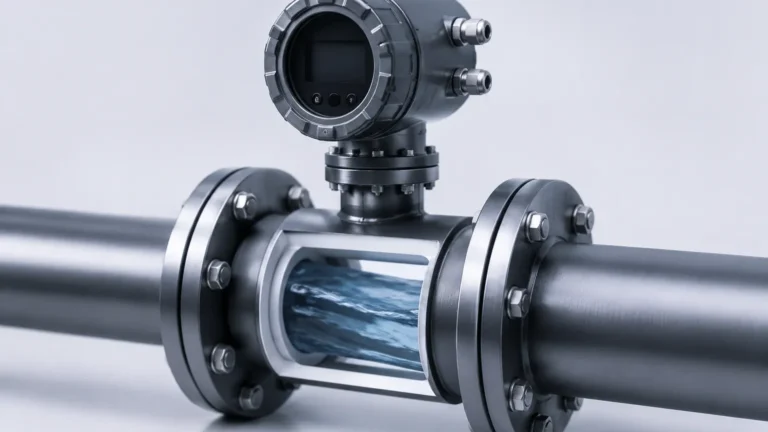
Carbon dioxide (CO2) is a versatile gas used extensively across the food and beverage, chemical, medical, and energy sectors. Whether it is used for carbonating soft drinks, providing an inert atmosphere for welding, or being captured and stored in Carbon Capture, Utilization, and Storage (CCUS) projects, the ability to measure its flow rate accurately is critical for process efficiency, safety, and billing. Selecting a carbon dioxide flow meter requires an understanding of the gas's unique physical properties, including its high compressibility and the potential for phase changes between gas, liquid, and supercritical states.
In industrial automation, flow measurement is often paired with level monitoring in storage tanks to provide a complete picture of inventory and process consumption. For engineers and procurement specialists, choosing the right technology involves balancing accuracy requirements, installation constraints, and the specific state of the CO2 being measured.
Measurement Principles for Carbon Dioxide
Before selecting a carbon dioxide flow meter, it is essential to understand the physical principles governing different measurement technologies. CO2 presents specific challenges because its density changes significantly with relatively small fluctuations in temperature and pressure.
Thermal Mass Flow Measurement
Thermal mass flow meters operate on the principle of heat transfer. The instrument typically contains two RTD (Resistance Temperature Detector) sensors: one acts as a reference, measuring the gas temperature, while the other is heated to a specific temperature above the reference. As CO2 molecules flow past the heated sensor, they carry away heat. The electrical power required to maintain the temperature difference is directly proportional to the mass flow rate.
Because this method measures mass flow directly, it does not require additional pressure or temperature compensation for gas applications. It is particularly effective for low-pressure CO2 lines and leak detection due to its high sensitivity.
Coriolis Mass Flow Measurement
Coriolis meters are considered the gold standard for accuracy. They consist of one or more vibrating tubes. As CO2 (liquid or gas) flows through these tubes, the Coriolis force causes the tubes to twist. The degree of twist is measured by sensors and is directly proportional to the mass flow.
Coriolis meters are unique because they measure mass flow, density, and temperature simultaneously. They are the preferred choice for high-pressure liquid CO2 or supercritical CO2 applications where density changes are extreme and unpredictable.
Vortex Shedding Principle
Vortex flow meters utilize a "bluff body" placed in the flow stream. As the CO2 flows past this obstruction, vortices are shed alternately on each side. The frequency of these vortices is proportional to the flow velocity. By incorporating temperature and pressure sensors (multivariable vortex meters), the device can calculate the compensated mass flow of CO2 gas. This technology is robust and has no moving parts, making it suitable for high-velocity gas applications.
Differential Pressure (DP) Measurement
Differential pressure meters, such as orifice plates or Venturi tubes, create a constriction in the pipe. The pressure drop across this constriction is measured. According to Bernoulli’s principle, the square root of the pressure drop is proportional to the flow rate. For CO2, DP meters require rigorous pressure and temperature compensation to account for density variations, making them more complex to maintain than modern mass flow alternatives.
Key Selection Criteria for Carbon Dioxide Flow Meters
Selecting the appropriate meter involves evaluating the specific process conditions and the desired outcome of the measurement. For a comprehensive overview of how these instruments integrate into broader industrial systems, professionals often consult the Main Page of specialized instrument manufacturers to ensure compatibility with existing automation frameworks.
1. Phase of the Media
CO2 can exist as a gas, a refrigerated liquid, or a supercritical fluid (above 31.1°C and 73.8 bar).
* Gas Phase: Thermal mass or Vortex meters are common.
* Liquid Phase: Coriolis or DP meters are preferred.
* Supercritical Phase: Coriolis meters are almost exclusively used due to the extreme density fluctuations.
2. Accuracy and Turndown Ratio
Turndown ratio refers to the range over which the meter can measure accurately (max flow vs. min flow). If a process has highly variable flow rates, a thermal mass meter (with a 100:1 turndown) may be superior to a vortex meter (typically 10:1 or 20:1).
3. Operating Pressure and Temperature
CO2 is often stored at high pressures. Ensure the meter body and flange ratings meet the Maximum Allowable Working Pressure (MAWP). Furthermore, CO2 can reach very low temperatures during expansion (the Joule-Thomson effect), which may require meters rated for cryogenic or sub-zero service.
Practical Selection Table
The following table provides a general comparison of the most common technologies used for CO2 flow measurement.
| Technology | Typical Accuracy | Turndown | Phase Suitability | Primary Advantage |
| :— | :— | :— | :— | :— |
| Thermal Mass | ±1% of Reading | 100:1 | Gas | No P&T compensation needed |
| Coriolis | ±0.1% to 0.5% | 20:1 | Liquid, Gas, Supercritical | Highest accuracy; direct mass |
| Vortex | ±1.0% to 1.5% | 20:1 | Gas, Steam | No moving parts; high temp |
| Differential Pressure | ±2.0% | 4:1 | Liquid, Gas | Low cost for large pipes |
| Ultrasonic | ±1.0% | 50:1 | Gas | Non-intrusive; no pressure drop |
Installation Considerations
To ensure the reliability of a carbon dioxide flow meter, specific installation protocols must be followed. Failure to adhere to these can result in significant measurement errors.
1. Straight Pipe Runs: Most flow meters (except Coriolis) require a certain length of straight pipe upstream and downstream to eliminate turbulence. Typically, 10 to 20 diameters (D) upstream and 5D downstream are required. If space is limited, flow conditioners may be necessary.
2. Orientation: For liquid CO2, the meter should be installed in a position where the pipe remains full. For gas CO2, the meter should be installed to prevent moisture or condensate from pooling in the sensor head.
3. Materials of Construction: CO2 can be corrosive in the presence of moisture (forming carbonic acid). Stainless steel (316L) is the standard recommendation. Additionally, elastomers must be chosen carefully; standard O-rings can suffer from Rapid Gas Decompression (RGD), where CO2 penetrates the seal and causes it to burst when the pressure drops.
4. Insulation: In liquid CO2 applications, the pipeline should be insulated to prevent ambient heat from causing the liquid to "flash" into gas, which creates two-phase flow and causes most meters to fail or report errors.
Limitations and Common Risks
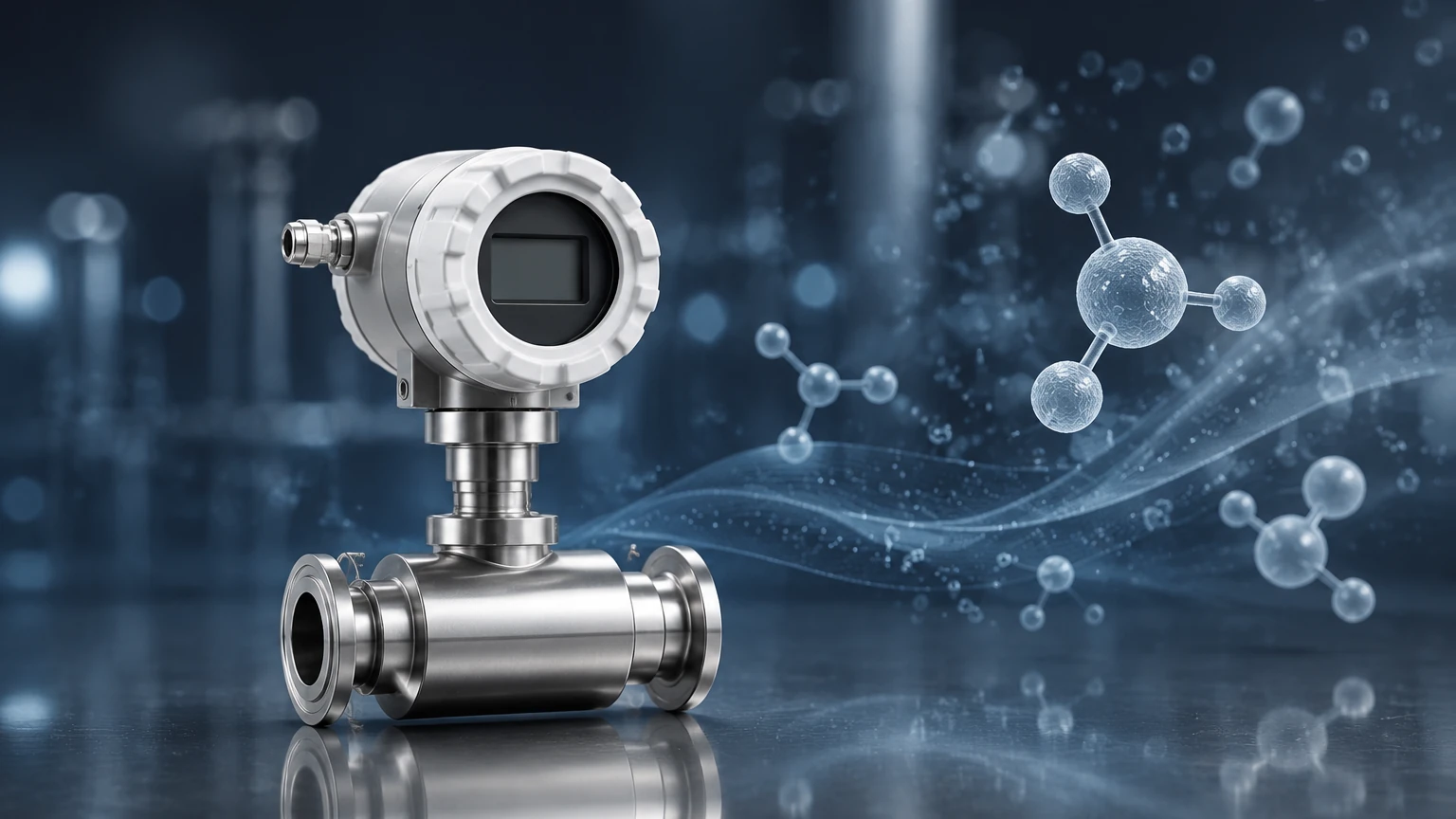
When implementing a carbon dioxide flow meter, engineers must be aware of several technical risks:
* The Joule-Thomson Effect: When CO2 pressure drops (e.g., across a valve or an orifice plate), the temperature drops significantly. This can lead to ice formation on the outside of the pipe or even dry ice formation inside the pipe if not managed correctly.
* Compressibility Factor: CO2 does not behave like an ideal gas. At high pressures, the Z-factor (compressibility) deviates significantly from 1.0. If using a volumetric meter with compensation, the flow computer must use the AGA8 or GERG-2008 equations for accuracy.
* Two-Phase Flow: If the pressure in a liquid CO2 line drops below the vapor pressure, gas bubbles will form. This "slug flow" or cavitation can damage equipment and makes accurate measurement nearly impossible for most technologies except specialized Coriolis meters.
Frequently Asked Questions (FAQs)
Q: Can I use a standard air flow meter for carbon dioxide?
A: Not directly. While the physical housing might be the same, the calibration must be specific to CO2. Thermal mass meters, in particular, rely on the specific heat capacity of the gas, which is different for CO2 than for air or nitrogen.
Q: Why is mass flow preferred over volumetric flow for CO2?
A: Because CO2 is highly compressible. A cubic meter of CO2 at 1 bar contains much less product than a cubic meter at 10 bar. Mass flow (kg/h) remains constant regardless of pressure and temperature changes, making it the standard for commercial transactions.
Q: What maintenance is required for a CO2 flow meter?
A: For non-intrusive meters like Ultrasonic or Coriolis, maintenance is minimal. For thermal mass or vortex meters, periodic inspection for sensor coating (from oil or moisture in the CO2) is recommended. Calibration should typically be verified every 1 to 2 years depending on the criticality of the process.
Q: How does moisture affect CO2 measurement?
A: Moisture is a significant concern. It can lead to corrosion (carbonic acid) and can change the thermal properties of the gas, leading to errors in thermal mass meters. It is always best to measure CO2 in a dry state or ensure the meter is designed to handle saturated gas.
Conclusion
Effective carbon dioxide flow measurement is a cornerstone of modern industrial processing and environmental management. By understanding the transition between gas and liquid phases and selecting a technology—whether it be the precision of Coriolis or the versatility of thermal mass—operators can ensure long-term stability and accuracy. For those integrating these sensors into larger automation projects involving level, pressure, and temperature control, sourcing from a manufacturer with a broad portfolio of industrial instruments is essential for system compatibility. Detailed technical specifications and support for these applications can be found by reviewing the options available on the Main Page of professional measurement solution providers.