Cdu in Data Center
Cdu in Data Center
As data centers evolve to accommodate high-performance computing (HPC) and artificial intelligence (AI) workloads, the thermal management requirements have shifted significantly. Traditional air-cooling methods often struggle to dissipate the heat generated by modern high-density server racks. This has led to the widespread adoption of liquid cooling systems, where the Coolant Distribution Unit (CDU) serves as the critical heart of the infrastructure. A cdu in data center environments acts as the interface between the building's primary chilled water loop and the secondary cooling loop that directly services the IT equipment.
Effective operation of a CDU requires precise control and monitoring, particularly regarding fluid levels, pressure, and temperature. This article explores the technical functions of a CDU, the principles of level measurement within these systems, and the engineering considerations for selecting the right instrumentation to ensure data center uptime.
Understanding the Role of a CDU in Data Center Liquid Cooling
A Coolant Distribution Unit is a specialized heat exchange system designed to manage the distribution of coolant (typically treated water or dielectric fluid) to server racks. It performs several essential functions:
1. Heat Exchange: It transfers heat from the secondary loop (technology cooling system) to the primary facility water system (FWS) without the two fluids mixing.
2. Pressure Regulation: It maintains the correct flow rates and pressures required by cold plates or immersion tanks.
3. Filtration: It removes contaminants from the coolant to prevent clogging in micro-channels.
4. Fluid Containment and Monitoring: It includes a reservoir or expansion tank to manage fluid thermal expansion and provide a buffer for the system.
In a typical setup, the cdu in data center operations isolates the IT equipment from the facility's industrial water, which may be of lower quality or at a pressure unsuitable for delicate server components. By maintaining a closed secondary loop, the CDU ensures that only high-purity coolant reaches the processors.
Measurement Principles for Coolant Level Monitoring
Monitoring the liquid level within the CDU’s internal reservoir is vital. A drop in level can indicate a leak in the secondary loop—a catastrophic event in a data center—while an overfill can lead to excessive pressure. Engineers typically employ several measurement principles to ensure accuracy and redundancy.
Hydrostatic Pressure Measurement
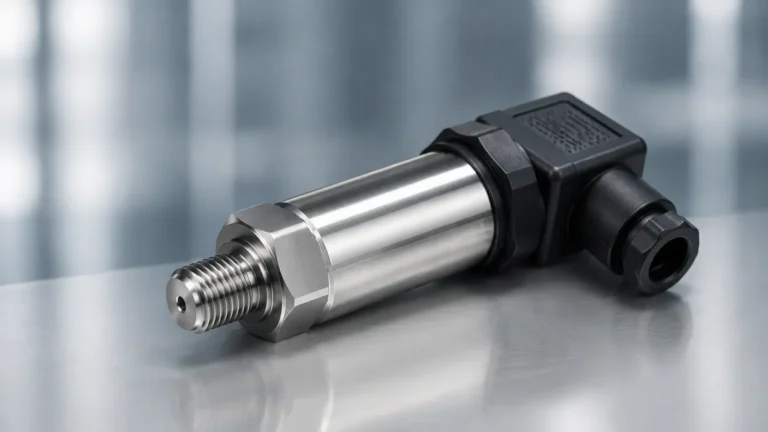
Hydrostatic level transmitters measure the pressure exerted by the liquid column at the bottom of the tank. The principle is based on the formula: $P = \rho \cdot g \cdot h$, where $P$ is pressure, $\rho$ is the density of the fluid, $g$ is gravity, and $h$ is the height of the liquid. This method is reliable and cost-effective for the relatively small, enclosed tanks found in CDUs. However, it requires compensation if the tank is pressurized or if the coolant density changes significantly with temperature.
Ultrasonic Level Sensing
Ultrasonic sensors emit high-frequency sound waves that reflect off the surface of the liquid. The time-of-flight (ToF) between emission and reception determines the distance. This is a non-contact method, which is advantageous for avoiding contamination. However, in the compact environment of a CDU, internal components or foam on the coolant surface can sometimes interfere with the signal.
Radar Level Measurement
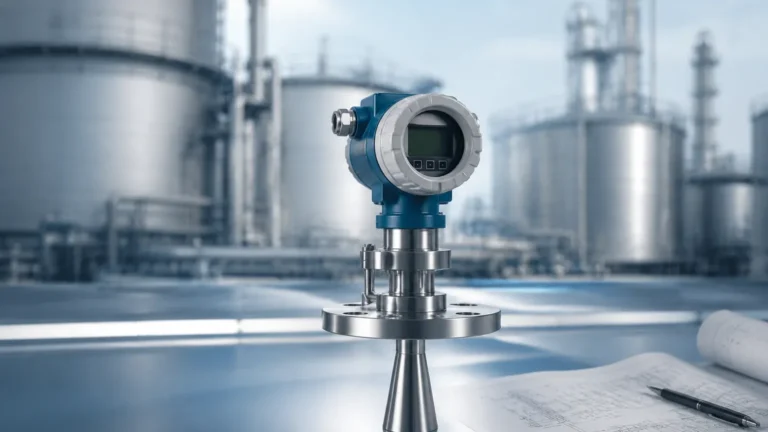
Radar sensors, specifically high-frequency (80GHz) radar, provide the highest precision. Like ultrasonic sensors, they use ToF, but they utilize electromagnetic waves. Radar is unaffected by temperature fluctuations, vapor, or vacuum conditions inside the expansion tank. For mission-critical data centers, radar is often preferred for its millimeter-level accuracy and long-term stability.
Magnetic Level Gauges
In many industrial CDU designs, a magnetic level gauge is mounted on the side of the reservoir. A float containing a magnet moves with the liquid level, flipping external flags or triggering reed switches. This provides a clear visual indication for maintenance personnel and a mechanical backup to electronic sensors.
Technical Comparison of Level Sensing Technologies for CDUs
When specifying instrumentation for a cdu in data center applications, engineers must balance precision, form factor, and integration capabilities. The following table summarizes the key characteristics of common level measurement technologies used in these systems.
| Technology | Accuracy | Contact Type | Best For | Limitations |
| :— | :— | :— | :— | :— |
| Hydrostatic | ±0.1% to 0.5% | Contact | Compact tanks, low cost | Sensitive to density changes |
| Ultrasonic | ±0.25% | Non-contact | Standard water-based coolants | Affected by heavy vapor/foam |
| Radar (80GHz) | ±1 mm | Non-contact | High-precision, dielectric fluids | Higher initial investment |
| Level Switch | N/A (Point) | Contact | Overfill/Leak protection | No continuous level data |
| Magnetic Gauge| ±5 mm | Contact | Visual redundancy | Moving parts can wear over time |
For a comprehensive overview of industrial measurement technologies and how they integrate into automated cooling systems, engineers can visit the Main Page to review product options and application support.

Installation and Integration Considerations
Installing level sensors within a cdu in data center environment requires careful planning to ensure the data is actionable and the hardware is durable.
Tank Geometry and Dead Zones
CDU reservoirs are often small and may contain baffles or internal piping. When installing ultrasonic or radar sensors, it is critical to account for the "dead zone" (the area directly beneath the sensor where measurements are impossible). Sensors must be positioned to avoid signal interference from the tank walls or return-line turbulence.
Fluid Compatibility
Data centers use various coolants, including deionized water, propylene glycol mixtures, and engineered dielectric fluids (for immersion cooling). The wetted materials of the level sensor (e.g., 316L stainless steel, PTFE, or FKM) must be chemically compatible with these fluids to prevent corrosion or leaching, which could damage the server cold plates.
Signal Output and Communication
Modern CDUs are integrated into the Data Center Infrastructure Management (DCIM) or Building Management System (BMS). Level transmitters should support standard protocols such as 4-20mA (HART), Modbus RTU, or BACnet. This allows for real-time monitoring and the setting of automated alarms for low-level (leak detection) or high-level (overfill) conditions.
Maintenance, Safety, and Leak Detection Strategies
The primary risk associated with a cdu in data center operations is a coolant leak. Because liquid is being pumped directly to the server racks, any loss of containment can lead to hardware failure and downtime.
Redundancy in Level Monitoring
Using a combination of continuous level measurement (e.g., radar) and discrete point level switches provides a safety layer. If the continuous sensor fails or the level drops below a critical threshold, the level switch can trigger an emergency shutdown of the CDU pumps to minimize the volume of fluid leaked.
Calibration and Testing
While many modern sensors from manufacturers like Welk are designed for long-term stability, periodic verification is necessary. Hydrostatic sensors should be checked for zero-drift, especially if the coolant mixture has been altered. Radar and ultrasonic sensors should be inspected for any buildup or condensation on the sensor face.
Leak Detection Cables
In addition to monitoring the reservoir level, many data center operators install leak detection cables around the base of the CDU and under the raised floor near the server racks. These cables detect the presence of moisture and provide a localized alarm, complementing the "macro" view provided by the CDU's internal level sensors.
Frequently Asked Questions (FAQ)
Q: Why is level measurement more critical in liquid cooling than in air cooling?
A: Air cooling does not involve a consumable or circulating fluid that can leak and damage electronics. In liquid cooling, the CDU must maintain a specific fluid volume to ensure proper thermal mass and pump suction. A loss of fluid directly correlates to a loss of cooling capacity and potential equipment damage.
Q: Can I use a standard water level sensor for dielectric fluids?
A: Not necessarily. Dielectric fluids have different dielectric constants than water, which affects the signal reflection in radar sensors and the capacitance in other sensor types. You must ensure the sensor is calibrated for the specific fluid density and dielectric properties.
Q: What is the typical maintenance interval for level sensors in a CDU?
A: In a clean data center environment, electronic sensors like radar or hydrostatic transmitters typically require an annual inspection. Magnetic gauges should be checked every six months to ensure the float moves freely and there is no sediment buildup.
Q: How does the CDU handle fluid expansion?
A: As the coolant heats up, it expands. The CDU includes an expansion tank (reservoir) where the liquid level rises and falls. The level sensor monitors this fluctuation to ensure the level stays within the safe operating range of the expansion volume.
Q: Is it better to use a contact or non-contact sensor?
A: Non-contact sensors (Radar/Ultrasonic) are generally preferred in high-purity systems to prevent any risk of fluid contamination. However, hydrostatic sensors are often used in smaller CDUs due to their compact size and ease of integration into pressurized systems.
By implementing robust level measurement and monitoring within the cdu in data center infrastructure, operators can leverage the efficiency of liquid cooling while mitigating the risks of fluid loss and system failure. Selecting high-quality instrumentation tailored to the specific demands of the data center environment is a fundamental step in modern facility engineering.