Centrifuge Cannabis
Centrifuge Cannabis
In the rapidly evolving landscape of industrial hemp and cannabis processing, the centrifuge has emerged as the gold standard for high-throughput extraction. As facilities scale from pilot-scale operations to massive industrial plants, the precision of the extraction process depends not only on the mechanical performance of the centrifuge but also on the sophisticated instrumentation that monitors the surrounding liquid levels. For engineers and facility managers, understanding the synergy between a centrifuge cannabis system and accurate level measurement is essential for safety, efficiency, and product consistency.
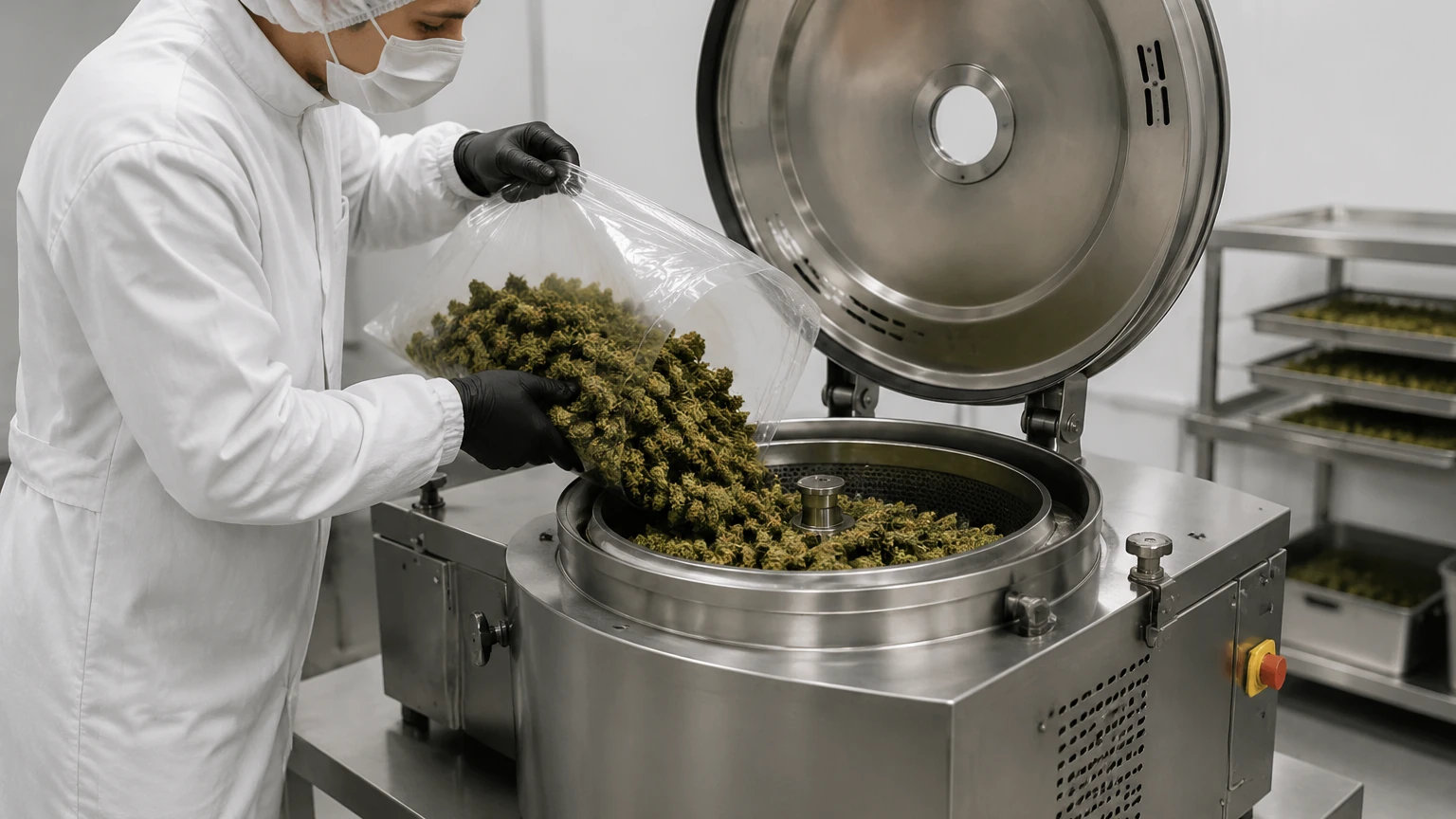
Industrial cannabis centrifugation primarily utilizes solvent-based extraction, typically employing chilled ethanol. The process involves soaking biomass in a solvent to dissolve cannabinoids and terpenes, followed by a high-speed spin cycle to separate the liquid extract from the solid plant material. Managing the flow of these solvents and the resulting "micella" (the solvent-oil mixture) requires a robust approach to level control across storage tanks, extraction vessels, and recovery systems.
Level Measurement Principles in Solvent-Based Extraction
Before selecting instrumentation for a centrifuge cannabis workflow, it is vital to understand the physical principles governing level measurement. In these environments, instruments must contend with flammable vapors, cryogenic temperatures, and varying liquid densities.
Radar Level Measurement (Time-of-Flight)
Radar level meters operate on the Time-of-Flight (ToF) principle. The sensor emits high-frequency electromagnetic pulses (typically in the 26 GHz or 80 GHz range) toward the liquid surface. These pulses reflect off the surface and return to the sensor. By measuring the time interval between emission and reception, the device calculates the distance to the product.
In cannabis extraction, non-contact radar is highly valued because it is unaffected by the heavy ethanol vapors or the vacuum conditions often found in closed-loop systems. Because the signal travels at the speed of light, it is independent of air temperature or pressure fluctuations, providing a precision of ±2 mm (0.08 inches).
Ultrasonic Level Measurement
Ultrasonic sensors function similarly to radar but use sound waves instead of electromagnetic pulses. The sensor emits a sound burst that bounces off the liquid surface. However, the speed of sound is highly dependent on the medium it travels through. In a centrifuge cannabis setup, the presence of concentrated ethanol vapor can significantly alter the speed of sound, leading to measurement errors unless the system is perfectly compensated for temperature and gas composition. Consequently, ultrasonic is often reserved for wastewater or non-volatile storage applications within the facility.
Hydrostatic Pressure Measurement
This principle relies on the relationship between the height of a liquid and the pressure it exerts at the bottom of a vessel. A pressure transmitter installed at the base of the tank measures the head pressure. If the density of the fluid is known and constant, the level can be calculated with high reliability. In extraction, this is useful for large bulk storage tanks, though it requires recalibration if the solvent-to-oil ratio changes significantly, as this alters the fluid density.
The Role of Level Control in Centrifuge Cannabis Processing
In a professional extraction environment, level measurement is integrated into several stages of the centrifuge workflow. Each stage presents unique challenges for the instrumentation.
1. Solvent Management
Centrifuge extraction requires large volumes of ethanol, often chilled to temperatures between -40°C and -80°C (-40°F to -112°F). Level sensors in these storage tanks must be rated for cryogenic or near-cryogenic temperatures. Precise level monitoring ensures that the centrifuge cannabis system always has an adequate supply of solvent for the next batch, preventing dry-run scenarios that can damage pumps.
2. Extraction and Collection Vessels
Once the centrifuge has separated the liquid from the biomass, the micella is transferred to collection tanks. These tanks often experience turbulence and foam. Level switches are frequently used here as redundant safety measures to prevent overfilling, while continuous level transmitters (like guided wave radar) provide real-time data for automated process control.
3. Solvent Recovery
After extraction, the solvent must be stripped from the oil. This involves evaporation and condensation. Monitoring the level in the evaporation flask or the falling film evaporator is critical to maintaining the heat transfer efficiency. In these stages, the liquid becomes increasingly viscous, making non-contact measurement methods preferable to avoid fouling of the sensor probe.
Technical Selection Table for Extraction Monitoring
Choosing the correct instrument requires balancing performance with the specific needs of the cannabis processing environment. The following table provides a comparison of common technologies used alongside centrifuge cannabis equipment.
| Technology | Accuracy | Suitability for Ethanol | Temperature Range | Best Application |
| :— | :— | :— | :— | :— |
| 80 GHz Radar | Excellent (±2mm) | High (Non-contact) | -196°C to +450°C | Process vessels & small tanks |
| Guided Wave Radar | High (±3mm) | High (Contacting) | -60°C to +400°C | Tanks with heavy foam or bypass pipes |
| Hydrostatic | Good (±0.1% Span) | Moderate (Density dependent) | -40°C to +100°C | Bulk solvent storage |
| Ultrasonic | Moderate (±0.25% Span) | Low (Vapor interference) | -40°C to +80°C | Water treatment & waste |
| Level Switch | N/A (Point level) | High | -50°C to +150°C | Overfill protection/High-level alarm |
For a comprehensive look at available instrumentation and technical specifications, engineers can Review product options and application support to ensure their system meets the necessary safety and performance standards.
Installation and Safety Considerations
When integrating level sensors into a centrifuge cannabis facility, several engineering factors must be addressed to ensure long-term reliability and compliance with safety regulations.
Hazardous Area Classifications
Cannabis extraction using ethanol involves flammable liquids and vapors. Therefore, all electrical instrumentation must comply with hazardous area standards, such as ATEX (Europe) or Class I, Division 1/2 (North America). Sensors must be intrinsically safe or housed in explosion-proof enclosures to prevent ignition in the event of a vapor leak.
Sanitary Requirements
To maintain the purity of the final product, sensors in contact with the process fluid should feature sanitary connections. Tri-clamp (Tri-clover) fittings are the industry standard, allowing for easy removal and cleaning. The materials of construction, typically 316L stainless steel with PTFE or PEEK seals, must be compatible with both the solvent and the organic compounds found in cannabis.
Mounting and Turbulence
Centrifuges create significant vibration. Level sensors should be mounted on stable portions of the tank or on dedicated bypass pipes (stillpipes) to isolate them from mechanical noise. In tanks where the liquid is agitated or flowing rapidly, a stilling well can be used to provide a calm surface for radar or ultrasonic signals, ensuring a stable and accurate reading.
Limitations of Level Measurement in Cannabis Processing
While modern instrumentation is highly advanced, certain process conditions can limit the effectiveness of level sensors in a centrifuge cannabis operation:
* Foaming: Heavy foam can absorb ultrasonic and radar signals. While 80 GHz radar can often penetrate light foam, thick, protein-heavy foam may require the use of guided wave radar or specialized signal processing algorithms.
* Vapor Density: In high-pressure or high-temperature solvent recovery, the density of the gas phase can change. If using ultrasonic sensors, this will cause significant measurement drift.
* Coating and Buildup: Cannabis resins are notoriously sticky. Over time, these can coat the probes of contacting sensors (like guided wave radar or tuning forks), potentially leading to false readings. Non-contact radar is the preferred solution to mitigate this risk.
Frequently Asked Questions (FAQs)
Q: Why is non-contact radar preferred over ultrasonic for ethanol tanks?
A: Ethanol evaporates readily, creating a dense vapor layer above the liquid. Since sound waves (ultrasonic) travel through the air, their speed is affected by the concentration of these vapors, leading to inaccuracies. Radar uses electromagnetic waves, which are unaffected by the vapor composition, providing a much more reliable reading.
Q: Can hydrostatic sensors be used for chilled ethanol at -40°C?
A: Yes, provided the sensor diaphragm and seals are rated for low temperatures. However, the density of ethanol changes with temperature. To maintain accuracy, the control system must compensate for the temperature-induced density changes of the solvent.
Q: How do I prevent overfilling in my centrifuge collection tank?
A: The most reliable method is to use a redundant system. A continuous level transmitter (like a radar meter) provides the primary data for the PLC, while an independent high-level switch (such as a vibrating tuning fork) acts as a hard-wired safety shut-off for the feed pump.
Q: What is the benefit of 80 GHz radar in small cannabis extraction vessels?
A: Higher frequency radar (80 GHz) has a much narrower beam angle compared to older 26 GHz models. This allows the sensor to be installed in small tanks with internal obstructions (like agitators or baffles) without receiving false reflections from the tank walls.
Conclusion
The successful operation of a centrifuge cannabis extraction line depends on the seamless integration of mechanical separation and electronic monitoring. By selecting level measurement instruments based on sound physical principles—such as radar for solvent management and hydrostatic for bulk storage—processors can achieve higher yields, ensure operator safety, and maintain the rigorous quality standards required in the modern cannabis industry. For detailed technical guidance on specific sensor models, visiting the Main Page of a professional instrument manufacturer is the recommended next step for system designers.