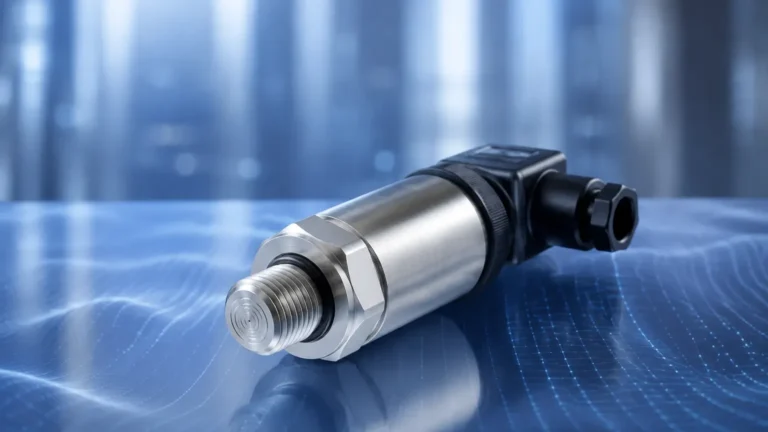
Cerabar Pmp75
Cerabar Pmp75
In the field of industrial process automation, the Cerabar PMP75 represents a critical component for high-pressure and high-temperature applications. As a digital pressure transmitter equipped with a metal diaphragm, it is primarily utilized in the process industry for measuring pressure, level, volume, or mass in liquids. Understanding the technical nuances of this instrument is essential for engineers and procurement professionals who require reliable performance in demanding environments.
Understanding Hydrostatic Level Measurement Principles
Before evaluating the specific capabilities of the Cerabar PMP75, it is necessary to understand the underlying physics of hydrostatic level measurement. This method is one of the most common techniques used in industrial tanks and vessels due to its reliability and relatively simple installation.
The Hydrostatic Paradox
The principle states that the pressure at a specific depth in a static liquid is proportional to the height of the liquid column above it, regardless of the tank's shape. This is expressed by the formula:
P = ρ × g × h
* P: Hydrostatic pressure (Pa or bar)
* ρ (rho): Density of the medium (kg/m³)
* g: Acceleration due to gravity (approximately 9.81 m/s²)
* h: Height of the liquid (m)
In a practical application, if the density of the liquid remains constant, the pressure transmitter installed at the bottom of the tank can provide a highly accurate reading of the liquid level by measuring the pressure exerted by the liquid column. For pressurized tanks, a differential pressure approach or a compensation for the top-side gas pressure is required to ensure accuracy.
Technical Overview of the Cerabar PMP75
The Cerabar PMP75 is designed specifically for applications involving high pressures (up to 400 bar / 6000 psi) and extreme process temperatures. Unlike standard transmitters that may use ceramic sensors, the PMP75 utilizes a metallic diaphragm, often integrated with diaphragm seals to protect the sensing element from aggressive or hot media.
Sensor Technology
The PMP75 typically employs a piezoresistive sensor cell. When pressure is applied to the metallic diaphragm, it deflects slightly, changing the resistance of the bridge circuit. This change is converted into an electronic signal (typically 4-20mA HART, PROFIBUS PA, or FOUNDATION Fieldbus). The use of a metal diaphragm is particularly advantageous in applications where hydrogen permeation is a risk, as specialized coatings like gold can be applied to the metallic surface.
Diaphragm Seal Systems
One of the defining features of the Cerabar PMP75 is its compatibility with a wide range of diaphragm seals. These seals are used when:
* The process temperature is outside the operating limits of the transmitter.
* The medium is highly corrosive and requires exotic materials (e.g., Hastelloy, Tantalum, or Monel).
* The medium is highly viscous or contains solids that could clog a standard pressure port.
* Hygienic requirements necessitate a flush-mounted diaphragm for easy cleaning (CIP/SIP).
Key Evaluation Criteria for Process Integration
When selecting a Cerabar PMP75 or a comparable high-end transmitter from the Main Page, several technical parameters must be confirmed to ensure the device is fit for purpose.
| Parameter | Specification Detail | Engineering Consideration |
| :— | :— | :— |
| Measurement Range | Up to 400 bar (6000 psi) | Ensure the URL (Upper Range Limit) provides sufficient headroom for process spikes. |
| Reference Accuracy | Up to ±0.075% (Standard) | Higher accuracy (±0.05%) may be required for custody transfer or precise inventory. |
| Process Temperature | -40°C to +400°C (-40°F to +752°F) | Temperatures above 150°C usually require capillary-mounted diaphragm seals. |
| Wetted Materials | 316L, Alloy C276, Tantalum, Gold | Material compatibility must be checked against the chemical resistance of the medium. |
| Output Communication | 4-20mA HART, Profibus, FF | Must match the existing control system (PLC/DCS) architecture. |
Installation and Commissioning Best Practices
The performance of the Cerabar PMP75 is heavily dependent on correct installation, particularly when configured with diaphragm seals and capillaries.
Mounting Position and Zero Point
Pressure transmitters are calibrated at the factory in a specific orientation (usually vertical). If the device is mounted horizontally or at an angle, the weight of the internal fill fluid in the diaphragm seal can cause a "zero shift." This is a constant offset that must be corrected during commissioning using the "Position Zero Adjustment" function.
Capillary Considerations
If the PMP75 uses capillaries to separate the transmitter from the process, the following must be observed:
1. Ambient Temperature Fluctuations: Capillaries are filled with oil. Changes in ambient temperature cause the oil to expand or contract, which can introduce measurement errors. Insulation or heat tracing of capillaries may be necessary in extreme climates.
2. Response Time: Longer capillaries increase the response time of the measurement. This should be accounted for in the control loop tuning.
3. Bending Radius: Never bend capillaries beyond the manufacturer's specified minimum radius to avoid damaging the internal tube and restricting fluid movement.
Impulse Lines
For versions without diaphragm seals, impulse lines should be sloped correctly (at least 1:12) to allow gas bubbles to escape back into the tank (for liquid measurement) or to allow condensate to drain (for gas measurement).
Limitations and Operational Constraints
While the Cerabar PMP75 is a robust instrument, it is not a universal solution for every level measurement challenge. Engineers should be aware of the following limitations:
* Density Sensitivity: Since hydrostatic measurement relies on the density of the liquid, any change in temperature that alters the liquid's density will result in a level error unless a temperature compensation algorithm is implemented in the DCS.
* Non-Contact Requirements: In applications involving extremely sticky materials or processes where the sensor cannot touch the medium, non-contact technologies like radar or ultrasonic sensors are preferred. You can explore these alternatives on the Main Page.
* Vacuum Limitations: While the PMP75 can measure in vacuum conditions, the choice of fill fluid in the diaphragm seal is critical. Some oils may boil or outgas under high vacuum and high temperature, leading to permanent damage to the diaphragm.
Comparison with Alternative Technologies
In many B2B industrial scenarios, the choice between a pressure transmitter like the PMP75 and a radar level meter depends on the vessel geometry and process conditions.
1. Radar (Time-of-Flight): Unaffected by density changes and can be used in non-contact applications. However, it can be more expensive and may struggle with heavy foam or internal obstructions.
2. Ultrasonic: Cost-effective for water treatment but limited by temperature, pressure, and the presence of vapors or dust in the tank headspace.
3. Hydrostatic (PMP75): Excellent for high-pressure vessels and provides a direct measurement of mass if the tank area is constant. It is generally more robust in high-temperature chemical processes.
Frequently Asked Questions
Q: How often should the Cerabar PMP75 be calibrated?
A: While the PMP75 has excellent long-term stability (often specified for up to 5 or 10 years), the calibration interval depends on the criticality of the process and local regulations. Most industrial plants perform a verification check every 12 to 24 months.
Q: Can the PMP75 be used for steam applications?
A: Yes, but it must be used with a diaphragm seal or a siphon to protect the sensor from direct contact with live steam, which can exceed the sensor's temperature rating.
Q: What is the difference between the PMP75 and the PMP71?
A: The PMP75 is typically associated with diaphragm seal applications for extreme conditions, whereas the PMP71 is often used for standard pressure applications with direct process connections, though there is significant overlap in their electronic platforms.
Q: How does hydrogen permeation affect the metallic diaphragm?
A: In high-pressure hydrogen applications, hydrogen atoms can diffuse through the metal diaphragm and form bubbles in the fill fluid, causing measurement drift. For these applications, a gold-plated diaphragm is recommended as it acts as a superior barrier to hydrogen diffusion.
Conclusion for Project Planning
When specifying a Cerabar PMP75 for a project, it is vital to confirm the chemical compatibility of the wetted parts, the maximum possible process pressure, and the ambient temperature range. For complex installations involving diaphragm seals, providing the manufacturer with the exact elevation difference between the process connection and the transmitter is necessary to ensure the device is pre-configured for the resulting head pressure.
For more information on selecting the right level measurement technology for your specific industrial application, including radar and ultrasonic options, visit the Main Page for comprehensive technical support and product specifications.