Cincinnati Cvg Airport Directions
Cincinnati Cvg Airport Directions
Navigating the complex infrastructure of a major international hub like the Cincinnati/Northern Kentucky International Airport (CVG) involves more than just understanding the road networks. While travelers often search for cincinnati cvg airport directions to reach their terminals or parking zones, engineers and facility managers focus on the "directions" of fluid flow and the critical level measurement systems that keep the airport’s industrial heart beating. From massive jet fuel farms to intricate wastewater treatment plants and seasonal de-icing fluid storage, precise level monitoring is essential for safety, environmental compliance, and operational efficiency.
At a facility as expansive as CVG, which covers thousands of acres, the management of liquid assets requires a sophisticated approach to instrumentation. This article explores the principles of level measurement, the specific applications within airport infrastructure, and how to select the right technology for demanding industrial environments.
Understanding Level Measurement Principles for Airport Infrastructure
Before selecting a device for a specific application at a facility like CVG, it is vital to understand the underlying physics of the most common level measurement technologies. Each method has strengths and limitations based on the medium being measured and the environmental conditions.
1. Radar Level Measurement (Non-Contact)
Radar level meters, such as those manufactured by Welk, use either Pulse Radar or Frequency Modulated Continuous Wave (FMCW) technology. The instrument emits a high-frequency electromagnetic wave (typically 26GHz or 80GHz) toward the product surface. The wave reflects off the surface and returns to the sensor. By measuring the time-of-flight or the frequency shift, the device calculates the distance to the liquid.
* Key Advantage: Radar is unaffected by changes in temperature, pressure, or the presence of vapors, making it ideal for volatile substances like jet fuel.
* 80GHz Technology: Modern 80GHz radar offers a narrow beam angle, allowing for installation in tanks with internal obstructions or narrow nozzles without signal interference.
2. Ultrasonic Level Measurement (Non-Contact)
Ultrasonic sensors function by emitting sound waves at frequencies above the human hearing range. These waves bounce off the liquid surface and return to the transducer. The time taken for the echo to return is proportional to the distance.
* Key Advantage: Cost-effective for water and wastewater applications.
* Limitation: Ultrasonic waves are sensitive to air temperature (requiring compensation) and can be scattered by heavy foam or dust.
3. Hydrostatic Level Measurement (Contact)
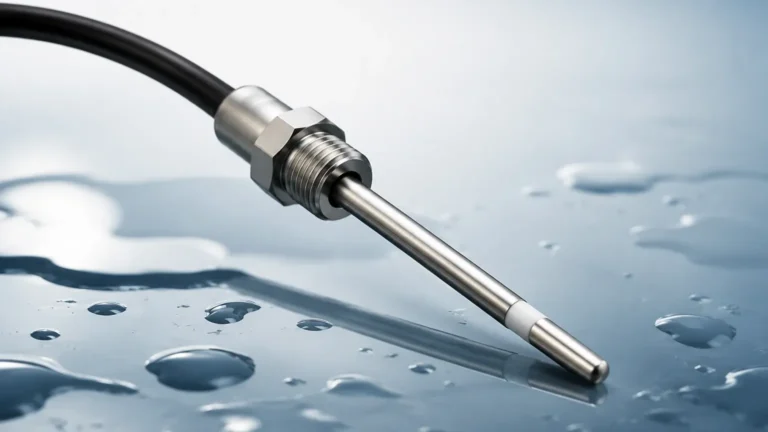
This method relies on the principle that the pressure at the bottom of a tank is directly proportional to the height of the liquid column above it (P = ρgh). A pressure transmitter is installed at the bottom of the tank or submerged in the liquid.
* Key Advantage: Simple to install in deep wells or vented tanks.
* Requirement: The density of the fluid must remain relatively constant for accurate height calculation.
Application-Specific Level Solutions at CVG
When following the logistical cincinnati cvg airport directions to the various utility sectors of the airport, one encounters diverse measurement challenges. Each zone requires a tailored technical approach.
Jet Fuel Storage and Distribution
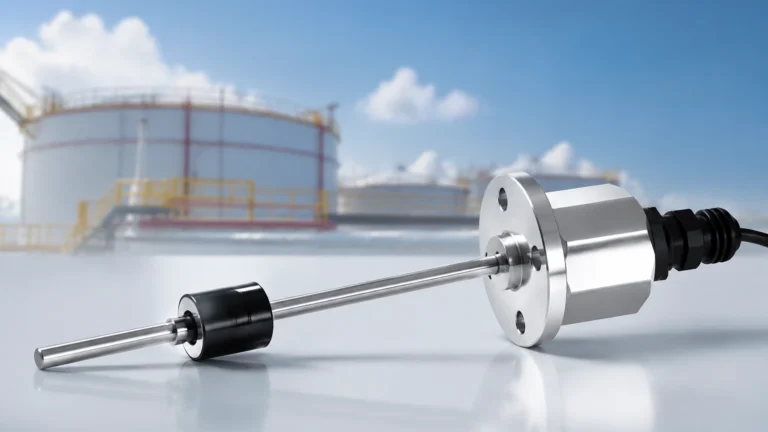
Fuel farms are the most critical industrial zones at CVG. Jet A-1 fuel is stored in large atmospheric tanks that may exceed 15 meters (49.2 feet) in height. For custody transfer and inventory management, accuracy is paramount. Radar level meters are the preferred choice here because they provide high-precision measurements (often within ±2mm) and are explosion-proof (ATEX/IECEx certified).
De-Icing Fluid Management
In the winter months, CVG manages vast quantities of propylene glycol for aircraft de-icing. This fluid is stored in large tanks and must be carefully monitored to ensure supply and to prevent environmental contamination during runoff collection. Because glycol can be viscous and its dielectric constant may vary with concentration, radar or high-end ultrasonic sensors are typically employed.
Wastewater and Stormwater Runoff
Airports produce significant amounts of wastewater, including runoff that may contain traces of fuel or chemicals. These are often collected in underground sumps or large treatment basins. Hydrostatic transmitters are frequently used in these deep sumps due to their ruggedness and ease of submersion, while ultrasonic sensors are used for open-channel flow measurement in flumes.
For a detailed look at the specific hardware used in these applications, professionals can visit the Main Page to review product options and application support.
Technical Selection Criteria for Industrial Level Meters
Choosing the correct instrument requires an evaluation of the physical properties of the medium and the vessel's geometry. The following table provides a general guide for selecting technology based on common airport fluids.
| Application | Recommended Technology | Typical Range | Key Consideration |
| :— | :— | :— | :— |
| Jet Fuel Tanks | 80GHz Radar | 0–30m (98.4 ft) | Explosion-proof (Ex d/ia) |
| De-icing (Glycol) | Radar or Ultrasonic | 0–15m (49.2 ft) | Resistance to vapor/foam |
| Fire Water Tanks | Ultrasonic | 0–10m (32.8 ft) | Low maintenance, non-contact |
| Wastewater Sumps | Hydrostatic | 0–20m (65.6 ft) | Submersible, rugged design |
| Chemical Storage | Radar (PTFE Coated) | 0–10m (32.8 ft) | Chemical compatibility |
Evaluation Factors:
1. Dielectric Constant (εr): Radar requires a minimum dielectric constant to reflect the signal. Fuel has a low εr (~2.1), necessitating high-sensitivity radar.
2. Vessel Internal Geometry: If a tank has agitators, heating coils, or ladders, a narrow-beam radar is necessary to avoid "false echoes."
3. Process Conditions: High pressure or vacuum environments rule out ultrasonic sensors, as sound requires a medium (air) to travel.

Installation Considerations in High-Security Aviation Environments
Installing instrumentation at a facility like CVG requires adherence to strict safety and security protocols. Beyond the literal cincinnati cvg airport directions needed for contractors to access secure airside zones, the following technical installation factors must be considered:
* Electromagnetic Interference (EMI): Airports are high-EMI environments due to powerful ground radars and communication arrays. Level meters must have high EMC resistance and be properly shielded and grounded to prevent signal drift.
* Mounting Position: Sensors should be mounted away from the tank wall (to avoid side-wall interference) and away from the inlet flow (to avoid turbulence). For a tank with a diameter of 5 meters (16.4 feet), the sensor should ideally be placed at 1/6th to 1/4th of the diameter from the wall.
* Stilling Wells: In tanks with heavy turbulence or low-dielectric fluids, a stilling well (a vertical pipe) can be used to guide the radar signal and provide a calm surface for measurement.
Limitations and Environmental Factors in Airport Utility Management
No single technology is a "silver bullet." Understanding limitations prevents operational failure.
* Foam and Turbulence: In wastewater treatment, heavy foam can absorb ultrasonic signals, leading to a "loss of echo." In such cases, radar or hydrostatic sensors are superior.
* Ambient Noise: High-decibel environments (near runways) can occasionally interfere with low-frequency ultrasonic sensors, though modern digital filtering has mitigated this risk.
* Condensation: In humid environments or tanks containing warm liquids, condensation can form on the sensor face. Welk radar meters often feature "drip-off" antenna designs or PTFE lenses to prevent moisture buildup from affecting the signal.
Frequently Asked Questions (FAQs)
Q: Why is 80GHz radar preferred over 26GHz for fuel farm applications?
A: The 80GHz frequency allows for a much smaller antenna and a tighter beam angle (as low as 3 degrees). This makes it easier to install on existing tank nozzles and ensures the signal does not hit internal tank structures, providing a much cleaner and more reliable return signal.
Q: Can one level meter be used for both water and fuel?
A: While some technologies like radar are versatile, the calibration and safety ratings differ. Fuel applications require explosion-proof certifications, whereas standard water tanks may not. Additionally, the dielectric constant of water (~80) is much higher than fuel (~2), requiring different sensitivity settings.
Q: How often do these instruments require calibration?
A: Most modern digital level meters are designed for long-term stability. However, for custody transfer applications (where fuel is bought or sold based on level), annual verification is often required by local weights and measures authorities.
Q: How do environmental temperatures at CVG affect measurement?
A: Cincinnati experiences significant temperature swings. Ultrasonic sensors must have integrated temperature compensation because the speed of sound changes with air density. Radar is unaffected by temperature changes in the vapor space, making it more robust for outdoor tanks exposed to the elements.
In summary, while the average person follows cincinnati cvg airport directions to reach a gate, the engineering teams at CVG follow a rigorous set of technical directions to ensure the facility's fluids are managed safely. By understanding the principles of radar, ultrasonic, and hydrostatic measurement, and by selecting high-quality instruments from providers like Welk, airport authorities can ensure continuous, safe, and efficient operations. For further technical specifications and to explore the full range of industrial measurement solutions, please refer to the Main Page.