Cole Parmer Chemical Compatibility Chart
Cole Parmer Chemical Compatibility Chart
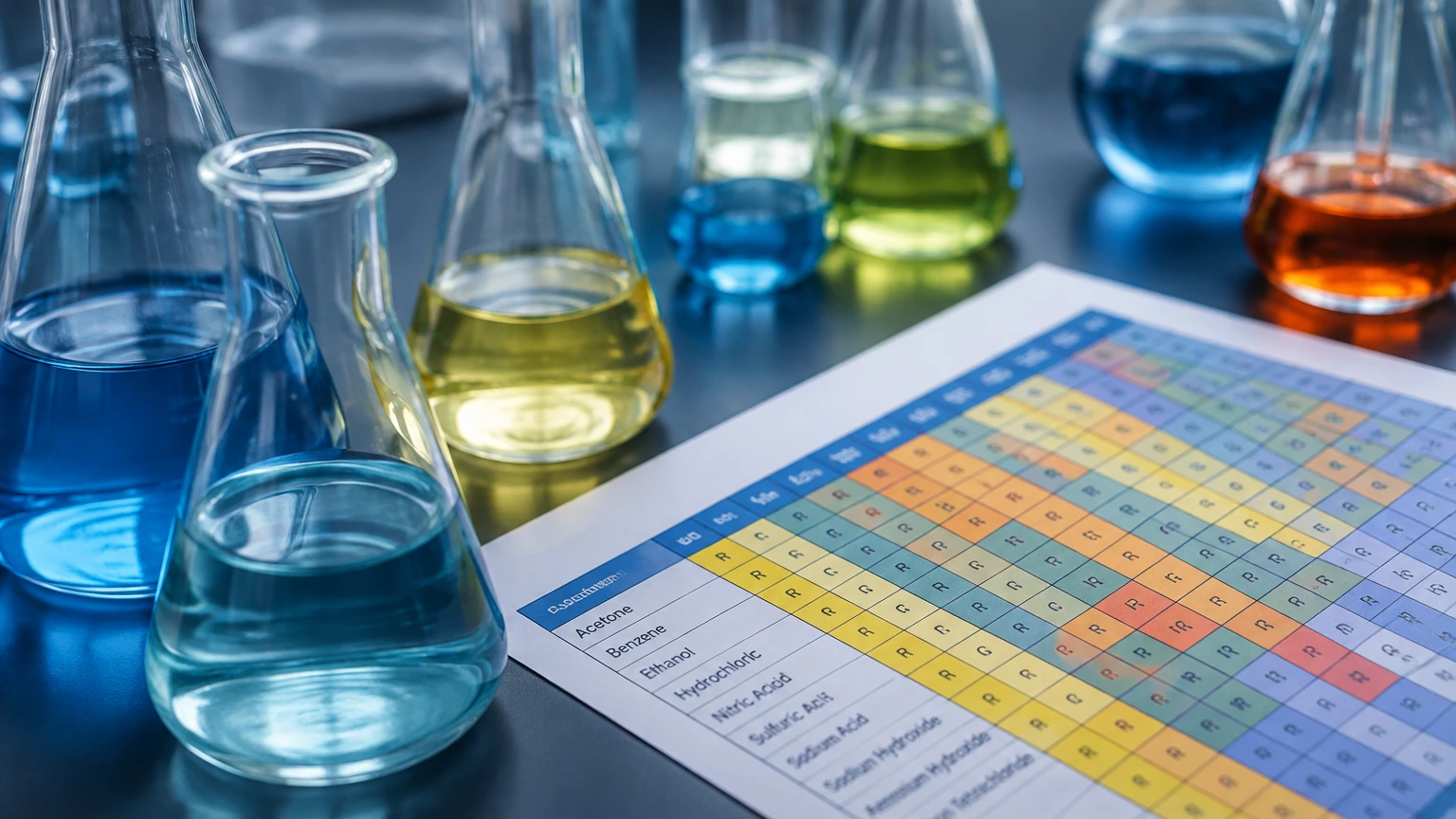
In industrial process control, the longevity and accuracy of level measurement instruments are directly tied to the chemical resistance of their wetted components. Selecting the wrong material for a radar antenna, an ultrasonic transducer, or a hydrostatic diaphragm can lead to catastrophic sensor failure, medium leakage, and costly downtime. One of the most recognized resources for engineering teams is the Cole Parmer chemical compatibility chart, a comprehensive database used to cross-reference chemicals with various plastics, metals, and elastomers.
For engineers and procurement specialists, understanding the principles behind material degradation and how to interpret these charts is essential for maintaining plant safety and operational efficiency. This guide explores the application of compatibility data to level measurement technology and provides a framework for selecting the right materials for challenging industrial environments.
Principles of Chemical Compatibility in Level Measurement
Before consulting a compatibility database, it is important to understand the primary mechanisms through which chemicals interact with sensor materials. These interactions are generally categorized into electrochemical corrosion (for metals) and chemical attack or physical degradation (for polymers).
1. Metallic Corrosion
Metals such as 316L Stainless Steel, Hastelloy C, and Tantalum are frequently used in level sensors due to their structural strength. However, they are susceptible to various forms of corrosion:
* General Corrosion: A uniform loss of metal across the entire surface.
* Pitting Corrosion: Localized holes that can penetrate a thin sensor diaphragm quickly.
* Stress Corrosion Cracking (SCC): The combined influence of tensile stress and a corrosive environment, often seen in chloride-rich media.
2. Polymer Degradation
Plastics like Polypropylene (PP), Polyvinylidene Fluoride (PVDF), and Polytetrafluoroethylene (PTFE) do not corrode in the electrochemical sense but can fail through:
* Swelling and Softening: The polymer absorbs the chemical, leading to dimensional changes and loss of mechanical strength.
* Oxidation: Chemicals like concentrated nitric acid can break the molecular bonds of the plastic.
* Environmental Stress Cracking (ESC): Brittle failure occurring under the influence of certain chemicals while the material is under stress.
3. The Role of Concentration and Temperature
Chemical compatibility is not a binary state. A material that is "Excellent" at 20°C (68°F) may be "Unsatisfactory" at 80°C (176°F). Higher temperatures increase the kinetic energy of molecules, accelerating chemical reactions and diffusion rates. Similarly, the concentration of a solution (e.g., 10% vs. 98% Sulfuric Acid) radically alters its reactivity.
Using the Cole Parmer Chemical Compatibility Chart for Sensor Selection
The Cole Parmer chemical compatibility chart typically uses a rating system to indicate the suitability of a material for a specific chemical. The standard ratings are:
* A – Excellent: No effect, or minor effect. Suitable for continuous exposure.
* B – Good: Minor effect, slight corrosion or discoloration. Suitable for intermittent exposure.
* C – Fair: Moderate effect, not recommended for continuous use. Softening or loss of strength may occur.
* D – Severe Effect: Not recommended for any use.
When selecting a level meter from the Main Page, engineers must match the wetted parts—the parts of the sensor that physically touch the liquid or gas—to the "A" rating for the specific process chemical.
Practical Material Selection Table
The following table provides a general overview of common materials used in level measurement and their compatibility with typical industrial chemicals, based on standard reference data.
| Chemical | 316L Stainless Steel | PTFE (Teflon) | PVDF (Kynar) | Hastelloy C | PP (Polypropylene) |
| :— | :— | :— | :— | :— | :— |
| Acetic Acid (Glacial) | B-Good | A-Excellent | A-Excellent | A-Excellent | A-Excellent |
| Hydrochloric Acid (37%) | D-Severe | A-Excellent | A-Excellent | B-Good | A-Excellent |
| Nitric Acid (10%) | A-Excellent | A-Excellent | A-Excellent | A-Excellent | B-Good |
| Sodium Hydroxide (50%) | B-Good | A-Excellent | B-Good | A-Excellent | A-Excellent |
| Sulfuric Acid (98%) | D-Severe | A-Excellent | B-Good | B-Good | D-Severe |
| Toluene | A-Excellent | A-Excellent | A-Excellent | A-Excellent | C-Fair |
| Diesel Fuel | A-Excellent | A-Excellent | A-Excellent | A-Excellent | A-Excellent |
*Note: Ratings are based on ambient temperature (approx. 20°C). Always verify for specific process temperatures.*
Material Spotlight: Wetted Parts in Level Instruments
Radar Level Meters
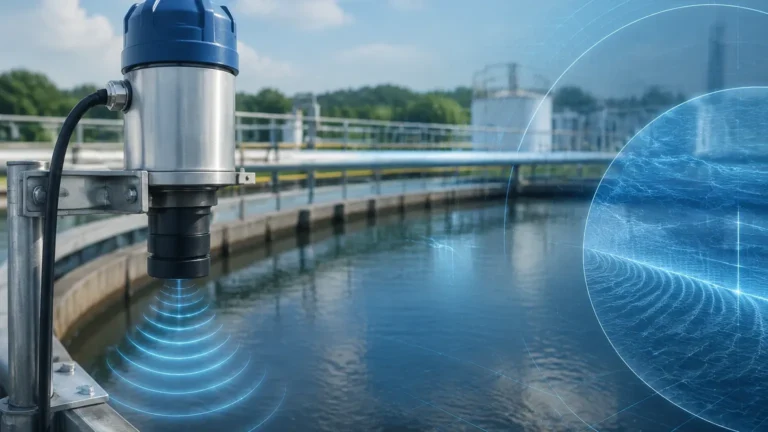
Non-contact radar level meters often utilize a horn antenna or a rod antenna. In corrosive environments, the antenna is typically encased in a PTFE or PVDF shield. Because radar waves can pass through these plastics with minimal attenuation, a full plastic seal protects the metallic electronic housing from corrosive vapors.
Ultrasonic Level Sensors
Ultrasonic transducers are often made of PVDF or UPVC. PVDF is preferred for its superior chemical resistance to acids and halogens. However, ultrasonic sensors should be checked against the Cole Parmer chemical compatibility chart for solvent exposure, as certain hydrocarbons can cause the transducer face to swell, disrupting the ultrasonic pulse.
Hydrostatic Level Transmitters
These sensors are submerged in the liquid. The entire body, diaphragm, and cable must be compatible. While the sensor body might be 316L SS, the diaphragm often requires Hastelloy C or Ceramic (96% Alumina) for acidic media. The cable jacket is equally critical; Polyurethane (PUR) is common for water, but FEP or PTFE jackets are required for aggressive chemicals.
Installation Considerations for Corrosive Media
Selecting the right material is only the first step. Proper installation ensures the material's properties are not compromised.
1. Seals and Gaskets: Often overlooked, the O-rings (Viton, EPDM, Kalrez) must match the chemical resistance of the sensor body. A failure in a small O-ring can lead to internal electronics damage.
2. Vapor Protection: In closed tanks, corrosive vapors can rise and attack the non-wetted parts of the sensor. Using a hermetically sealed housing or a stand-off pipe can mitigate this risk.
3. Flange Facing: If using a plastic-lined tank, ensure the sensor flange is also lined or made of a compatible polymer to prevent galvanic corrosion at the connection point.
4. Cleaning Protocols: Consider whether the sensor will be subjected to Clean-in-Place (CIP) chemicals. A sensor compatible with the process media might fail when exposed to hot caustic cleaning solutions.
Limitations of Compatibility Charts
While the Cole Parmer chemical compatibility chart is an invaluable tool, it has limitations that engineers must acknowledge:
* Chemical Mixtures: Charts usually list pure chemicals. Mixtures can behave very differently. For example, a mixture of Nitric and Hydrochloric acid (Aqua Regia) is far more aggressive than either acid alone.
* Pressure Effects: High pressure can force chemicals into the microscopic pores of a material, accelerating degradation. Most charts are based on atmospheric pressure.
* Aeration: The presence of dissolved oxygen can change the corrosion rate of certain metals.
* Flow Velocity: High-velocity liquids can cause erosion-corrosion, where the protective oxide layer on a metal is mechanically stripped away, exposing fresh metal to chemical attack.
Frequently Asked Questions (FAQ)
Q: Can I use 316 Stainless Steel for Hydrochloric Acid?
A: Generally, no. 316 SS is highly susceptible to pitting and SCC in the presence of chlorides. For HCl, plastics like PTFE or PVDF, or metals like Tantalum, are required.
Q: What is the best material for strong alkaline (base) solutions?
A: PTFE and 316L Stainless Steel generally perform well with bases like Sodium Hydroxide. However, at high concentrations and temperatures, Stainless Steel may suffer from caustic embrittlement.
Q: How do I choose between EPDM and Viton for seals?
A: Consult the compatibility chart. EPDM is excellent for hot water, steam, and many polar solvents but fails in the presence of oils and hydrocarbons. Viton (FKM) is excellent for oils and fuels but can be degraded by certain ketones and organic acids.
Q: Is a ceramic diaphragm better than a metal one?
A: Ceramic (Alumina) is extremely hard and chemically inert to almost all acids and bases. It is often the best choice for abrasive slurries or highly corrosive chemicals where metal diaphragms would be too thin and fragile.
Conclusion
Successful level measurement in the chemical and process industries requires a disciplined approach to material science. Tools like the Cole Parmer chemical compatibility chart provide the foundational data needed to make informed decisions. By considering the specific concentration, temperature, and physical state of the media, and by selecting instruments designed with high-performance wetted materials, operators can ensure long-term reliability.
For those seeking specific instrument configurations or technical support regarding material compatibility for radar, ultrasonic, or hydrostatic sensors, it is recommended to Review product options and application support to find the most cost-effective and durable solution for your application.