Compressed Air Monitoring Equipment
Compressed Air Monitoring Equipment
Compressed air is often referred to as the "fourth utility" in industrial environments, alongside electricity, water, and gas. While essential for powering pneumatic tools, control systems, and manufacturing processes, it is also one of the most expensive energy sources in a facility. Inefficient systems can lose up to 30% of their energy through leaks, pressure drops, and poor condensate management.
Effective compressed air monitoring equipment is required to maintain system integrity, ensure air quality, and optimize energy consumption. This guide explores the technical principles of monitoring technologies, with a specific focus on how level measurement integrates into the management of compressed air systems.
Measurement Principles in Compressed Air Systems
To monitor a compressed air system accurately, several physical parameters must be tracked. Each parameter relies on specific scientific principles to provide actionable data.
1. Flow Measurement (Thermal Mass and Vortex)
Flow meters measure the volume or mass of air moving through the piping. Thermal mass flow meters operate on the principle of heat transfer. A heated sensor is placed in the air stream, and the cooling effect of the moving air is proportional to the mass flow rate. This allows for precise measurement without the need for additional pressure or temperature compensation. Vortex meters, conversely, measure the frequency of vortices shed by a bluff body placed in the flow, which is proportional to the flow velocity.
2. Pressure Measurement (Piezoresistive and Capacitive)
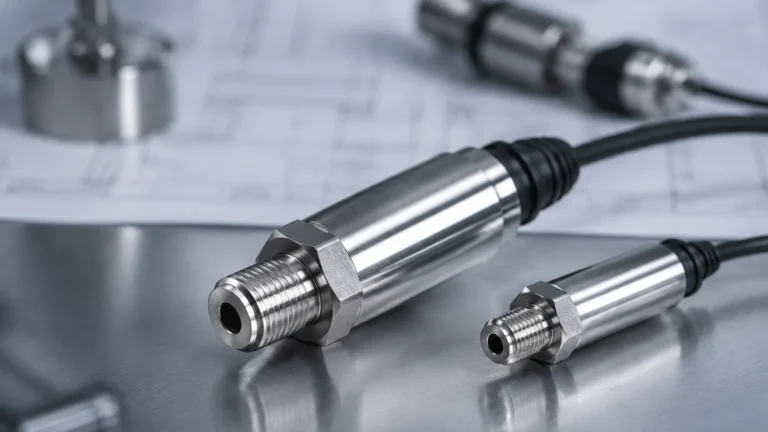
Pressure transmitters are the heartbeat of the system. Piezoresistive sensors use a silicon diaphragm that changes electrical resistance when deformed by air pressure. This change is converted into a standard 4-20mA or digital signal. Monitoring pressure at the compressor discharge versus the end-of-line helps identify significant pressure drops caused by undersized piping or clogged filters.
3. Level Measurement (Ultrasonic and Radar)
Level measurement is critical for managing the secondary components of a compressed air system, such as condensate tanks and oil-water separators.
* Ultrasonic Level Sensors: These devices emit high-frequency sound pulses that reflect off the surface of the liquid (condensate or oil). The sensor measures the time-of-flight (ToF) to calculate the distance. This is a non-contact method suitable for atmospheric or low-pressure tanks.
* Radar Level Meters: Radar sensors use high-frequency electromagnetic waves (typically 26GHz or 80GHz). Unlike sound, radar waves are unaffected by air temperature, pressure, or vacuum conditions. This makes them ideal for high-pressure separator vessels where air density might fluctuate.
Core Components of Compressed Air Monitoring
A comprehensive monitoring strategy involves a suite of equipment designed to provide a full picture of system health.
Flow Meters and Pressure Sensors
These are typically installed at the main header and at branch lines for major departments. By comparing flow rates at different points, maintenance teams can pinpoint leakage zones. Pressure sensors ensure that the system is not "over-pressured," as every 1 bar (14.5 PSI) of excess pressure typically increases energy costs by approximately 7%.
Dew Point Transmitters
Moisture is the primary enemy of pneumatic components. Dew point sensors measure the temperature at which water vapor begins to condense into liquid. In high-precision industries like electronics or food processing, maintaining a dew point of -40°C (-40°F) is often mandatory. Monitoring equipment ensures that desiccant or refrigerant dryers are functioning correctly.
Condensate Level Management
As air is compressed, moisture and oil vapors condense into liquid. This "condensate" must be collected and removed. Level switches and continuous level transmitters are installed in collection traps and separator tanks. If a level sensor fails, condensate can back up into the air lines, leading to pipe corrosion and tool failure. For those evaluating technical specifications for these components, the Main Page offers a range of industrial-grade sensors designed for these specific environments.
Selection Criteria for Monitoring Equipment
Choosing the right compressed air monitoring equipment requires an evaluation of the process environment and the specific goals of the facility. The following table provides a comparison of common technologies used in air system management.
| Technology | Primary Application | Advantages | Limitations |
| :— | :— | :— | :— |
| Thermal Mass Flow | Leak detection, total consumption | High sensitivity at low flows | Sensitive to moisture/oil coating |
| Pressure Transmitter | System regulation, filter monitoring | Robust, fast response | Requires periodic calibration |
| Ultrasonic Level | Condensate tank monitoring | Non-contact, cost-effective | Affected by heavy foam or high pressure |
| Radar Level Meter | High-pressure separator tanks | Extremely accurate, ignores vapors | Higher initial investment |
| Dew Point Sensor | Air quality/Dryer performance | Prevents downstream corrosion | Sensitive to oil contamination |
Key Evaluation Factors
1. Pressure Rating: Ensure all sensors are rated for the maximum system pressure, typically 7 to 13 bar (100 to 190 PSI) for standard industrial air, but much higher for specialized applications.
2. Communication Protocols: Modern monitoring equipment should support Modbus RTU, 4-20mA HART, or IO-Link to integrate with a centralized Building Management System (BMS) or PLC.
3. Installation Requirements: Consider whether the sensor requires a specific straight pipe run (common for flow meters) or a specific mounting orientation.
Installation and Maintenance Considerations
Proper installation is as important as the hardware itself. For flow meters, a general rule of thumb is to have 10 diameters (10D) of straight pipe before the sensor and 5 diameters (5D) after it to ensure a stable flow profile.
For level measurement in condensate tanks, the sensor must be mounted away from the inlet to avoid turbulence and false readings. If using ultrasonic sensors, the "dead zone" or "blocking distance" must be accounted for—this is the area immediately below the sensor where it cannot take a measurement. Radar level meters generally have a much smaller dead zone, making them preferable for compact tanks.
Maintenance Checklist:
* Calibration: Pressure and dew point sensors should be calibrated annually to ensure accuracy.
* Cleaning: Flow sensors and level probes should be checked for oil or particulate buildup, especially in systems without high-efficiency filtration.
* Seal Integrity: Check all mounting points for air leaks using ultrasonic leak detectors or soapy water.
Limitations and Common Risks
While compressed air monitoring equipment provides significant benefits, there are limitations to consider:
* Contamination: Compressed air often contains aerosols of lubricating oil and fine particulates. These can coat the sensing elements of flow meters and dew point sensors, leading to drifted readings or total failure. High-quality filtration must be installed upstream of sensitive monitoring equipment.
* Pressure Drops: Intrusive sensors (like certain flow meters) can cause a slight pressure drop. While usually negligible, in high-velocity systems, this can add to energy costs.
* Environmental Noise: Ultrasonic level sensors can sometimes be affected by the high-frequency acoustic noise generated by air leaks or pneumatic valves in the vicinity. In such cases, switching to a radar-based system or a guided wave radar is the standard engineering solution.
Frequently Asked Questions (FAQs)
Q: Why should I monitor condensate levels instead of just using timed drains?
A: Timed drains open at set intervals regardless of whether water is present, which wastes compressed air. Level-controlled drains (using level switches) only open when the reservoir is full, saving significant energy and ensuring the system remains dry.
Q: Can I use one flow meter for the entire plant?
A: While a main meter is useful for total cost accounting, it cannot identify where leaks are occurring. Sub-metering at the departmental level is necessary for effective leak management and energy reduction programs.
Q: What is the difference between "Actual" and "Standard" flow?
A: Compressed air volume changes with pressure and temperature. "Standard" flow (e.g., Nm³/hr or SCFM) refers to the volume the air would occupy at a standard temperature and pressure. Most monitoring equipment automatically converts actual flow to standard flow for consistent reporting.
Q: How does temperature affect level measurement in air systems?
A: In ultrasonic systems, the speed of sound changes with air temperature. If the sensor does not have built-in temperature compensation, the level reading will be inaccurate. Radar sensors are not affected by temperature and are generally more reliable in fluctuating environments.
Conclusion
Investing in compressed air monitoring equipment is a fundamental step toward industrial energy efficiency and operational reliability. By understanding the principles of flow, pressure, and level measurement, engineers can design systems that not only reduce waste but also protect expensive downstream machinery. For technical assistance in selecting the appropriate level sensors and transmitters for your air system infrastructure, visit the Main Page to review product options and application support.