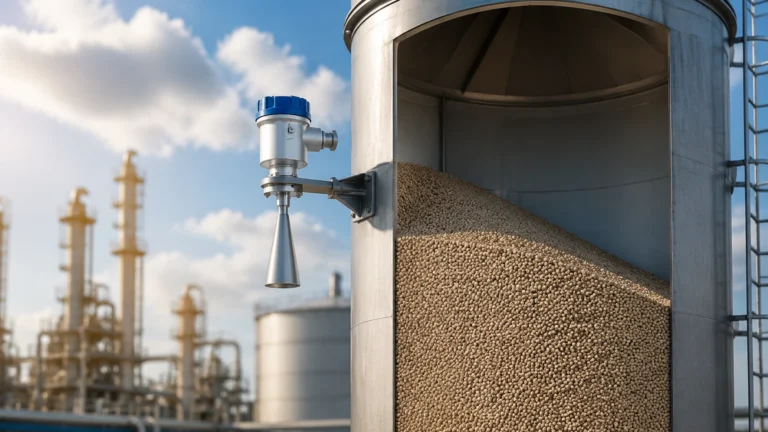
Vibrating Fork Level Switch
Vibrating Fork Level Switch
In the landscape of industrial automation and process control, the vibrating fork level switch—often referred to as a tuning fork level sensor—stands as one of the most reliable and versatile point-level detection technologies. Whether managing the overflow of a chemical storage tank or ensuring a pump does not run dry in a water treatment facility, these instruments provide a robust solution where other technologies might fail due to turbulence, bubbles, or changing fluid properties.
As a professional manufacturer, Welk specializes in providing high-performance level measurement instruments tailored for demanding environments. This guide serves as a practical engineering reference for understanding, selecting, and installing vibrating fork level switches across various industrial applications. For those seeking specific product specifications or custom OEM/ODM solutions, you can review product options and application support on our Main Page.
Understanding the Measurement Principle
The operation of a vibrating fork level switch is based on the principle of change in resonant frequency. The device consists of a symmetric tuning fork (the sensing element) and an internal electronic module that utilizes piezoelectric crystals.
The Piezoelectric Drive
One piezoelectric crystal is used to excite the fork tines at their natural resonant frequency in the air. For liquid applications, this frequency is typically around 1,200 Hz to 1,400 Hz. A second piezoelectric crystal acts as a receiver, detecting the vibration and converting it back into an electrical signal for the internal electronics to monitor.
Frequency Shift Detection
When the tines are not in contact with the process medium (the "dry" state), they vibrate freely at their maximum frequency. As the medium rises and covers the tines (the "wet" state), the added mass and damping effect of the material cause the vibration frequency to drop significantly. The electronic circuit detects this frequency shift and triggers a change in the output state—usually a relay, PNP/NPN transistor, or a two-wire signal.
Because the device relies on frequency rather than electrical properties like conductivity or dielectric constant, it is largely unaffected by changes in the medium's chemical composition, pressure, or temperature.
Key Applications in Process Industries
The vibrating fork level switch is widely adopted because it requires no calibration and has no moving parts that can wear out. Its applications are generally divided into liquid and solid categories.
Liquid Level Detection
In liquid applications, these switches are primarily used for high-level alarm (overfill protection) and low-level alarm (dry-run protection).
* Water and Wastewater: Monitoring sumps, storage tanks, and chemical dosing tanks.
* Chemical Processing: Detecting corrosive acids, alkalis, and solvents where the medium's density remains relatively stable.
* Food and Beverage: Used in stainless steel tanks for milk, juices, and syrups, often requiring hygienic (Tri-clamp) connections.
* Oil and Gas: High-pressure separators and fuel storage tanks.
Solids and Powders
For bulk solids, the tines are typically larger and more robust to withstand the impact of granules and powders.
* Silos and Hoppers: Detecting the level of plastic pellets, grain, or cement.
* Mining: Monitoring ore dust or crushed minerals in chutes.
Technical Selection Criteria for Engineers
Selecting the right vibrating fork level switch requires a detailed understanding of the process environment. Engineers should evaluate the following parameters before procurement.
1. Medium Density
Density is the most critical factor. The switch must be sensitive enough to detect the frequency shift caused by the material. Most liquid forks require a minimum density of 0.5 g/cm³ (500 kg/m³), though high-sensitivity versions can detect media as light as 0.3 g/cm³.
2. Viscosity
Vibrating forks handle viscous fluids better than many other technologies, but there is an upper limit. If a liquid is too viscous (typically above 10,000 mm²/s), it may cling to the tines even after the level has dropped, causing a "false wet" signal.
3. Temperature and Pressure
Standard industrial forks are designed for temperatures between -40°C and 150°C and pressures up to 40 bar (4.0 MPa). For high-temperature applications (up to 250°C), specialized versions with extended thermal sleeves are required to protect the electronics.
4. Material Compatibility
The wetted parts are usually made of 316L stainless steel, which offers excellent corrosion resistance. For highly aggressive chemicals, coatings like PFA or ECTFE may be applied to the tines.
Selection Summary Table
| Parameter | Liquid Level Switch | Solid Level Switch |
| :— | :— | :— |
| Typical Frequency | 1,200 Hz – 1,400 Hz | 80 Hz – 400 Hz |
| Min. Medium Density | > 0.5 g/cm³ | > 0.01 g/cm³ |
| Max. Viscosity | 10,000 mm²/s | N/A (Flowability matters) |
| Standard Connection | G 1", 1.5" NPT, Flange | G 1.5", Flange |
| Common Use Case | Overfill/Dry-run | High/Low Level in Silos |
Installation Best Practices and Orientation
Proper installation ensures the longevity of the sensor and the accuracy of the signal. The vibrating fork level switch can be installed horizontally or vertically, but specific rules apply to each.
Horizontal Installation
When installed through the side of a tank, the tines should be oriented so that the flat surfaces are vertical. This allows the liquid to drain easily from the tines as the level recedes, preventing buildup. Most manufacturers provide a marking or a notch on the hex nut to indicate the orientation of the tines.
Vertical Installation
Vertical installation is common for high-level alarms at the top of a tank. The length of the sensor can be extended using a pipe extension (up to 3,000 mm or more) to reach the desired switching point. It is important to ensure the fork is not placed directly under a filling inlet, as the force of the falling material could damage the tines or cause false triggers.
Avoiding Turbulence and Foam
While vibrating forks are generally resistant to foam, extremely dense or sticky foam can sometimes cause issues. If the tank has heavy agitation, a stilling well or a protective shield may be necessary to stabilize the liquid around the sensor.

Limitations and Maintenance Requirements
Despite their versatility, vibrating fork level switches are not universal solutions. Engineers must be aware of the following limitations:
* Material Buildup: While the vibration has a slight self-cleaning effect, heavy, drying, or coating media (like thick sludge or drying paint) can eventually bridge the gap between the tines, leading to failure.
* Granule Size: In solids applications, if the particle size is too large (e.g., large rocks), a particle may become wedged between the tines, preventing vibration.
* Aeration: In liquids, if the medium is heavily aerated (contains a high percentage of air bubbles), the effective density may drop below the sensor's detection threshold.
Maintenance Checklist
1. Visual Inspection: Periodically check the tines for signs of corrosion or mechanical damage.
2. Cleaning: If the medium is prone to scaling, remove the sensor and clean the tines with a soft brush or compatible solvent. Do not use abrasive tools that could scratch the surface.
3. Seal Integrity: Inspect the cable glands and housing seals to prevent moisture ingress, especially in outdoor or wash-down environments.
Frequently Asked Questions (FAQs)
Q: Can a vibrating fork level switch detect the interface between two liquids?
A: Generally, no. Most forks are designed to detect the presence or absence of a medium based on a density threshold. However, if the density difference between two liquids is very large (e.g., oil and water), specialized electronics can sometimes be calibrated to detect the interface, though this is not the primary use case.
Q: Does the sensor require calibration for different liquids?
A: No. One of the greatest advantages of this technology is that it is "plug-and-play." As long as the liquid density is above the minimum threshold, the switch will function without adjustment.
Q: How does it compare to ultrasonic level switches?
A: Ultrasonic point-level switches are also effective but can be affected by vapors, heavy foam, or changes in air temperature. Vibrating forks are generally more robust in environments with varying pressure and vapor concentrations.
Q: What output options are typically available?
A: Most Welk instruments offer multiple output configurations, including DPDT relays for direct load switching, PNP/NPN for PLC integration, and 8/16mA (NAMUR) for hazardous area applications.
Conclusion
The vibrating fork level switch is a cornerstone of modern industrial level control, offering a high degree of reliability with minimal maintenance. By understanding the relationship between medium density and resonant frequency, and by following strict installation guidelines regarding orientation and placement, engineers can ensure long-term operational safety in their facilities.
For more detailed technical data sheets, installation manuals, or to discuss a customized solution for your specific industrial application, please visit our Main Page to connect with our technical support team. Welk remains committed to providing accurate and cost-effective level measurement solutions for water treatment, chemical processing, and industrial automation worldwide.