Corimass
Corimass
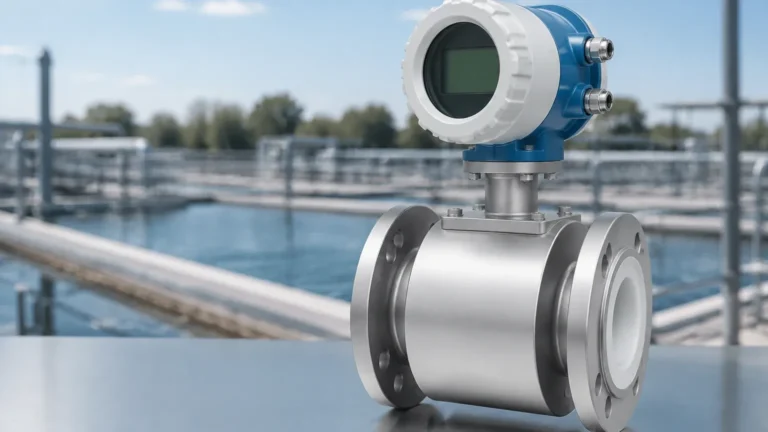
In the landscape of industrial process control, the term "corimass" typically refers to Coriolis mass flow measurement technology. While often categorized strictly as a flow measurement solution, its implications for level measurement, inventory management, and fluid density analysis are profound. For engineers and plant managers, understanding the synergy between mass flow data and vessel level monitoring is essential for achieving high-precision process automation.
This guide explores the fundamental principles of Coriolis technology, its integration with level measurement systems, and the practical considerations required for successful deployment in industrial environments.
Understanding Coriolis Mass Flow Principles
Before selecting a measurement instrument, it is vital to understand the physics that drive its accuracy. The Coriolis effect is an inertial force that acts on objects in motion within a frame of reference that rotates. In a corimass meter, this principle is applied to a fluid flowing through vibrating tubes.
The Oscillation Mechanism
Inside the meter, one or two measuring tubes are induced to vibrate at their resonant frequency by an electromagnetic drive coil. When there is no flow, the tubes vibrate uniformly. However, when a fluid (liquid or gas) enters the tubes, the mass of the moving fluid introduces a Coriolis force.
This force causes the tubes to twist. The degree of twisting is directly proportional to the mass flow rate of the fluid. Sensors (pick-off coils) located at the inlet and outlet of the tubes detect the phase shift—the time difference—between the vibrations. This phase shift is measured in microseconds and is translated into a highly accurate mass flow reading.
Multi-Variable Measurement
One of the primary advantages of Coriolis technology is its ability to measure multiple parameters simultaneously:
1. Mass Flow: Derived from the phase shift.
2. Density: Derived from the resonant frequency of the vibration. Heavier fluids result in lower frequencies, while lighter fluids result in higher frequencies.
3. Temperature: Measured via an internal sensor to compensate for the thermal expansion of the measuring tubes.
By providing real-time density data, these meters become invaluable companions to level measurement instruments, particularly in applications where fluid composition or temperature fluctuations might otherwise compromise accuracy.
The Role of Corimass in Industrial Level and Inventory Management
While instruments like radar level meters or ultrasonic sensors measure the physical height of a product, corimass meters provide the "mass balance" data necessary to verify those readings. In complex industrial processes, relying on a single measurement technology can lead to errors due to foam, turbulence, or varying dielectric constants.
Mass Balance and Level Verification
In storage tank applications, integrating a mass flow meter at the inlet and outlet allows operators to calculate the theoretical level based on the mass of the fluid added or removed. When compared against the live data from a Main Page instrument, such as a radar level meter, any discrepancy can immediately alert the system to leaks, sensor drift, or unexpected changes in fluid density.
Enhancing Hydrostatic Level Measurement
Hydrostatic level transmitters measure the pressure exerted by a liquid column. However, the pressure reading is dependent on the liquid's density ($P = \rho gh$). If the density changes due to temperature or chemical mixing, the level reading will be incorrect. By using the real-time density output from a Coriolis meter, the control system can dynamically adjust the hydrostatic level calculation, ensuring millimeter-level accuracy regardless of fluid changes.
Key Evaluation Criteria for Corimass Meters
Selecting the right instrument requires a detailed analysis of the process conditions. Unlike level switches or simple transmitters, Coriolis meters are highly sensitive to the physical properties of the installation site.
Selection Table: Technology Comparison
| Feature | Corimass (Coriolis) | Ultrasonic Level | Radar (FMCW) |
| :— | :— | :— | :— |
| Primary Variable | Mass Flow / Density | Distance / Level | Distance / Level |
| Accuracy | ±0.1% to 0.05% | ±0.25% | ±1 mm to 3 mm |
| Fluid Dependency | Independent of Viscosity | Dependent on Sound Speed | Dependent on Dielectric |
| Installation | In-line (Pipe) | Top-mount (Non-contact) | Top-mount (Non-contact) |
| Maintenance | Low (No moving parts) | Low | Very Low |
| Cost | High | Low to Medium | Medium to High |
Material Compatibility
Since the fluid is in direct contact with the measuring tubes, material selection is critical. Standard tubes are often constructed from 316L stainless steel, but for corrosive chemical applications, materials like Hastelloy C22 or Tantalum may be required. Engineers must confirm that the tube material can withstand both the chemical nature of the fluid and the mechanical stress of high-frequency vibration.
Installation Best Practices and Considerations
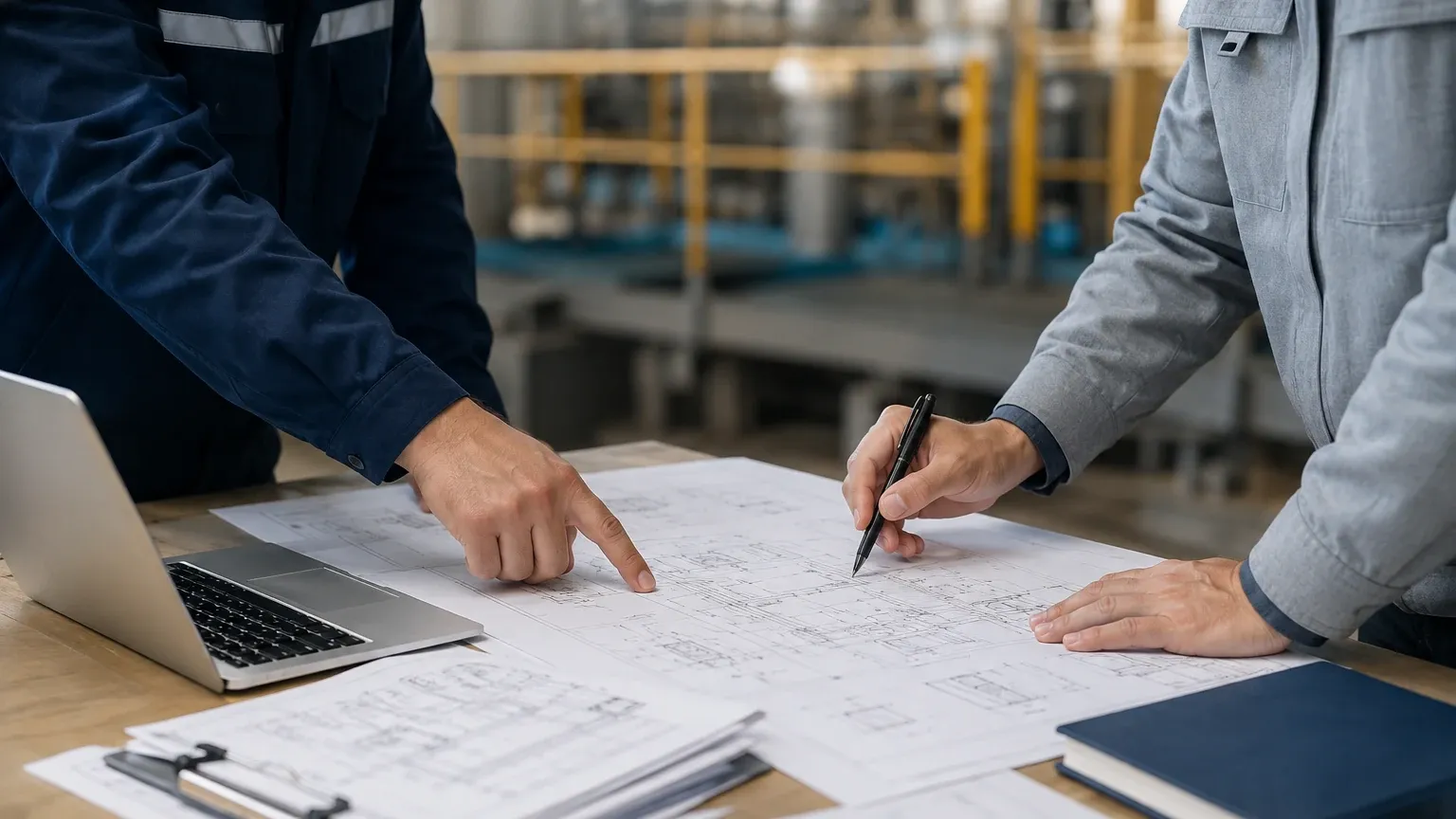
To maintain the high accuracy associated with Coriolis technology, specific installation guidelines must be followed. While these meters do not require the long straight pipe runs associated with orifice plates or turbine meters, they are sensitive to mechanical noise.
1. Orientation and Entrained Air
* Liquids: The meter should ideally be installed in a "U" shape pointing downwards (flagpole or belly-down) to ensure the tubes remain full and to prevent gas bubbles from becoming trapped.
* Gases: The meter should be installed belly-up to allow any condensed liquids to drain out of the tubes.
* Vertical Installation: Flowing upwards is generally preferred for liquids to ensure the meter remains primed and full.
2. Vibration Isolation
Because the measurement principle relies on detecting subtle vibrations, external mechanical vibrations from pumps or motors can interfere with the sensor. It is essential to support the piping on both sides of the meter using rigid hangers or pedestals. Flexible connectors are sometimes used, but the meter itself must be securely anchored.
3. Zero Calibration
Upon installation, a "zero-point calibration" must be performed under actual process conditions. This involves filling the meter with the process fluid, ensuring there is zero flow, and then triggering the zeroing function on the transmitter. This accounts for the specific stresses and orientation of the installed piping.
Technical Limitations and Common Risks
Despite their versatility, corimass meters are not a universal solution for every application. Engineers should be aware of the following limitations:
* Pressure Drop: The geometry of the measuring tubes (especially bent-tube designs) can cause a significant pressure drop in the system. This must be calculated during the design phase to ensure the pump capacity is sufficient.
* Large Line Sizes: As pipe diameters increase (e.g., above 250 mm or 10 inches), Coriolis meters become extremely heavy, bulky, and expensive. In these cases, other technologies like magnetic flow meters or high-end level-to-volume calculations may be more cost-effective.
* Entrained Gas: While modern digital signal processing has improved the ability of meters to handle "slug flow" or entrained air, excessive gas in a liquid stream can dampen the tube vibration, leading to a loss of measurement or significant errors.
Frequently Asked Questions (FAQs)
Q: Can a Coriolis meter replace a level transmitter?
A: No. They perform different functions. A level transmitter measures the volume or height of product in a tank, while a Coriolis meter measures the mass flowing into or out of that tank. They are best used together for redundant monitoring and mass balance.
Q: How does viscosity affect Corimass measurement?
A: Unlike many other flow technologies, Coriolis meters are largely independent of viscosity. They can measure everything from water to heavy crude oil and molasses with high accuracy, provided the pressure drop is managed.
Q: Is periodic recalibration necessary?
A: Coriolis meters are known for their long-term stability because they have no moving parts that wear out. However, in abrasive or corrosive applications where tube wall thinning might occur, annual verification or calibration is recommended to ensure the "meter factor" has not shifted.
Q: What is the typical turndown ratio?
A: Most high-quality Coriolis meters offer a turndown ratio of at least 20:1, with some reaching 100:1 while maintaining acceptable accuracy. This makes them ideal for processes with highly variable flow rates.
Conclusion
Integrating corimass technology into an industrial process provides a level of data depth that single-variable instruments cannot match. By providing mass, density, and temperature in a single device, it serves as a critical component in advanced inventory control and process optimization. When combined with reliable level measurement solutions from the Main Page, facility operators can achieve a comprehensive understanding of their fluid assets, ensuring both safety and efficiency in demanding B2B environments.
Before proceeding with a purchase, project teams should confirm the maximum allowable pressure drop, the chemical compatibility of the tube materials, and the specific vibration profile of the installation site to ensure the instrument performs to its full potential.