Coriolis Flow
Coriolis Flow
In the landscape of industrial process control, the measurement of fluid movement is as critical as the monitoring of tank levels. While many technologies measure volumetric flow, Coriolis flow measurement stands out as the gold standard for precision by directly measuring mass flow. This engineering guide explores the principles, applications, and selection criteria for Coriolis flowmeters, providing the technical foundation necessary for integrating these instruments into complex automation systems.
Measurement Principles of Coriolis Flowmeters
Coriolis flowmeters operate on the principles of fluid mechanics and the Coriolis effect, a phenomenon first described by Gaspard-Gustave de Coriolis in the 19th century. Unlike volumetric meters that measure the space a fluid occupies, Coriolis meters measure the actual mass passing through the device.
The Coriolis Effect
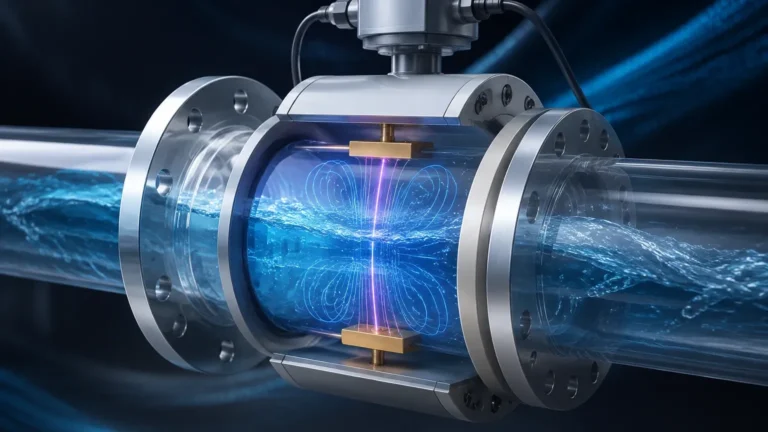
The fundamental principle involves a vibrating tube. In a typical setup, an internal drive coil causes one or two measuring tubes to oscillate at their resonant frequency. When there is no flow, the tubes vibrate in a uniform manner, and sensors at the inlet and outlet sides of the tube detect the vibration in phase with each other.
When a fluid (liquid or gas) begins to flow through the vibrating tubes, the mass of the moving fluid introduces inertia. This inertia causes a subtle twisting or distortion of the tubes. According to the Coriolis effect, the tube's oscillation is resisted at the inlet and accelerated at the outlet. This results in a time delay, or "phase shift," between the inlet and outlet sensors. This phase shift is directly proportional to the mass flow rate of the fluid.
Multi-Variable Measurement
One of the primary reasons engineers specify Coriolis meters is their ability to measure multiple variables simultaneously:
1. Mass Flow: Derived from the phase shift of the vibrating tubes.
2. Density: The resonant frequency of the tube vibration changes depending on the mass (and thus the density) of the fluid inside. A denser fluid results in a lower frequency.
3. Temperature: Integrated RTDs (Resistance Temperature Detectors) measure the tube temperature to compensate for changes in tube elasticity, providing an additional process variable.
By combining mass and density, the meter can also calculate volumetric flow and concentration (such as Brix or Plato scales), making it a versatile tool for chemical, food and beverage, and oil and gas applications.
Key Advantages and Selection Criteria
Choosing a Coriolis flowmeter requires an understanding of the specific process requirements. Because these instruments are generally more expensive than magnetic or ultrasonic meters, their selection is usually justified by their high accuracy and maintenance-free design.
Accuracy and Repeatability
Coriolis meters typically offer mass flow accuracy of ±0.1% or even ±0.05% for liquids, and approximately ±0.5% for gases. This precision is largely independent of fluid properties such as viscosity, conductivity, or flow profile. Unlike differential pressure or turbine meters, Coriolis meters do not require straight pipe runs upstream or downstream, which simplifies piping design.
Fluid Compatibility
When selecting a meter, the material of construction is paramount. While 316L stainless steel is standard, highly corrosive fluids may require Hastelloy, Tantalum, or Titanium. Engineers must also consider the viscosity of the fluid. While Coriolis meters handle high-viscosity fluids (such as molasses or heavy crude) exceptionally well, the pressure drop across the meter increases with viscosity and must be calculated during the design phase.
Tube Geometry
There are two primary tube designs:
* Bent/U-Shaped Tubes: These offer the highest sensitivity and the widest turndown ratios. However, they can be more difficult to drain and may trap air or solids.
* Straight Tubes: These are easier to clean (CIP/SIP) and have a lower pressure drop. They are preferred in the food and pharmaceutical industries but generally require more sophisticated electronics to detect the smaller phase shifts associated with straight-tube vibration.
Technical Selection Table
| Feature | U-Shaped Tube | Straight Tube |
| :— | :— | :— |
| Accuracy (Liquid) | ±0.05% to ±0.1% | ±0.1% to ±0.2% |
| Pressure Drop | Moderate to High | Low |
| Cleanability | Challenging (Self-draining issues) | Excellent (Self-draining) |
| Installation Space | Large footprint | Compact |
| Sensitivity | Very High | High |
| Typical Applications | Custody transfer, Gas measurement | Food & Beverage, Slurries |
Installation Considerations
Proper installation is vital to maintaining the high accuracy of a Coriolis flowmeter. Because the meter relies on detecting minute vibrations, external mechanical noise and stress can degrade performance.
Orientation and Support
The orientation of the meter depends on the process medium:
* Liquids: The meter should ideally be installed in a vertical pipe with upward flow. This ensures the tubes remain full and prevents air bubbles from becoming trapped. If horizontal installation is necessary, the tubes should point downward (in a "flag" or "belly-down" position) to avoid gas accumulation.
* Gases: For gas applications, horizontal installation with the tubes pointing upward is preferred to prevent condensate or liquids from collecting in the tubes.
Mechanical support is equally important. The meter should be supported by the adjacent piping, and the piping itself must be rigidly anchored. It is essential to avoid installing the meter near sources of high-frequency vibration, such as large pumps or compressors, without proper dampening.
Zeroing the Meter
Upon installation, a "zero calibration" must be performed. This involves filling the meter with the process fluid, ensuring there is absolutely no flow (using isolation valves), and then running the zeroing routine on the transmitter. This accounts for the specific installation stresses and environmental conditions of the site.

Limitations and Challenges
Despite their versatility, Coriolis meters are not a universal solution for every application. Engineers should be aware of the following limitations:
1. Initial Cost: The capital expenditure for a Coriolis meter is significantly higher than for most other flow technologies. It is typically reserved for applications where accuracy or multi-variable data is essential.
2. Pressure Drop: The internal geometry of the tubes, especially in U-shaped designs, can cause a significant pressure drop (often ranging from 0.5 to 1.5 bar depending on flow rate). This must be accounted for in pump sizing.
3. Entrained Gas: While Coriolis meters are excellent for liquids and gases, mixtures of the two (two-phase flow) can cause the tubes to stall or lose accuracy. Advanced digital signal processing (DSP) in modern meters has improved performance in aerated liquids, but high gas fractions remain a challenge.
4. Size Constraints: Coriolis meters are rarely used for pipes larger than 300mm (12 inches) due to the massive size and weight of the resulting instrument.
Integration with Level Measurement Systems
In many industrial processes, flow measurement and level measurement are complementary. While a Coriolis meter provides the mass flow rate into a vessel, level sensors provide the real-time inventory status. For example, in a chemical blending tank, the Coriolis meter ensures the precise mass of each reactant is added, while a radar level meter monitors the total volume to prevent overfills and verify the final yield.
For engineers designing these integrated systems, selecting the right level measurement technology is just as critical as selecting the flowmeter. You can Review product options and application support on the Welk Main Page to see how various level transmitters, such as radar and ultrasonic sensors, can be paired with flow data to create a comprehensive process control loop.
Frequently Asked Questions (FAQ)
Q: Does fluid viscosity affect the accuracy of a Coriolis meter?
No. One of the greatest strengths of Coriolis technology is that it is virtually immune to changes in viscosity. However, higher viscosity will increase the pressure drop across the meter.
Q: Can Coriolis meters measure steam?
While they can measure gas, Coriolis meters are generally not recommended for high-temperature steam due to the extreme thermal stress on the vibrating tubes and the potential for condensate to interfere with the vibration.
Q: How often does a Coriolis meter need recalibration?
Because there are no moving parts subject to wear (like bearings in a turbine meter), the calibration is extremely stable. Many facilities only perform a field verification every 2–5 years, depending on the criticality of the process and local regulations.
Q: What is the "Turndown Ratio"?
Turndown ratio refers to the range over which the meter maintains its specified accuracy. Coriolis meters often have turndown ratios of 100:1 or better, meaning a meter designed for 10,000 kg/h can accurately measure down to 100 kg/h.
Conclusion
Coriolis flow measurement provides an unparalleled level of data for modern industrial processes. By delivering direct mass flow, density, and temperature in a single device, it eliminates the need for multiple sensors and complex compensation calculations. When properly selected and installed—considering tube geometry, fluid properties, and mechanical isolation—a Coriolis meter serves as a reliable cornerstone for precision automation and custody transfer. When combined with accurate inventory data from the Main Page of level measurement specialists, these instruments ensure that process plants operate with maximum efficiency and minimal waste.