Density Reader
Density Reader
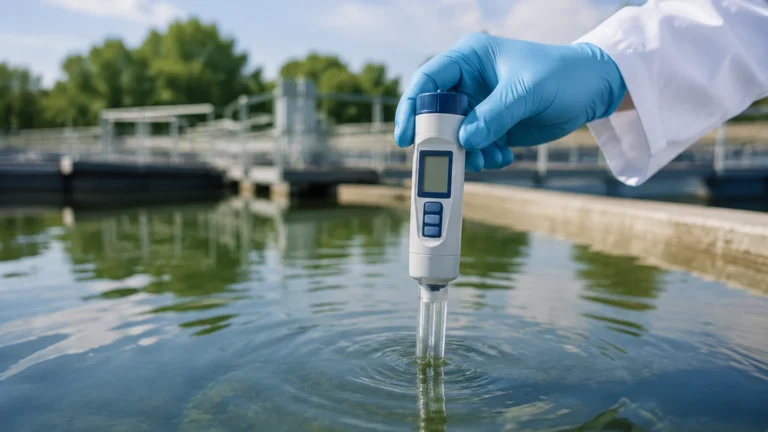
In industrial process control, a density reader—often referred to as a density meter or densitometer—is a critical instrument used to measure the mass per unit volume of a liquid or slurry. Accurate density measurement is essential for quality control, custody transfer, and the calculation of mass flow or concentration in industries ranging from chemical processing and oil and gas to water treatment and food production.
Understanding the relationship between density and other process variables, such as level and pressure, is fundamental for engineers. For instance, many level measurement technologies, particularly hydrostatic transmitters, rely on a known density to calculate the height of a liquid. Conversely, if the height of a liquid column is fixed, the hydrostatic pressure becomes a direct indicator of the fluid's density. This guide explores the principles, selection criteria, and practical applications of density readers in modern industrial environments.
Measurement Principles of Density Readers
Before selecting a density reader, it is vital to understand the physics behind the various measurement technologies. Each principle offers specific advantages depending on the fluid properties and environmental conditions.
1. Vibrating Element (Tuning Fork) Principle
This is one of the most common technologies for continuous inline density measurement. The sensor consists of a vibrating fork (or a similar oscillating element) that is immersed in the fluid.
* The Physics: The resonant frequency of the vibrating element changes depending on the density of the medium in which it is immersed. As the density of the fluid increases, the mass of the fluid surrounding the fork increases, which lowers the resonant frequency.
* Application: These sensors are highly accurate and suitable for clean liquids and low-viscosity slurries. They are often used for concentration control (e.g., Brix or Plato scales in the beverage industry).
2. Hydrostatic (Differential Pressure) Principle
Hydrostatic density measurement utilizes the relationship between pressure, density, and height in a static liquid column. This method is frequently used in tanks where the liquid level is either constant or measured by a separate instrument.
* The Physics: According to the formula $P = \rho \cdot g \cdot h$ (where $P$ is pressure, $\rho$ is density, $g$ is gravity, and $h$ is height), if the distance between two pressure sensors ($h$) is fixed, the differential pressure ($ΔP$) between those two points is directly proportional to the density of the fluid.
* Application: This is a robust method for large tanks and is a core application for high-precision hydrostatic transmitters. It is particularly effective in the chemical and water treatment sectors.
3. Coriolis Principle
While primarily known for mass flow measurement, Coriolis meters are exceptionally accurate density readers.
* The Physics: The meter contains tubes that are vibrated at their resonant frequency. As fluid passes through the tubes, the mass of the fluid affects the vibration frequency. By measuring this frequency shift, the instrument calculates the density of the fluid independently of the flow rate.
* Application: Coriolis meters are used when both flow and density need to be measured simultaneously with high precision, such as in chemical dosing or oil blending.
4. Ultrasonic Principle
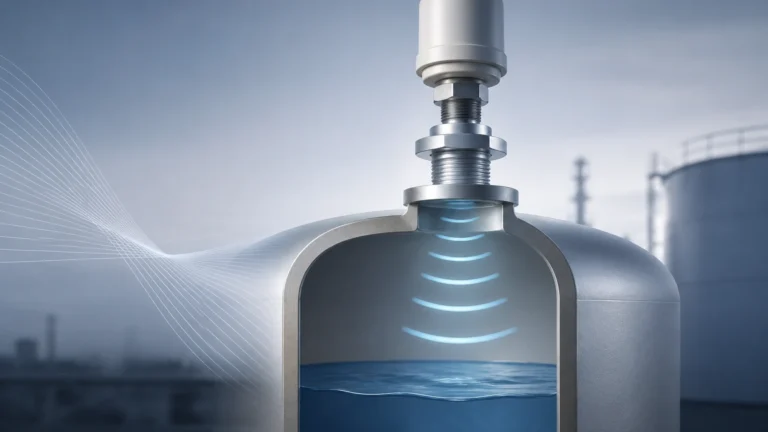
Ultrasonic density readers measure the speed of sound through a medium or the attenuation of the sound wave.
* The Physics: The velocity of an ultrasonic wave is influenced by the density and elasticity of the material. In many industrial slurries, there is a linear relationship between the concentration of solids (which changes the density) and the ultrasonic attenuation or velocity.
* Application: These are often used for monitoring sludge density in wastewater treatment plants where non-invasive measurement is preferred.
Selection Criteria for Industrial Density Readers
Choosing the right density reader requires a thorough evaluation of the process environment. The following table provides a comparison of the most common technologies to assist in the selection process.
Technology Comparison Table
| Technology | Accuracy | Fluid Type | Maintenance | Best Use Case |
| :— | :— | :— | :— | :— |
| Vibrating Fork | High (±1 kg/m³) | Clean liquids, light slurries | Low | Inline concentration control |
| Hydrostatic (DP) | Moderate (±2-5 kg/m³) | Most liquids, tall tanks | Moderate | Large storage tanks, chemical reactors |
| Coriolis | Very High (±0.5 kg/m³) | Clean liquids, gases | Very Low | Custody transfer, high-value chemicals |
| Ultrasonic | Moderate | Slurries, wastewater | Low | Sludge density, non-invasive needs |
| Nuclear (Gamma) | High | Highly abrasive/corrosive | Low (but regulated) | Extreme mining slurries, high-pressure pipes |
Key Evaluation Factors
1. Fluid Viscosity: Vibrating fork sensors may experience "damping" in highly viscous fluids (typically above 20,000 cP), which can affect accuracy. Coriolis or hydrostatic methods are often better for high-viscosity applications.
2. Entrained Air/Gas: Bubbles in a liquid will significantly lower the measured density. If air entrainment is likely, Coriolis meters or specific de-aeration systems may be required.
3. Corrosiveness: For aggressive chemicals, the wetted parts of the density reader must be compatible. Options include Stainless Steel 316L, Hastelloy, or PTFE coatings.
4. Process Temperature and Pressure: Ensure the sensor is rated for the maximum operating temperature (e.g., 150°C or higher) and pressure (e.g., 40 bar / 580 psi). Temperature compensation is mandatory for density measurement because most liquids expand as they heat up, reducing their density.
Installation Considerations for Accuracy
Even the most advanced density reader will provide inaccurate data if installed incorrectly. Engineers should follow these best practices:
* Avoid Turbulence: Install inline sensors in a straight run of pipe, typically 5 to 10 pipe diameters away from pumps, valves, or elbows that cause turbulence.
* Ensure Full Pipe Flow: For inline measurement, the pipe must be completely full of liquid. Installing the sensor in a vertical pipe with upward flow is the most reliable way to prevent air pockets.
* Temperature Compensation: Since density is highly temperature-dependent, always use a density reader with an integrated PT100 or PT1000 temperature sensor. The instrument should calculate "referred density" (density at a standard temperature like 20°C).
* Orientation for Hydrostatic Sensors: When using differential pressure for density in a tank, the two sensors must be mounted on a vertical axis. Any horizontal offset can introduce errors due to varying fluid velocities or sediment buildup.

Limitations and Common Risks
While density readers are robust, they are not infallible. Users should be aware of the following risks:
* Sedimentation and Coating: In slurry applications, solids may settle on the vibrating tines or the diaphragms of pressure sensors. This "coating" adds mass to the sensor, leading to a false high-density reading. Regular cleaning or the use of flush-mounted diaphragms can mitigate this.
* Vibration Interference: Vibrating fork sensors can be sensitive to external plant vibrations. Ensure the mounting is secure and, if necessary, use dampeners.
* Scaling: In hard water or chemical applications, scale buildup can change the volume of the measurement chamber or the mass of the sensor, requiring periodic acid cleaning or recalibration.
Frequently Asked Questions (FAQs)
Q: How often should a density reader be calibrated?
A: For most process applications, an annual calibration check is sufficient. However, for custody transfer or high-precision chemical blending, semi-annual or quarterly verification against a laboratory sample is recommended.
Q: Can a density reader measure the concentration of a two-component solution?
A: Yes. If the two components have different densities (e.g., sugar and water), the density reader can use a lookup table (Brix, % Concentration, etc.) to provide a real-time concentration output.
Q: What is the difference between density and specific gravity?
A: Density is the mass per unit volume (e.g., kg/m³). Specific gravity is a dimensionless ratio of the density of the substance to the density of a reference substance (usually water at 4°C). Most modern density readers can output both values.
Q: Does flow rate affect density measurement?
A: In a Coriolis meter, density measurement is independent of flow. However, in vibrating fork sensors, extremely high flow velocities can cause "noise" in the vibration signal. It is best to maintain a steady, moderate flow.
Conclusion and Next Steps
Integrating a density reader into your process requires a balance between technology capability and application requirements. Whether you are managing wastewater sludge or high-purity chemical production, selecting the right principle—be it vibrating fork, hydrostatic, or Coriolis—is the first step toward process optimization.
Before finalizing a specification, engineers should confirm the maximum solids content, the chemical compatibility of wetted parts, and the required communication protocols (such as 4-20mA HART, Modbus, or Profibus). For a comprehensive range of industrial measurement instruments, including radar, ultrasonic, and hydrostatic solutions that complement density monitoring, you can Review product options and application support on our Main Page. Ensuring that your level and density instrumentation work in harmony is the key to achieving reliable, cost-effective industrial automation.