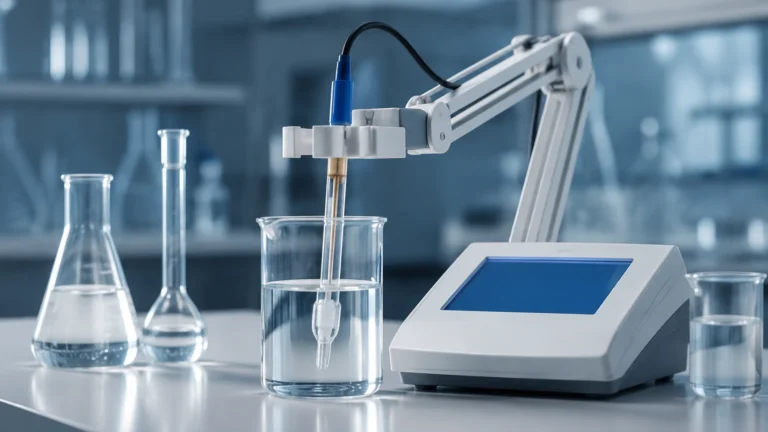
Device That Measures Ph
Device That Measures Ph
In industrial process control, the ability to monitor the chemical properties of a liquid is as critical as monitoring its physical properties. A device that measures ph is a fundamental analytical instrument used across various sectors, including wastewater treatment, chemical processing, pharmaceuticals, and power generation. While physical parameters like level, pressure, and flow provide data on the quantity and movement of fluids, pH measurement provides essential insights into the chemical balance, reactivity, and safety of the process media.
Accurate pH monitoring ensures that chemical reactions occur at optimal rates, prevents corrosion in expensive piping and vessel infrastructure, and guarantees compliance with environmental discharge regulations. This article serves as a technical reference for engineers and plant managers on the principles, selection, and maintenance of industrial pH measurement systems.
Understanding the Fundamentals of pH Measurement
pH is a unit of measure that describes the degree of acidity or alkalinity of a solution. Mathematically, it is defined as the negative logarithm of the hydrogen ion activity:
$$pH = -\log[H^+]$$
The scale typically ranges from 0 to 14, where 7.0 is neutral. Values below 7 are acidic, and values above 7 are alkaline (basic). Because the scale is logarithmic, each whole pH value below 7 is ten times more acidic than the next higher value. For example, a pH of 4.0 is ten times more acidic than a pH of 5.0 and one hundred times more acidic than a pH of 6.0.
In an industrial context, a device that measures ph must be robust enough to handle high pressures, fluctuating temperatures, and chemically aggressive environments that would quickly degrade laboratory-grade equipment.
How a Device That Measures Ph Works: The Potentiometric Principle
The most common method for industrial pH measurement is the potentiometric method, which utilizes the potential difference between two electrodes. A complete measurement loop consists of a sensing electrode, a reference electrode, a temperature sensor, and a transmitter.
The Glass Electrode
When the glass bulb of the sensing electrode comes into contact with an aqueous solution, a hydrated gel layer forms on both the outside and the inside of the glass membrane. Hydrogen ions in the solution exchange with ions in the gel layer. This ion exchange creates a millivolt (mV) potential. The magnitude of this potential depends on the concentration of hydrogen ions in the sample.
The Reference Electrode
To measure the potential generated at the sensing electrode, a stable reference point is required. The reference electrode provides a constant potential that is independent of the pH of the solution. It typically consists of an internal element (usually silver/silver chloride) immersed in an electrolyte (usually potassium chloride). This electrolyte makes electrical contact with the sample through a small opening called a junction.
The Nernst Equation
The relationship between the measured potential and the pH of the solution is governed by the Nernst equation. At 25°C (298.15 K), a theoretical pH electrode produces a change of 59.16 mV per pH unit. This is known as the "slope" of the electrode.
Key Components of Industrial pH Sensors
Selecting the right device that measures ph requires an understanding of the sensor's physical construction. Industrial sensors are often "combination electrodes," where the sensing, reference, and temperature elements are housed in a single body.
1. Sensing Membrane: Different glass formulations are used for specific applications. For example, "high-alkali glass" reduces errors in solutions with high sodium concentrations, while "HF-resistant glass" is used in processes containing hydrofluoric acid.
2. Reference Junction: This is the most common failure point in pH measurement. In dirty or oily processes, a standard porous ceramic junction can clog. Alternatives include Teflon junctions, which resist fouling, or "open" junctions that use a solid polymer electrolyte to maintain contact without a physical barrier.
3. Electrolyte: Most sensors use a 3M KCl gel or liquid. In high-pressure applications, the electrolyte may be pressurized to prevent the process fluid from entering the sensor (poisoning the reference).
4. Temperature Compensation (ATC): Because the Nernstian slope is temperature-dependent, a Pt100 or Pt1000 RTD is usually integrated into the sensor body to allow the transmitter to correct the reading in real-time.
Selection Criteria for Industrial pH Measurement Devices
Choosing the correct instrument involves balancing accuracy requirements with the harshness of the process environment. The following table provides a general guide for electrode selection based on common industrial scenarios.
| Application Environment | Recommended Electrode Type | Junction Material | Housing Material |
| :— | :— | :— | :— |
| General Water Treatment | Standard Glass Combination | Porous Ceramic | Epoxy or Glass |
| Wastewater / Slurries | Toughened Flat-Surface Glass | Teflon (PTFE) | Ryton (PPS) or PVDF |
| Chemical Processing | High-Temp / High-Pressure Glass | Double Junction (KNO3/KCl) | Stainless Steel or Titanium |
| Pure Water / Condensate | Low-Impedance Glass | Flowing Liquid Junction | Stainless Steel |
| Food & Beverage | Non-Glass (ISFET) | Hygienic Ceramic | Food-grade PEEK |
Pressure and Temperature Ratings
Standard industrial pH sensors are typically rated for temperatures up to 80°C or 100°C and pressures up to 6 or 7 bar (approx. 100 psi). For high-pressure steam or chemical reactors, specialized housings and high-temperature glass formulations are required to prevent the glass from leaching or the internal reference from boiling.
Integration with Level Measurement Systems
In many industrial applications, pH measurement is part of a larger liquid management strategy. For instance, in chemical storage tanks or neutralization basins, it is necessary to monitor both the chemical state and the volume of the liquid.
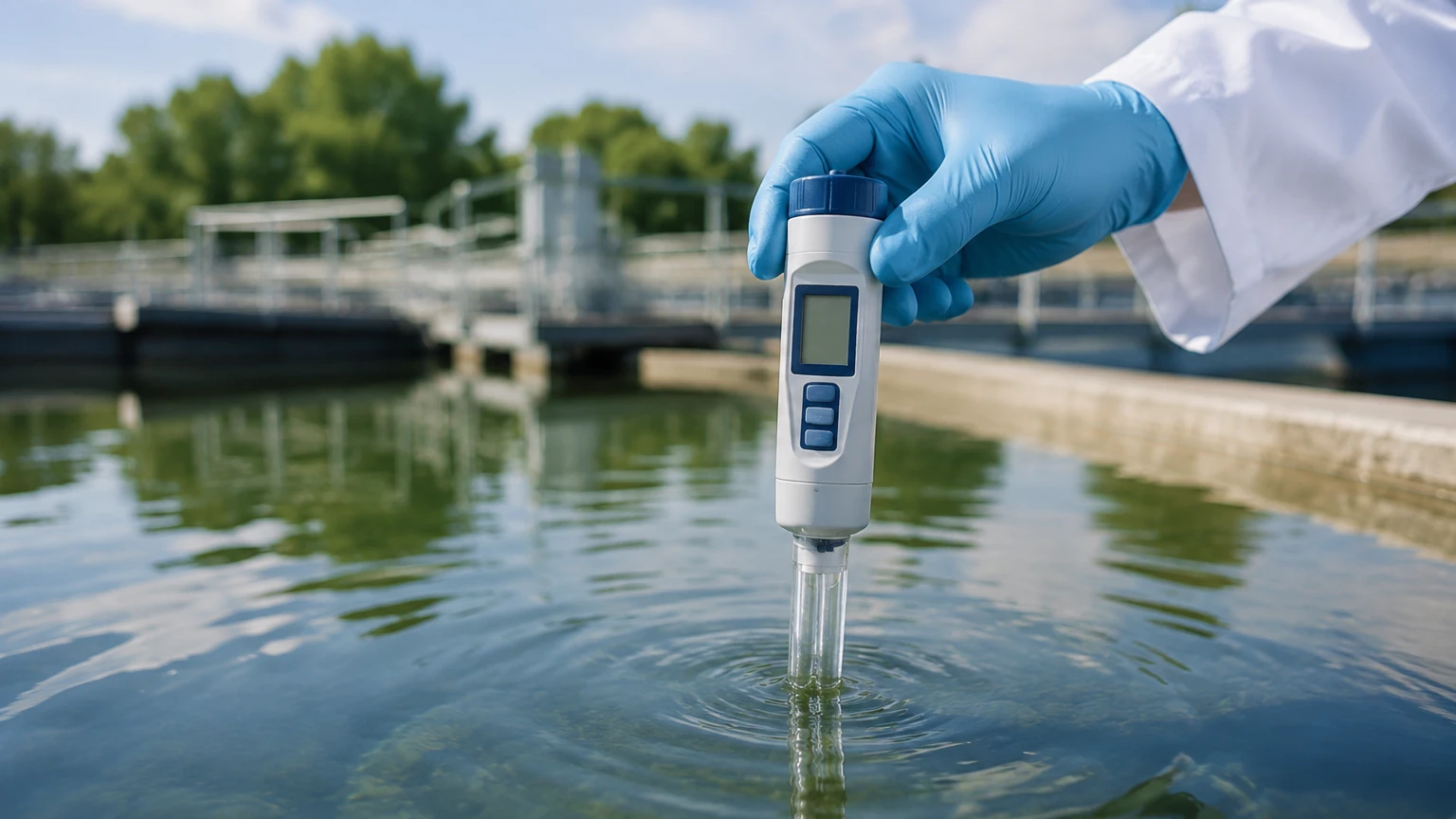
Integrating a device that measures ph with reliable level measurement instruments allows for automated dosing systems. For example, if a wastewater basin reaches a specific level, an ultrasonic or radar level meter triggers the discharge pump, while the pH sensor ensures the water is within the legal limit (e.g., pH 6.5 to 8.5) before the valve opens. For high-performance level measurement solutions that complement analytical sensors, engineers often refer to the Main Page to select radar, ultrasonic, or hydrostatic transmitters suitable for corrosive chemical environments.
By combining analytical data (pH) with physical data (level), operators can calculate the exact volume of neutralizing agent required to treat a batch, optimizing chemical usage and reducing operational costs.
Installation Guidelines for Process pH Sensors
The longevity and accuracy of a device that measures ph are heavily influenced by how it is installed. Proper installation minimizes fouling and ensures the sensor remains hydrated.
* Mounting Angle: Sensors should never be installed horizontally or upside down. A minimum angle of 15° above the horizontal is required to ensure the internal electrolyte remains in contact with the glass bulb and to prevent air bubbles from being trapped in the sensing tip.
* Flow Velocity: In pipeline installations, the flow should be directed toward the sensing face to keep it clean, but excessive velocity (above 2 m/s) can cause "streaming potentials," leading to noisy readings.
* Submersion Depth: In tanks, the sensor must be submerged deep enough to represent the bulk liquid but far enough from the bottom to avoid being buried in sediment.
* Retractable Housings: For critical processes that cannot be shut down, retractable assemblies (hot-tap valves) allow the sensor to be removed for cleaning and calibration while the tank or pipe remains under pressure.
Maintenance, Calibration, and Troubleshooting
Unlike level or pressure transmitters, which can often operate for years without intervention, a device that measures ph is a consumable item that requires regular maintenance.
Calibration
Sensors drift over time due to the aging of the glass and changes in the reference potential. Calibration should be performed using certified buffer solutions (usually pH 4.0, 7.0, and 10.0).
1. Zero Point: Calibrate at pH 7.0 first to establish the isopotential point.
2. Slope: Calibrate with a second buffer (pH 4 or 10) to determine the efficiency of the electrode. A new electrode should have a slope between 95% and 102% of the theoretical Nernst value. If the slope falls below 85%, the sensor should be replaced.
Cleaning
Fouling is the primary cause of sluggish response.
* Oils and Greases: Clean with a mild detergent or isopropyl alcohol.
* Mineral Scale: Soak in a 5% Hydrochloric Acid (HCl) solution for a few minutes.
* Proteins: Use a mixture of HCl and pepsin.
Storage
Never store a pH sensor in deionized (DI) water or distilled water, as this will leach the ions out of the glass and the reference electrolyte. Always store the sensor in a dedicated storage solution or a pH 4.0 buffer with added KCl.
Frequently Asked Questions (FAQ)
Q: How long does an industrial pH sensor last?
A: In clean water applications, a sensor may last 12 to 24 months. In harsh chemical processes or high-temperature environments, the lifespan may be as short as 3 to 6 months.
Q: Can I use a pH sensor to measure the concentration of an acid?
A: While pH is related to concentration, it measures activity. For high concentrations of acids (e.g., 98% Sulfuric Acid), a conductivity sensor or an ultrasonic concentration meter is usually more appropriate than a device that measures ph.
Q: Why does my pH reading drift when the temperature changes?
A: Temperature affects pH in two ways: it changes the electrical output of the electrode (corrected by ATC) and it changes the actual chemical pH of the solution. Most transmitters only correct for the electrical change, not the chemical change, unless programmed with a specific temperature coefficient for that fluid.
Q: Is glass-free pH measurement possible?
A: Yes, ISFET (Ion-Sensitive Field-Effect Transistor) sensors use a silicon chip instead of a glass bulb. These are common in the food industry where glass breakage is a safety risk, though they are generally less stable than glass electrodes in long-term industrial deployments.
By understanding these technical parameters and ensuring proper integration with volume-monitoring tools, industrial operators can maintain precise control over their chemical processes, ensuring both safety and efficiency.