Digital Output Pressure Transducer
Digital Output Pressure Transducer
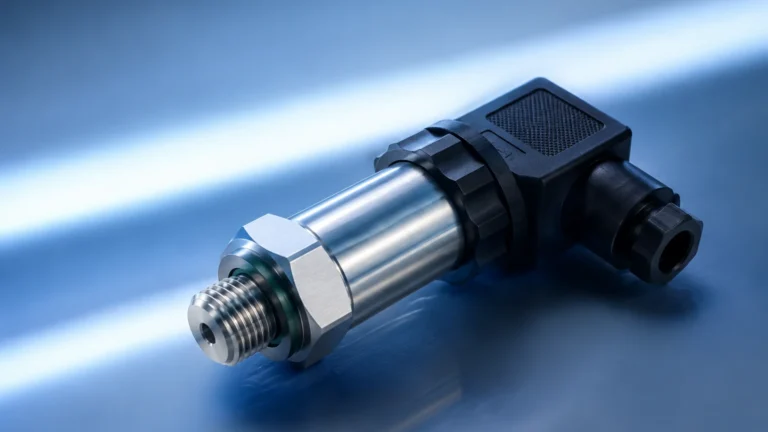
In the landscape of modern industrial automation, the transition from analog to digital signal processing has fundamentally altered how process variables are monitored. A digital output pressure transducer is a precision instrument designed to measure the physical pressure of gases or liquids and convert that force into a discrete digital signal. Unlike traditional analog sensors that output a continuous voltage or current, digital transducers provide a robust, noise-resistant data stream that can be directly integrated into programmable logic controllers (PLCs), distributed control systems (DCS), and IoT gateways.
For engineers and system integrators, selecting the right digital output pressure transducer is critical for maintaining system accuracy and long-term reliability. This guide explores the underlying measurement principles, the advantages of digital communication protocols, and practical considerations for implementation in demanding industrial environments.
Measurement Principles and Signal Conversion
At the core of every digital output pressure transducer is a primary sensing element. The most common technologies used in industrial applications include piezoresistive silicon, ceramic thick-film, and capacitive sensing.
Piezoresistive Sensing
Piezoresistive sensors utilize the change in electrical resistance that occurs when a material is subjected to mechanical strain. In these transducers, a silicon diaphragm with implanted resistors is exposed to the process media. As pressure deforms the diaphragm, the resistance change is measured via a Wheatstone bridge circuit. This analog change is then processed by internal electronics.
Capacitive Sensing
Capacitive transducers measure the change in electrical capacitance between a flexible sensing diaphragm and a fixed metal plate. As pressure moves the diaphragm, the distance between the electrodes changes, altering the capacitance. This method is highly sensitive and often used for low-pressure applications or environments where high overpressure protection is required.
The Digital Conversion Process
The distinguishing feature of a digital output pressure transducer is the integrated signal conditioning and Analog-to-Digital Converter (ADC). The low-level analog signal from the sensing element is amplified, temperature-compensated, and converted into a digital value (typically 12-bit to 24-bit resolution). A local microprocessor then formats this data according to a specific communication protocol, such as Modbus RTU or CANopen. This internal processing eliminates the signal degradation that often occurs when transmitting weak analog signals over long distances.
Digital vs. Analog: Why Make the Switch?
While 4-20 mA current loops have been the industry standard for decades, digital output pressure transducers offer several distinct advantages that are essential for Industry 4.0 applications.
1. Noise Immunity: Digital signals are significantly less susceptible to electromagnetic interference (EMI) and radio frequency interference (RFI) than analog signals. This makes them ideal for use near large motors, variable frequency drives (VFDs), and high-voltage power lines.
2. Long-Distance Transmission: Digital protocols like RS485 allow for data transmission over distances exceeding 1,000 meters without the signal loss or voltage drops associated with analog cables.
3. Multi-Parameter Data: A single digital transducer can transmit multiple data points over a single pair of wires. For instance, many Welk digital sensors provide both pressure and process temperature readings, as well as diagnostic status indicators.
4. Reduced Wiring Costs: Through multi-drop networking, multiple sensors can be connected to a single bus, drastically reducing the amount of cabling required compared to point-to-point analog wiring.
Communication Protocols in Digital Transducers
The choice of protocol determines how the transducer interacts with the rest of the control system. Below are the most common interfaces found in industrial digital output pressure transducers:
Modbus RTU (RS485)
Modbus is perhaps the most widely used protocol in industrial automation due to its simplicity and open standard. It uses the RS485 physical layer, supporting up to 247 devices on a single twisted-pair cable. It is highly efficient for monitoring pressure in water treatment facilities and chemical processing plants.
HART (Highway Addressable Remote Transducer)
HART is a hybrid protocol that superimposes a digital signal on top of a standard 4-20 mA analog loop. This allows for digital configuration and diagnostics while maintaining compatibility with legacy analog systems.
CANbus / CANopen
Originally developed for the automotive industry, CANbus is highly robust and features excellent error-detecting capabilities. It is frequently used in mobile hydraulics and complex machinery where high-speed communication is required.
I2C and SPI
These are low-level digital interfaces typically used for short-distance communication (centimeters) within a single enclosure or on a PCB. They are less common in standalone industrial transducers but are found in OEM sensor modules.
Selection Criteria for Industrial Applications
When evaluating a digital output pressure transducer, engineers must look beyond the basic pressure range. The following table summarizes key evaluation criteria for common digital interfaces:
| Feature | Modbus RTU (RS485) | HART | CANopen | SDI-12 |
| :— | :— | :— | :— | :— |
| Typical Application | Industrial Automation | Process Control (Legacy) | Mobile Machinery | Environmental Monitoring |
| Max Distance | 1,200 m | 3,000 m | 1,000 m (at low speeds) | 60 m |
| Power Consumption | Moderate | Low | Moderate | Very Low |
| Data Resolution | High (16/32-bit) | Moderate | High | High |
| Multi-drop Capacity | High (247 devices) | Limited (15 devices) | High (127 devices) | Moderate (10 devices) |
Material Compatibility
The wetted parts of the transducer must be compatible with the process media. For standard water applications, 304 or 316L stainless steel is usually sufficient. However, for corrosive chemical applications or seawater, materials like Hastelloy C, Monel, or Tantalum may be required to prevent premature sensor failure.
Accuracy and Total Error Band (TEB)
Digital transducers often specify accuracy as a percentage of Full Scale (FS). However, a more comprehensive metric is the Total Error Band (TEB), which includes the effects of linearity, hysteresis, repeatability, and temperature offsets over a specified range. High-precision digital transducers can achieve a TEB of <±0.1% FS.
Implementation in Hydrostatic Level Measurement
A significant application for the digital output pressure transducer is hydrostatic level measurement. By measuring the pressure exerted by a column of liquid, the level can be calculated using the formula:
Level (h) = Pressure (P) / (Density (ρ) × Gravity (g))
In this context, digital transducers offer superior performance for deep-well monitoring or large storage tank farms. Because the density of a liquid changes with temperature, a digital transducer that provides simultaneous pressure and temperature data allows the PLC to perform real-time density correction, resulting in a much more accurate level reading.
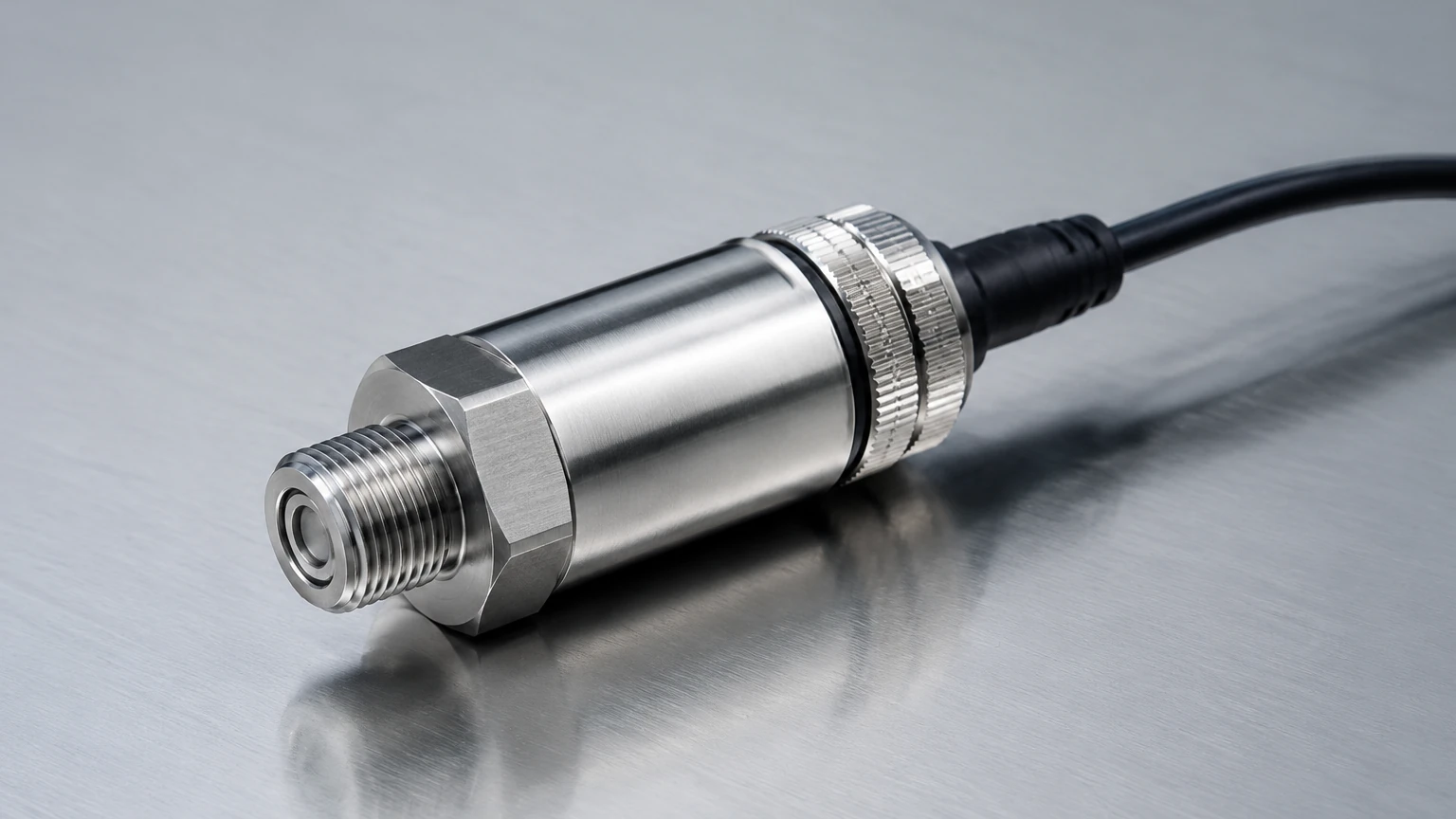
Welk provides specialized hydrostatic transmitters that utilize digital outputs to ensure that even in deep reservoirs (e.g., 200 meters), the data remains accurate and free from the electrical noise often found in submersible applications.
Installation Considerations and Best Practices
To ensure the longevity and accuracy of a digital output pressure transducer, follow these installation guidelines:
1. Shielding and Grounding: Always use shielded twisted-pair (STP) cabling for digital communication. The shield should be grounded at one end (usually the controller end) to prevent ground loops while providing a path for induced noise.
2. Termination Resistors: For RS485 and CANbus networks, ensure that 120-ohm termination resistors are placed at both physical ends of the bus to prevent signal reflections.
3. Venting: For gauge pressure measurements (relative to atmosphere), the transducer must have a vent path. In submersible models, this is usually a vent tube within the cable. Ensure this tube is protected by a desiccant filter to prevent moisture from entering the sensor housing.
4. Mounting Position: While most digital transducers are vibration-resistant, they should be mounted away from excessive heat sources and high-vibration equipment. If measuring steam, always use a syphon to protect the sensor diaphragm from high temperatures.
5. Address Management: Before deploying multiple digital sensors on a single bus, pre-configure each unit with a unique slave ID or node address. Attempting to change addresses on a live, multi-device bus can lead to communication conflicts.
Limitations and Potential Risks
Despite their advantages, digital output pressure transducers are not a universal solution for every scenario. Potential limitations include:
* Complexity: Setting up a digital network requires more configuration (baud rates, parity, register maps) than a simple analog loop.
* Latency: In extremely high-speed control loops (e.g., explosion suppression), the time taken for digital conversion and bus arbitration may introduce unacceptable latency compared to pure analog circuits.
* Power Requirements: Digital sensors require a stable DC power supply and generally consume more power than a passive 2-wire 4-20 mA loop, which can be a factor in remote, battery-powered locations.
Frequently Asked Questions (FAQ)
Q: Can I use a digital output pressure transducer with a long cable?
A: Yes. Protocols like RS485 (Modbus) are specifically designed for long-distance communication, often reaching up to 1,200 meters without needing a signal repeater.
Q: How do I calibrate a digital transducer?
A: Most digital transducers are calibrated at the factory and do not drift as significantly as analog sensors. However, field "zeroing" can often be performed via software commands sent over the communication bus.
Q: What happens if the digital communication fails?
A: Unlike an analog signal where a 0 mA reading clearly indicates a fault, a digital system might simply stop updating data. It is important to implement a "watchdog" timer in your PLC code to detect if a sensor has stopped communicating.
Q: Are digital transducers waterproof?
A: Many models, especially those designed for hydrostatic level measurement, are rated IP68 for continuous submersion. Always check the specific ingress protection rating for your application.
Conclusion
The digital output pressure transducer represents a significant step forward in process instrumentation, providing the high-resolution data and diagnostic capabilities required for modern industrial operations. By understanding the communication protocols and mechanical requirements of these devices, engineers can build more resilient and accurate measurement systems. For those looking to explore specific hardware configurations or seeking technical support for their next automation project, it is recommended to Review product options and application support on our Main Page to find the ideal solution for your specific industry needs.