Coke Oven
Coke Oven
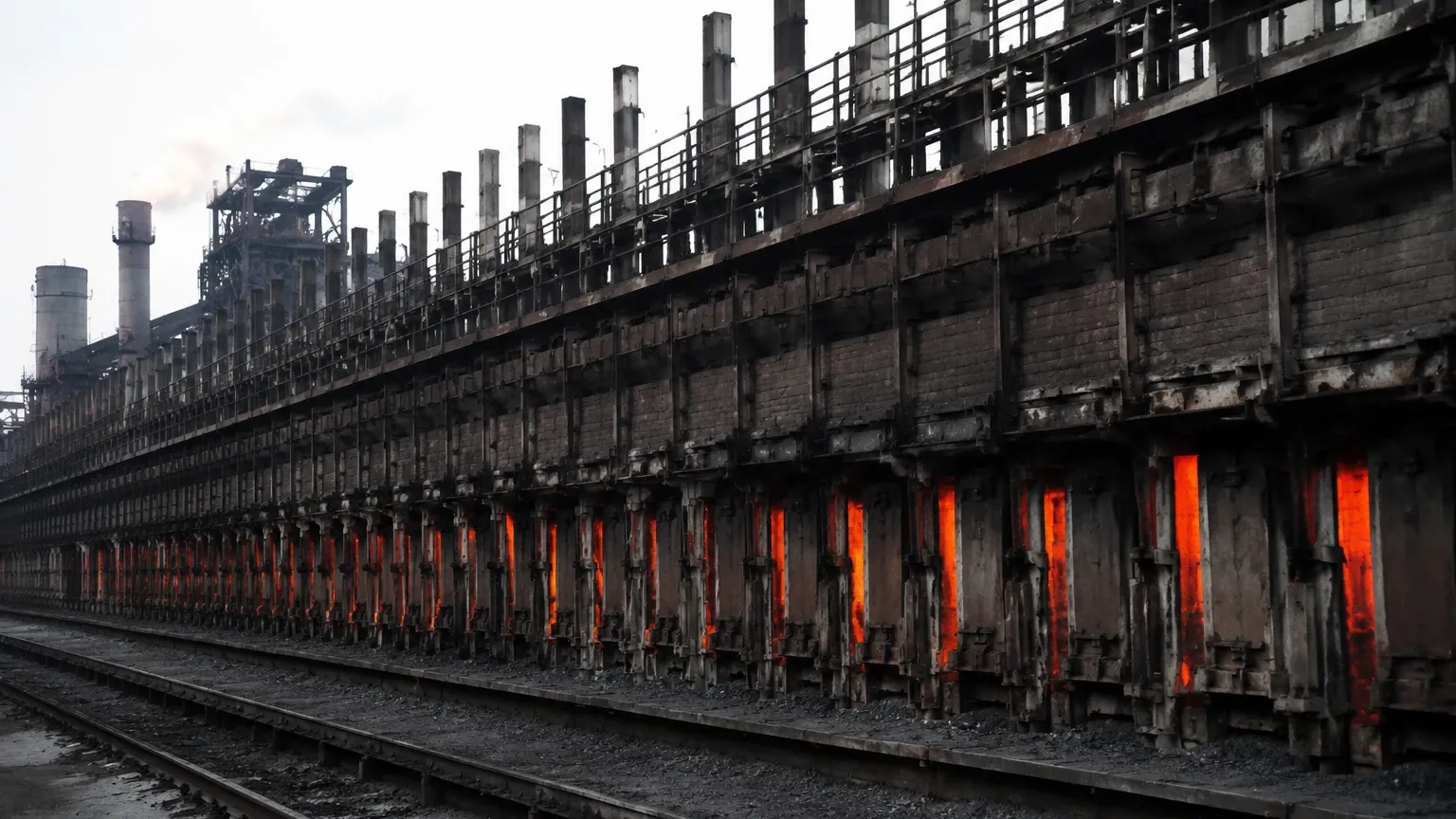
In the metallurgical industry, the coke oven stands as a critical piece of infrastructure, responsible for the thermal distillation of coal into coke, a vital fuel and reducing agent for blast furnaces. The process, known as carbonization, occurs in a high-temperature, oxygen-free environment, typically reaching temperatures between 1,000°C and 1,100°C. Managing a coke oven facility requires precise control over various liquids and solids, ranging from raw coal and quenching water to complex chemical by-products like coal tar and ammonia liquor.
Reliable level measurement is essential for maintaining the safety, efficiency, and environmental compliance of these operations. Given the extreme heat, abrasive dust, and corrosive chemicals inherent in coke production, selecting the appropriate instrumentation is a fundamental engineering challenge. This guide explores the measurement technologies and application strategies necessary for effective level control in and around the coke oven complex.
Understanding Level Measurement in Coke Oven Operations
Level measurement in a coke oven plant is not limited to a single type of medium. The facility operates as a massive chemical processing plant where solids (coal and coke) and liquids (water, tar, and chemicals) must be monitored continuously. For example, coal bunkers must be managed to ensure a steady feed to the ovens, while tar decanters require precise interface measurement to separate coal tar from ammonia liquor.
Inaccurate level readings in these environments can lead to significant operational risks. Overfilling a coal bunker can cause mechanical strain or spills, while failing to monitor the level in a quenching water tank can lead to inadequate cooling of the red-hot coke, potentially causing fires or equipment damage. Furthermore, the by-product plant relies on level sensors to manage hazardous chemicals, where leaks or overflows could result in severe environmental penalties. For comprehensive technical data and product specifications, engineers can refer to the Main Page of Welk’s industrial instrumentation catalog.
Core Measurement Principles for Harsh Environments
Before selecting a specific instrument for a coke oven application, it is vital to understand the underlying physical principles of the most common measurement technologies. Each method offers distinct advantages depending on the physical properties of the medium and the environmental conditions.
Radar Level Measurement (ToF)
Radar level meters operate on the Time-of-Flight (ToF) principle. The sensor emits high-frequency microwave pulses (typically in the 26 GHz or 80 GHz range) that travel at the speed of light. When these pulses hit the surface of the medium, they are reflected back to the sensor. The distance is calculated based on the time interval between emission and reception.
Because radar waves do not require a medium for propagation and are largely unaffected by temperature fluctuations, pressure, or dust, they are the preferred choice for coal bunkers and high-temperature liquid tanks. Non-contact radar is particularly effective in coke oven environments where the sensor must remain isolated from abrasive or corrosive materials.
Ultrasonic Level Measurement
Ultrasonic sensors also use the ToF principle but utilize sound waves instead of microwaves. The transducer emits an ultrasonic pulse that reflects off the target surface. While cost-effective and reliable for simple water applications, ultrasonic technology is sensitive to air temperature changes, heavy dust, and vapors. In a coke oven setting, its use is generally restricted to wastewater treatment or ambient-temperature water storage tanks where the air composition is stable.
Hydrostatic Level Measurement
Hydrostatic transmitters measure the pressure exerted by a liquid column at the bottom of a tank. This pressure (P) is directly proportional to the height of the liquid (h) and its density (ρ), according to the formula P = ρgh. This is a contact-based measurement method that is highly effective for clean liquids in vented or pressurized tanks. In coke production, it is often used for cooling water and chemical storage, provided the density of the liquid remains relatively constant.
Magnetic Level Gauges
Magnetic level gauges utilize a float containing a permanent magnet that moves with the liquid level inside a bypass chamber. Outside the chamber, a series of magnetic flags or a transmitter responds to the float's position. This provides a clear visual indication and a continuous electronic signal. This method is excellent for pressurized vessels where a physical visual check is required alongside automated monitoring.
Specific Applications within the Coking Plant
The coke oven environment presents several unique scenarios that require specialized measurement approaches.
Coal Bunkers and Silos
Coal is the primary feedstock for the coke oven. It is stored in large bunkers before being charged into the ovens. These bunkers are characterized by high dust levels and uneven surface profiles. 80 GHz high-frequency radar is the standard recommendation here. The narrow beam angle allows the signal to avoid internal structural reinforcements, while the high frequency penetrates dust more effectively than lower-frequency alternatives.
Tar Decanters and Interface Measurement
One of the most complex tasks in the by-product plant is separating coal tar from ammonia liquor in decanter tanks. Since the two liquids have different densities and do not mix, an interface forms. Guided wave radar (GWR) or specialized hydrostatic systems are used to detect this interface. GWR uses a probe that extends into the liquid; the signal reflects off both the upper liquid surface and the interface between the liquor and the tar, allowing for simultaneous tracking of both levels.
Quenching Water Systems
After the carbonization process, the red-hot coke is pushed out of the oven and quenched with water. The quenching towers and associated storage tanks require robust level monitoring to ensure sufficient water volume is always available. Ultrasonic or non-contact radar sensors are typically employed here, mounted at a safe distance from the steam and heat generated during the quenching process.
Selection Criteria and Comparison Table
Choosing the right instrument requires balancing performance requirements with the physical constraints of the coke oven site. The following table provides a general selection framework for common applications.
| Application | Medium | Recommended Technology | Key Benefit |
| :— | :— | :— | :— |
| Coal Bunker | Raw Coal (Solid) | 80 GHz Radar | High dust penetration; narrow beam |
| Tar Decanter | Tar/Ammonia Liquor | Guided Wave Radar | Accurate interface detection |
| Quenching Tank | Process Water | Non-contact Radar | Unaffected by steam and vapor |
| Ammonia Storage | Corrosive Liquid | Magnetic Level Gauge | Visual safety + corrosion resistance |
| Wastewater Sump | Industrial Effluent | Ultrasonic | Cost-effective for open channels |
| Acid/Alkali Tanks | Chemicals | Hydrostatic (PTFE coated) | Reliable pressure-based tracking |
Installation and Maintenance Best Practices
In the harsh environment of a coke oven, the longevity of an instrument is often determined by its installation. Engineering teams should consider the following factors:
1. Heat Shielding: For sensors mounted near the oven tops or quenching towers, ambient temperatures can exceed the operating limits of the electronics. The use of heat shields, cooling jackets (water or air-cooled), and stand-off pipes is essential to protect the sensor housing.
2. Purging Systems: In areas with high dust or condensing vapors (like coal silos or tar tanks), air purging systems should be installed. A continuous flow of clean air across the sensor face prevents the buildup of material that could attenuate the signal.
3. Nozzle Geometry: For radar installations, the mounting nozzle should be as short as possible. If a long nozzle is unavoidable, it must be smooth-walled to prevent false reflections. The sensor should be positioned so that the signal beam does not intersect with the coal inflow stream or internal tank supports.
4. Grounding and Lightning Protection: Coke oven structures are often massive metal assemblies located in exposed areas. Proper electrical grounding and surge protection are mandatory to prevent damage from lightning strikes or electrical noise from heavy machinery.
Limitations and Mitigation Strategies
No measurement technology is universal. Engineers must be aware of the limitations inherent in these systems within a coke oven context.
* Radar and Dielectric Constants: Radar relies on the dielectric constant (εr) of the material. Very dry coal may have a low dielectric constant, resulting in a weaker reflection. Using high-sensitivity radar modules or larger antenna sizes can mitigate this.
* Ultrasonic and Vacuum/Vapor: Ultrasonic waves cannot travel through a vacuum and are significantly slowed by high concentrations of steam or heavy vapors. In the by-product plant, where vapors are common, radar is almost always a superior choice to ultrasonic.
* Hydrostatic and Density Shifts: If the temperature of the stored liquid fluctuates significantly, its density will change, leading to errors in hydrostatic level readings. Utilizing a dual-pressure system or integrating temperature compensation can maintain accuracy.
Frequently Asked Questions (FAQs)
Q: Can radar level meters see through the heavy steam in a quenching tower?
A: Yes. Unlike ultrasonic waves, radar microwaves are not significantly affected by steam or air density changes. This makes radar the most reliable choice for quenching applications where steam is a constant factor.
Q: How do we handle the build-up of coal tar on contact probes?
A: For guided wave radar or hydrostatic probes, coal tar buildup can be a challenge. We recommend using probes with PTFE (Teflon) coatings to minimize adhesion. Additionally, regular maintenance schedules should include a check of the probe surface, or a non-contact radar solution should be considered if the tank geometry allows.
Q: What is the maximum temperature a standard level sensor can handle?
A: Most standard industrial sensors are rated for process temperatures up to 80°C or 150°C. However, for applications near the coke oven battery, specialized high-temperature versions with ceramic seals and cooling extensions can handle process temperatures exceeding 400°C, while keeping the electronics at a safe operating temperature.
Q: Is 80 GHz radar always better than 26 GHz for coal bunkers?
A: Generally, yes. The 80 GHz frequency offers a much narrower beam (often as small as 3 degrees), which is critical for avoiding the internal structural beams and ladders common in large coal silos. It also provides better resolution on the uneven surfaces of coal piles.
For industrial operators looking to optimize their coke oven processes, selecting the right level measurement partner is crucial. Welk provides a range of radar, ultrasonic, and hydrostatic solutions designed to withstand the rigors of heavy industry. To explore specific models and technical documentation, please visit the Main Page for more information.