Diode Laser Absorption Spectroscopy
Diode Laser Absorption Spectroscopy
In the landscape of modern industrial process control, the ability to monitor gas concentrations with high precision and rapid response times is critical. Diode Laser Absorption Spectroscopy (DLAS), often referred to in its tunable form as TDLAS (Tunable Diode Laser Absorption Spectroscopy), has emerged as a premier sensing technology. Unlike traditional extractive methods that require physical sampling and transport of gases, DLAS offers non-contact, in-situ measurement capabilities that are essential for high-temperature, corrosive, or high-pressure environments. For engineering teams managing complex industrial automation and level measurement systems, understanding the integration of DLAS into broader process monitoring strategies is vital for maintaining safety and efficiency.
Understanding the Principles of Diode Laser Absorption Spectroscopy
At its core, Diode Laser Absorption Spectroscopy is an analytical technique used to determine the concentration of specific gas species within a mixture. The method relies on the fundamental physical principle that every gas molecule absorbs light at specific, characteristic wavelengths (spectral lines). By using a semiconductor diode laser as the light source, the system can target these specific absorption lines with extreme accuracy.
The Beer-Lambert Law
The quantitative foundation of DLAS is the Beer-Lambert Law. This law describes the relationship between the absorption of light and the properties of the material through which the light is traveling. The formula is generally expressed as:
I = I₀ exp(-α L C)
Where:
* I is the intensity of the light after passing through the gas.
* I₀ is the initial intensity of the laser light.
* α is the absorption coefficient (specific to the gas species and wavelength).
* L is the optical path length (the distance the laser travels through the gas, typically measured in meters).
* C is the concentration of the target gas.
* exp denotes the exponential function.
By measuring the ratio of the transmitted intensity to the initial intensity, and knowing the path length and the absorption coefficient, the system can calculate the gas concentration in real-time. In tunable systems (TDLAS), the laser's wavelength is rapidly swept across the absorption line. This allows the system to account for background interference and changes in the baseline light intensity, significantly improving the signal-to-noise ratio.
Wavelength Modulation and Direct Absorption
There are two primary modes of operation in DLAS:
1. Direct Absorption Spectroscopy (DAS): The laser wavelength is scanned across the absorption feature, and the transmission loss is measured directly. This is straightforward but can be sensitive to noise in the laser source.
2. Wavelength Modulation Spectroscopy (WMS): A high-frequency modulation is added to the laser's wavelength scan. By using phase-sensitive detection (lock-in amplification) at the second harmonic (2f), the system can filter out low-frequency noise and detect much smaller absorption signals. This mode is preferred for trace gas detection where concentrations may be in the parts-per-million (ppm) or parts-per-billion (ppb) range.
Key Components of a TDLAS System
A standard industrial DLAS setup consists of several critical components designed to operate in harsh process conditions:
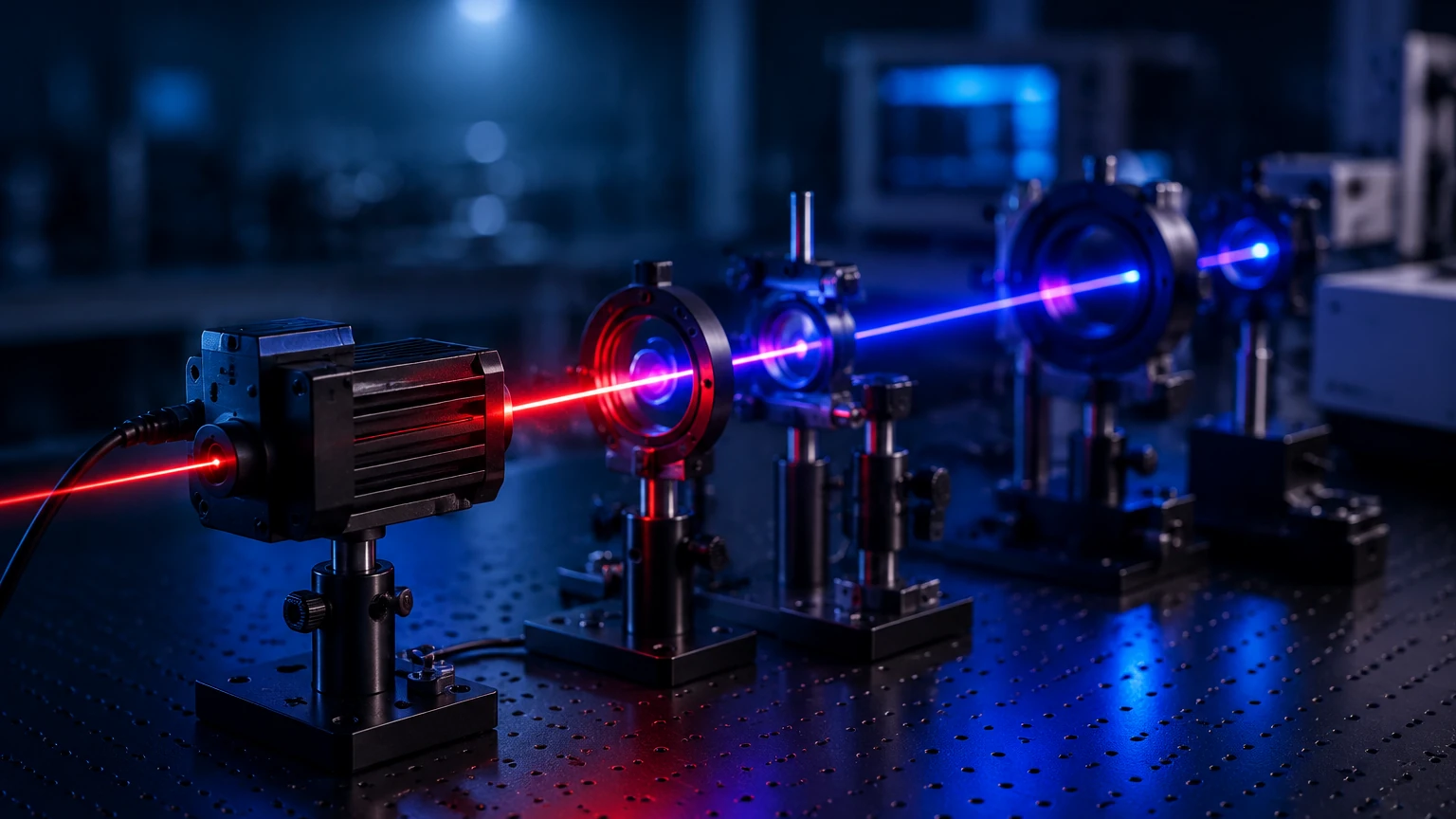
* Diode Laser Source: Typically a Distributed Feedback (DFB) or Vertical-Cavity Surface-Emitting Laser (VCSEL). These lasers provide the narrow linewidth required to resolve individual molecular absorption lines.
* Optical Assembly: Includes lenses for collimating or focusing the beam and windows (often sapphire or quartz) that separate the instrument from the process gas.
* Detector: A photodiode (often InGaAs for near-infrared applications) that converts the transmitted light into an electrical signal.
* Electronics and Processing Unit: This module controls the laser temperature and current (to tune the wavelength) and processes the detector signal to output the concentration data via industrial protocols like 4-20mA, Modbus, or HART.
Industrial Applications and Integration with Level Measurement
While Welk is primarily recognized for providing reliable, accurate, and cost-effective level measurement solutions, such as radar and ultrasonic sensors, the integration of gas phase analysis via DLAS is a complementary technology in many process sectors. For more information on comprehensive instrumentation, you can visit the Main Page to review product options and application support.
Combustion Control and Safety
In power plants and industrial furnaces, DLAS is used to monitor oxygen (O₂) and carbon monoxide (CO) levels directly in the flue gas. High-speed O₂ monitoring allows for precise air-to-fuel ratio control, maximizing efficiency and reducing emissions. Because DLAS is non-contact and operates in-situ, it can withstand the high temperatures (often exceeding 1,000°C / 1,832°F) and high dust loads that would destroy traditional electrochemical or paramagnetic sensors.
Moisture Analysis in Hydrocarbons
In the oil and gas industry, monitoring moisture (H₂O) in natural gas pipelines or refinery streams is critical to prevent corrosion and hydrate formation. DLAS is the preferred technology here because it is immune to "sensor poisoning" from glycols or sulfur compounds, which frequently degrade moisture sensors based on capacitance or chilled mirrors.
Relationship to Level Measurement
In chemical storage tanks or reactors, level measurement instruments (such as hydrostatic level transmitters or radar level meters) provide the volume of the liquid phase. However, the headspace (the volume above the liquid) often contains hazardous or reactive gases. DLAS can be used in tandem with level sensors to monitor the concentration of these gases—such as ammonia (NH₃) in fertilizer production or hydrogen chloride (HCl) in chemical synthesis—ensuring that the gas phase remains within safe operational limits as the liquid level fluctuates.
Selection Criteria for Process Environments
Selecting the right DLAS configuration requires a detailed evaluation of the process parameters. Engineers should consider the following factors:
| Criteria | Description | Importance |
| :— | :— | :— |
| Target Gas Species | The gas to be measured (e.g., O₂, CO, CH₄, H₂O, NH₃). | Determines the required laser wavelength. |
| Path Length | The distance between the laser source and the detector (0.5m to 20m). | Influences the sensitivity and detection limit. |
| Process Temperature | Range from ambient to 1,500°C (2,732°F). | Affects spectral line broadening and window selection. |
| Process Pressure | Range from vacuum to 50 bar (725 psi). | High pressure causes pressure broadening of the absorption lines. |
| Dust/Particulate Load | Concentration of solids in the gas stream. | High dust loads can attenuate the laser signal, requiring higher power. |
| Response Time | Typically 1 to 5 seconds. | Critical for safety-instrumented systems (SIS). |
Installation Guidelines and Best Practices
Successful deployment of Diode Laser Absorption Spectroscopy depends heavily on proper mechanical and optical installation. Unlike a hydrostatic level transmitter which is relatively simple to mount, DLAS systems are sensitive to alignment.
1. Optical Alignment: The transmitter and receiver units must be precisely aligned. In cross-stack configurations, structural vibrations or thermal expansion of the stack can cause the beam to drift. Using robust mounting flanges with fine-tuning adjustments is essential.
2. Purging Systems: To prevent the process gas from fouling the optical windows, a continuous purge of clean, dry air or nitrogen (N₂) is required. The purge flow must be sufficient to create a protective curtain but not so high that it significantly dilutes the gas in the measurement path.
3. Path Length Verification: The actual distance between the windows must be measured accurately to within ±10mm (0.4 in) to ensure the concentration calculation remains valid.
4. Environmental Protection: While the sensor heads are typically rated for IP65/IP66, in extreme climates, sunshades or heated enclosures may be necessary to maintain the internal laser temperature stability.
Comparison with Alternative Gas Sensing Technologies
Understanding where DLAS fits compared to other technologies helps in justifying the investment for specific applications.
* NDIR (Non-Dispersive Infrared): NDIR is cost-effective for general gas monitoring but suffers from cross-interference from other gases. DLAS has much higher spectral resolution, effectively eliminating interference.
* Electrochemical Sensors: These are inexpensive and portable but have a short lifespan (1-2 years) and are easily poisoned by chemicals. DLAS is a solid-state technology with no consumable parts in contact with the process, leading to a much lower total cost of ownership (TCO).
* Gas Chromatography (GC): GC provides highly detailed analysis of complex mixtures but is slow (minutes vs. seconds) and requires extensive maintenance. DLAS is used when real-time, continuous monitoring of a single or dual gas species is the priority.
Limitations and Operational Challenges
Despite its advantages, DLAS is not a universal solution. It has specific limitations that must be managed:
* Line-of-Sight Requirement: The technology requires a clear optical path. If the process medium is an opaque liquid or a dense foam, DLAS cannot see through it. This is why it is used for gas-phase analysis, while technologies like ultrasonic or radar are used for the liquid level.
* Gas Specificity: A single diode laser is tuned to a specific gas. If you need to measure five different gases, you typically need five different lasers or a complex multi-laser system, which increases costs significantly.
* Spectral Overlap: In very high-pressure applications, the absorption lines of different gases can broaden and overlap. Advanced spectroscopic modeling is required to decouple these signals.
Frequently Asked Questions (FAQ)
Q: How often does a TDLAS system need calibration?
A: Unlike electrochemical sensors that drift, the "calibration" of a DLAS system is based on fundamental physical constants. Most industrial systems use an internal reference cell to lock the laser wavelength. Under stable conditions, a full manual calibration check is only required once a year, though periodic zero-checks using nitrogen are recommended.
Q: Can DLAS measure gases in liquids?
A: No, DLAS measures gases in the vapor phase. To measure dissolved gases in a liquid, the gas must first be stripped or allowed to reach equilibrium in a headspace where the laser can pass through it.
Q: What is the maximum temperature for a DLAS probe?
A: Standard probes can handle gas temperatures up to 600°C (1,112°F). For higher temperatures, such as in combustion zones (up to 1,500°C), specialized high-temperature optics and intensive cooling/purging systems are utilized.
Q: How does dust affect the measurement?
A: DLAS is remarkably resilient to dust. Because the system looks at the *shape* of the absorption line rather than just the total light intensity, it can often operate with up to 90% signal loss due to dust attenuation. However, once the signal drops below a certain threshold, the signal-to-noise ratio becomes too low for accurate measurement.
In conclusion, Diode Laser Absorption Spectroscopy represents a significant advancement in process analytical technology. By providing fast, accurate, and low-maintenance gas analysis, it complements traditional level measurement and automation tools. When integrating these systems, engineers must prioritize optical alignment and environmental conditions to ensure long-term reliability in the field.