Dry Material Level Switch
Dry Material Level Switch
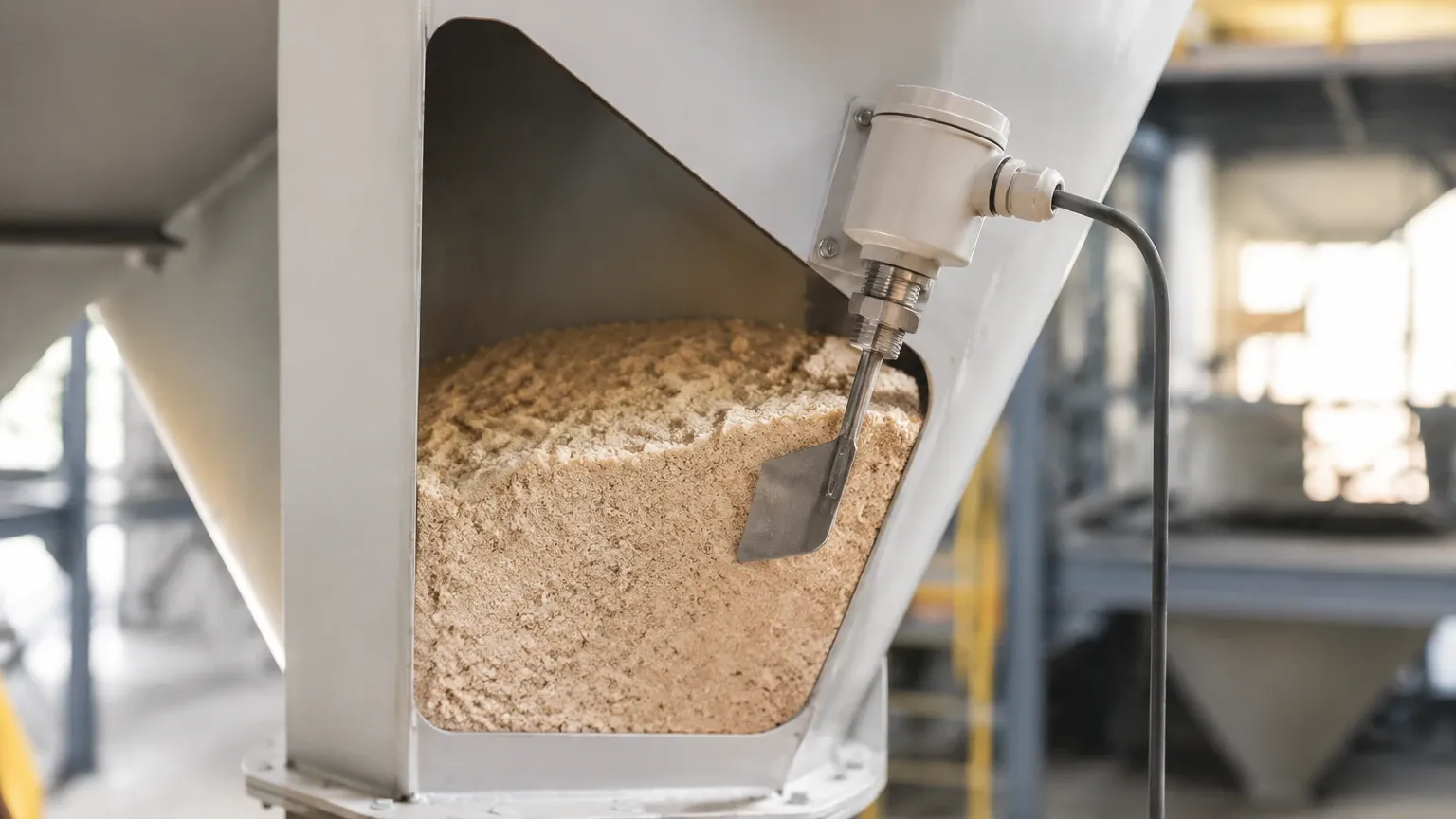
In industrial bulk solids handling, the dry material level switch serves as a critical component for process automation and safety. These point-level sensors are designed to detect the presence or absence of powders, granules, and bulk solids within silos, bins, and hoppers. Unlike continuous level measurement, which provides a constant reading of the volume or height, a level switch acts as a high-level alarm to prevent overfilling or a low-level alarm to prevent run-dry conditions in downstream equipment.
Selecting the correct dry material level switch requires an understanding of the physical properties of the material being measured, such as bulk density, moisture content, and abrasiveness. As a professional manufacturer, Welk provides a range of measurement technologies tailored to these specific industrial challenges. For a comprehensive overview of available technologies, engineers often refer to the Main Page to evaluate product specifications against their specific application requirements.
Measurement Principles of Dry Material Level Switches
Before selecting a device, it is essential to understand the underlying physics of how these sensors interact with dry materials. Each technology has distinct advantages depending on the material's characteristics.
Rotary Paddle Switches
The rotary paddle switch is one of the most common mechanical solutions for bulk solids. A low-speed motor drives a rotating paddle. When the dry material reaches the level of the paddle, it creates mechanical resistance (torque). This resistance causes the motor to stall or shift, which triggers a microswitch to signal the level state. Once the material level drops, a spring returns the motor to its original position, and the paddle resumes rotation.
Vibrating Fork and Rod Switches
These sensors utilize piezoelectric crystals to vibrate a fork-shaped or rod-shaped probe at its natural resonance frequency (typically around 85 Hz to 350 Hz). When the probe is covered by dry material, the vibration is dampened. The electronic circuit detects this change in frequency or amplitude and switches the output. Vibrating switches are highly sensitive and are often preferred for fine powders and low-density materials.
Capacitance Level Switches
Capacitance sensors operate by measuring the change in electrical capacitance between the sensor probe and the vessel wall (which acts as the ground). Dry materials have a different dielectric constant than air. As the material covers the probe, the capacitance increases. This technology is solid-state and has no moving parts, making it suitable for high-pressure or high-temperature environments, though it can be sensitive to material buildup on the probe.
Diaphragm (Pressure) Switches
Diaphragm switches are flush-mounted to the wall of a bin. They rely on the physical weight or pressure of the dry material to push against a sensitive internal membrane. This mechanical force activates a switch. These are purely mechanical and do not require external power for the sensing element, but they are generally limited to free-flowing materials with sufficient bulk density.
Technical Selection Criteria
Choosing the right dry material level switch involves more than just selecting a brand. The following table provides a comparison of common technologies based on typical application parameters.
Selection Comparison Table
| Technology | Minimum Bulk Density | Temperature Range | Ideal Material Types | Resistance to Buildup |
| :— | :— | :— | :— | :— |
| Rotary Paddle | >100 kg/m³ | -40°C to +250°C | Grains, plastic pellets, sand | Moderate |
| Vibrating Fork | >10 kg/m³ | -50°C to +150°C | Fine powders, flour, cement | High |
| Capacitance | N/A (Dielectric-based) | -40°C to +500°C+ | Chemicals, liquids, solids | Low (unless shielded) |
| Diaphragm | >300 kg/m³ | -40°C to +80°C | Heavy ores, coal, gravel | Low |
Key Evaluation Factors
1. Bulk Density: Measured in kg/m³ (or lbs/ft³). Extremely light materials like fumed silica require high-sensitivity vibrating rods, whereas heavy ores require robust rotary paddles with reinforced shafts.
2. Particle Size: Large, abrasive rocks can damage delicate vibrating forks. In such cases, a heavy-duty rotary paddle or a non-contact solution may be necessary.
3. Moisture Content: If the dry material is prone to clumping or sticking, capacitance sensors may trigger false positives unless they feature "active shield" technology to ignore coating.
4. Flow Characteristics: Materials that form bridges or "rat-holes" can bypass sensors located in dead zones of the silo.
Installation Considerations and Best Practices
Correct installation is vital to ensure the longevity and accuracy of a dry material level switch. Even the highest quality sensor from Welk will fail if placed in the direct path of a material heavy-load stream.
* Mounting Location: Sensors should be installed away from the fill inlet. If the sensor must be near the inlet, a protective baffle or shield should be installed above the probe to prevent mechanical damage from falling material.
* Side vs. Top Mounting: High-level alarms are typically top-mounted with an extended shaft or cable. Low-level alarms are side-mounted near the discharge cone. For side mounting, the sensor should be angled slightly downward (approx. 15-20 degrees) to prevent material from settling on the top of the probe.
* Cable Entry: Always point cable entries downward to prevent moisture from entering the housing via the conduit. Use drip loops in the wiring.
* Abrasive Materials: In applications involving glass cullet or heavy minerals, use sensors with hardened steel paddles or ceramic-coated probes to extend the service life.
Common Risks and Limitations
While dry material level switches are robust, they are not immune to process-related failures. Engineers should be aware of the following risks:
* Material Bridging: In silos containing cohesive powders, the material may form a bridge over the discharge outlet while the sensor remains covered, leading to a false "full" reading when the silo is actually emptying below the bridge.
* Mechanical Wear: Rotary paddles contain motors and seals that can wear out over time, especially in continuous 24/7 operations or in environments with fine, abrasive dust that can penetrate bearings.
* False Triggers from Dust: In extremely dusty environments, high-sensitivity vibrating forks may occasionally trigger if a thick layer of dust settles on the tines. Regular cleaning or adjusting the sensitivity threshold is required.
* Static Discharge: Dry plastic pellets or synthetic powders can generate significant static electricity. Sensors used in these environments must be properly grounded and, in many cases, certified for use in hazardous (Ex) dust zones.
Project Confirmation Checklist
Before finalizing a purchase or proceeding with a plant upgrade, project managers should confirm the following details with their technical team or supplier:
1. Explosive Atmosphere Ratings: Does the site require ATEX, IECEx, or CSA certifications for combustible dust?
2. Vessel Construction: Is the silo made of metal or concrete? (This affects capacitance sensor grounding).
3. Process Connection: What is the required thread size (e.g., 1" NPT, G 1 1/2") or flange specification?
4. Output Requirements: Does the control system require a relay contact (SPDT), a PNP/NPN transistor output, or a two-wire AC/DC connection?
5. Insertion Length: How far into the vessel does the probe need to reach to clear the insulation or wall thickness?
Frequently Asked Questions (FAQ)
Q: Can a dry material level switch be used for liquids?
A: Some technologies, like vibrating forks and capacitance switches, are dual-purpose. However, rotary paddles and diaphragm switches are strictly for bulk solids. Always check the manufacturer's data sheet on the Main Page for specific fluid compatibility.
Q: How do I handle material buildup on the sensor?
A: For capacitance sensors, look for "Active Shield" or "Guard" technology. For vibrating sensors, a higher frequency or a single-rod design (rather than a fork) can help shed material more easily.
Q: What is the typical lifespan of a rotary paddle switch?
A: With a high-quality motor and proper sealing, a rotary paddle switch can last 3 to 5 years in standard conditions. In highly abrasive or high-cycle applications, the paddle or motor may need replacement every 12 to 18 months.
Q: Are there non-contact options for point level detection?
A: Yes, microwave barriers can be used for non-contact point level detection. They consist of a transmitter and receiver mounted on opposite sides of the silo. When the material path blocks the microwave beam, the switch is triggered. These are ideal for highly corrosive or extremely abrasive materials where no sensor can touch the product.
By following these engineering guidelines and selecting the appropriate technology for the specific bulk solid, facilities can ensure reliable level control, minimize downtime, and prevent costly overflows in their dry material handling processes.