Ecofit Cpa640
Ecofit Cpa640
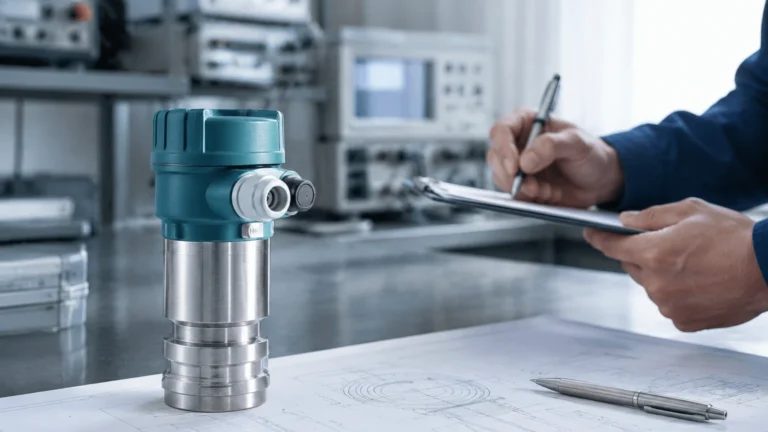
In industrial water treatment and process engineering, the integration of liquid analysis and level monitoring is fundamental to maintaining system efficiency and safety. The Ecofit CPA640 is a specialized immersion assembly designed to house 120 mm sensors for pH, ORP (Oxidation-Reduction Potential), conductivity, and oxygen measurement. While the assembly focuses on the physical protection and positioning of analytical sensors, its performance is intrinsically linked to the liquid level within the tank or basin.
For engineers and plant operators, understanding how the Ecofit CPA640 interacts with the broader process control environment—specifically level measurement technologies—is critical for preventing sensor damage and ensuring continuous data acquisition. This guide examines the technical principles of the CPA640, its selection criteria, and the complementary level measurement solutions required for optimized operation.
Introduction to Liquid Analysis and Level Integration
Process automation in sectors such as wastewater treatment, chemical processing, and power generation relies on high-quality real-time data. The Ecofit CPA640 serves as the mechanical interface between the sensitive analytical sensor and the often-harsh process medium. However, an analytical sensor can only provide accurate readings if it remains properly submerged.
If the liquid level drops below the sensor's immersion depth, the sensor may dry out, leading to calibration drift or permanent damage to the glass membrane (in the case of pH electrodes). Conversely, excessive levels can lead to overflow or pressure issues. Therefore, any installation involving an immersion assembly should be paired with a robust level measurement system. For comprehensive technical support on integrating these technologies, professionals often consult a Main Page for industrial instrumentation to review compatible radar or ultrasonic solutions.
Understanding the Ecofit CPA640 Assembly Principle
The Ecofit CPA640 is a modular immersion assembly. Its primary function is to provide a secure, leak-proof housing for sensors with a standard Pg 13.5 thread and a length of 120 mm. The design philosophy centers on versatility, allowing for installation in open basins, channels, and tanks.
Mechanical Design
The assembly typically consists of an immersion pipe, a sensor holder, and a protection guard. The protection guard is a vital component that shields the sensitive sensor tip from mechanical impacts caused by large solids or high-velocity flow within the medium.
Immersion Depth and Mounting
The CPA640 is available in various lengths, typically ranging from 500 mm to 3000 mm. The choice of length depends on the minimum and maximum operating levels of the tank. It can be mounted using various process connections, including:
- Universal suspension bracket: Ideal for open basins where the level fluctuates significantly.
- Flange connections: Used for closed tanks where a pressure-tight seal is required.
- Threaded connections (G1 or NPT): Suitable for direct integration into pipework or smaller vessel ports.
Technical Specifications and Material Compatibility
Selecting the correct material for the Ecofit CPA640 is essential to ensure chemical resistance and structural integrity. The assembly must withstand the corrosive nature of the process fluid while maintaining a stable environment for the sensor.
| Feature | Specification / Material Options |
| :— | :— |
| Immersion Lengths | 500 mm, 1000 mm, 1500 mm, 2000 mm, 2500 mm, 3000 mm |
| Wetted Materials | Polypropylene (PP), Stainless Steel (1.4404 / 316L) |
| Seal Materials | EPDM, FKM (Viton) |
| Temperature Range | PP: 0 to 60°C; Stainless Steel: -15 to 130°C |
| Pressure Rating | Up to 6 bar at 20°C (depending on material) |
| Sensor Connection | Pg 13.5 thread for 120 mm sensors |
Pressure and Temperature Limits
It is important to note that the pressure resistance of the assembly decreases as the temperature of the medium increases. For instance, a PP (Polypropylene) assembly rated for 6 bar at 20°C may only be suitable for 2 bar at 60°C. Engineers must consult the pressure-temperature curves provided in the technical documentation to avoid mechanical failure.
Selecting Level Measurement for Complementary Process Control
While the Ecofit CPA640 manages the analytical sensor, a level meter manages the process environment. Selecting the right level technology ensures that the CPA640 is always positioned correctly relative to the liquid surface.
Hydrostatic Level Transmitters
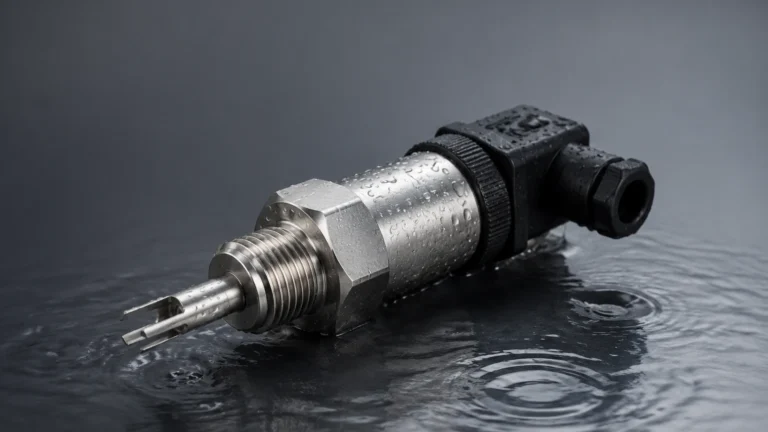
Hydrostatic sensors measure the pressure exerted by the liquid column above the sensor. This is a "contact" technology where the transmitter is submerged at the bottom of the tank.
- Principle: $P = \rho \cdot g \cdot h$ (Pressure = Density × Gravity × Height).
- Application: Excellent for deep basins where the CPA640 is also used. It provides a reliable reading regardless of surface foam.
Ultrasonic Level Sensors
Ultrasonic measurement is a non-contact method that uses sound waves to determine the distance to the liquid surface.
- Principle: The sensor emits an ultrasonic pulse and measures the time it takes for the echo to return (Time of Flight).
- Application: Ideal for wastewater applications where the medium might be corrosive or contain solids that could foul a contact-based level sensor.
Radar Level Meters
Radar technology (specifically 80GHz high-frequency radar) offers the highest precision and is unaffected by temperature fluctuations, steam, or dust.
- Principle: Microwaves are reflected off the liquid surface.
- Application: Best for closed tanks or reactors where the Ecofit CPA640 is installed via a flange and where high accuracy is required for chemical dosing.

Installation Guidelines for Immersion Assemblies and Level Sensors
Proper installation is the most significant factor in the longevity and accuracy of both the Ecofit CPA640 and the accompanying level instruments.
Placement Considerations
1. Avoid Turbulence: Do not install the CPA640 or the level sensor directly above an inlet pipe or near an agitator. Excessive turbulence can cause mechanical stress on the immersion pipe and lead to unstable level readings.
2. Stilling Wells: In applications with high flow rates or surface agitation, the use of a stilling well (a bypass pipe) can protect the CPA640 and provide a calm surface for level measurement.
3. Minimum Immersion: Ensure that the CPA640 is long enough so that the sensor remains submerged even at the "Low-Low" level alarm point of the tank.
Mounting the Assembly
When using the universal suspension bracket, the assembly should be allowed to swing slightly if there is flow, but it must be secured if the flow velocity exceeds 0.5 m/s. For rigid mounting in tanks, ensure the flange or thread is tightened to the manufacturer's specified torque to prevent leaks, especially in pressurized systems.
Maintenance, Cleaning, and Operational Longevity
Immersion assemblies like the Ecofit CPA640 are subject to fouling, scaling, and biological growth. Regular maintenance is required to ensure the sensor within the assembly continues to function.
Cleaning Procedures
- Manual Cleaning: The assembly should be removed from the process periodically. The protection guard can be unscrewed to allow access to the sensor tip. Use a soft cloth and appropriate cleaning agents (e.g., dilute HCl for calcium deposits).
- Automatic Cleaning Integration: Some versions of immersion assemblies allow for the integration of spray heads that clean the sensor in-situ using water or cleaning chemicals, reducing the need for manual intervention.
Sensor Replacement
One of the advantages of the CPA640 is the ease of sensor replacement. By unscrewing the top cover, the sensor can be disconnected from the cable and replaced without removing the entire immersion pipe from the tank, provided the liquid level is below the top of the pipe.
Limitations and Practical Considerations
While the Ecofit CPA640 is a robust solution, it has limitations that engineers must account for:
- Flow Velocity: In high-flow channels, long immersion pipes (over 2 meters) can vibrate or bend. In these cases, additional support brackets are necessary.
- Material Degradation: PP is susceptible to UV degradation if used outdoors without protection for many years. For outdoor installations in high-sunlight regions, stainless steel or UV-stabilized covers are preferred.
- Viscous Media: In highly viscous liquids, the protection guard of the CPA640 may become clogged, preventing the medium from reaching the sensor. A version without a guard or with larger openings may be required.
Frequently Asked Questions (FAQ)
Q: Can the Ecofit CPA640 be used in pressurized tanks?
A: Yes, provided it is equipped with a flange or threaded process connection. However, you must ensure the pressure does not exceed the rating for the specific material and temperature (typically max 6 bar for PP at ambient temperature).
Q: How do I choose between a PP and a Stainless Steel assembly?
A: PP is generally chosen for its excellent chemical resistance to acids and bases at lower temperatures and costs. Stainless steel (316L) is selected for higher temperatures, higher pressures, or applications requiring hygienic standards.
Q: What happens if the liquid level rises above the top of the immersion pipe?
A: The Ecofit CPA640 is designed to be an immersion assembly, but the top connection (where the cable exits) is typically not rated for permanent submersion unless specifically configured with a watertight cable gland (IP68). Standard installations should ensure the top of the assembly remains above the maximum liquid level.
Q: Is it possible to install multiple sensors in one CPA640?
A: The standard CPA640 is designed for a single 120 mm sensor. For multi-parameter measurement in a single location, multiple assemblies or a specialized multi-sensor holder would be required.
By carefully matching the Ecofit CPA640 with the appropriate level measurement technology and adhering to strict installation guidelines, industrial operators can achieve a reliable and low-maintenance monitoring system. For further details on selecting the right level transmitters to support your analytical assemblies, visiting a professional Main Page for technical specifications and product comparisons is recommended.