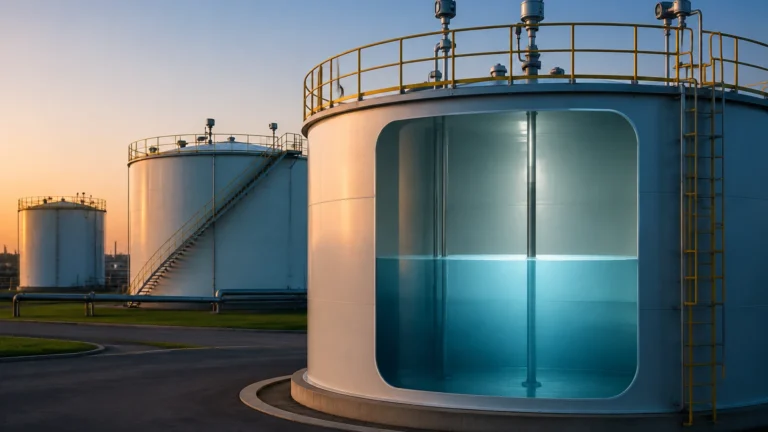
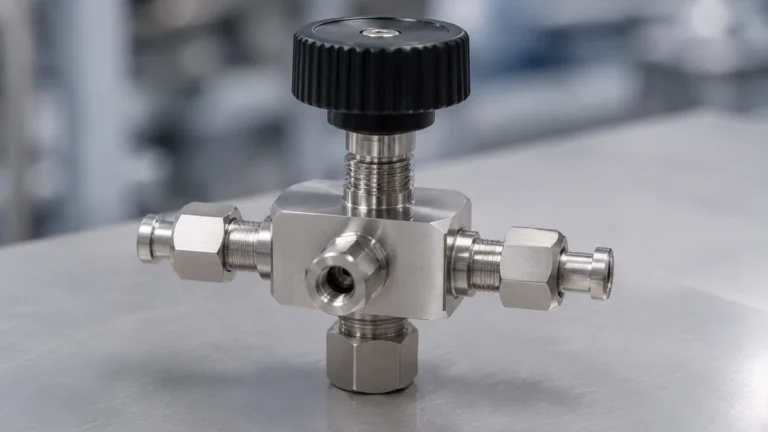
Electrostatic Tank Sensors
Electrostatic Tank Sensors
In the landscape of industrial process control, the accurate monitoring of liquid and solid levels within storage vessels is critical for operational efficiency and safety. Among the various technologies available, electrostatic tank sensors—more commonly referred to in engineering as capacitive or RF admittance level sensors—represent a versatile and robust solution. These sensors leverage the electrical properties of the stored medium to provide either continuous level data or point-level detection. This guide examines the underlying physics, selection criteria, and practical installation requirements for implementing electrostatic sensing technology in industrial environments.
Measurement Principles of Electrostatic Level Sensing
Electrostatic tank sensors operate on the fundamental principle of electrical capacitance. A capacitor is formed when two electrically conductive plates are separated by an insulating material known as a dielectric. In a typical industrial tank application, the sensor probe acts as one plate, and the tank wall (if metallic and grounded) acts as the second plate. If the tank is non-conductive, a second reference probe or a grounding strap is required to complete the circuit.
The capacitance ($C$) of this system is defined by the formula:
$$C = \epsilon \cdot \frac{A}{d}$$
Where:
* $\epsilon$ (Epsilon): The permittivity of the dielectric material between the plates.
* $A$: The surface area of the plates.
* $d$: The distance between the plates.
In level measurement, the distance ($d$) and the area ($A$) of the probe remain constant. The variable factor is the total permittivity ($\epsilon$) of the space between the probe and the tank wall. This space is occupied by a combination of the process material (liquid or solid) and the air or gas above it. Since most industrial materials have a higher dielectric constant than air (which has a dielectric constant of approximately 1), the total capacitance increases as the material rises and covers more of the probe. The electronics within the sensor head convert this change in capacitance into a standardized electrical signal, such as a 4-20mA loop or a digital communication protocol.
RF Admittance: The Evolution of Capacitance
While basic capacitance sensors are effective for clean, non-coating liquids, many electrostatic tank sensors utilize RF (Radio Frequency) Admittance technology. This is an advanced form of capacitive measurement that uses a high-frequency oscillator to measure both the capacitive reactance and the resistive component of the medium. By processing these components separately, the sensor can "ignore" the effects of material buildup or coating on the probe, which is a common failure point for standard capacitive devices.
Types of Electrostatic Tank Sensors
Before selecting a sensor, it is necessary to distinguish between the two primary functional types: point-level switches and continuous level transmitters.
1. Point-Level Electrostatic Switches
These are used for high-level alarms, low-level protection, or pump control. When the material reaches the sensor probe, the sudden change in capacitance triggers a relay or transistor output. They are highly valued in the chemical and food industries because they have no moving parts that can jam or wear out.
2. Continuous Level Transmitters
For applications requiring real-time inventory management, continuous electrostatic tank sensors provide a constant output proportional to the level (0% to 100%). These probes are often long rods or flexible cables that extend the full height of the tank. They are particularly effective in tall, narrow silos where radar or ultrasonic signals might suffer from interference from internal structures.
Industrial Selection Guide
Choosing the correct sensor requires an analysis of the material's dielectric constant ($\epsilon_r$) and the physical environment of the tank. The following table provides a general reference for common industrial materials.
| Material Type | Dielectric Constant ($\epsilon_r$) | Recommended Probe Type | Sensitivity Requirement |
| :— | :— | :— | :— |
| Water-based liquids | 80+ | Insulated (PTFE/PFA) | Low (Easy to detect) |
| Alcohols | 15 – 30 | Insulated | Moderate |
| Oils and Fuels | 1.8 – 5 | Bare or Insulated | High |
| Dry Powders/Grains | 1.2 – 3 | Bare metal or Cable | Very High |
| Corrosive Acids | Varies | Fully encapsulated PFA | Moderate |
When evaluating hardware, engineers should consult the Main Page of professional instrumentation providers to ensure the selected model's pressure and temperature ratings align with the process requirements.
Key Evaluation Criteria
To ensure long-term reliability, several factors beyond the dielectric constant must be considered during the procurement phase:
* Conductivity of the Medium: Conductive liquids (like water or acids) require probes with an insulating sheath (usually PTFE or PFA) to prevent a short circuit between the probe and the ground. Non-conductive liquids (like pure hydrocarbons) can often be measured with bare metal probes.
* Tank Geometry: In horizontal cylindrical tanks, the relationship between capacitance and volume is non-linear. The control system or the sensor electronics must be capable of performing strapping table calculations to provide accurate volume readings.
* Process Temperature and Pressure: Electrostatic sensors are robust and can often handle temperatures exceeding 200°C and pressures up to 100 bar, provided the seal materials and electronics housings are appropriately specified.
* Vessel Material: If the tank is made of plastic, fiberglass, or has a rubber lining, the sensor will not function without a reference electrode. This usually takes the form of a concentric shield (coaxial probe) or a parallel ground rod.
Installation and Engineering Considerations
Proper installation is the most significant factor in the accuracy of electrostatic tank sensors. Unlike non-contact methods, these sensors are "wetted," meaning they are in physical contact with the process.
Mounting Position
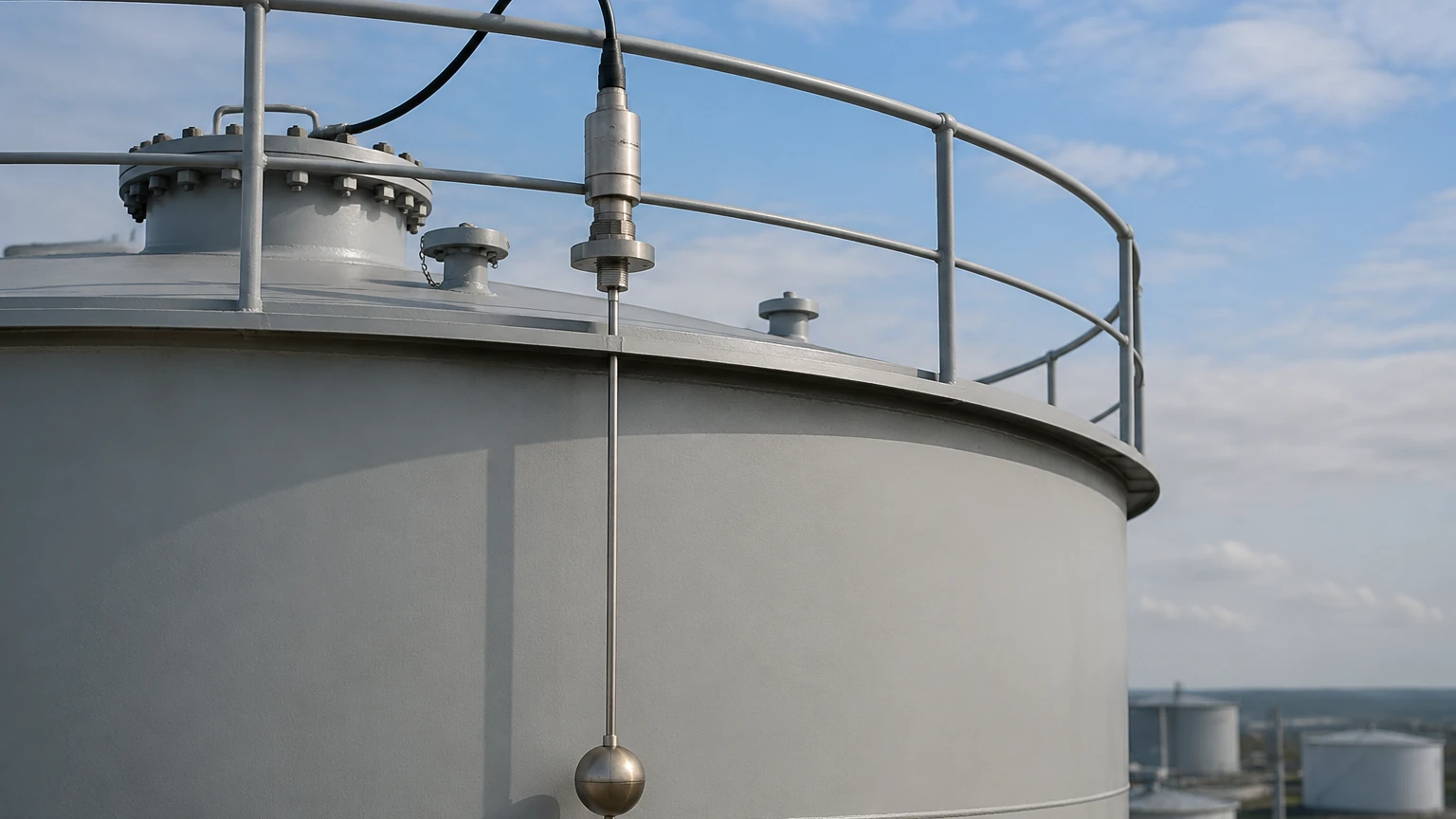
The sensor should be mounted vertically from the top of the tank. It is essential to keep the probe away from the tank walls (unless the wall is the intended ground) and away from internal structures like agitators, heating coils, or ladders. If the probe is too close to a metal structure, it may create a "parasitic capacitance" that skews the readings.
The "Dead Zone"
Most probes have a small inactive area near the mounting thread where the insulation is thicker or where the electronics are housed. This is known as the dead zone. Engineers must account for this when calculating the maximum fill level to prevent overfilling before the sensor can detect the material.
Grounding
Since the measurement relies on a circuit between the probe and ground, the tank must be properly grounded. For metallic tanks, ensuring a metal-to-metal connection at the mounting thread or flange is usually sufficient. For non-conductive tanks, a dedicated ground wire must be connected to a reference probe submerged in the liquid.
Limitations and Common Risks
While highly versatile, electrostatic tank sensors are not universal solutions. Users should be aware of the following limitations:
1. Changing Dielectric Constants: If the composition of the stored liquid changes significantly (e.g., switching from a water-based solution to an oil-based one), the sensor will require recalibration. The sensor measures capacitance, not physical height; if the dielectric constant changes, the perceived level will change even if the physical level remains constant.
2. Moisture in Solids: In dry bulk applications, such as grain silos, a change in moisture content can drastically alter the dielectric constant of the material, leading to measurement errors.
3. Heavy Coating: While RF admittance sensors mitigate the effects of coating, extremely thick or conductive coatings (like metallic slurries) can still bridge the gap between the probe and the tank wall, causing a "false full" reading.
4. Electrostatic Discharge (ESD): In applications involving dry powders or non-conductive liquids moving at high velocities, static electricity can build up. If the sensor is not designed with proper ESD protection, these discharges can damage the sensitive internal electronics.
Comparison with Other Technologies
| Feature | Electrostatic (Capacitive) | Radar (Non-contact) | Ultrasonic |
| :— | :— | :— | :— |
| Cost | Generally lower | Higher | Moderate |
| Moving Parts | None | None | None |
| Foam Handling | Good (can sense through) | Poor (reflects signal) | Poor |
| Pressure/Temp | Excellent | Excellent | Limited |
| Installation | Wetted (Contact) | Non-contact | Non-contact |
| Maintenance | Low (if no coating) | Very Low | Moderate (transducer cleaning) |
Electrostatic sensors are often preferred over ultrasonic sensors in high-pressure or vacuum environments where sound waves cannot travel effectively. They are also favored over radar in applications with heavy foam, as radar signals often scatter or are absorbed by foam, whereas capacitive probes can be tuned to detect either the foam top or the liquid level beneath it.
Frequently Asked Questions (FAQs)
Q: Can electrostatic tank sensors be used in plastic tanks?
A: Yes, but they require a reference ground. This is typically achieved by using a dual-probe sensor or a probe with a concentric metal tube (coaxial) that acts as the ground.
Q: How often do these sensors need calibration?
A: If the process material remains consistent, these sensors are very stable and may only need a calibration check once a year. However, if the material's dielectric constant fluctuates, more frequent calibration or the use of a compensating probe is necessary.
Q: Are they suitable for explosive environments?
A: Yes, many electrostatic sensors are designed to be intrinsically safe (Ex ia) or explosion-proof (Ex d), making them suitable for use in hazardous areas common in the oil and gas or chemical industries.
Q: What is the maximum probe length available?
A: Rigid rod probes are typically available up to 3 or 4 meters. For deeper tanks or silos, flexible cable probes can be used, which can reach lengths of up to 30 meters or more.
Conclusion
Electrostatic tank sensors remain a cornerstone of industrial level measurement due to their lack of moving parts, high durability, and ability to operate in extreme process conditions. By understanding the dielectric properties of the medium and ensuring proper grounding and installation, engineers can achieve highly accurate and repeatable measurements. For those looking to integrate these solutions into their automation systems, reviewing the technical specifications on the Main Page of a dedicated manufacturer like Welk is the recommended next step to ensure the hardware matches the specific demands of the application.