Endress Hauser Flow Measurement
Endress Hauser Flow Measurement
In the landscape of industrial process automation, flow measurement represents one of the most critical variables for ensuring operational efficiency, safety, and fiscal accountability. Endress Hauser flow measurement solutions have established a significant footprint across diverse sectors, including water and wastewater, chemical processing, oil and gas, and food and beverage production. This guide serves as a practical engineering reference for understanding the technologies, selection criteria, and installation requirements associated with high-precision flow instrumentation.
While level measurement—the primary focus of specialized manufacturers like Welk—deals with the inventory and volume of stationary or semi-stationary fluids, flow measurement addresses the dynamic movement of those fluids through a system. Understanding the synergy between these two disciplines is essential for comprehensive process control.
Core Principles of Flow Measurement
Before selecting a specific instrument, engineers must understand the physical principles that govern different measurement technologies. Endress Hauser flow measurement devices typically utilize one of several primary methods, each suited to specific fluid properties and environmental conditions.
Electromagnetic Flow Measurement
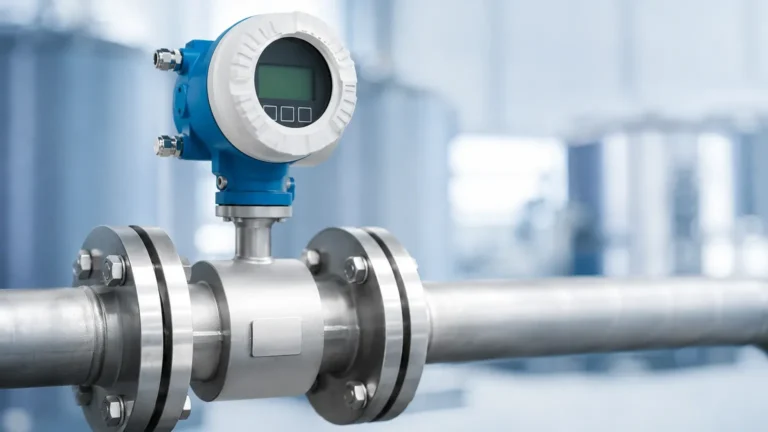
Based on Faraday’s Law of Induction, electromagnetic flowmeters (magmeters) are used for conductive liquids. When a conductive fluid flows through a magnetic field, it generates a voltage proportional to its velocity. This method is non-intrusive, offering no pressure drop and no moving parts.
Coriolis Mass Flow Measurement
Coriolis meters measure mass flow directly rather than volume. They operate on the principle that a vibrating tube will experience a twist (Coriolis force) when a fluid flows through it. The degree of twist is directly proportional to the mass flow rate. This is widely considered the most accurate method for complex fluids and custody transfer applications.
Ultrasonic Flow Measurement
Ultrasonic meters use sound waves to determine flow velocity. Most industrial units employ the "transit-time" method, where the difference in time between an ultrasonic pulse traveling with the flow and one traveling against it is measured. This technology is ideal for non-conductive fluids and applications where pipe penetration is undesirable (clamp-on versions).
Vortex Flow Measurement
Vortex meters utilize the Karman Vortex Street principle. As fluid flows past a bluff body (a shedder bar), vortices are created. The frequency of these vortices is proportional to the flow velocity. This technology is robust and particularly effective for measuring steam, gases, and low-viscosity liquids.
Endress Hauser Flow Measurement Portfolio Overview
The Endress Hauser flow measurement range is primarily organized under the "Proline" family of instruments. These are designed to provide a unified operating philosophy across different sensor types.
1. Promag (Electromagnetic): Designed for conductive liquids like water, slurries, and acids. They are frequently used in water treatment and mining.
2. Promass (Coriolis): Used for high-precision mass flow, density, and temperature measurement. These are the gold standard in chemical and oil/gas sectors.
3. Prowirl (Vortex): The primary choice for steam applications and high-temperature gas measurement.
4. Prosonic (Ultrasonic): Available in both inline and clamp-on configurations for flexible installation in existing piping systems.
5. t-mass (Thermal): Specifically designed for the direct mass flow measurement of gases, often used in compressed air monitoring and burner control.
Technical Selection Criteria
Selecting the correct flowmeter requires an analysis of the process fluid and the mechanical constraints of the installation site. The following table provides a generalized comparison of the primary technologies used in Endress Hauser flow measurement.
| Technology | Typical Accuracy | Fluid Conductivity | Pressure Drop | Suitable Media |
| :— | :— | :— | :— | :— |
| Electromagnetic | ±0.2% to 0.5% | > 5 μS/cm | Negligible | Conductive liquids, slurries |
| Coriolis | ±0.05% to 0.1% | Any | Moderate | Liquids, high-pressure gases |
| Vortex | ±0.75% to 1.0% | Any | Low | Steam, gases, low-viscosity liquids |
| Ultrasonic | ±0.5% to 2.0% | Any | None | Clean liquids, water, chemicals |
| Thermal Mass | ±1.0% to 2.0% | Any | Low | Dry gases, compressed air |
Fluid Properties to Confirm
* Viscosity: High-viscosity fluids may require Coriolis meters, while Vortex meters require low viscosity to shed vortices properly.
* Conductivity: Electromagnetic meters require a minimum conductivity (usually 5 to 20 μS/cm).
* Abrasiveness: For slurries, electromagnetic meters with ceramic liners are preferred over mechanical or high-velocity options.
* State of Matter: Is the media a liquid, gas, or steam? Does it contain entrained air or solids?
Installation Considerations and Best Practices
Even the most sophisticated Endress Hauser flow measurement device will fail to provide accurate data if installed incorrectly. Engineers must adhere to strict piping requirements to ensure a stable flow profile.
Straight Pipe Runs
Most flowmeters require a specific length of straight pipe upstream and downstream of the sensor to eliminate turbulence caused by elbows, valves, or pumps.
* Upstream: Typically 5 to 20 pipe diameters (DN).
* Downstream: Typically 2 to 5 pipe diameters (DN).
* *Note:* Some modern "0 x DN" electromagnetic meters utilize specialized coil geometries to eliminate these requirements, but this should be verified per specific model data sheets.
Orientation and Filling
The sensor must always be completely filled with fluid. For horizontal pipes, the sensor should not be placed at the highest point (where air can trap) or the lowest point (where sediment can collect). Vertical installation with upward flow is generally the preferred orientation to ensure the pipe remains full.
Grounding
For electromagnetic meters, proper grounding is critical. The fluid, the sensor, and the transmitter must be at the same electrical potential to prevent stray currents from interfering with the low-voltage measurement signal. In plastic or lined pipes, grounding rings are mandatory.

Limitations and Risk Mitigation
While Endress Hauser flow measurement tools are highly reliable, certain process conditions can introduce measurement errors or lead to premature failure.
1. Entrained Air: In Coriolis and Ultrasonic meters, air bubbles can dampen the signal or cause significant measurement drift. Air eliminators should be installed upstream if the process is prone to aeration.
2. Vibration: Coriolis and Vortex meters are sensitive to external mechanical vibrations. Ensure the piping is properly supported and that the meter is not installed near high-vibration equipment like reciprocating pumps.
3. Scaling and Buildup: In electromagnetic meters, an insulating layer of scale on the electrodes will eventually break the circuit. Regular cleaning or the use of "self-cleaning" electrode designs may be necessary for coating-prone media.
4. Cavitation: If the pressure drops too low across a meter (especially Vortex or Coriolis), the fluid may vaporize, causing cavitation that damages the sensor and ruins accuracy.
Integrating Flow and Level Measurement
In many B2B industrial applications, flow and level measurement are used in tandem to provide a complete picture of process health. For example, in open channel flow measurement (common in wastewater treatment), an ultrasonic or radar level sensor—such as those found on the Main Page of level-meters.com—is used to measure the head height of water passing through a flume or weir. This height is then converted into a flow rate using standardized formulas.
Furthermore, in chemical dosing systems, a flowmeter monitors the rate of addition while a hydrostatic or radar level transmitter monitors the inventory in the supply tank. This redundancy ensures that the process continues even if one instrument requires maintenance, and it allows for cross-verification of data (mass balance).
FAQ: Technical Engineering Questions
Q: Can I use a Coriolis meter for gas measurement?
A: Yes, but with caveats. Because gases have much lower density than liquids, the Coriolis force generated is smaller. This often requires higher velocities or specialized high-sensitivity sensors to maintain accuracy.
Q: How often does an Endress Hauser flow measurement device need calibration?
A: This depends on the industry and the criticality of the measurement. For custody transfer or pharmaceutical applications, annual calibration is standard. For general process monitoring, a "Heartbeat Technology" verification (an onboard diagnostic suite) can often extend the intervals between wet calibrations.
Q: What is the difference between a 2-wire and a 4-wire flowmeter?
A: A 2-wire device receives its power and transmits its 4-20mA signal over the same pair of wires, which is more cost-effective for installation. A 4-wire device has separate power and signal circuits, allowing for higher power consumption (necessary for some Coriolis or large electromagnetic meters) and more robust signal processing.
Q: How does temperature affect flow measurement?
A: Temperature changes affect fluid density and viscosity. Volumetric meters (like Vortex or Magmeters) may require external temperature compensation to calculate mass flow or corrected volume. Coriolis meters measure mass directly and are inherently immune to density changes, though they still monitor temperature to compensate for changes in the stiffness of the measuring tubes.
Conclusion
Implementing Endress Hauser flow measurement systems requires a disciplined approach to engineering selection and installation. By matching the measurement principle to the specific fluid dynamics of the application and adhering to strict installation guidelines, operators can achieve high levels of precision and long-term reliability. Whether managing the high-speed flow of steam or the slow, precise dosing of chemicals, these instruments form the backbone of modern industrial automation. For those also managing the storage of these fluids, integrating these flow solutions with reliable level measurement instruments remains the most effective strategy for total process control.