Endress Mass Flow Meter
Endress Mass Flow Meter
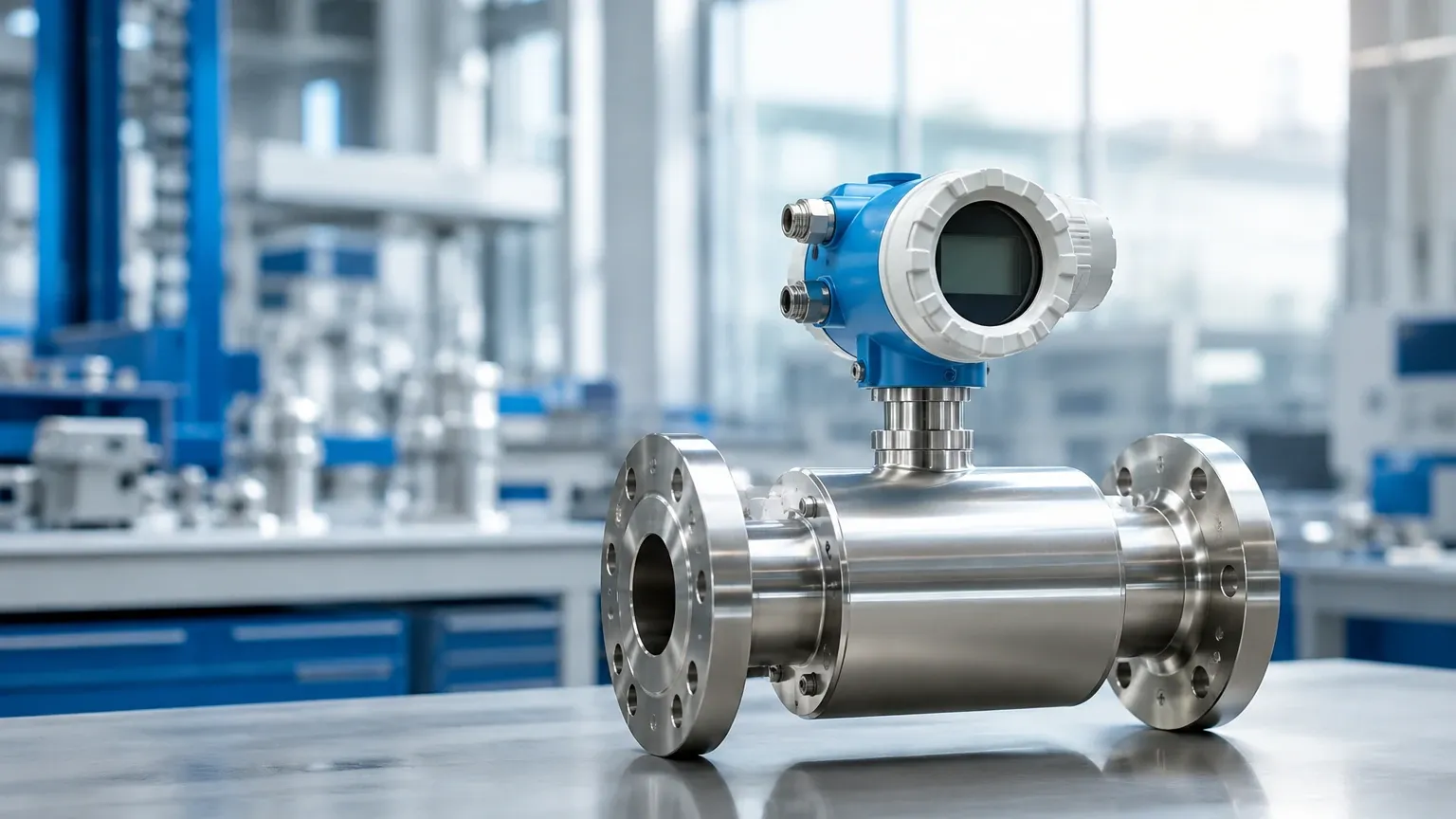
In the landscape of industrial process automation, the ability to measure the mass of a fluid directly—rather than its volume—provides a significant advantage in accuracy and process control. The endress mass flow meter, specifically those within the Proline family, represents a standard for high-precision measurement in sectors ranging from chemical processing to food and beverage production. Unlike volumetric flow meters, which require compensation for temperature and pressure changes, mass flow meters provide a direct reading that is essential for custody transfer, recipe dosing, and mass balance calculations.
For engineers and facility managers, selecting the correct flow technology is as critical as choosing the right level measurement instrumentation. While companies like Welk specialize in advanced level sensors, understanding the integration of flow and level data is fundamental to comprehensive plant management. This guide explores the principles, selection criteria, and practical application of mass flow technology in industrial environments.
Understanding Mass Flow Measurement Principles
To effectively implement an endress mass flow meter, it is necessary to understand the two primary physical principles used: the Coriolis effect and Thermal dispersion. Each is suited to specific fluid types and environmental conditions.
The Coriolis Principle
The Coriolis mass flow meter is widely regarded as the "gold standard" for liquid measurement. It operates based on the Coriolis force, an inertia force that acts on objects in motion within a rotating frame of reference. In a flow meter, this is achieved by vibrating one or more measuring tubes at their resonant frequency.
1. Oscillation: An internal driver coil causes the measuring tubes to oscillate.
2. Phase Shift: When a fluid flows through these vibrating tubes, the mass inertia causes a twist or a "phase shift" between the inlet and outlet sections of the tube.
3. Measurement: Sensors detect this phase shift, which is directly proportional to the mass flow rate.
One of the unique advantages of Coriolis technology is its multivariable capability. In addition to mass flow, these meters simultaneously measure fluid density (based on the oscillation frequency) and temperature (via an integrated Pt100 sensor), allowing for the calculation of volume flow and concentration in real-time.
The Thermal Dispersion Principle
Thermal mass flow meters are primarily utilized for gas applications. This technology relies on the heat-conducting properties of the fluid. The meter typically consists of two temperature sensors: one that acts as a reference and another that is heated.
As the gas flows past the heated sensor, it carries away heat. The amount of energy required to maintain a specific temperature difference between the two sensors is directly proportional to the mass flow of the gas. This method is highly effective for low-pressure gas systems and compressed air monitoring where pressure drops must be kept to a minimum.
Key Evaluation Criteria for Endress Mass Flow Meters
When evaluating an endress mass flow meter for a specific project, technical specifications must align with the physical properties of the process medium. The following criteria are essential for a successful deployment:
* Accuracy and Repeatability: Coriolis meters typically offer accuracies of ±0.1% (or better) for liquids and ±0.5% for gases. Thermal meters generally range from ±1.0% to ±5.0% depending on the gas mixture.
* Turn-down Ratio: This refers to the range over which the meter can measure accurately. High-end mass flow meters often feature a turn-down ratio of 100:1 or higher, allowing for precise measurement during both peak production and low-flow cleaning cycles.
* Fluid Properties: For Coriolis meters, viscosity and density are less of a concern than they are for volumetric meters, but high gas content in liquids (entrained gas) can disrupt the oscillation. For thermal meters, the gas composition must be known and constant, as different gases have different heat capacities.
* Pressure Drop: Bent-tube Coriolis designs may introduce a pressure drop in the system. If the process has low head pressure, a straight-tube design or a thermal meter might be more appropriate.
Practical Selection Table for Industrial Applications
The following table provides a general reference for selecting mass flow technologies based on common industrial requirements.
| Application Requirement | Recommended Technology | Typical Model Series | Key Advantage |
| :— | :— | :— | :— |
| High-precision liquid dosing | Coriolis | Promass P / F | Unaffected by viscosity changes |
| Hygienic food/pharma | Coriolis | Promass H / S | Self-drainable, polished surfaces |
| Compressed air monitoring | Thermal | t-mass T / F | Low pressure drop, cost-effective |
| High-pressure gas (CNG) | Coriolis | Promass O | Robust design for extreme pressure |
| Corrosive chemicals | Coriolis | Promass I / E | Tantalum or Alloy C22 liners available |
| Large diameter gas pipes | Thermal (Insertion) | t-mass 65 | Easy installation in existing lines |
Installation Best Practices and Technical Considerations
Even the most advanced endress mass flow meter will fail to meet its accuracy specifications if installed incorrectly. Engineering teams should adhere to the following guidelines:
Orientation and Support
For Coriolis meters, the orientation depends on the phase of the medium. To prevent the accumulation of air or solids, the following is recommended:
* Liquids: Install the meter in a vertical pipe with upward flow. If horizontal installation is necessary, the tubes should point downward to avoid gas pockets.
* Gases: Install the meter with the tubes pointing upward to prevent condensate from collecting in the measuring section.
Mechanical stress is another critical factor. The meter should be supported by the piping, but it must be free from excessive vibration and pipe tension. Using flexible connectors or dedicated supports near the flanges can mitigate these risks.
Straight Run Requirements
While Coriolis meters are largely immune to flow profile disturbances and generally do not require long straight runs of pipe, thermal mass flow meters are highly sensitive. Thermal meters typically require 15 to 20 diameters of straight pipe upstream and 5 diameters downstream to ensure a fully developed flow profile.
Limitations and Common Operational Risks
While mass flow meters are highly versatile, they are not universal solutions. Understanding their limitations prevents costly process failures.
1. Entrained Gas in Liquids: In Coriolis meters, bubbles can cause the tubes to lose their resonant frequency, leading to "slug flow" errors. While modern electronics (such as Multi-Frequency Technology) can mitigate this, excessive gas will still impact accuracy.
2. Cost Constraints: Mass flow meters, particularly Coriolis types, represent a higher initial capital investment compared to electromagnetic or ultrasonic meters. However, the total cost of ownership (TCO) is often lower due to reduced maintenance and higher process yield.
3. Coating and Buildup: In thermal meters, if the sensor becomes coated with oil or particulate matter, the heat transfer rate changes, leading to significant measurement drift. Regular inspection is required in "dirty" gas applications.
4. Zero-Point Drift: Over time, changes in pipe stress or ambient conditions can cause a slight shift in the zero point. Periodic zero-point calibration under "no-flow" conditions is essential for maintaining sub-0.1% accuracy.
Integrating Flow and Level Measurement
In complex industrial systems, flow and level measurements are complementary. For example, in a storage tank application, a Main Page level sensor provides the static volume of the inventory, while an endress mass flow meter tracks the dynamic movement of the product in and out of the vessel.
By comparing the mass change calculated from level data (using density) against the integrated flow from the meter, operators can detect leaks, verify pump performance, and ensure mass balance across the plant. Welk’s range of radar and ultrasonic level sensors provides the necessary precision to work alongside high-performance flow meters in these integrated control loops.
Frequently Asked Questions (FAQ)
Q: Can a Coriolis meter measure steam?
A: While some Coriolis meters are rated for high temperatures, they are generally not the first choice for steam due to the high velocities and potential for water hammer. Vortex or specialized thermal meters are usually preferred for steam applications.
Q: Do mass flow meters require frequent recalibration?
A: No. Because there are no moving parts to wear out, the mechanical stability of the measuring tubes is excellent. Most units only require a zero-point check during routine maintenance intervals.
Q: What is the difference between mass flow and volumetric flow?
A: Volumetric flow measures the space the fluid occupies (e.g., liters per minute). Mass flow measures the actual amount of matter (e.g., kilograms per minute). Since volume changes with temperature and pressure, mass flow is a more consistent measurement for chemical reactions and commercial transactions.
Q: Is it possible to use a thermal mass flow meter for liquids?
A: While theoretically possible, thermal dispersion is almost exclusively used for gases in industrial settings because the heat capacity of liquids is much higher, requiring significantly more energy to create a measurable temperature differential.
For more information on selecting the right instrumentation for your process, you may Review product options and application support to find solutions that align with your specific industrial automation requirements.