Float Level Switches Market
Float Level Switches Market
In the landscape of industrial automation, the float level switches market remains a cornerstone for point-level detection across diverse sectors. Despite the rise of non-contact technologies, float-based systems continue to be favored for their simplicity, reliability, and cost-effectiveness. These instruments serve as critical components in preventing tank overflows, protecting pumps from dry running, and managing automated filling processes in water treatment, chemical processing, and oil and gas industries.
Understanding the technical nuances of these devices is essential for engineers and procurement professionals tasked with maintaining operational safety and efficiency. This article examines the fundamental measurement principles, market dynamics, selection criteria, and practical installation guidelines for float level switches.
Measurement Principles of Float Level Switches
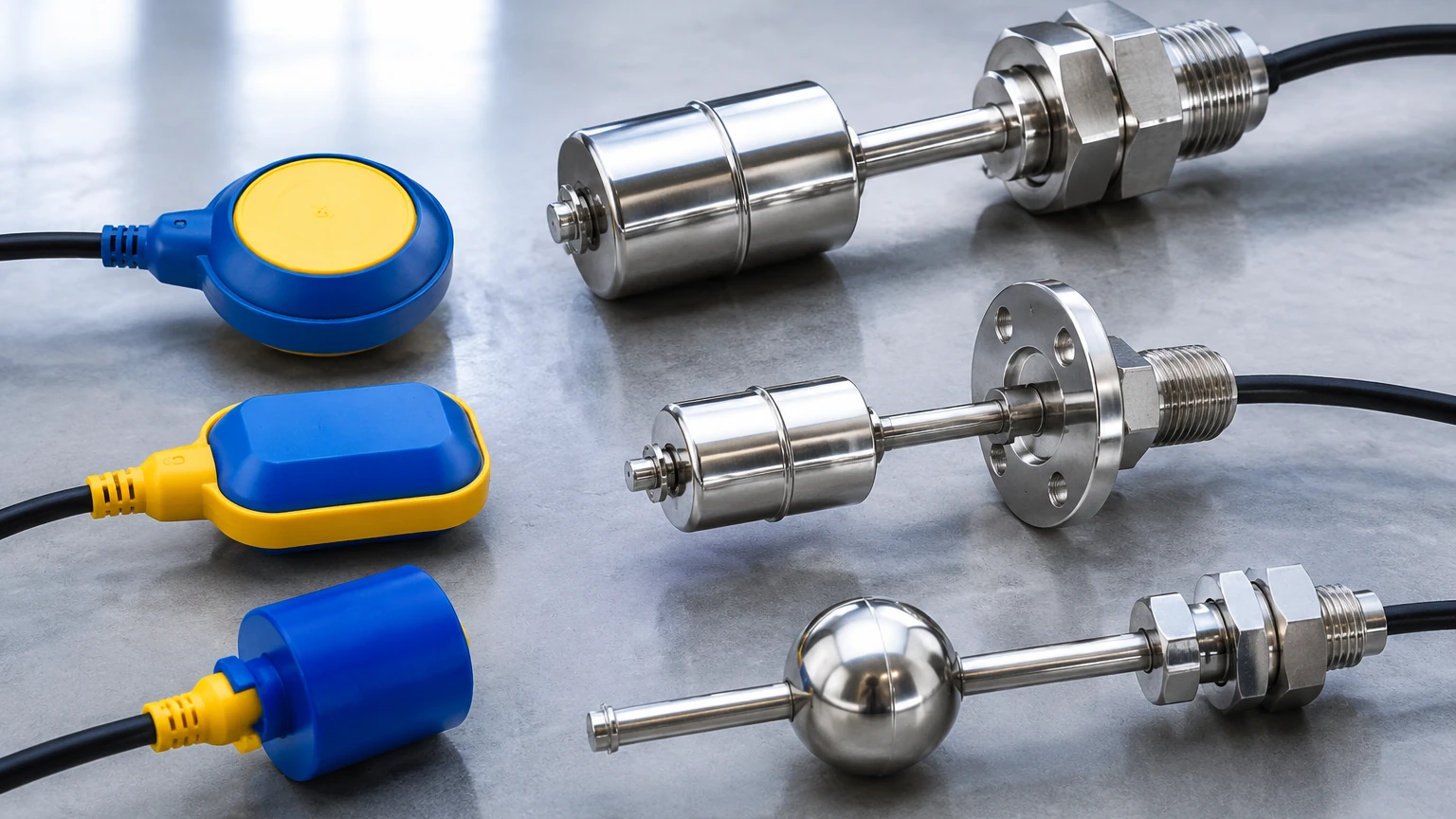
Float level switches operate on the basic physical principles of buoyancy and magnetic coupling. The design typically consists of a hollow float containing a permanent magnet and a stationary stem housing one or more hermetically sealed reed switches.
The Buoyancy Effect
According to Archimedes' principle, any object, wholly or partially immersed in a fluid, is buoyed up by a force equal to the weight of the fluid displaced by the object. In a level switch, the float is designed with a specific gravity lower than that of the process liquid. As the liquid level rises or falls within a vessel, the float moves accordingly along the length of the stem.
Magnetic Actuation
Inside the stationary stem, reed switches are positioned at specific set points (e.g., high level or low level). As the float moves past these set points, the magnetic field from the internal magnet causes the reed switch contacts to either close (Normally Open to Closed) or open (Normally Closed to Open). This mechanical action generates an electrical signal that can be used to trigger alarms, actuate valves, or start/stop pumps. Because the electrical components are isolated from the process media within the sealed stem, the technology is inherently robust against moisture and contamination.
Dynamics of the Float Level Switches Market
The global float level switches market is characterized by a steady demand driven by the expansion of infrastructure and the modernization of industrial plants. While advanced technologies like radar and ultrasonic sensors are gaining ground for continuous measurement, float switches maintain a dominant position in high-reliability safety-critical applications where a physical, mechanical backup is required.
Key Market Drivers
1. Water and Wastewater Management: Increasing global investment in water treatment facilities necessitates reliable level control for sumps, reservoirs, and chemical dosing tanks.
2. Industrial Safety Regulations: Stringent environmental and safety regulations require redundant level monitoring systems to prevent hazardous spills, particularly in the chemical and petrochemical sectors.
3. OEM Integration: Manufacturers of boilers, chillers, and hydraulic power units frequently integrate float switches as standard components due to their compact size and ease of integration into control loops.
Technological Evolution
Modern manufacturers, such as Welk, are responding to market needs by developing switches with higher chemical resistance and multi-point detection capabilities. The shift toward stainless steel (SS304/SS316) and specialized plastics like PVDF or Polypropylene allows these devices to operate in increasingly aggressive environments. Furthermore, the integration of float switches into IoT frameworks via digital transmitters is a growing trend within the broader float level switches market.
Key Evaluation Criteria for Selection
Selecting the appropriate float level switch requires a detailed analysis of the process environment. Failure to account for specific gravity or chemical compatibility can lead to premature mechanical failure or inaccurate switching.
Material Compatibility
The material of the float and stem must be chemically resistant to the process liquid.
* Stainless Steel (304/316L): Ideal for high-temperature, high-pressure applications and food-grade environments.
* Polypropylene (PP): Suitable for general-purpose water and acidic/alkaline solutions at lower temperatures.
* PVDF/PTFE: Reserved for highly corrosive chemicals and solvents.
Specific Gravity (SG)
The float must have a lower density than the liquid it is intended to measure. Most industrial float switches are rated for liquids with an SG of 0.7 or higher. If the liquid is too light (e.g., certain hydrocarbons), the float will not rise, and the switch will fail to actuate.
Operating Pressure and Temperature
Standard plastic switches are typically limited to pressures of 3-5 bar and temperatures up to 80°C. For high-pressure boilers or chemical reactors, stainless steel variants can handle pressures exceeding 30 bar and temperatures up to 200°C.
Practical Selection Table
The following table provides a general reference for selecting float level switches based on common industrial requirements.
| Application Type | Mounting Style | Recommended Material | Max Temp (°C) | Common Use Case |
| :— | :— | :— | :— | :— |
| Sump Pump Control | Top Mounted | Polypropylene / PVC | 60 | Wastewater sumps |
| Chemical Storage | Side Mounted | PVDF / SS316 | 120 | Acid/Alkali tanks |
| High-Temp Boiler | Top Mounted | SS316L | 200 | Condensate return |
| Hydraulic Oil | Side Mounted | NBR Float / Brass Stem | 100 | Power unit reservoirs |
| Food & Beverage | Top Mounted | Polished SS316 | 150 | Clean-in-place (CIP) |
Installation Considerations and Best Practices
Correct installation is paramount to ensuring the longevity and accuracy of a float level switch. Mechanical interference is the most common cause of failure in the field.
1. Clearance and Turbulence
The float must have sufficient clearance from the tank walls, internal baffles, or heating coils. In tanks with high turbulence or agitation, a stilling well (a perforated pipe surrounding the switch) should be installed to prevent the float from bouncing, which can cause "chatter" in the electrical signal.
2. Orientation
* Vertical Mounting: Used for top or bottom entry. Ensure the stem is perfectly vertical to prevent the float from binding against the stem.
* Horizontal Mounting: Typically used for side-entry switches. These often utilize a hinged float mechanism. It is vital to ensure the hinge is oriented according to the manufacturer’s markings (usually an "UP" arrow) to function correctly.
3. Electrical Protection
While reed switches are reliable, they have limited current-carrying capacity. Switching high-inductive loads (like large pump motors) directly through the float switch will weld the contacts. Always use an intermediate relay or contactor to handle the power load, using the float switch only for the control signal.
4. Metric and Imperial Considerations
In international projects, ensure that thread types match. Common standards include BSP (Metric/European) and NPT (Imperial/North American). Using an NPT male thread in a BSP female port can lead to leaks or damage to the tank nozzle.
Limitations and Common Risks
While float level switches are highly versatile, they are not suitable for every application. Engineers should be aware of the following limitations:
* Viscous Liquids: Highly viscous fluids can cause the float to stick to the stem, preventing movement.
* Coating and Scaling: Liquids that crystallize or leave heavy deposits (like calcium buildup in hard water) can weigh down the float or jam the mechanism.
* Magnetic Particles: Since the system relies on internal magnets, any metallic or magnetic debris in the liquid will be attracted to the float, eventually interfering with the magnetic coupling to the reed switch.
* Mechanical Wear: As a mechanical device, the float and hinge (in side-mounted versions) are subject to wear over millions of cycles, unlike solid-state technologies such as ultrasonic or radar sensors.
For complex applications requiring continuous monitoring or non-contact solutions, it is advisable to consult technical documentation. You can Review product options and application support to compare float switches with other technologies like radar or hydrostatic transmitters.
Frequently Asked Questions (FAQs)
Q: Can a float level switch be used in explosive atmospheres?
A: Yes, but the switch must be certified (e.g., ATEX, IECEx) and typically used in conjunction with an intrinsically safe barrier to limit the electrical energy entering the hazardous area.
Q: How do I change the switch logic from Normally Open (NO) to Normally Closed (NC)?
A: For many vertical float switches, this can be achieved by removing the retaining clip and reversing the orientation of the float on the stem. Always verify with the manufacturer's manual before modification.
Q: What is the minimum specific gravity for a standard stainless steel float?
A: Most standard stainless steel floats require a minimum liquid density of 0.70 to 0.80 g/cm³. Specialized high-buoyancy floats are available for lighter fluids.
Q: How often should float switches be maintained?
A: In clean water applications, annual inspection is usually sufficient. In wastewater or chemical applications with potential for scaling, quarterly cleaning of the float and stem is recommended to prevent sticking.
Conclusion
The float level switches market continues to provide essential solutions for industrial level control by offering a balance of simplicity and durability. By understanding the buoyancy principles and carefully matching material specifications to the process environment, facilities can achieve reliable point-level detection with minimal maintenance. Whether used as a primary control or a secondary safety backup, the float switch remains a fundamental tool in the modern industrial toolkit. For those seeking a deeper dive into specific models or customized OEM solutions, the Main Page offers a comprehensive overview of the latest advancements in level measurement technology.