Edress Hauser
Edress Hauser
In the landscape of industrial process control, selecting the correct level measurement technology is fundamental to operational safety, efficiency, and accuracy. Engineers and procurement specialists often search for established industry benchmarks, such as edress hauser, when seeking high-reliability instrumentation for challenging environments. Navigating the complexities of radar, ultrasonic, and hydrostatic measurement requires a deep understanding of physical principles and application-specific variables.
As a professional manufacturer, Welk provides a comprehensive range of level measurement solutions designed to meet the rigorous demands of the chemical, water treatment, and oil and gas sectors. This guide explores the core technologies utilized in modern level sensing, offering a practical engineering reference for those evaluating their instrumentation options on the Main Page.
Core Principles of Level Measurement
Before selecting a specific instrument, it is essential to understand the physics governing different measurement methods. Each technology has distinct advantages and limitations based on the properties of the media and the vessel environment.
Radar Level Measurement (ToF)
Radar level meters operate on the Time-of-Flight (ToF) principle. The sensor emits high-frequency electromagnetic pulses (typically in the GHz range) that travel at the speed of light. When these pulses hit the surface of the medium, they are reflected back to the sensor. The distance is calculated based on the time interval between transmission and reception.
* Non-Contact Radar: Ideal for aggressive chemicals or high-temperature liquids where physical contact with the sensor would lead to degradation.
* Guided Wave Radar (GWR): Uses a probe to guide the signal, making it highly effective for low dielectric constants or turbulent surfaces.
Ultrasonic Level Sensing
Ultrasonic sensors emit acoustic pressure waves. These waves reflect off the surface of the material and return to the transducer. Unlike radar, which uses electromagnetic waves, ultrasonic measurement relies on the mechanical vibration of air molecules. Consequently, the speed of sound is affected by air temperature, requiring integrated temperature compensation for accurate readings.
Hydrostatic Pressure Measurement
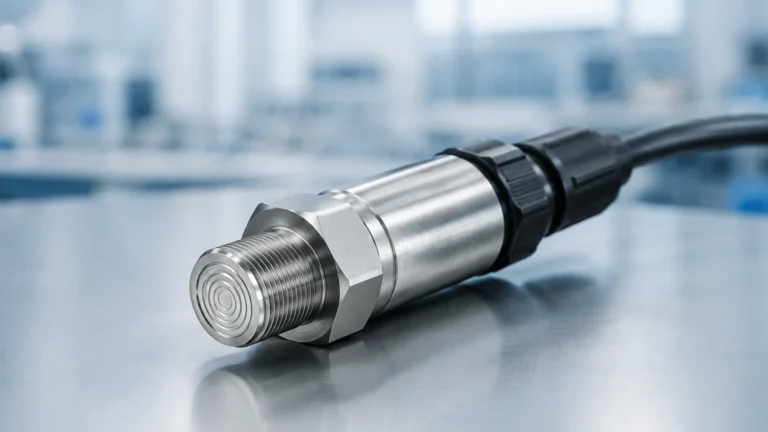
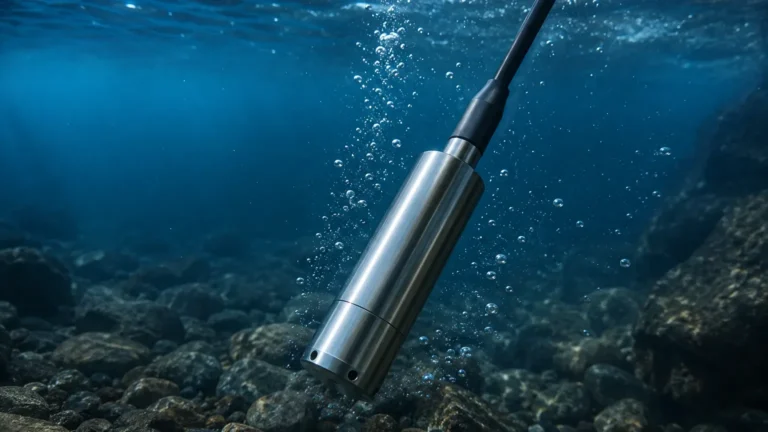
This contact-based method calculates level by measuring the pressure exerted by a liquid column at a specific point. According to Pascal's law, the pressure is proportional to the height of the liquid and its density. Hydrostatic transmitters are widely used in vented tanks and deep-well applications due to their robustness and ease of installation.
Evaluating Instrumentation: The Edress Hauser Benchmark
When professionals look for top-tier instrumentation, the name edress hauser often serves as a standard for quality and reliability. In the B2B sector, comparing high-end European standards with specialized manufacturers like Welk allows for a more nuanced procurement strategy. While global brands offer broad catalogs, specialized manufacturers often provide equivalent precision with greater flexibility in customization and cost-effectiveness for OEM/ODM requirements.
Choosing between these options involves assessing the "Total Cost of Ownership" (TCO), which includes initial purchase price, ease of integration, and long-term maintenance requirements. For many industrial automation projects, the goal is to achieve the reliability associated with brands like edress hauser while maintaining a competitive project budget.
Practical Selection Criteria for Process Industries
Selecting the right instrument requires a systematic review of the process conditions. The following table provides a quick reference for technology selection based on common industrial factors.
Technology Selection Table
| Process Variable | Radar (Non-Contact) | Guided Wave Radar | Ultrasonic | Hydrostatic |
| :— | :— | :— | :— | :— |
| Liquid Level | Excellent | Excellent | Good | Excellent |
| Solid/Powder | Good | Excellent | Fair | N/A |
| Corrosive Media | Excellent (PTFE) | Good | Good | Good (Hastelloy) |
| Vacuum Conditions | Excellent | Excellent | Not Recommended | Good |
| Heavy Foam | Fair | Good | Poor | Excellent |
| High Turbulence | Good | Excellent | Fair | Excellent |
| Max Temperature | Up to 450°C | Up to 400°C | Up to 80°C | Up to 100°C |
Installation Considerations and Best Practices
Even the most advanced level meter will fail to provide accurate data if installed incorrectly. Engineering teams must account for the physical geometry of the tank and the behavior of the media.
1. Beam Angle and Obstructions
For radar and ultrasonic sensors, the "beam angle" defines the area where the signal spreads. Any internal tank structures—such as agitators, ladders, or heating coils—within this beam path can cause "false echoes." To mitigate this, sensors should be mounted at least 200mm to 500mm away from the tank wall, depending on the vessel's height.
2. The Blocking Distance (Dead Zone)
Every non-contact sensor has a minimum distance near the transducer face where it cannot measure accurately. This is known as the blocking distance or dead zone. For ultrasonic sensors, this is typically between 0.25m and 0.8m. If the liquid level enters this zone, the sensor may report a full tank or a lost signal.
3. Nozzle Geometry
The mounting nozzle should be as short as possible. A long, narrow nozzle can interfere with the signal, especially for radar units. If a long nozzle is unavoidable, an extension or a specific antenna design may be required to ensure the signal clears the nozzle edge before spreading.
4. Hydrostatic Venting
For hydrostatic transmitters, if the tank is atmospheric (vented), the sensor must also be vented to the atmosphere via a capillary tube in the cable. This ensures the sensor measures the pressure of the liquid relative to the atmospheric pressure, preventing errors caused by weather-related barometric changes.

Limitations and Environmental Challenges
No single technology is a universal solution. Understanding the limitations is key to avoiding operational downtime.
* Vapor and Dust: High concentrations of dust (in silos) or heavy steam (in boilers) can attenuate ultrasonic signals. In these environments, high-frequency radar is preferred as electromagnetic waves are less affected by air density changes.
* Dielectric Constant ($\\varepsilon_r$): Radar relies on the reflectivity of the medium. Materials with very low dielectric constants, such as certain oils or liquefied gases, reflect less energy. Guided wave radar is often used in these cases to concentrate the signal energy.
* Surface Turbulence: Rapidly mixing liquids can scatter the return signal of a non-contact sensor. Using a bypass pipe or a stilling well can provide a calm surface for the sensor to measure accurately.
Frequently Asked Questions (FAQ)
Q: How does temperature affect level measurement?
A: For ultrasonic sensors, temperature changes the speed of sound, which can lead to errors of approximately 0.17% per degree Celsius. Radar is largely unaffected by temperature changes in the vapor space. For hydrostatic sensors, temperature changes can affect liquid density, which must be accounted for in the PLC/DCS scaling.
Q: Can I use radar for solids?
A: Yes, but it requires a high-frequency (e.g., 80GHz) radar with a narrow beam to handle the uneven surfaces and low reflectivity of bulk solids. Guided wave radar is also a common choice for silos.
Q: What is the maintenance cycle for these instruments?
A: Non-contact instruments generally require very little maintenance as they have no moving parts and do not touch the media. Hydrostatic sensors may require periodic cleaning if the media is prone to scaling or buildup on the diaphragm.
Conclusion
Achieving precision in level measurement is a balance of selecting the right technology, understanding the environmental constraints, and following rigorous installation standards. Whether you are benchmarking against industry leaders like edress hauser or seeking specialized OEM solutions, the fundamental engineering principles remain the same. Reliability is built on the accurate matching of sensor physics to process reality.
For technical specifications, detailed product datasheets, and expert application support, visit our Main Page to explore how Welk’s range of radar, ultrasonic, and hydrostatic instruments can optimize your industrial processes.