Flow Line Safety Restraints
Flow Line Safety Restraints
In high-pressure industrial environments, the integrity of flow lines is paramount to personnel safety and equipment longevity. Flow line safety restraints are engineered systems designed to contain the violent movement of high-pressure piping, hoses, or manifolds in the event of a catastrophic connection failure. Often referred to as "whip-stop" or "hose-containment" systems, these restraints serve as a critical secondary safety layer in industries ranging from oil and gas extraction to chemical processing and large-scale water treatment.
Understanding the mechanics of flow line failure and the technical specifications of restraint systems is essential for any facility manager or process engineer. This guide explores the principles, selection criteria, and installation requirements for flow line safety restraints, while also examining how precise level and pressure monitoring can mitigate the risks these systems are designed to manage.
Principles of Flow Line Failure and Containment
To appreciate the necessity of flow line safety restraints, one must first understand the physics of a pressurized line failure. When a pressurized pipe or hose separates from its coupling, the stored energy within the fluid is rapidly converted into kinetic energy. This results in an effect known as "line whip."
Stored Energy and Impulse Force
In a system pressurized to 350 bar (approx. 5,000 PSI), the force exerted at the moment of failure can be immense. If a 50 mm (2-inch) diameter line fails, the resulting thrust can exceed several thousand kilograms of force. Without restraints, the disconnected end of the line will flail uncontrollably, potentially causing fatal injuries to nearby personnel and destroying surrounding infrastructure.
The Mechanics of Restraint
Flow line safety restraints work by anchoring the pressurized line to a structural point or to another section of the piping. They are designed to:
1. Absorb the initial shock load: The material must have sufficient tensile strength to withstand the sudden impulse.
2. Limit the range of motion: By restricting the distance the line can travel, the system prevents the "whip" from reaching walkways or sensitive control equipment.
3. Distribute the load: Effective systems distribute the force across multiple anchor points to prevent the restraint itself from failing.
Types of Flow Line Safety Restraints
Selecting the correct restraint system depends on the pressure ratings, the fluid medium, and the environment (onshore vs. offshore). The following table outlines common restraint technologies used in modern process industries.
Selection Comparison Table
| Restraint Type | Typical Pressure Rating | Material | Primary Application | Key Advantage |
| :— | :— | :— | :— | :— |
| Cable Whip-Checks | Up to 140 bar (2,000 PSI) | Galvanized or Stainless Steel | Air and water hoses | Low cost, easy installation |
| Nylon Webbing Slings | Up to 350 bar (5,000 PSI) | High-tenacity Polyester/Nylon | Temporary flow lines, fracking | Lightweight, non-sparking |
| Steel Wire Rope Systems | Up to 1,000+ bar (15,000+ PSI) | Multi-strand Steel Cable | Oilfield manifolds, high-pressure gas | Extreme strength, durability |
| Rigid Clamping Systems | 1,400+ bar (20,000+ PSI) | Forged Alloy Steel | Permanent high-pressure manifolds | Zero-movement containment |
Integration with Level and Process Monitoring
While flow line safety restraints are a reactive safety measure, proactive safety relies on accurate instrumentation. Many flow line failures are the result of pressure surges caused by tank overfills, pump malfunctions, or sudden valve closures. Reliable level measurement is the first line of defense in preventing these conditions.
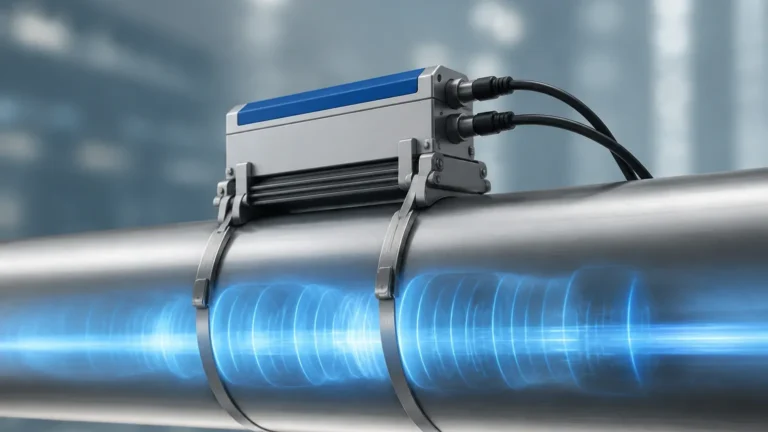
For instance, in a chemical storage facility, using advanced radar level meters or hydrostatic transmitters allows for real-time monitoring of vessel capacity. If a level sensor detects an unexpected rise in fluid levels, the control system can trigger an emergency shutdown (ESD) before the pressure in the flow lines exceeds the safety threshold. Engineers often review product options and application support on a manufacturer's Main Page to ensure their level measurement instruments are compatible with the high-pressure environments where flow line safety restraints are deployed.
By integrating high-accuracy level sensors with safety PLC systems, facilities can reduce the frequency of "near-miss" events where restraints would otherwise be required to perform.
Key Evaluation Criteria for Restraint Systems
When specifying flow line safety restraints for a project, engineers must evaluate several technical factors beyond simple pressure ratings.
1. Breaking Strength vs. Working Load Limit (WLL)
It is critical to distinguish between the breaking strength of the cable or sling and its working load limit. For safety-critical applications, a safety factor (often 5:1 or higher) is applied. If a flow line failure is calculated to produce 1,000 kg of thrust, the restraint system should ideally be rated for a breaking strength of at least 5,000 kg.
2. Environmental Degradation
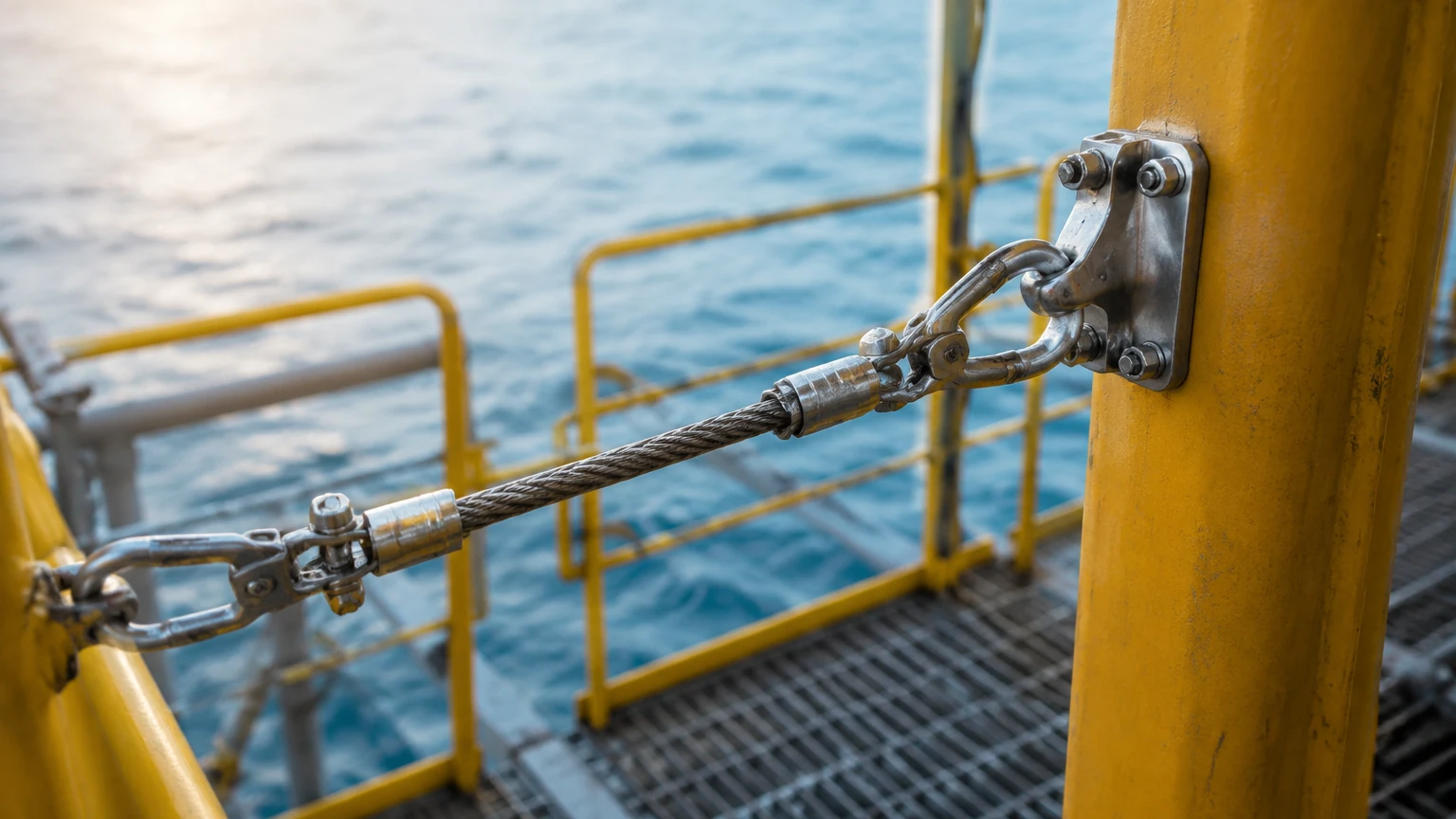
* Corrosion: In offshore or chemical environments, galvanized steel may fail prematurely. Stainless steel (316 grade) or specialized coatings are required.
* UV Exposure: Synthetic slings (nylon/polyester) can lose up to 50% of their strength if left in direct sunlight for extended periods without UV-resistant coatings.
* Temperature: High-temperature steam lines require metallic restraints, as synthetic materials may melt or lose structural integrity above 80°C (176°F).
3. Connection Points and Anchoring
A restraint is only as strong as its anchor. If a cable is attached to a thin-walled pipe or a non-structural handrail, the anchor will fail long before the cable reaches its breaking strength. Anchors should be connected to the primary structural steel or heavy-duty manifolds designed to take the load.
Installation Considerations and Best Practices
Proper installation is the difference between a functional safety system and a false sense of security. Follow these guidelines for installing flow line safety restraints:
* Minimize Slack: The restraint should be installed with the minimum amount of slack necessary to allow for thermal expansion. Excessive slack allows the failing line to build up momentum, increasing the impulse force on the restraint.
* Placement Near Couplings: Restraints must be placed as close to the connection point (flange, hammer union, or cam-lock) as possible. This is the most likely point of failure.
* Wrap Configuration: For cable systems, use a double-wrap or a specialized "choker" hitch to ensure the cable does not slide down the pipe during a failure.
* Standard Compliance: Ensure all installations meet relevant standards, such as API RP 54 for oilfield safety or OSHA requirements for high-pressure air hoses.
Limitations of Safety Restraints
It is important to recognize what flow line safety restraints *cannot* do. They are not a substitute for proper maintenance and pressure testing.
1. They Do Not Stop Leaks: A restraint will prevent a pipe from whipping, but it will not stop the release of hazardous, flammable, or high-pressure fluids. Secondary containment and emergency shut-off valves remain necessary.
2. Single-Use Recovery: Most safety restraints, especially those involving synthetic fibers or specialized deformation-based steel cables, are designed for a single "event." Once they have been subjected to a high-pressure failure load, they must be decommissioned and replaced, even if they appear undamaged.
3. Fatigue: Restraints subjected to constant vibration or pulsation in the flow line can suffer from fatigue. Regular inspection schedules are mandatory.
Frequently Asked Questions (FAQs)
Q: How often should flow line safety restraints be inspected?
A: In standard industrial environments, a visual inspection should be conducted every six months. In high-vibration or corrosive environments (like offshore rigs), monthly inspections are recommended. Any restraint that has been involved in a line-separation event must be replaced immediately.
Q: Can I use standard lifting slings as flow line restraints?
A: No. While lifting slings have high tensile strength, they are not engineered for the dynamic shock loading associated with a line whip. Only use restraints specifically rated and certified for flow line containment.
Q: Are there specific requirements for the distance between restraints on long pipe runs?
A: Yes. For long runs of flexible hose, restraints should typically be placed every 2 to 4 meters (approx. 6 to 13 feet) to prevent the mid-section of the hose from bowing or whipping if a failure occurs at either end.
Q: How does temperature affect the choice of restraint?
A: Synthetic restraints (nylon/polyester) are generally limited to temperatures below 90°C. For steam lines or high-temperature chemical processes, stainless steel cables or rigid mechanical restraints are required to ensure the material does not lose strength under heat.
Conclusion
Flow line safety restraints are an indispensable component of industrial safety, providing a final physical barrier against the dangers of high-pressure system failures. However, the most effective safety strategy is a multi-layered approach that combines robust mechanical containment with precise process monitoring. By utilizing reliable level measurement technologies—such as those found on the Main Page of leading instrumentation providers—engineers can maintain tighter control over system pressures and volumes, significantly reducing the likelihood that a safety restraint will ever need to be put to the test. Regular inspection, adherence to engineering standards, and proper material selection remain the cornerstones of effective flow line management.