Food and Beverage Quality Control
Food and Beverage Quality Control
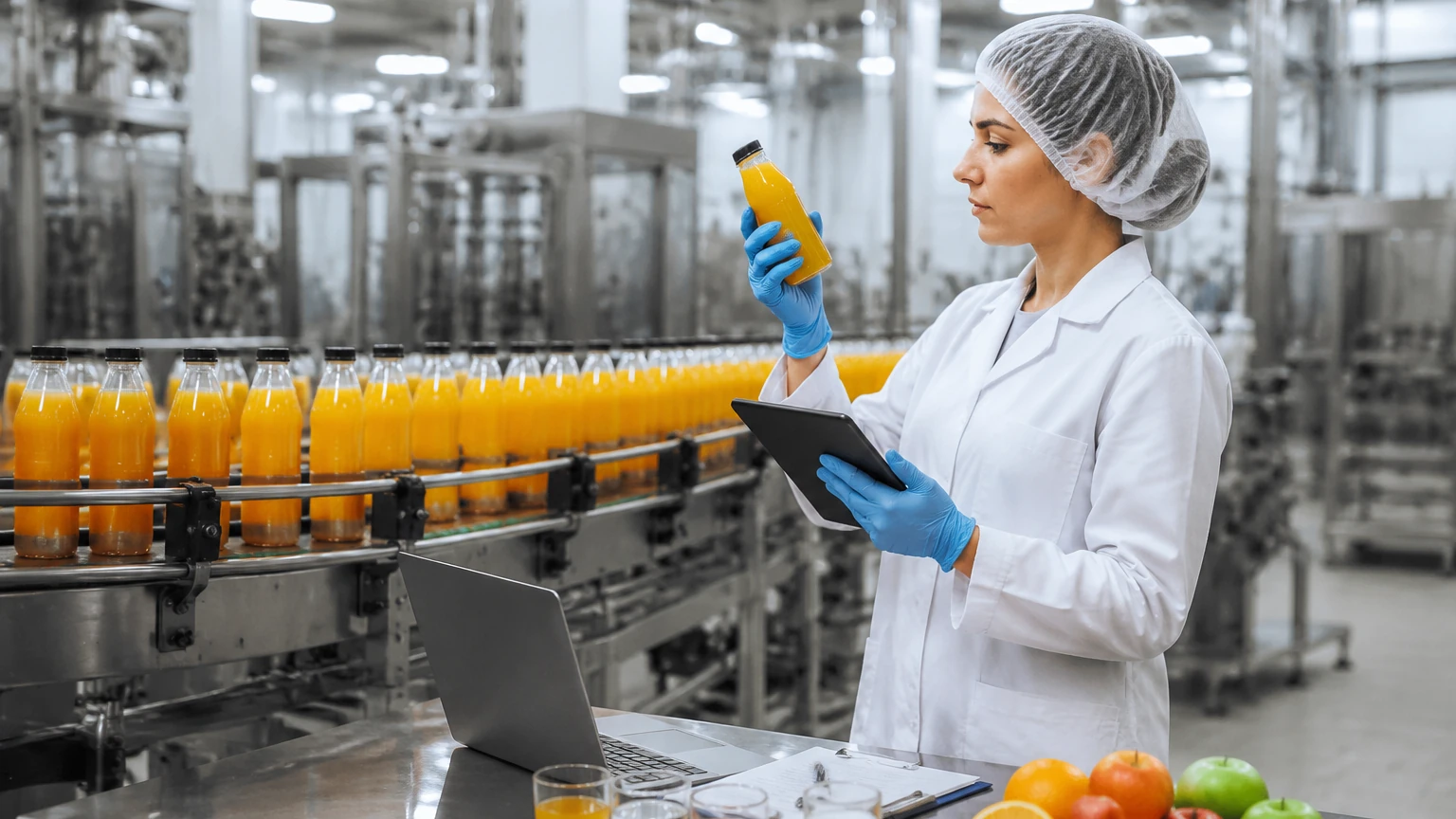
In the modern industrial landscape, food and beverage quality control is not merely a regulatory requirement but a fundamental pillar of operational excellence. For manufacturers, maintaining the integrity of the production line ensures consumer safety, brand reputation, and waste reduction. One of the most critical, yet often overlooked, components of this quality control framework is the precise measurement of liquid and solid levels within processing tanks, silos, and mixing vessels. Accurate level instrumentation prevents overfills, ensures precise ingredient dosing, and maintains the hygienic conditions necessary to meet international safety standards.
To achieve consistent results, engineers must understand the interplay between measurement technology and the physical properties of the media being processed. Whether managing the storage of raw milk, the fermentation of beer, or the packaging of carbonated soft drinks, the choice of level sensor directly impacts the final product's quality. For a comprehensive overview of industrial measurement solutions and technical specifications, professionals can refer to the Main Page of our product resource center.
The Critical Role of Level Measurement in Quality Control
Quality control in the food and beverage sector relies heavily on process repeatability. If a level sensor provides inaccurate data, the entire batch may be compromised. For instance, in a mixing process, if the level of a base liquid is underestimated, the concentration of additives will be too high, leading to a product that fails flavor or safety profiles.
Furthermore, food and beverage quality control is intrinsically linked to hygiene. Level sensors used in this industry must be designed to eliminate "dead zones" where bacteria can proliferate. Sensors that utilize non-contact technology or flush-mounted diaphragms are essential for maintaining Clean-in-Place (CIP) and Sterilization-in-Place (SIP) protocols. By ensuring that sensors do not introduce contaminants, manufacturers can uphold the highest standards of food safety while optimizing their production throughput.
Core Measurement Principles for the Food Industry
Before selecting a specific instrument, it is essential to understand the physical principles that govern different level measurement technologies. Each method has distinct advantages depending on the medium's viscosity, dielectric constant, and the presence of foam or agitation.
1. Radar Level Measurement (Non-Contact)
Radar level meters operate on the Time-of-Flight (ToF) principle. The sensor emits high-frequency microwave pulses (typically in the 26 GHz or 80 GHz range) that travel to the surface of the product and reflect back to the antenna.
* Principle: The distance is calculated based on the time interval between emission and reception.
* Suitability: Since microwaves are unaffected by temperature fluctuations, pressure, or vacuum, radar is ideal for large storage tanks and vessels with steam or dust. 80 GHz radar, in particular, offers a narrow beam angle, making it suitable for small vessels with internal obstructions like agitators.
2. Ultrasonic Level Measurement (Non-Contact)
Similar to radar, ultrasonic sensors use sound waves rather than microwaves.
* Principle: The sensor emits an ultrasonic pulse that bounces off the liquid surface. The time taken for the echo to return determines the level.
* Suitability: This is a cost-effective solution for water treatment within food plants or for measuring non-foaming liquids in open channels. However, it is sensitive to air temperature changes and heavy foam, which can absorb the sound signal.
3. Hydrostatic Level Measurement (Contact)
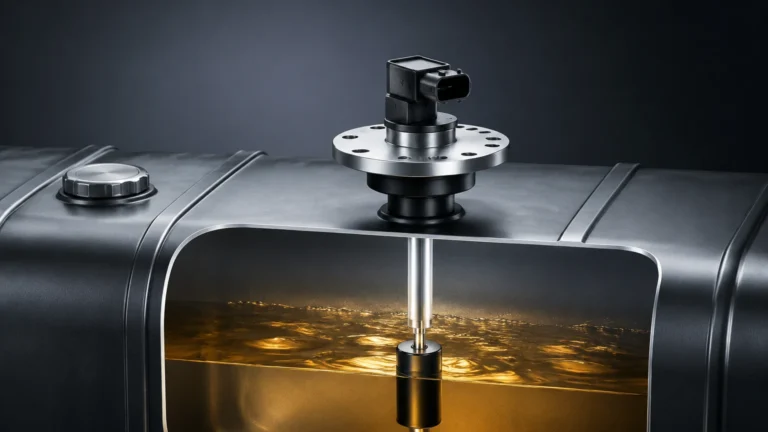
Hydrostatic transmitters measure the pressure exerted by a liquid column at the bottom of a tank.
* Principle: Level (h) = Pressure (p) / (Density (ρ) x Gravity (g)).
* Suitability: This method is highly reliable for vented tanks. In the food industry, hydrostatic sensors must feature a flush-mounted, stainless steel (316L) diaphragm to prevent food particles from clogging the sensing element.
4. Guided Wave Radar (GWR)
Unlike standard radar, GWR uses a probe to guide the microwave signal to the surface.
* Principle: The signal travels along a rod or cable, reflecting back at the point where the dielectric constant changes (the product surface).
* Suitability: GWR is excellent for liquids with low dielectric constants or applications with heavy foam, as the probe ensures the signal reaches the liquid surface effectively.
Selection Criteria for Hygienic Level Sensors
When implementing food and beverage quality control measures, the hardware must meet specific engineering criteria to ensure it does not become a point of failure.
Material Compatibility and Surface Finish
All wetted parts—components that come into direct contact with the food product—must be made of non-toxic, corrosion-resistant materials. Grade 316L stainless steel is the industry standard. Furthermore, the surface roughness (Ra) should typically be less than 0.8 µm to prevent microbial adhesion. For highly acidic or alkaline products, specialized coatings like PTFE (Polytetrafluoroethylene) may be required.
Process Connections
Standard threaded connections are often avoided in food processing because the threads can trap organic matter. Instead, sanitary connections such as Tri-Clamp, SMS, or Varivent are used. These allow for quick disassembly and ensure a leak-proof, gap-free seal that is compatible with CIP processes.
Environmental Resistance
Sensors in food plants are frequently subjected to high-pressure washdowns and aggressive cleaning agents. An Ingress Protection (IP) rating of IP67 or IP69K is mandatory for the sensor housing to prevent moisture from damaging the internal electronics during cleaning cycles.
Practical Selection Table for Common Applications
The following table provides a general guideline for matching level measurement technologies with common food and beverage applications.
| Application | Recommended Technology | Key Benefit | Limitations |
| :— | :— | :— | :— |
| Milk Storage | Radar (80 GHz) | Non-contact, high precision | High cost compared to ultrasonic |
| Beer Fermentation | Hydrostatic (Flush) | Unaffected by surface foam | Requires density compensation |
| Cooking Oil | Guided Wave Radar | Works with low dielectric media | Probe requires cleaning |
| Grain Silos | Radar (High Power) | Penetrates dust during filling | Requires careful aiming |
| Fruit Syrup | Hydrostatic | Handles high viscosity well | Sensitive to extreme pressure spikes |
| Wastewater | Ultrasonic | Cost-effective, non-contact | Not for boiling liquids |
Installation Best Practices and Sanitary Standards
Correct installation is as vital as the technology itself. Even the most accurate sensor will fail if placed incorrectly.
1. Avoid the Fill Stream: Never install a level sensor directly in the path of the incoming product. This creates turbulence and false readings. Sensors should be placed at a distance of at least 200 mm from the tank wall and away from the inlet.
2. Agitator Interference: In tanks with mixers, radar and ultrasonic sensors should be positioned so the signal beam does not hit the agitator blades. If this is unavoidable, "false echo suppression" software must be used to map out the blades.
3. Nozzle Height: For non-contact sensors, the nozzle height should be kept to a minimum. A long, narrow nozzle can cause signal interference (ringing) before the pulse even reaches the tank interior.
4. Dead Zone Awareness: Every sensor has a "dead zone" (blocking distance) near the face of the transducer where measurement is impossible. Ensure the maximum possible fill level does not enter this zone, typically ranging from 50 mm to 500 mm depending on the technology.
Common Risks and Technical Limitations
While modern instrumentation is robust, certain process conditions pose risks to food and beverage quality control accuracy.
* Foam: Heavy, dense foam can absorb ultrasonic and radar signals. In such cases, hydrostatic pressure or Guided Wave Radar is preferred because they measure the liquid level beneath the foam.
* Condensation and Steam: In hot processes like pasteurization, steam can condense on the sensor face. Some radar sensors feature a convex lens design that allows droplets to run off, preventing signal attenuation.
* Build-up: Sticky products like chocolate or honey can build up on probes. If using contact-based sensors, choose models with "active shield" technology that ignores coating on the probe, or stick to non-contact radar.
* Temperature Shocks: Rapid temperature changes during SIP (e.g., jumping from 20°C to 130°C) can cause thermal shock in ceramic diaphragms. Metallic diaphragms or non-contact sensors are generally more resilient to these transitions.
Frequently Asked Questions (FAQ)
Q: How often should level sensors be calibrated in a food production environment?
A: Calibration frequency depends on the criticality of the process. Generally, an annual calibration is standard, but for high-precision dosing, semi-annual checks are recommended. Many modern digital sensors offer self-diagnostic features that alert operators if the sensor drifts out of tolerance.
Q: Can one sensor be used for both liquid and solid ingredients?
A: While some high-end radar sensors are versatile, it is usually better to select a sensor optimized for the specific material. Solids (like flour) have an angle of repose that reflects signals differently than the flat surface of a liquid.
Q: Is 80 GHz radar always better than 26 GHz for food applications?
A: 80 GHz radar is superior for small tanks and avoiding internal obstructions due to its narrow beam. However, 26 GHz radar may be more effective in extremely dusty environments where the longer wavelength can penetrate particles more easily.
Conclusion: Ensuring Precision in Production
Effective food and beverage quality control requires a holistic approach to process monitoring. By understanding the measurement principles of radar, ultrasonic, and hydrostatic technologies, engineers can select the right tools to maintain consistency and safety. Before finalizing a system design, it is crucial to confirm the chemical compatibility of wetted materials, the specific gravity of the media, and the cleaning protocols the equipment must endure. Investing in high-quality, hygienic level measurement is not just a technical necessity—it is a commitment to delivering safe and consistent products to the global market.