Food Industry Water Treatment
Food Industry Water Treatment
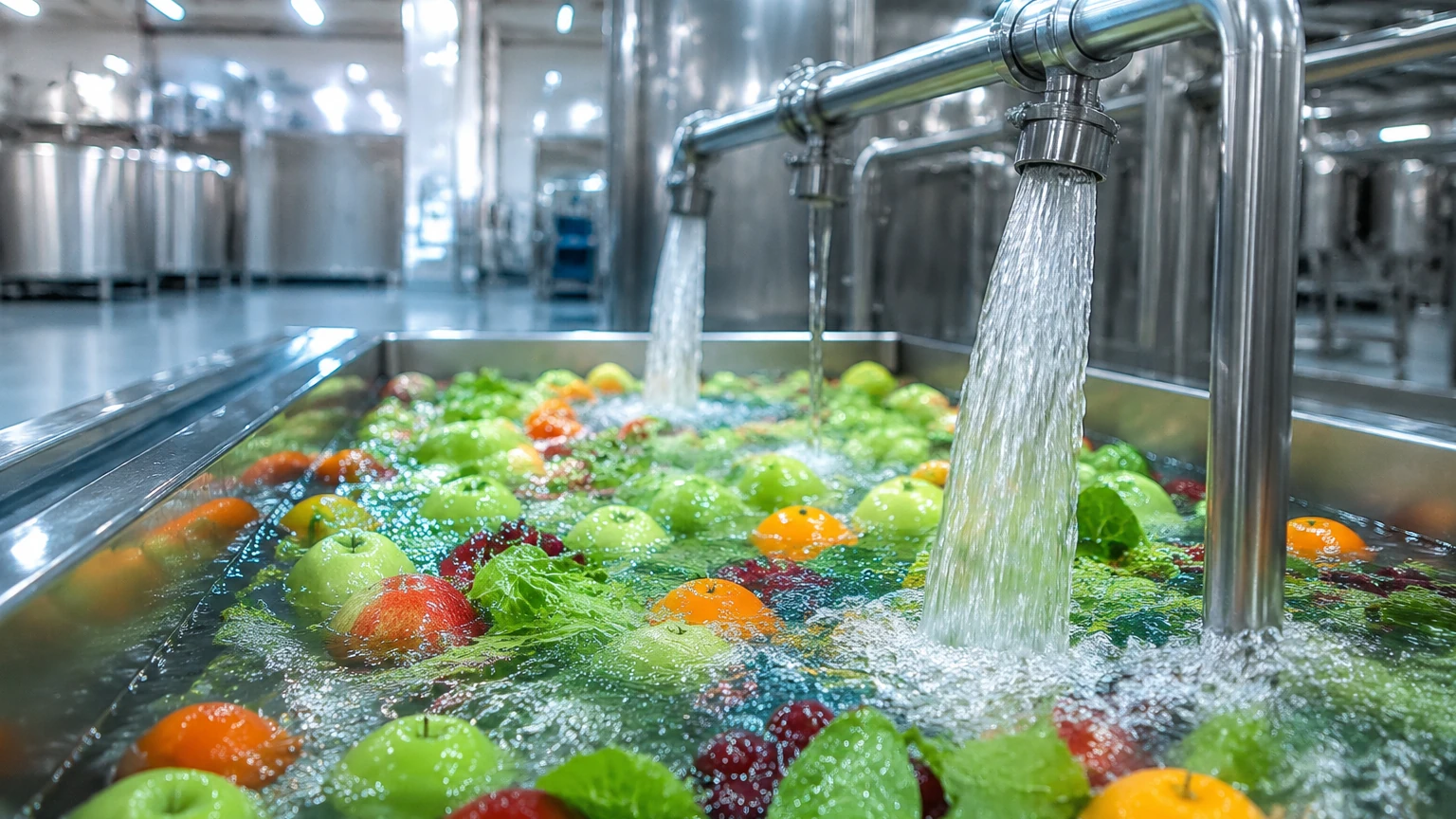
Water is a fundamental utility in the food and beverage sector, serving as a primary ingredient, a cleaning agent for CIP (Clean-in-Place) systems, and a medium for heating and cooling. Consequently, food industry water treatment encompasses a broad spectrum of processes, from purifying influent water to managing highly organic wastewater before discharge. Precise level measurement is critical throughout these stages to ensure process efficiency, regulatory compliance, and resource conservation.
Effective water management requires a deep understanding of how different measurement technologies interact with various fluid states, including high-purity water, chemical-laden cleaning solutions, and turbulent effluent. This guide examines the technical principles of level measurement within the context of food industry water treatment and provides engineering frameworks for selecting the appropriate instrumentation.
Measurement Principles for Water Treatment Applications
Before selecting an instrument for water treatment, it is essential to understand the physical principles governing the measurement. In the food industry, non-contact and hydrostatic methods are the most prevalent due to hygiene and maintenance requirements.
Ultrasonic Level Measurement
Ultrasonic sensors operate on the "time-of-flight" principle. The transducer emits a high-frequency acoustic pulse that travels through the air, reflects off the liquid surface, and returns to the sensor. The distance is calculated based on the speed of sound.
* Advantages: Non-contact, cost-effective for open-air applications like flumes and sumps.
* Limitations: Sensitive to air temperature fluctuations, heavy foam, and steam, which can attenuate the sound signal.
Radar Level Measurement (FMCW and Pulse)
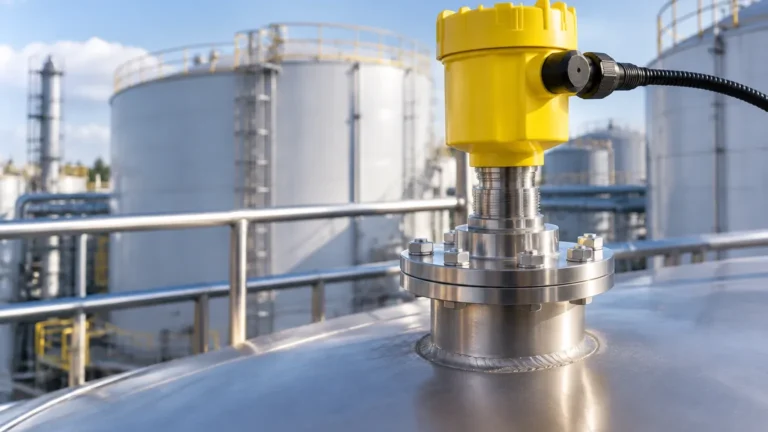
Radar level meters use electromagnetic waves (typically in the 26GHz or 80GHz range). Frequency Modulated Continuous Wave (FMCW) radar is increasingly common in the food industry. The sensor transmits a signal with a varying frequency; the difference between the transmitted and received frequency is proportional to the distance.
* Advantages: Unaffected by vacuum, pressure, or temperature changes. 80GHz radar offers a narrow beam angle, which is ideal for avoiding internal tank obstructions.
* Limitations: Generally higher initial cost than ultrasonic; requires careful selection for liquids with very low dielectric constants.
Hydrostatic Level Measurement
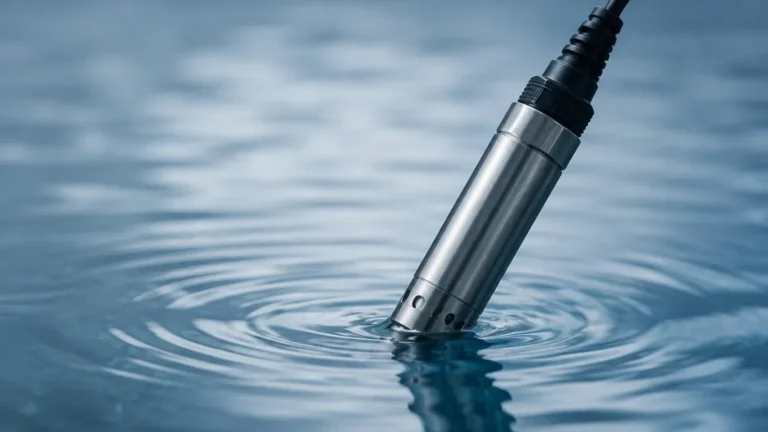
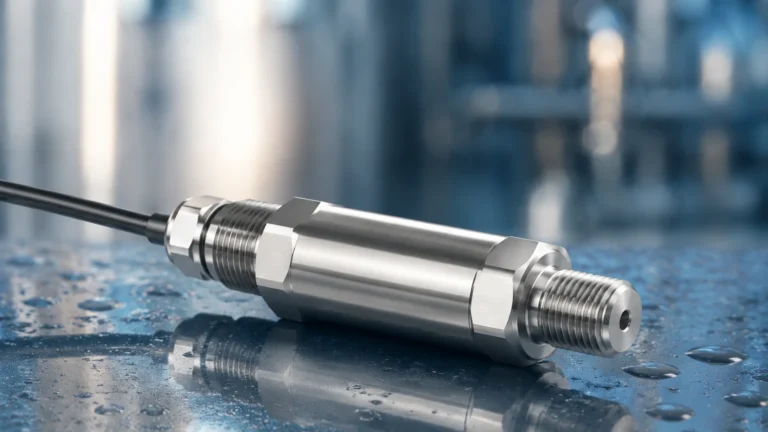
This method measures the pressure exerted by a liquid column. The pressure at the bottom of a tank is directly proportional to the liquid height and its density ($P = \rho gh$). For food industry water treatment, flush-diaphragm transmitters are often used to prevent clogging in sludge or high-viscosity applications.
* Advantages: Simple installation, highly reliable for vented tanks, and unaffected by surface foam.
* Limitations: Accuracy depends on constant liquid density; requires contact with the process fluid.
Role of Level Control in Food Industry Water Treatment
Water treatment in food plants is divided into three primary phases: influent treatment, process water management, and effluent/wastewater treatment. Each phase presents unique challenges for level instrumentation.
Influent and Pre-treatment
Raw water from municipal sources or wells must be filtered, softened, or demineralized. Level sensors are required in raw water storage tanks to prevent pump dry-running and in chemical dosing tanks (e.g., for chlorine or coagulants). Because dosing tanks are often small and contain corrosive chemicals, non-contact radar is frequently preferred to avoid material degradation.
Process Water and Ingredient Storage
Once treated, water is stored in buffer tanks. In the food industry, these tanks must often meet sanitary standards. Level measurement here ensures a continuous supply for production lines. If the water is heated, steam may be present, making high-frequency radar a more reliable choice than ultrasonic sensors, as radar waves are not hindered by vapor.
Wastewater and Effluent Management
Food processing wastewater is characterized by high BOD (Biochemical Oxygen Demand) and COD (Chemical Oxygen Demand), often containing fats, oils, and greases (FOG).
1. Equalization Tanks: These tanks balance the flow and organic load. Level sensors must handle turbulence and potential foam.
2. Clarifiers and Sludge Pits: Hydrostatic transmitters are often used here to monitor sludge levels, though they must be robust enough to handle suspended solids.
3. Open Channel Flow: Ultrasonic sensors are the industry standard for measuring the level over weirs or flumes to calculate discharge volume.
For engineers looking to integrate these technologies into a broader automation strategy, you can Review product options and application support to find specific hardware configurations suited for food-grade environments.
Selection Criteria for Level Instruments
Choosing the right technology requires evaluating the physical properties of the liquid and the environmental conditions of the tank. The following table provides a comparison for common food industry water treatment scenarios.
| Application | Recommended Technology | Key Reason | Alternative |
| :— | :— | :— | :— |
| Raw Water Storage | Ultrasonic | Cost-effective, non-contact | Hydrostatic |
| Chemical Dosing | Radar (80GHz) | Chemical resistance, narrow beam | Ultrasonic (PTFE coated) |
| Hot Process Water | Radar | Unaffected by steam/vapor | Hydrostatic |
| Wastewater Sump | Ultrasonic | Reliable for open-air, low cost | Radar |
| Sludge Holding | Hydrostatic | Measures head pressure accurately | Radar |
| CIP Chemicals | Radar | Handles varying temperatures/foams | Level Switch (Point level) |
Installation Considerations and Best Practices
Proper installation is as important as technology selection. Even the most advanced radar level meter will fail if mounted incorrectly.
1. Blocking Distance (Dead Zone): Every ultrasonic and radar sensor has a minimum distance (dead zone) near the transducer where it cannot measure. Ensure the maximum fill level of the tank does not enter this zone. For a sensor with a 0.25m (approx. 10 inches) dead zone, the mounting nozzle must be tall enough or the tank must not be overfilled.
2. Nozzle Mounting: For radar, the nozzle diameter and height must allow the signal beam to clear the bottom edge of the nozzle to prevent false reflections. 80GHz radar is more forgiving due to its narrow beam (typically 3° to 8°).
3. Avoid Obstructions: Do not mount sensors directly above agitators, ladders, or heating coils. If obstructions are unavoidable, use the "False Echo Suppression" or "Background Subtraction" features found in modern digital transmitters.
4. Turbulence and Foam: In wastewater equalization tanks, surface turbulence is common. Using a stilling well (a pipe that extends into the liquid) can provide a calm surface for the sensor to measure, though this is not always suitable for fluids with high solids content.
Limitations and Technical Challenges
While modern instrumentation is highly capable, certain conditions in the food industry water treatment cycle pose significant challenges:
* Heavy Foam: In aerobic treatment tanks, thick foam can absorb ultrasonic pulses and scatter radar signals. In these cases, hydrostatic pressure sensors or guided wave radar (where a probe stays in contact with the liquid) are more reliable.
* Rapid Temperature Shifts: During CIP cycles, temperatures can jump from 20°C to 85°C (68°F to 185°F) rapidly. This affects the speed of sound, causing ultrasonic sensors to report errors unless they have high-speed temperature compensation.
* Build-up and Scaling: In hard water or sludge applications, material can build up on the sensor face. Non-contact radar is less sensitive to build-up than ultrasonic, but extreme scaling may still require periodic cleaning.
Maintenance and Calibration
In a B2B industrial environment, downtime is costly. Maintenance for water treatment level sensors should include:
* Visual Inspection: Check for moisture ingress in the housing and build-up on the transducer face.
* Verification: Periodically compare the digital reading against a manual dip-tape measurement.
* Signal Analysis: Use the manufacturer’s software to check the "Signal-to-Noise Ratio." A declining ratio often indicates that the sensor face needs cleaning or that the process conditions have changed (e.g., increased foaming).
Frequently Asked Questions (FAQ)
Q: Can I use ultrasonic sensors for hot water tanks in a food plant?
A: It is generally not recommended if steam is present. Steam changes the density of the air, which significantly alters the speed of sound, leading to large measurement errors. Radar is a better choice for hot water or steam-rich environments.
Q: What is the benefit of 80GHz radar over 26GHz radar in water treatment?
A: The 80GHz frequency allows for a much smaller antenna and a narrower beam. This makes it easier to install in small tanks or tanks with internal pipes and agitators, as the beam is less likely to hit the tank walls or obstructions.
Q: How do I measure the level of corrosive acids used in water pH adjustment?
A: Use a non-contact radar or ultrasonic sensor with a wetted part made of PTFE (Teflon) or PVDF. This ensures that the corrosive vapors do not damage the transducer.
Q: Is hydrostatic pressure suitable for open wastewater pits?
A: Yes, but ensure you use a submersible pressure transmitter designed for wastewater. These often have a large, flush diaphragm to prevent the accumulation of solids and grease that would clog a standard pressure port.
Q: How does foam affect radar measurement?
A: It depends on the foam type. Dry, airy foam may be transparent to radar, while wet, dense foam can reflect or absorb the signal. In food industry wastewater, if foam is a constant issue, a hydrostatic sensor is often the most stable solution.
By understanding these principles and limitations, plant engineers can ensure that food industry water treatment processes remain efficient, safe, and compliant with environmental standards. Selecting the right level measurement technology is a foundational step in achieving optimized water cycles and reducing operational waste.