Food Processing Wastewater
Food Processing Wastewater
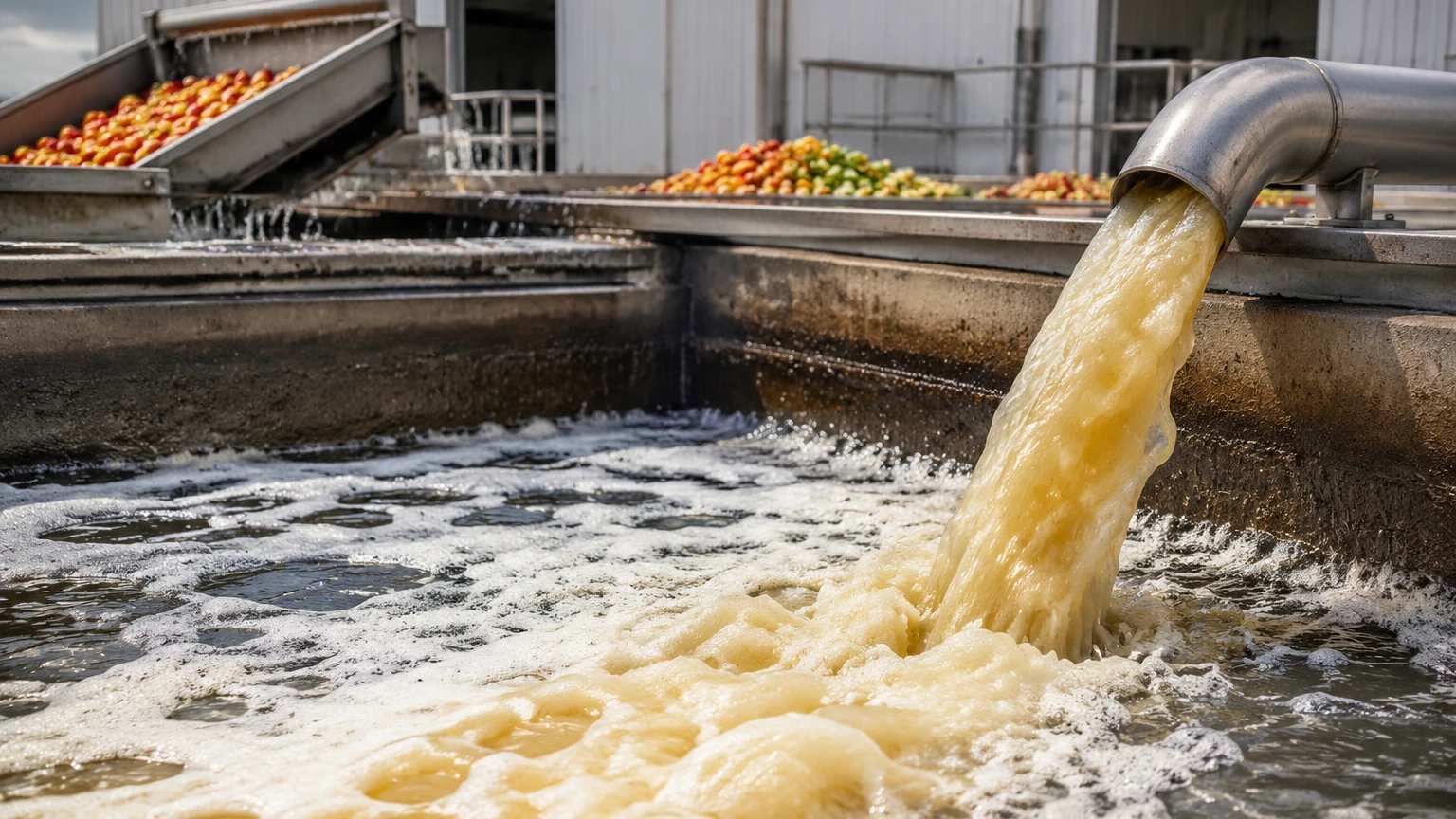
In the industrial landscape, food processing wastewater represents one of the most challenging media for process control and environmental management. Unlike municipal sewage, wastewater from food and beverage production is characterized by high concentrations of biological oxygen demand (BOD), chemical oxygen demand (COD), suspended solids, and significant levels of fats, oils, and grease (FOG). To maintain compliance with environmental regulations and optimize treatment plant efficiency, precise level measurement is essential.
Effective management of food processing wastewater requires a deep understanding of the physical and chemical properties of the effluent. Whether managing a simple lift station or a complex anaerobic digester, the choice of level instrumentation directly impacts the reliability of the entire treatment process. This guide examines the technical requirements for level sensing in these environments, providing engineering insights into technology selection and installation.
Understanding the Challenges of Food Processing Wastewater
Food processing wastewater is rarely a consistent fluid. Depending on the specific sector—such as dairy, meat processing, fruit and vegetable canning, or brewery operations—the wastewater profile changes drastically throughout a single production shift.
Key challenges include:
- Fats, Oils, and Grease (FOG): These substances tend to solidify and coat any submerged equipment, leading to sensor failure or measurement drift.
- Variable Solids Content: High concentrations of organic solids can cause clogging in pressure-based sensors or interference in acoustic signals.
- Foaming: Biological treatment processes often generate surface foam, which can absorb ultrasonic signals or cause false high-level readings in certain probe types.
- Corrosive Cleaning Agents: The frequent use of Clean-in-Place (CIP) chemicals, such as caustic soda or nitric acid, requires sensors to be constructed from chemically resistant materials like 316L stainless steel or PTFE.
- Temperature Fluctuations: Wastewater from blanching or sterilization processes can reach high temperatures, affecting the speed of sound and air density, which in turn impacts certain measurement technologies.
Core Principles of Level Measurement in Wastewater Applications
Before selecting a specific instrument, it is vital to understand the physical principles that govern different measurement technologies. In the context of food processing wastewater, three primary principles are most commonly employed: acoustic (ultrasonic), electromagnetic (radar), and hydrostatic pressure.
Ultrasonic Level Measurement (Acoustic)
Ultrasonic sensors function by emitting high-frequency sound pulses from a transducer. These pulses travel through the air, reflect off the surface of the wastewater, and return to the sensor. The device calculates the distance based on the time-of-flight of the sound wave.
Because sound speed is affected by air temperature, most industrial ultrasonic sensors include an integrated temperature sensor to compensate for variations. However, ultrasonic technology is sensitive to heavy foam, which can dissipate the sound wave, and to steam or heavy vapors which may distort the signal. It remains a cost-effective solution for open-channel flow measurement and standard sump monitoring where foam is minimal.
Radar Level Measurement (Electromagnetic)
Radar sensors, particularly those operating at high frequencies such as 80GHz, utilize microwave pulses. Unlike sound waves, microwaves are not affected by air temperature, pressure, or vacuum. They travel at the speed of light and reflect off the surface of the liquid based on the dielectric constant of the medium.
In food processing wastewater, non-contact radar is often the preferred choice. It can penetrate light foam and is unaffected by the vapors often found in hot wastewater tanks. The high frequency allows for a narrow beam angle, which is critical for avoiding internal tank obstructions like agitators or spray balls.
Hydrostatic Level Measurement (Pressure)
Hydrostatic measurement relies on the principle that the pressure at the bottom of a tank is directly proportional to the height of the liquid column above it (P = ρgh). A pressure transmitter is installed at the bottom of the tank or suspended via a cable.
In wastewater, "clog-free" flush diaphragms are essential. These sensors are robust and unaffected by surface foam or turbulence. However, changes in the density of the wastewater (e.g., varying salt or sugar concentrations) will introduce measurement errors unless the system is recalibrated for the specific gravity of the fluid.
Selecting the Right Technology for Food Processing Wastewater
Choosing the correct instrument involves balancing the physical properties of the wastewater against the technical limitations of the sensor. For engineers looking to optimize their systems, reviewing the Main Page of a dedicated manufacturer like Welk provides a comprehensive overview of available technologies and their specific application ranges.
Sumps and Lift Stations
For raw wastewater collection, sensors must handle turbulence and floating debris. Non-contact radar is ideal here because it remains above the liquid, preventing FOG buildup on the sensor face. If budget constraints are a factor, ultrasonic sensors are a viable alternative, provided the mounting position is shielded from heavy steam.
Equalization (EQ) Tanks
EQ tanks often experience significant agitation to prevent solids from settling. This creates a turbulent surface. Radar sensors with advanced signal processing can filter out the "noise" from the turbulence to provide a stable level reading. Hydrostatic transmitters are also effective here as they measure the weight of the liquid and are not bothered by surface ripples.
Anaerobic and Aerobic Digesters
In biological treatment stages, foam is a constant presence. Since foam can absorb ultrasonic signals, radar or hydrostatic sensors are recommended. If the digester is a closed vessel, the sensor must also be rated for potentially explosive atmospheres (ATEX/IECEx) due to the presence of methane gas.
Technical Selection Table for Level Instruments
| Technology | Typical Accuracy | Max Range | Suitability for Foam | Resistance to FOG | Best Use Case |
| :— | :— | :— | :— | :— | :— |
| 80GHz Radar | ±2 mm | 30 m+ | High | Excellent | Process tanks with steam/vapor |
| Ultrasonic | ±0.25% of range | 15 m | Low | Good | Open sumps, flow channels |
| Hydrostatic | ±0.1% to 0.5% | 200 m | Excellent | Moderate | Deep wells, pressurized tanks |
| Level Switch | ±1 mm (point) | N/A | Moderate | Low | Overfill protection/Pump control |
Installation Best Practices for Reliable Performance
Proper installation is as critical as technology selection. In food processing wastewater environments, even the best sensor will fail if installed incorrectly.
1. Avoid the Dead Zone: Every non-contact sensor has a "dead zone" or "blocking distance" near the transducer face where measurement is impossible. Ensure the sensor is mounted high enough that the maximum liquid level never enters this zone.
2. Nozzle Geometry: For radar and ultrasonic sensors, the mounting nozzle should be as short and wide as possible. Internal welds or narrow pipes can cause false reflections (ringing) that obscure the actual level signal.
3. Positioning Relative to Inflow: Never mount a level sensor directly above the point where wastewater enters the tank. The falling liquid will cause erratic readings and may physically damage the sensor over time.
4. Stilling Wells: In tanks with extreme turbulence or heavy foam, a stilling well (a vertical pipe submerged in the liquid) can provide a calm surface for the sensor to measure. However, in food wastewater, these pipes must be cleaned regularly to prevent solids buildup.
5. Cable Protection: For hydrostatic submerged sensors, ensure the vented cable is protected from kinks and that the moisture-absorbing desiccant at the terminal end is replaced regularly to prevent condensation from affecting the internal reference pressure.
Limitations and Maintenance Considerations
While modern level meters from manufacturers like Welk are designed for high reliability, the aggressive nature of food processing wastewater necessitates a proactive maintenance schedule.
Coating and Buildup: In meat processing or dairy plants, animal fats and milk proteins can create a hard crust or a sticky film. While non-contact radar is resistant to this, the antenna should still be inspected periodically. If a hydrostatic sensor is used, the diaphragm must be checked for "pancaking"—where solids have hardened against the sensing element.
Chemical Compatibility: The pH of food wastewater can swing from highly acidic (fruit processing) to highly alkaline (cleaning cycles). Ensure that all wetted parts, including gaskets and O-rings, are compatible with the full range of chemicals used in the facility. FKM (Viton) or EPDM are common choices, but PTFE is the gold standard for universal chemical resistance.
Signal Attenuation: In very large tanks, the accumulation of steam can attenuate high-frequency signals. In these specific cases, a lower frequency radar (e.g., 26GHz) or a guided wave radar (GWR) might be more effective, although GWR probes are susceptible to coating by FOG.
Frequently Asked Questions (FAQ)
Q: Can I use an ultrasonic sensor in a tank with heavy steam?
A: It is not recommended. Steam changes the density of the air, which affects the speed of sound and results in significant measurement errors. A non-contact radar sensor is a much more reliable choice for steamy environments.
Q: How do I handle measurement in a tank that produces thick biological foam?
A: Hydrostatic pressure transmitters are the most reliable because they measure the liquid head pressure and are completely unaffected by surface foam. If non-contact is required, an 80GHz radar with a high dynamic range is the best alternative.
Q: Is there a way to measure level without cutting into the tank?
A: Yes, certain high-power radar sensors can measure through plastic or fiberglass tank walls. However, for stainless steel tanks common in food processing, an internal mounting or a sight glass bypass is usually required.
Q: How often should I calibrate my wastewater level sensors?
A: For environmental compliance points (like final effluent discharge), calibration should be checked every 6 to 12 months. For internal process control, an annual check is usually sufficient unless the wastewater characteristics change significantly.
For engineers and plant managers seeking to upgrade their wastewater treatment infrastructure, selecting the right instrumentation is a balance of physics and practical application. By understanding the unique demands of food processing wastewater and utilizing the advanced features of modern radar and hydrostatic sensors, facilities can achieve higher efficiency and maintain strict environmental compliance. For more detailed specifications and product selection tools, visit the Welk Main Page to explore professional-grade level measurement solutions.