Food Silo
Food Silo
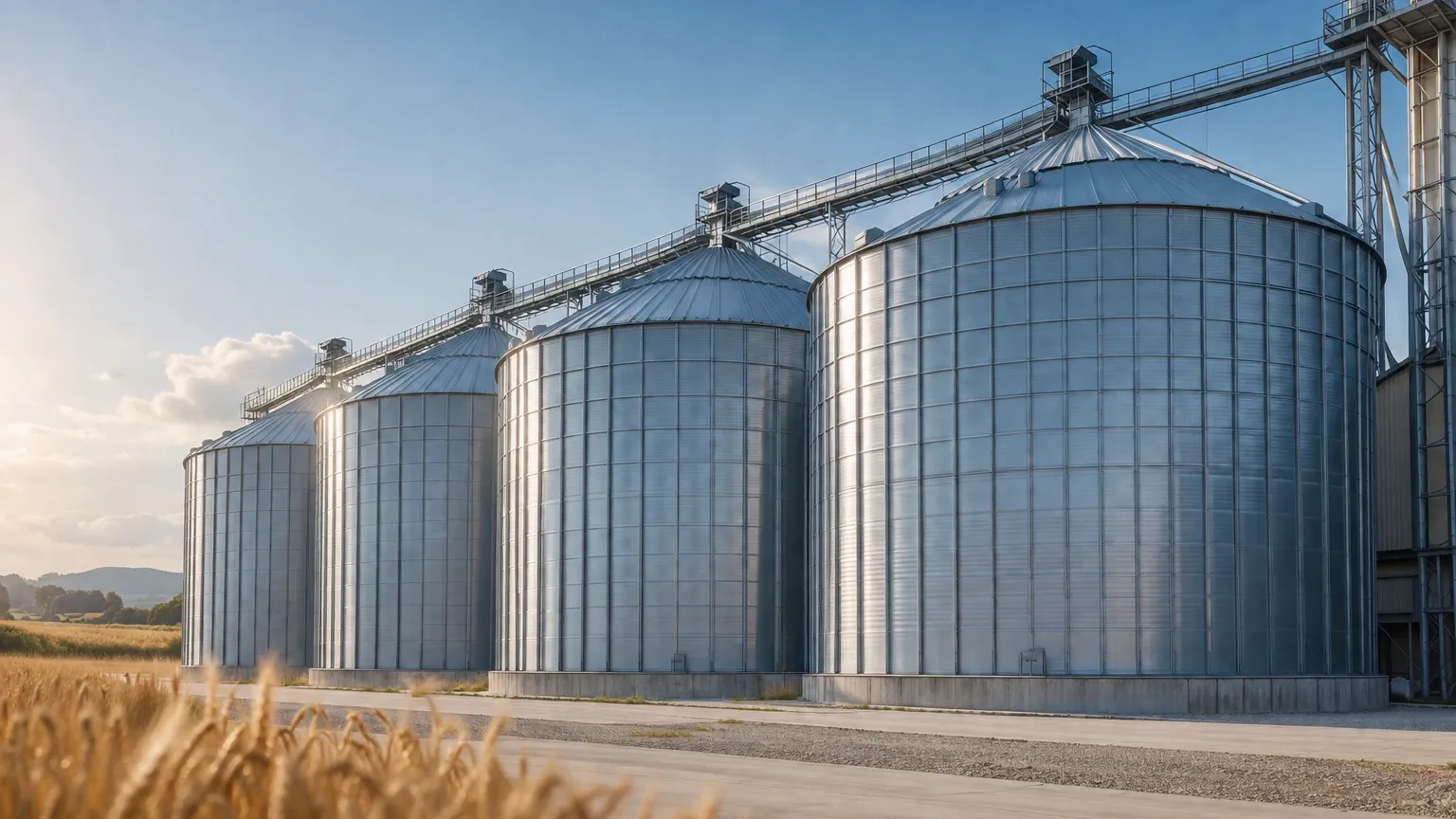
In the global food processing and agriculture industries, the food silo serves as a critical infrastructure component for the bulk storage of raw materials and finished products. Whether storing grains, flour, sugar, or liquid ingredients like vegetable oils and syrups, maintaining precise inventory control is essential for operational efficiency, safety, and supply chain management. Accurate level measurement within a food silo is not merely a matter of convenience; it is a fundamental requirement for preventing overfills, managing stock rotation, and ensuring the continuous flow of production lines.
Selecting the appropriate instrumentation for a food silo requires a deep understanding of the material properties, the physical dimensions of the storage vessel, and the environmental conditions present during the filling and discharging processes. This guide explores the technical principles of level measurement technologies used in food storage and provides engineering-led recommendations for selecting and installing these systems.
Core Measurement Principles for Food Silo Applications
To effectively monitor the contents of a food silo, engineers must choose between continuous level measurement and point level detection. Continuous measurement provides real-time data on the exact volume or height of the material, while point level detection acts as a safety switch to indicate when a silo is full or empty.
1. Radar Level Measurement (Non-Contact)
Radar technology, particularly Frequency Modulated Continuous Wave (FMCW) radar, has become the gold standard for solid and liquid food silos. The instrument emits a high-frequency microwave signal (often in the 80 GHz range) toward the material surface. The signal reflects back to the sensor, and the device calculates the distance based on the time-of-flight or frequency shift.
* Principle: 80 GHz radar offers a narrow beam angle, which is crucial in a food silo where internal structures like ladders or agitators might otherwise cause false echoes.
* Advantages: It is unaffected by dust, pressure, or temperature fluctuations. Since it is non-contact, there is no risk of contaminating the food product.
2. Ultrasonic Level Sensors
Ultrasonic sensors function by emitting sound waves that bounce off the surface of the stored material. The time taken for the echo to return determines the distance.
* Principle: Sound waves require a medium (air) to travel. The speed of sound varies with air temperature, so these sensors typically include integrated temperature compensation.
* Advantages: Cost-effective for liquid food silos or short-range grain storage where dust levels are manageable.
3. Guided Wave Radar (GWR)
Unlike non-contact radar, GWR uses a probe (cable or rod) that extends into the food silo. The microwave pulse travels along the probe and reflects when it hits the material surface.
* Principle: The probe guides the signal, making it highly effective for materials with low dielectric constants (like certain dried powders) or in narrow silos.
* Advantages: Provides a very stable signal even during turbulent filling phases.
4. Hydrostatic Pressure
For liquid food silos, such as those holding milk or juices, hydrostatic pressure transmitters are frequently used. These are mounted at the bottom of the tank.
* Principle: The pressure exerted by a liquid column is directly proportional to its height and density (P = ρgh).
* Advantages: Simple, reliable, and easy to clean if using hygienic flush-diaphragm designs.
Technology Comparison and Selection Matrix
Choosing the right instrument depends on whether the food silo contains solids (bulk powders/grains) or liquids. The following table provides a comparison based on common industrial requirements.
| Technology | Suitable for Solids? | Suitable for Liquids? | Performance in Dust | Hygienic Requirements |
| :— | :— | :— | :— | :— |
| 80 GHz Radar | Excellent | Excellent | Excellent | High (Non-contact) |
| Ultrasonic | Limited | Good | Poor | High (Non-contact) |
| Guided Wave Radar | Good | Excellent | Excellent | Moderate (Contact) |
| Hydrostatic | No | Excellent | N/A | High (Hygienic) |
| Rotary Paddle | Point Level Only | No | Excellent | Moderate (Contact) |
For comprehensive technical specifications and to explore specific hardware options for these technologies, engineers can Review product options and application support to align their choice with specific regulatory standards such as FDA or EHEDG.
Engineering Considerations for Installation
The physical installation of a level meter on a food silo significantly impacts the accuracy of the readings. Several factors must be accounted for during the design phase.
Beam Angle and Internal Obstructions
When using non-contact radar or ultrasonic sensors, the "beam angle" is the spread of the signal. In a tall, narrow food silo, a wide beam may hit the silo walls or internal reinforcements, creating "noise" or false levels. Modern 80 GHz radar units offer beam angles as narrow as 3 degrees, allowing them to be installed close to walls or in silos with complex internal geometries.
The Filling Stream
Sensors should never be installed directly above the inlet where the food product enters the silo. The falling material will interfere with the signal, leading to erratic readings. Ideally, the sensor should be placed at a distance of at least 200mm to 500mm from the filling stream.
Angle of Repose
In a food silo storing solids like corn, wheat, or flour, the material does not sit flat. It forms a cone (the angle of repose) during filling and an inverted cone during discharge. To get a representative average of the volume, the sensor should be positioned approximately 1/6th to 1/3rd of the diameter from the silo wall, rather than dead center.
Nozzle Heights
If the sensor is mounted on a nozzle, the nozzle should be as short as possible. If the nozzle is too long and narrow, it can create "ringing" or internal reflections that mask the actual material level near the top of the silo.
Overcoming Environmental Challenges in Food Storage
Food silos present unique environmental challenges that can interfere with standard instrumentation.
Dust and Vapor
Filling a food silo with flour or grain creates significant dust. Ultrasonic sensors often fail in these conditions because the dust particles absorb the sound energy. Radar is the preferred solution here, as microwaves penetrate dust clouds without signal loss. Similarly, in liquid silos containing hot syrups, steam and vapor can cause condensation on sensor faces. Using a PTFE-coated or horn-antenna radar helps shed condensation and maintain signal integrity.
Hygiene and Contamination
In the food industry, "cleanability" is paramount. Instruments must often withstand Clean-in-Place (CIP) or Steam-in-Place (SIP) cycles. For liquid food silos, sensors must feature hygienic process connections (like Tri-Clamp) and surfaces with a low roughness average (Ra < 0.8 µm) to prevent bacterial growth.
Material Build-up
Sticky materials, such as milk powder or sugar, can build up on the sensor face or the probe of a GWR. Non-contact radar with a flat-face antenna is less prone to this. Some advanced radar units also feature automated "false signal suppression" software that can ignore the reflection from a certain amount of build-up on the antenna.
Maintenance and Calibration Best Practices
While modern level meters are designed for long-term stability, a regular maintenance schedule ensures the continued safety of the food silo operation.
1. Visual Inspection: For non-contact sensors, check the antenna face for material build-up every 3 to 6 months, depending on the product's stickiness.
2. Verification: Periodically compare the sensor's reading with a manual measurement (e.g., a sounding tape) when the silo is at a known level. This is especially important for hydrostatic sensors where the density of the liquid might change between batches.
3. Firmware Updates: Manufacturers often release software updates that improve signal processing algorithms, particularly for filtering out noise in turbulent silos.
4. Seal Integrity: Ensure that the seals and gaskets at the process connection are intact to prevent moisture ingress or product leakage, which could compromise food safety.
Frequently Asked Questions
Q: Can I use one sensor for different types of grain in the same food silo?
A: Yes, especially if using radar. Radar measures the distance to the surface and is largely independent of the material's density. However, if using a weight-based system or hydrostatic pressure, you must recalibrate for the specific gravity of the new grain.
Q: How do I handle a food silo with a very low dielectric constant material?
A: Materials like dry plastic pellets or some very dry powders have low dielectric constants, meaning they reflect radar signals poorly. In these cases, a Guided Wave Radar (GWR) is often the best choice, as the probe concentrates the energy and provides a stronger reflection.
Q: What is the maximum height a radar sensor can measure in a food silo?
A: Modern high-frequency radars can accurately measure heights up to 100 meters (approx. 328 feet), making them suitable for even the largest industrial grain terminals.
Q: Is ultrasonic ever better than radar for food?
A: Ultrasonic is generally only preferred when the budget is extremely tight and the environment is completely free of dust, foam, and temperature gradients. In almost all modern food silo applications, radar is the more reliable investment.
By following these technical guidelines and selecting the appropriate measurement principle, plant managers can ensure their food silo infrastructure remains a reliable part of their production process. For further technical details on integrating these sensors into automation systems, visit the Main Page for detailed product documentation.