Gateway Lora
Gateway Lora
In the landscape of modern industrial automation, the ability to monitor fluid levels across vast facilities or remote locations is paramount. Traditional wired systems often face significant hurdles, including high installation costs, cabling complexity, and vulnerability to environmental damage. The emergence of Low Power Wide Area Network (LPWAN) technologies, specifically LoRa (Long Range), has revolutionized how data is collected. At the heart of this architecture lies the gateway lora, a critical component that bridges the gap between field-level sensors and centralized data management systems. This guide explores the technical principles, selection criteria, and practical implementation of LoRa gateways within industrial level measurement applications.
Understanding the Role of Gateway LoRa in Industrial Level Measurement
Level measurement involves determining the position of a liquid or solid surface relative to a reference point, typically the bottom or top of a vessel. Industrial sensors, such as those manufactured by Welk, utilize various physical principles to achieve this. For instance, radar level meters emit high-frequency electromagnetic waves (often in the 76-81 GHz range) that reflect off the medium's surface. Ultrasonic sensors use sound waves, while hydrostatic transmitters measure the pressure exerted by a liquid column.
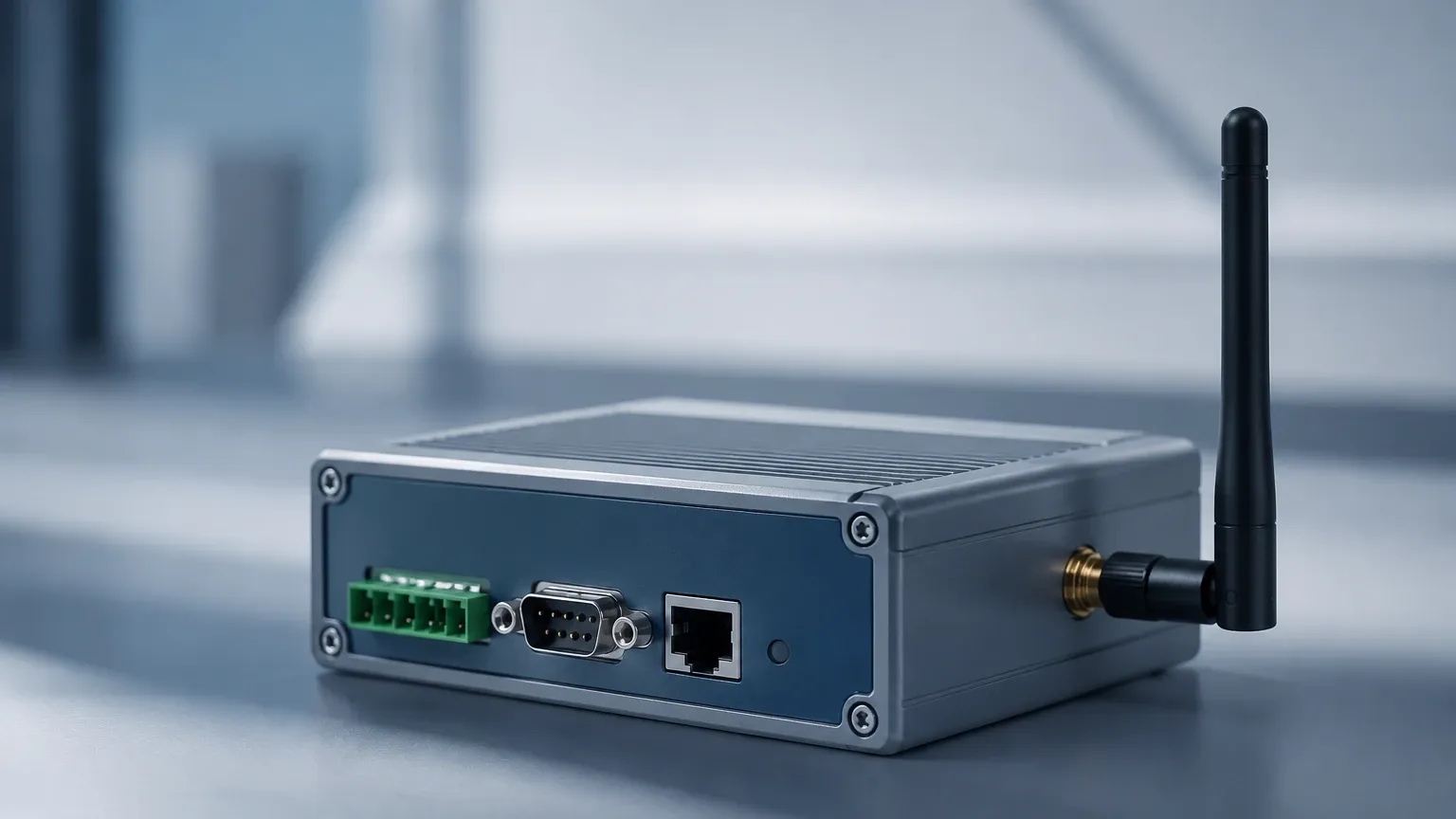
In a traditional setup, these sensors output a 4-20mA analog signal or an RS485 digital signal. However, in a LoRa-enabled ecosystem, the sensor is integrated with a LoRa node. This node digitizes the measurement data and transmits it wirelessly over long distances. The gateway lora acts as the concentrator. It receives these radio frequency (RF) packets from multiple nodes simultaneously and converts them into IP packets that can be transmitted over standard backhaul networks, such as Ethernet, Wi-Fi, or cellular (4G/5G), to a network server.
For engineers looking to optimize their monitoring infrastructure, reviewing product options and application support on the Main Page of the manufacturer’s site is a recommended first step to ensure compatibility between sensors and gateway hardware.
Technical Principles of LoRa Communication
LoRa is a physical layer technology based on Chirp Spread Spectrum (CSS) modulation. This technique uses wideband linear frequency modulated pulses, known as chirps, to encode information. The primary advantage of CSS is its extreme robustness against interference and its ability to maintain communication integrity even when signal levels are below the noise floor.
Key Transmission Parameters
1. Spreading Factor (SF): This determines the number of chips per symbol. A higher SF increases the range and receiver sensitivity but reduces the data rate and increases power consumption. In level measurement, where data packets are small and infrequent, a higher SF is often preferred for maximum range.
2. Bandwidth (BW): Typically set at 125 kHz, 250 kHz, or 500 kHz. A narrower bandwidth increases sensitivity but lowers the transmission speed.
3. Frequency Bands: LoRa operates in the unlicensed Industrial, Scientific, and Medical (ISM) bands. Common frequencies include 868 MHz for Europe and 915 MHz for North America.
The gateway lora is designed to listen to multiple channels and spreading factors at once. This multi-channel capability allows a single gateway to support thousands of end-devices, making it highly scalable for large-scale tank farms or municipal water treatment facilities.
Key Evaluation Criteria for Industrial Gateways
Selecting the right gateway requires a balance between technical performance and environmental suitability. Industrial environments are often characterized by electromagnetic noise, physical obstructions, and harsh weather conditions.
Sensitivity and Capacity
A high-quality gateway should offer a receiver sensitivity of at least -140 dBm. This ensures that signals from distant or obstructed level sensors are successfully captured. Furthermore, the capacity of the gateway—defined by the number of concurrent channels (usually 8, 16, or 64)—must match the density of the sensor network.
Backhaul Redundancy
Since the gateway is the single point of failure for the local sensor network, backhaul reliability is critical. Industrial gateways often feature "failover" capabilities, where the system automatically switches from Ethernet to a cellular 4G connection if the primary link is lost.
Environmental Protection
For outdoor installations or placement in chemical processing areas, the gateway must possess an appropriate Ingress Protection (IP) rating. An IP67 rating is standard for outdoor equipment, ensuring protection against dust and temporary immersion in water.
Selection Table and Technical Specifications
The following table provides a comparison of typical gateway configurations used in industrial level measurement projects.
| Feature | Indoor Industrial Gateway | Outdoor Ruggedized Gateway | High-Capacity Carrier Grade |
| :— | :— | :— | :— |
| Ingress Protection | IP30 / IP40 | IP67 | IP67 / IP68 |
| Channels | 8 Channels | 8 to 16 Channels | 16 to 64 Channels |
| Backhaul Options | Ethernet, Wi-Fi | Ethernet, 4G LTE, PoE | Ethernet, 4G/5G, Fiber |
| Operating Temp | -20°C to +60°C | -40°C to +75°C | -40°C to +85°C |
| Antenna Type | Internal or SMA | External N-Type (High Gain) | External N-Type (MIMO) |
| Typical Range | 1–3 km (Urban) | 5–15 km (Line of Sight) | 15+ km |
| Primary Use Case | Factory floor monitoring | Remote tank farms / Water | Smart City / Large Infrastructure |
Installation Best Practices for Optimal Signal Strength
The performance of a gateway lora is heavily dependent on its physical placement. To maximize the efficiency of level measurement systems, engineers should adhere to the following installation guidelines:
Antenna Height and Placement
The gateway antenna should be placed as high as possible to clear the "Fresnel Zone." The Fresnel Zone is an elliptical area around the line-of-sight path between the transmitter and receiver. Obstructions within this zone can cause signal attenuation and phase shifts. For a 5 km link at 915 MHz, the maximum radius of the first Fresnel zone is approximately 20 meters at the midpoint.
Minimizing Cable Loss
In outdoor installations, the gateway is often mounted on a pole while the antenna is mounted even higher. The coaxial cable connecting the two introduces signal loss (measured in dB per meter). To minimize this, use high-quality, low-loss cables (like LMR-400) and keep the cable length as short as possible. In many modern designs, the gateway is integrated directly with the antenna mount to eliminate cable loss entirely.
Lightning and Surge Protection
Because gateways are often the highest point on a structure, they are susceptible to lightning strikes. Installing an inline surge protector between the antenna and the gateway is essential for protecting the internal electronics. Additionally, ensuring the gateway chassis is properly grounded to the facility's earth system is a mandatory safety requirement.
Limitations and Operational Risks
While LoRa technology is highly effective, it is not without limitations that must be addressed during the project planning phase.
1. Latency and Duty Cycle: LoRa is not designed for real-time control. In many regions, regulations limit the "duty cycle" (the percentage of time a device can transmit) to 1%. This means level measurements are typically sent at intervals (e.g., every 15 minutes) rather than continuously.
2. Signal Attenuation in Metal Structures: Industrial sites are often filled with metal tanks, pipes, and steel-reinforced concrete. These materials reflect and block RF signals. A gateway lora may struggle to receive signals from a sensor located inside a thick-walled metal vessel if the node's antenna is not properly positioned outside the tank.
3. Data Throughput: LoRa is intended for small data packets (payloads of 51 to 222 bytes). It is unsuitable for transmitting high-resolution images or large diagnostic logs from advanced level meters.
Frequently Asked Questions (FAQ)
Q: How many level sensors can one LoRa gateway handle?
A: A standard 8-channel gateway can theoretically handle thousands of nodes. However, in practice, this depends on the frequency of data transmission and the spreading factor used. For level monitoring where sensors transmit once every 10–30 minutes, 500 to 1,000 sensors per gateway is a conservative and reliable estimate.
Q: Can I use a LoRa gateway in an explosive atmosphere (ATEX/IECEx)?
A: Standard gateways are typically not rated for hazardous zones. The common practice is to install the gateway in a safe area and use high-gain antennas to reach sensors located within the hazardous zones. If the gateway must be inside the zone, it must be housed in a certified explosion-proof enclosure.
Q: What is the difference between a LoRa gateway and a LoRaWAN gateway?
A: LoRa is the physical modulation (the "language"), while LoRaWAN is the network protocol (the "rules of conversation"). Most industrial gateways are LoRaWAN-compliant, meaning they support standardized security, device management, and data routing features.
Conclusion and Project Confirmation
Implementing a gateway lora for industrial level measurement significantly reduces the total cost of ownership by eliminating the need for extensive wiring. However, the success of the deployment depends on a thorough site survey and the selection of hardware that matches the environmental demands of the application.
Before proceeding with procurement, project managers should confirm the following:
* Site Topography: Are there major obstructions between the sensor locations and the intended gateway position?
* Power Availability: Is Power over Ethernet (PoE) available, or is solar power required for the gateway?
* Network Integration: How will the gateway data be integrated into existing SCADA or ERP systems? (e.g., via MQTT or Webhooks).
By addressing these factors and utilizing high-quality instruments, organizations can achieve reliable, long-range level monitoring that enhances operational efficiency and safety. For detailed technical support on integrating wireless gateways with specific level measurement technologies, engineers are encouraged to consult the technical resources available on the Main Page.