What Is a Surge Vessel
What Is a Surge Vessel
In industrial fluid handling and municipal water distribution, the sudden change in flow velocity can lead to catastrophic pipe failure. This phenomenon, commonly known as water hammer or hydraulic transients, necessitates the use of specialized protective equipment. Among the most effective solutions is the surge vessel. Understanding what is a surge vessel and how it integrates into a process system is essential for engineers tasked with maintaining pipeline integrity and operational safety.
The Fundamentals of Pressure Transients
Before defining the vessel itself, it is necessary to understand the problem it solves. When a pump trips, a valve closes rapidly, or a power failure occurs, the kinetic energy of the moving fluid must be dissipated. This results in a high-pressure wave (surge) or a low-pressure wave (rarefaction) traveling through the pipeline at the speed of sound.
Without mitigation, these pressure spikes can exceed the burst pressure of the pipes, while low-pressure zones can cause pipe collapse or cavitation. A surge vessel acts as a hydraulic shock absorber, providing a buffer that dampens these fluctuations by utilizing the compressibility of a gas cushion.
What Is a Surge Vessel: Definition and Principle
A surge vessel, often referred to as a hydropneumatic tank or a surge drum, is a pressure-rated container partially filled with the process liquid and partially filled with a compressed gas—typically air or nitrogen.
The core principle of operation relies on the fact that liquids are nearly incompressible, whereas gases are highly compressible. When a high-pressure surge enters the vessel, the liquid level rises, compressing the gas cushion and absorbing the energy. Conversely, during a low-pressure event, the compressed gas expands, forcing liquid back into the pipeline to prevent a vacuum and maintain pressure above the vapor pressure of the fluid.
The Critical Role of Level Measurement
For a surge vessel to function correctly, the ratio between the gas volume and the liquid volume must be precisely maintained. If the vessel becomes "water-logged" (too much liquid), there is insufficient gas to compress, rendering the vessel ineffective. If the gas volume is too large, there is a risk of gas escaping into the pipeline, which can cause air locks or damage downstream equipment.
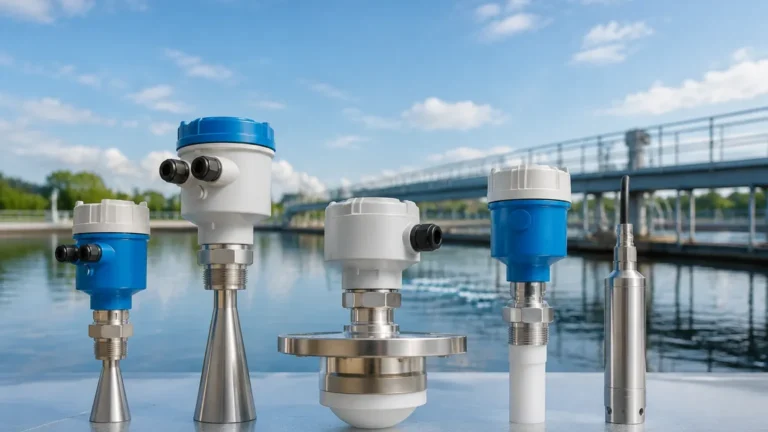
This is where advanced instrumentation becomes vital. To ensure the vessel operates within its design parameters, operators rely on accurate level measurement technologies. For comprehensive information on the instruments used to monitor these systems, you can visit the Main Page of industrial measurement specialists like Welk, who provide the sensors necessary for these high-stakes applications.
Common Level Measurement Technologies for Surge Vessels
1. Radar Level Meters: Utilizing non-contact microwave technology, radar sensors provide high-precision measurements of the liquid-gas interface. They are unaffected by pressure changes or gas composition, making them ideal for high-pressure surge vessels.
2. Magnetic Level Gauges: These provide a clear visual indication of the level outside the vessel via a bypass chamber. They are often equipped with reed switches or transmitters for remote monitoring.
3. Ultrasonic Level Sensors: Suitable for atmospheric or low-pressure surge tanks, these sensors use sound waves to determine the distance to the liquid surface.
4. Differential Pressure (DP) Transmitters: By measuring the pressure difference between the bottom (liquid) and top (gas) of the vessel, the liquid level can be calculated based on the fluid density.
Types of Surge Vessels
Surge vessels are generally categorized by how the gas and liquid are separated and how the gas charge is maintained.
1. Bladder-Type Surge Vessels
In these vessels, a flexible rubber bladder (typically made of Butyl or EPDM) separates the gas from the liquid. The gas is pre-charged into the bladder.
* Advantages: No contact between gas and liquid prevents gas absorption into the fluid; lower maintenance as the gas charge is retained longer.
* Limitations: Bladders can wear out or tear over time; size is often limited compared to compressor-fed models.
2. Compressor-Fed (Air-over-Water) Vessels
In this design, the gas (usually air) is in direct contact with the liquid. As the air is gradually absorbed into the water under pressure, an automated system involving an air compressor and level sensors is used to replenish the gas cushion.
* Advantages: No internal moving parts or bladders to fail; suitable for very large volumes and high-pressure applications.
* Limitations: Requires a constant power supply for the compressor and more complex control instrumentation.
Selection Criteria for Surge Vessels
Choosing the right surge vessel requires detailed hydraulic modeling. Engineers must consider the following factors:
| Criteria | Description | Typical Range/Requirement |
| :— | :— | :— |
| Vessel Volume | Total capacity needed to absorb the predicted surge energy. | 500 L to 100,000 L+ (132 to 26,400 gal) |
| Design Pressure | Maximum allowable working pressure (MAWP) based on the highest possible surge. | 10 bar to 100 bar+ (145 to 1,450 psi) |
| Material of Construction | Must be compatible with the fluid (e.g., carbon steel with epoxy lining for water, stainless steel for chemicals). | Carbon Steel, SS304, SS316 |
| Gas Type | Air is common for water; Nitrogen is used for flammable or oxygen-sensitive fluids. | Air, Nitrogen (N2) |
| Connection Size | The diameter of the nozzle connecting the vessel to the main pipeline. | 100 mm to 600 mm+ (4" to 24") |
Installation and Engineering Considerations
Successful implementation of a surge vessel extends beyond the vessel itself. Proper installation is critical for performance.
* Proximity to Source: Surge vessels are typically installed as close as possible to the source of the transient, such as immediately downstream of a pump station or upstream of a fast-acting valve.
* Connection Geometry: The pipe connecting the main line to the vessel (the branch pipe) should be sized to minimize friction losses, allowing the fluid to move into the vessel quickly during a surge.
* Venting and Drainage: Every vessel must be equipped with an automatic air release valve (ARV) at the top and a drain valve at the bottom for maintenance.
* Foundation and Support: Given the weight of the vessel when full of liquid (e.g., a 10,000 L vessel weighs approximately 10 metric tons plus the steel weight), a robust concrete foundation is mandatory.
Limitations and Risks
While highly effective, surge vessels are not "set and forget" components. They have specific limitations:
1. Maintenance Requirements: For air-over-water types, the compressor system must be maintained. For bladder types, the pre-charge pressure must be checked at least annually.
2. Space Constraints: Large-scale pipelines may require vessels that are 5 meters (16.4 ft) or more in height, which may not be feasible in urban or indoor environments.
3. Temperature Sensitivity: Gas laws (Boyle's Law) dictate that gas volume changes with temperature. In extreme climates, the vessel may require insulation or heat tracing to maintain the correct gas-to-liquid ratio.
4. Corrosion: Internal corrosion in steel vessels can lead to structural failure. Regular non-destructive testing (NDT), such as ultrasonic thickness gauging, is recommended.
Frequently Asked Questions (FAQs)
Q: What is the difference between a surge tank and a surge vessel?
A: While the terms are often used interchangeably, a "surge tank" often refers to an open-top, atmospheric tank used in low-pressure systems (like hydropower forebays). A "surge vessel" is specifically a closed, pressurized container used in pumped systems.
Q: How do I know if my surge vessel is water-logged?
A: A water-logged vessel will show rapid pressure fluctuations on the system pressure gauge and the pumps may "cycle" (start and stop) too frequently. Accurate level instrumentation will show a liquid level that remains consistently near the top of the vessel.
Q: Can a surge vessel handle both positive and negative pressure?
A: Yes. During a high-pressure spike, it absorbs fluid to lower the pressure. During a low-pressure dip, it gives back fluid to raise the pressure and prevent vacuum formation.
Q: Is nitrogen better than air for the gas cushion?
A: Nitrogen is preferred in oil and gas applications because it is inert and prevents oxidation inside the vessel. For standard water treatment, compressed air is usually sufficient and more cost-effective.
Conclusion
Identifying what is a surge vessel and implementing it correctly can mean the difference between a stable industrial process and a catastrophic system failure. By acting as a dynamic buffer, these vessels protect infrastructure from the violent forces of hydraulic transients. However, the effectiveness of any surge vessel is entirely dependent on the accuracy of its control systems. Reliable level measurement is the cornerstone of this protection, ensuring that the gas-liquid interface remains exactly where it needs to be to safeguard the pipeline.